
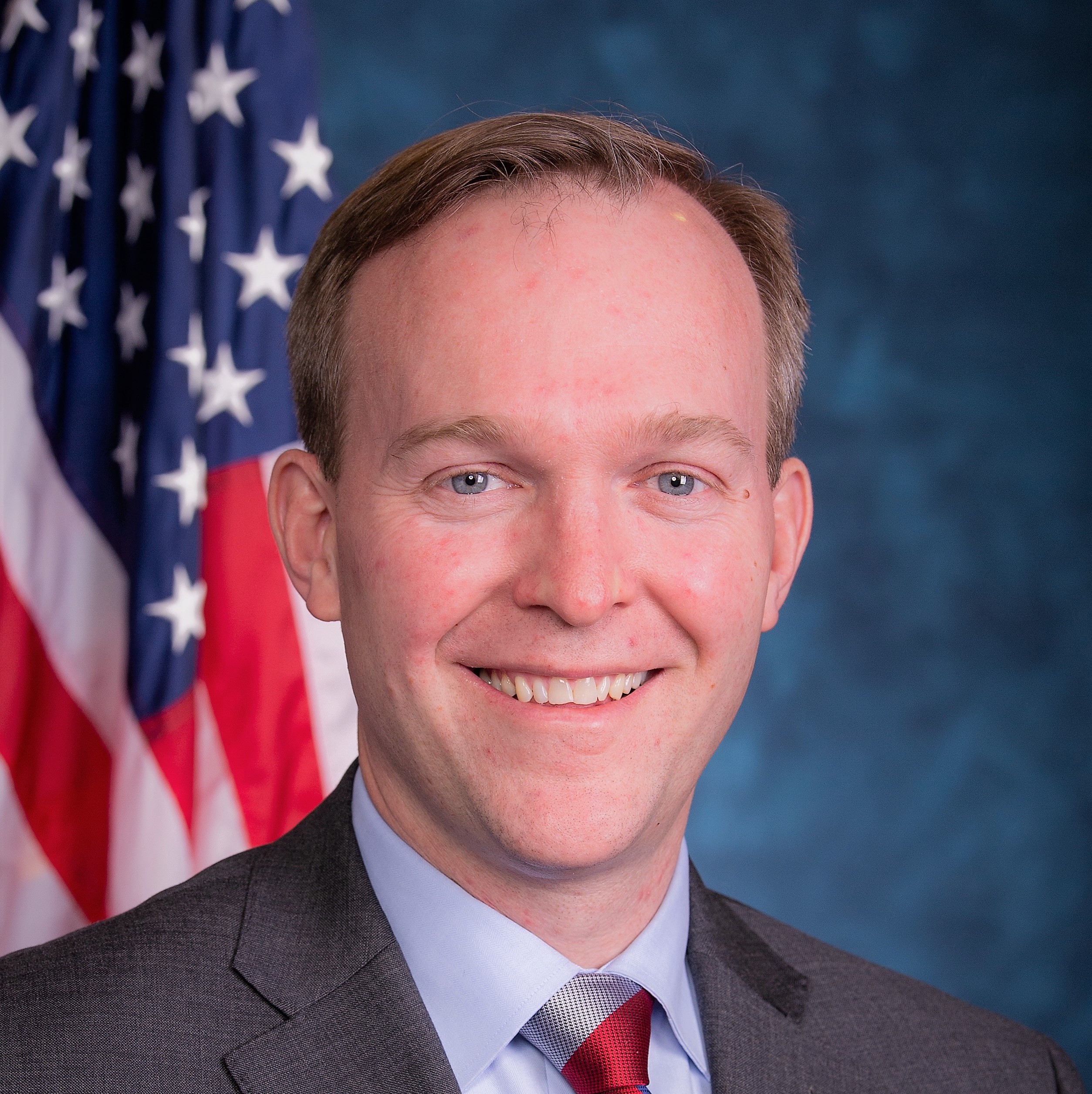
This is the second half of an interview on July 10th with Ben McAdams, representative from Utah’s Fourth Congressional District, about some of the legislation he’s recently sponsored. The first part of the interview can be found here.
Charles Bonkowsky: You also recently signed onto the “Protect Our Children from COVID-19” act, which would require the Health and Human Services to study the role of children in transmitting that virus. So this is a topic that, you know, is sort of on everybody’s minds as we figure out schools in the fall, so—as I guess a broad question to start this off: do you think schools will be able to reopen in the fall, and should they?
Ben McAdams: I think the decision about whether schools should open or not really needs to be made at the local level. This virus is continuing to make its impact felt across our country, and some places are being hit harder than others, and the risks are different in different places. So I really think that a one-size-fits-all national response to school openings is not the right approach. We need to trust our states and our local school districts to make the decision that’s right based on their respective circumstances. There’s a lot we don’t know about this virus—I’ve had the coronavirus, I was very sick with it, I’m better now—but let me tell you that it’s something we should take very, very seriously and every one of us should take responsibility by wearing a mask and social distancing and doing everything we can to slow the spread of it. I hope, as a parent of four young kids, I hope that schools are open in the fall and that my kids will be able to go back to school—I think there’s a cost to not reopening the schools that’s very real as they miss those really important learning opportunities as, you know, these young kids. So I hope that they’re able to go back to school, but I think we need to balance, you know, all those factors: the cost of not going to school versus the risk and the human cost of the virus.
CB: Right. You said it should be a more local decision?
BM: Yeah.
CB: So then what are your thoughts on the recent push by the president, the head of the CDC, the Secretary of Education, on trying to get schools open in the fall? Do you think that’s the right way to go about it?
BM: No. I think we should be doing what we can do to support the schools in reopening, not bullying them into reopening regardless of the consequences. So I think there’s a role, maybe, for some federal support, federal funding. If schools need funding for masks or funding for plexiglass or ventilation systems, or things like that where we can support the infrastructure that will facilitate the reopening of schools, I think that’s an appropriate federal role. But the federal government can’t make a one-size-fits-all determination that every school in this country should open. That really needs to be done by people who are on the ground, who know the circumstances of their particular state and even the school building: what the school building’s like, what the school population’s like, what the status of the virus is in each community, it needs to be a local decision. I think it’s important for the country that our kids receive an education and there’s a cost for them missing school, so I think there’s a—it’s certainly in our interest to support school reopening, but by no means should we be dictating school opening.
CB: Okay. The “Protect Our Children From COVID-19” act, it sponsors testing by Health and Human Services to see how children transmit the virus. Do you have any ideas, when schools make the decision on whether to reopen or not, on what you think we need to know about school reopening, and what do you think we need to be doing so that states and local districts can be making those decisions?
BM: You know, certainly, access to testing so that when there are outbreaks we can react appropriately and stop the spread so that it doesn’t get bigger. I think there’s a lot we need to know about this virus, still so much we don’t understand. The latest on the virus seems to say that it is transmitted by air and not so much on surfaces—I think that’s important to know. You know, how much do we need to be disinfecting every surface? How long does the virus live on a surface indoors? Or, if it’s more airborne transmission, then things like masks and plexiglass are more important. So making sure we understand how the virus is transmitted, how in particular kids transmit or get the virus—and in many cases they’re asymptomatic, so making sure that there’s available testing to identify those asymptomatic cases so they don’t become “silent spreaders” of the virus throughout the entire community. And so I think there’s just a lot that we need to know, and if we want to see the schools reopen, having information is an important foundation to reopening schools.
CB: Do you think the mask mandate in K-12 schools—in all Utah schools—is a step in the right direction for that?
BM: Yeah, I think it’s a step in the right direction. I know, as a parent of four young kids, that it’s going to be harder to enforce in some of the younger ages, you know—try telling a kindergartener that they can’t take off a mask—so there’s going to be some enforcement issues, you know? Actually, ‘enforce’ is the wrong word, not every kid’s going to follow through on that, but I think it’s a step in the right direction.
CB: Right. I was recently talking to a physics teacher at West High, and she said that it seems like a lot of the burden of reopening seems to be placed on the teachers. Do you have thoughts or ideas on how to address these concerns?
BM: Well, I think that, you know, one of the concerns is many of your teachers are going to fall into risk categories. Like everybody across society, they’re going to have different levels of risk, and they may be concerned about their own exposure, so reopening schools without consulting teachers about how we can make them feel safe is not—it’s not only about the kids, but also about our teachers and making sure our teachers feel safe coming back is an important part of the equation. I worry that not enough focus has been placed on that at this point, and so there’s certainly more work to be done on how we can make the workplace safer.
CB: You talked about funding a little bit, so—there have been a lot of reports saying that for schools across the US, it will take billions of dollars for reopening safely. So where are you standing on the funding for schools in the stimulus package that’s planned for August, I believe?
BM: Yeah. Well, I voted against the—which stimulus are you talking about? There’s an infrastructure package that the House voted on a week ago that had some school funding, and that was more school construction. I had some—that bill I had some concerns with, and voted against it, but August—like I said, I don’t know what bill you’re talking about. We’re talking about an additional coronavirus response legislation that would pass at the end of July, but that’s still being negotiated.
CB: Okay, yeah, I think it’s one of the bills being negotiated.
BM: Yeah. So I’m open to some funding to help support schools in reopening and making sure it’s safe for students and teachers. For the reasons I laid out, there’s probably—that is an appropriate role of the federal government, not just mandating that they open in a one-size-fits-all fashion without offering support to have that. To have them do it safely is what I’m concerned about.
CB: Right. There’s also been some discussion of having schools cut a lot of programs that wouldn’t be viable during coronavirus—like sports, moving classrooms together, which might reduce some of the funding they need. Do you think that’s something that should be explored, or do you think that it should—that we should give them the funding they’re calling for now without additional cuts?
BM: Well, I think that again, that’s going to be a local decision, how to manage their budget, and do it and still meet their core functions. I’m a believer that some of the arts, the humanities, and even sports are an important part of the well-rounded education, so I’d hope that that is not a permanent change. But, you know, I think that is probably something which needs to be done and decided on a local basis by the school boards who reflect their community, who know their budgets. I don’t think it’s an appropriate role for the federal government to really dictate what those decisions are. But as a parent, I would say, I hope that we can find a way—I would be understanding if there were short-term disruptions to some of those programs, but I think it’s such an important part of a well-rounded education that I’d hope it would only be short-term.
CB: And then one more thing which has cropped up recently is the—international students, the new immigration restrictions.
BM: Yeah.
CB: You signed a letter with John Curtis and other Utah representatives about international teachers, visa restrictions—do you think there should be similar action to protect international students with the new immigration stuff that says if a school goes fully online, students will have to transfer or leave the country?
BM: Yeah, I’m really concerned about that. It’s good for the United States to have people come here and study, and I worry, you know, it would really leave a lot of people high and dry and unable to complete their studies. So I think these are extraordinary circumstances and I think we need to approach it with an understanding viewpoint that we’re going to have to make accommodations and allow students to complete programs that they’ve spent years preparing for and they’re oftentimes spending their entire savings to complete an education. I think we need to take that into consideration and, just as we are in so many other areas of society working to make the best of a really bad situation, I think we need to do that in this area as well.
CB: Right. So, I don’t know how much time we have, since those were the two topics I wanted to talk to you about, the nuclear testing and school reopening. Is there anything else you want to talk about or you think is important that people should know about what you’re doing?
BM: No, I think—we are in this country in crisis, in many ways, and we’ve got to find a way to come together and find common ground. You know, I have my opinions about what I think are the right approaches to solving many of these challenges that we’re facing, but above all, I think we’ve got to sit down, Republicans and Democrats, and find common ground and be willing to—all sides—to make concessions in order to get something done, because the American people can’t—we’re not going to get past this crisis with idealistic positions on both sides that sit on the shelf and never get implemented because we can’t find common ground. So I think it’s important that we recognize that we’re going to have to be flexible and willing to meet in the middle on a lot of these things.