
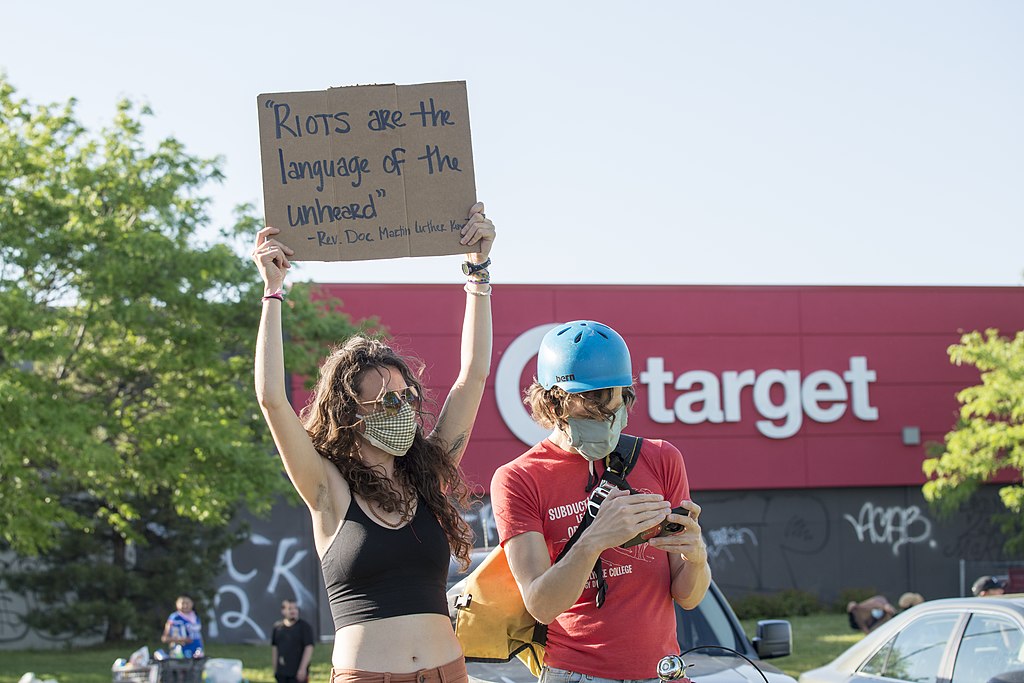
The riots following the death of George Floyd have been made known to US citizens. We are now reminded on a daily basis through the defacing of monuments and lootings of businesses that the death of George Floyd has invoked outrage into the hearts of many Americans. Images of destroyed buildings and monuments have been posted on social media throughout late May and most of June.
One image in particular that many people recollect is that of a Target store. The store was ransacked, aisles were destroyed, and shelves were stripped. This type of action reoccurred throughout many businesses and stores in the United States. Many people were angered by the actions of the rioters, and others were on their side. To the surprise of the public, a strong supporter was none other than Target.
“As a Target team, we’ve huddled, we’ve consoled, we’ve witnessed horrific scenes similar to what’s playing out now and wept that not enough is changing. And as a team we’ve vowed to face pain with purpose,” said CEO Brian Cornell. He was not concerned about the looted store as he promised to continue “rebuilding and bringing back the store that has served as a community resource since 1976. In any of our other locations that are damaged or at risk, the safety and well-being of our team, guests and the surrounding community will continue to be our paramount priority.” The company went as far as to send truckloads of supplies and aid to the damaged areas.
Target’s response towards the looting of one of their own stores was simply a result of the fact that it was a toll they could afford to pay. While the response of the nation-wide chain was ringingly heard, it was not a common one amongst looted store owners. Unfortunately for small businesses, they are not able to rebuild in the same way that Target has.
A video of a man by the name of Hak Tong Kim crying at the loss of $350,000 looted from his store represents the impact these lootings have on small businesses. “I couldn’t sleep today… I am so unlucky,” he said. Kim stood in the parking lot with a wrench in hand as he watched his own creation get demolished while receiving phone calls from friends and family to come home to safety. Kim has no current plans to reopen.
The tears of Hak Tong Kim represent the loss that many small businesses have gone through during these lootings. The impacts are emotional, financial, and material.
An estimate calculated by the Anderson Economic Group indicates that the total cost of the lootings in the 20 largest metropolitan areas adds up to more than $400 million. This estimate accounts for property damage, stolen items, money, and any cost to rebuild.
Small businesses that are currently suffering from the impact of these damages have high hopes of recovery. Unfortunately, this will not come with ease. Small businesses were already experiencing financial complications due to the effects of the coronavirus and the lootings only fueled this effect. These kinds of losses have served as a blow not only financially and materially, but in terms of emotion and morale.
In another case in Tampa FL, the owner of a local jewelry store watched on TV as her store was broken into just minutes after the store was left unattended. She described other businesses in the area as “disappointed, shocked. They are suffering because now they have bills to pay. Everybody has bills to pay.”
Gov. Ron DeSantis responded to the actions of the rioters saying, “Florida has zero tolerance for violence, rioting, and looting. George Floyd’s murder was appalling, and the Minnesota perpetrators need to be brought to justice, but this cannot be used as a pretext for violence in our Florida communities.”
The small businesses themselves have not been the only things harmed during the lootings. Employees have been largely affected as well.
What has gone unnoticed about the effects of looting on small businesses is the fact that many are not able to work until the store has rebounded. Employees from stores that were looted are losing hours and money even if the store is still able to remain in everyday service. Some stores were able to take orders from customers with shortened hours and less workers.
Large businesses simply have the capacity to recover from these lootings. In February 2019, there were approximately 1,844 Target locations throughout the nation. The annual revenue of Target in 2019 was approximately $78.11 billion. To replace a single store for a large company is a simple task.
A small business may only make $200-400,000 in annual revenue. In the case of Hak Tong Kim, approximately $350,000 was stolen or damaged.
The effects of looting on businesses has been inevitably negative. Especially in terms of recovery, small businesses were hit much harder than larger ones. The financial, material, and emotional damages will make it hard for small businesses to rebound or to even restore a similar version of what the businesses had been prior to the lootings.