Thomas Paine & America’s Transformative Politics

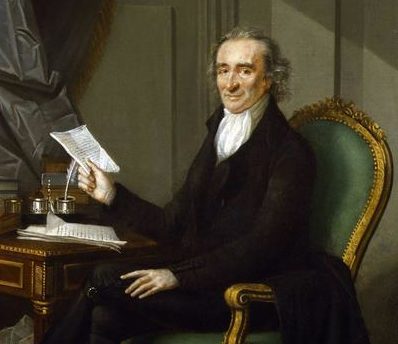
Thomas Paine is one of the most significant political thinkers in American history. Paine’s pamphlet Common Sense inspired a revolutionary vision and mainstreamed the concepts of democracy, self-determinism, and equality. Along with his advocacy for democratic governance, Paine’s critique of monarchy displayed its vast contradictions & illegitimacy. “But how a race of men came into the world so exalted above the rest and distinguished like some new species” (Common Sense, 11). Whether it’s Kings or Oligarchs, Paine highlights that such vast amounts of political and social inequality cannot be natural unless monarchs are a separate race from the rest of humanity, which is obviously laughable.

In Paine’s view, inequality was justified through the customs and traditions that legitimize arbitrary power. Because Paine understood these inequalities were merely a social construction of elites, rather than a result of natural inequality, he recognized the fight to expand democracy & equality was purely a matter of political will: “We have the power to make the world over again” (Common Sense, Appendix). This was Paine’s call to revolution & restructuring of our political and social order to mirror what he saw as our natural inclination of solidarity and interdependence. Paine’s rejection of tradition, questioning of authority, & the pursuit of social equality & democracy has had a profound impact on the boldest & transformative political moments in US History, including Reconstruction.

The Second Founding

The Reconstruction Era is the period following the American Civil War, in which the push for material freedoms for African Americans such as voting rights, political representation, & economic security began to take place. Reconstruction was a period of transformative politics that was meant to expand & uphold those fundamental rights of democracy, equality, and liberty for all. Although Reconstruction failed in 1877 following the white supremacist backlash & implementation of Jim Crow, it was a template for radical social & political change that Paine spoke of in the late 1700s. The attempt to redefine our economic & political systems to reflect an egalitarian worldview that recognizes the human & civil rights of African Americans, against the will of the plantation class of the 1860s, shows the influence of Paine’s ideas. The Radical Republicans understood Paine’s call to “make the world over again”. They rejected the conventional wisdom, arbitrary authority, & unjust laws that were meant to legitimize the unequal & anti-democratic reality of the United States in the 1800s. The Radicals Republicans saw that transformative economic & social change was necessary to fulfill America’s promise to African Americans, just as Paine realized during the Revolutionary Era that transformation was needed for the colonists to have the rights to self-determination & self-governance.

The Greatest Generation

Paine’s vision re-emerged once again in the 1930s, with the election of Franklin Roosevelt, the implementation of the New Deal, & a call to action for the American people to embrace their “rendezvous with destiny” (FDR quoted this original Paine quote in his re-nomination acceptance speech in 1936). The quote speaks on the connection between the Founder Revolutionaries and the Greatest Generation, both of who opposed conformity & pursued justice through transformative collective demands. Again, we see Paine’s ideas reemerge during a time of conflict & struggle but also an opportunity for change. The demands of the Labor Movement pushed Roosevelt to intact a variety of programs & policies to not only provide relief and recovery to Americans impacted by the Great Depression, but to yet again expand the American promise of democracy, equality, & liberty. Roosevelt & the Labor Movement recognized that freedom in the 20th century cannot be actualized without material economic security ( i.e. freedom from poverty, starvation wage, homelessness, etc). The establishment of the minimum wage, social security, & the right to unionize was all a product of this new & radical view of the government’s role in the economy. Some have argued that these ideologies have strongly contributed to the furthering of a socialistic framework within the progressive wing of the modern Democratic party. They argue, in order to have a free society, our individual rights shouldn’t come at the exclusion of collective security and freedom including rights to healthcare, a living wage, housing, college education, and more.

The common theme here is that the conventional wisdom of each era heavily influenced opposition to the expansion of democracy. Most politicians during the 1870s abandoned the push for civil rights and economic freedom for African Americans & mainstream neoclassical economists in the 1930s rejected the economic theories espoused by the New Deal coalition. Thomas Paine’s vision served as a catalyst to break from this traditionalist worldview, question the legitimacy of authority, & constantly demand a transformative change of illegitimate structures and systems under his reasoning. Paine saw the despotism of The Crown firsthand & wrote about the need for Revolution in Common Sense in 1776 & still, his influence lives on centuries later through the revolutionary politics of modern American history.

The Truth about Racism and its Statistics in America

To many, the civil rights messages of figures like Martin Luther King Jr. still ring true today as America continues to navigate racial tensions. With protesters taking to the streets and the election just around the corner, racism has resurfaced as a topic that both sides of the aisle have to weigh in on. In order to address what, if anything, should be done about racism, it is first necessary to have a comprehensive understanding of what racism means in the context of modern America and, by extension, interactions between black people and police.

Systemic Racism Analysis

With the explosion of peaceful and non-peaceful protests across the U.S. following the death of George Floyd, many people wonder about the motive of demonstrators. Justifications for breaking social distancing guidelines, defacing property, and other civil unrest range anywhere from defunding the police to destroying capitalist systems. However, the shared message between those leading demonstrations seems to be the fight against systemic racism. Systemic racism is not an easy term to define. It does not have to be explicitly codified in the laws or policies of an institution. To those committed to combating systemic racism, discrimination based on biological race or skin color is pervasive and normalized. They point to the deaths of George Floyd and Breonna Taylor as manifestations of this.

The variables surrounding the death of George Floyd and Breonna Taylor are circumstantial at best. In order to convict an individual of first or second degree murder, intent must be proven. Furthermore, in order to prove that an individual committed murder due to prejudice (a hate crime), intent for the killing must be proven to be driven by prejudice such as racism. Judging by the escalation of Black Lives Matter demonstrations in the name of George Floyd and Breonna Taylor, many have judged the intentions of involved police officers to be prejudiced. However, evidence such as the gunshot wound to an officer in the Breonna Taylor case suggests that the fatal shooting of Taylor was incidental collateral damage in officers’ discharging of weapons in reaction to Taylor’s boyfriend shooting a police officer. But, the specific details of the case are to be evaluated by a grand jury. Thus, evidence in the Taylor case remains circumstantial and inconclusive about intention, let alone prejudiced intention, in the killing of a black individual. Similarly, the congruence between the fatal neglect of a police officer kneeling on George Floyd’s neck and prejudiced action against an individual based on their skin color remains debatable. That is not to say that Breonna Taylor or George Floyd deserved to die. However, the reason behind what led to their death may or may not include racist motives.

Taking into account the ambiguity of intentions and circumstances surrounding instances of police brutality, case examples of manifestations of systemic racism do not seem to put racism into perspective. In trying to better understand what racism in a huge and complex system such as the US, case examples do not provide a complete picture.

Racism Statistics in Education, Government and Occupation

In order to define racism, it is important to understand inequalities between people of different races. Inequality may exist in the context of structures and institutions such as education, government, and occupation. In addition, inequalities may exist in subtler areas of life such as culture and family. Almost all bodies of research indicate that schools with a predominantly minority student body disproportionately suffer more from larger class sizes, a lack of qualified teachers, and an overall inability to provide resources to students. For now, it is somewhat unclear whether the cause of under-funded and neglected portions of the education system are due to racial bias or are simply symptoms of economic equality. A study by David Mosenskis points to a causal relationship in Pennsylvania between the skin color of students within a school district and how much that district receives in funding. However, more research is needed to conclusively implicate racial bias as a primary factor in education in other states and districts. In addition to discrepancies in education, many Americans point to a lack of representation in government for racial minorities. However, Pew Research Center indicates that Congress continues to set records of minority representation every election cycle. Additionally, many Americans point to the fact that minorities are significantly over-represented in lower-paying jobs. Many see this as evidence that processes such as hiring and deciding employee promotions are biased. In respect to family structure, Brookings reports that from 1965 to 1990 (in the wake of the Civil Rights Movement) the percentage of black infants born into families without fathers increased from 24% to 64% compared to the percentage of white infants which increased from 3% to 18%. Taken together, factors such as education and family structure are considered to be strong influences on socioeconomic inequities.

Controversy emerges with disagreement about how these different factors mix together to cause inequalities between races such as the wealth and income inequality gap between white and black households. Those who view statistics through the lens of systemic racism are likely to attribute any discrepancy between races or differences in representation of races to prejudice. In this way, rather than defining racism as a explicit or intentional bias, any policy or institution that leads to a discrepancy between races may be considered racist. In contrast, an individual might view inequalities between races as consequences of factors such as culture or personal choice. Looking at partisan differences between perceptions of racial privilege in a study by Pew Research Center, Democrats are far more likely to view being white as a significant advantage. Consequently, it is no surprise that Democrats view race as a driving indicator of one’s likelihood to succeed, fail, or suffer as a victim of police brutality. Conversely, Republicans are less likely to attribute an individual’s socioeconomic position to their race and more likely to attribute it to their personal decisions and productive merit.

Racism Statistics in Police Brutality

In the current political climate, police brutality remains as one of the primary topics in discussing racial tension and inequality. According to Statista, black Americans experience higher rates of killings by police officers than any other race, while white Americans are the most killed race. This study shows that black Americans are about twice as likely to have a fatal encounter with a police officer. However, although it is more likely for black people to be killed, the Washington Post database on police shootings indicates that only 14 unarmed back people were fatally shot in 2019 which represents the continuation of a 63% reduction in fatal shootings of unarmed black men since the study began in 2015. While it is tragic that black people are statistically more likely to be fatally shot by police officers, the small and decreasing proportion of the African American population that experiences fatal instances of police brutality does not help to prove Joe Biden‘s that statement that “black Americans wake up knowing that they can lose their life over the course of just living their life.” Thus, many go farther in asserting that the criminal justice system as a whole is racist due to higher incarceration rates of black people. Others point to a significantly higher proportion of individuals that are black that commit violent crimes as compared to other races, as 37.8% of violent crimes are committed by black Americans despite black people representing only 13.4% of the general public. Interestingly, factors such as high poverty among black Americans may also help explain inequalities in fatal shooting statistics. This study demonstrates how the rate of poverty can explain the higher number of black Americans being killed by police officers. This study claims that there are increased odds of simply being black and poor in America at a ratio of 2.5, which closely resembles the 2.29 increased odds of which black Americans are killed by police officers. More importantly, the odds-ratio of poor black citizens being killed by police officers is 3.34 which is actually less than the odds for white citizens being killed by police officers at 3.64. These statistics do not correlate with the claim that police officers are collectively biased in their kills by race. Nevertheless, these statistics do not disprove isolated cases of racism.

Politics

At its core, racism remains a political issue. Given the history of government-induced racial inequity in the past as well as many people’s belief in government’s general responsibility to facilitate social well-being and equity, the question of how to address racism is often targeted toward politicians. More specifically, in recent months, the death of George Floyd has sparked interest in reforming laws surrounding policing. To many, reforming the police can involve eliminating qualified immunity, imposing more restrictive recruiting, and requiring better training. These reforms are primarily driven by the desire to create a more transparent and less-militarized police force composed of officers that can be held accountable. In simpler terms, many argue over the amount of money allocated to police. Some Democrats such as House Representatives Ilhan Omar and Alexandria Ocasio-Cortez have supported the movement to “defund the police.” The movement hopes to diminish the proportion of the budget assigned to the police and reinvest the funds into areas like education and public health. However, despite rallying cries for police reform, the direction towards progress remains elusive. In the face of concerns of over-policing specific neighborhoods with predominantly black populations, a Gallup poll indicates that 81% of black people in America would like to maintain or increase policing in their own communities.

Democrat presidential candidate Joe Biden and President Donald Trump have varied approaches to racism and race-based inequality. Joe Biden has vowed to help the black community by tackling housing inequality, expanding funding to public education, and appointing the first black female Supreme Court Justice. In contrast, President Trump has touted low black unemployment numbers before the economic devastation during the COVID crisis. It is far from clear where the politics surrounding racism will and should go from here. Given the hazardous and often-polarizing nature of the topic, it is undeniably imperative that we are able to objectively assess both the problem of racism, and the policies to address it.

“What is your Life’s Blueprint?” -Martin Luther King

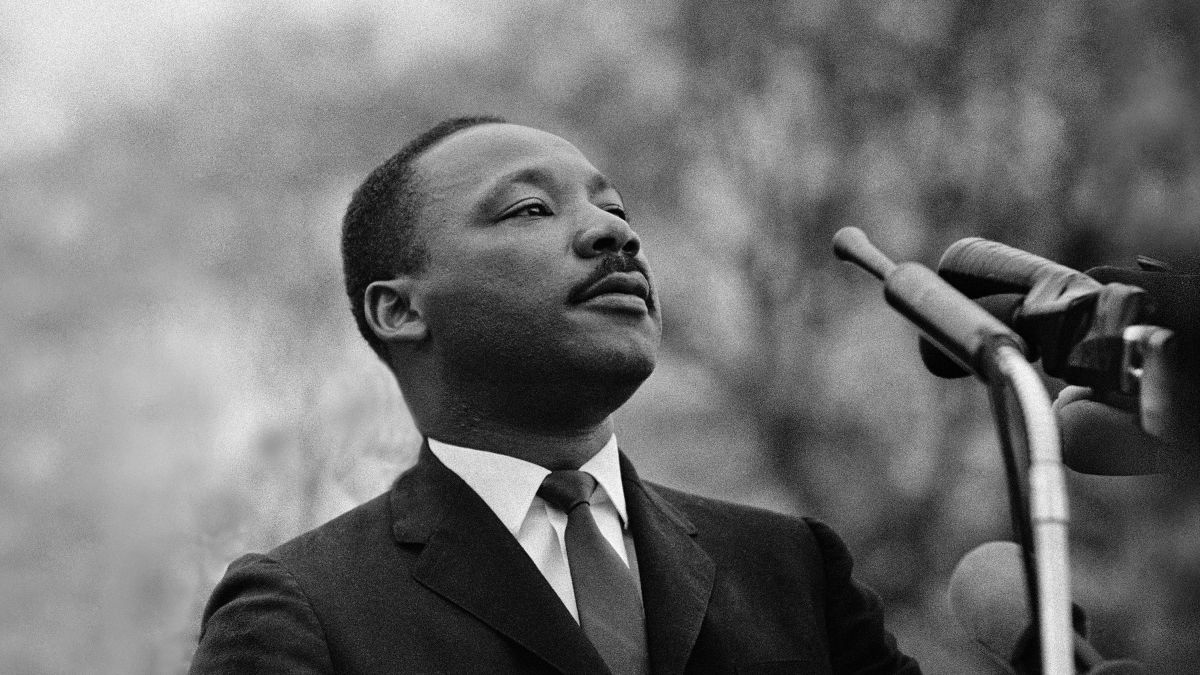
Six months before he was assassinated, Dr. Martin Luther King spoke to a group of students at Barratt Junior High School in Philadelphia on October 26, 1967.

Martin Luther King remains one of the most hallowed orators in American history. With a voice so imbued with power, King often delivered eloquent speeches with broad ideas on the national stage. This speech, however, was delivered in a high school gym.

In his speech, Dr.King speaks to high school teens regarding their futures and the fight to keep those dreams alive. King’s speech gave so many Black teenagers across America the motivation to continue their educations, their belief in their own self-worth, and the tenacity and strength to be the best they could possibly be.

https://www.youtube.com/watch?v=AjkmW8MxopU

The school where King delivered his speech, Barratt Junior High, was later transformed into a middle school, and subsequently demolished in 2011 due to declining student enrollment. Though the building may exist no longer, Dr. King’s blueprint has remained a focal point for Black youth in America.

Beyond Black youth, Martin Luther King’s speech also speaks to the youth of every race. This fight for equality is all of our fights. It is up to every single community to get up and fight for this movement on the behalf of us all. We can no longer keep our heads down as it comes to racism.  In Martin Luther King’s own words: “If you can’t fly then run, if you can’t run then walk, if you can’t walk then crawl, but whatever you do you have to keep moving forward.”

How Looting Affects Small Businesses

The riots following the death of George Floyd have been made known to US citizens. We are now reminded on a daily basis through the defacing of monuments and lootings of businesses that the death of George Floyd has invoked outrage into the hearts of many Americans. Images of destroyed buildings and monuments have been posted on social media throughout late May and most of June. 

One image in particular that many people recollect is that of a Target store. The store was ransacked, aisles were destroyed, and shelves were stripped. This type of action reoccurred throughout many businesses and stores in the United States. Many people were angered by the actions of the rioters, and others were on their side. To the surprise of the public, a strong supporter was none other than Target. 

“As a Target team, we’ve huddled, we’ve consoled, we’ve witnessed horrific scenes similar to what’s playing out now and wept that not enough is changing. And as a team we’ve vowed to face pain with purpose,” said CEO Brian Cornell. He was not concerned about the looted store as he promised to continue “rebuilding and bringing back the store that has served as a community resource since 1976. In any of our other locations that are damaged or at risk, the safety and well-being of our team, guests and the surrounding community will continue to be our paramount priority.” The company went as far as to send truckloads of supplies and aid to the damaged areas. 

Target’s response towards the looting of one of their own stores was simply a result of the fact that it was a toll they could afford to pay. While the response of the nation-wide chain was ringingly heard, it was not a common one amongst looted store owners. Unfortunately for small businesses, they are not able to rebuild in the same way that Target has. 

A video of a man by the name of Hak Tong Kim crying at the loss of $350,000 looted from his store represents the impact these lootings have on small businesses. “I couldn’t sleep today… I am so unlucky,” he said. Kim stood in the parking lot with a wrench in hand as he watched his own creation get demolished while receiving phone calls from friends and family to come home to safety. Kim has no current plans to reopen. 

The tears of Hak Tong Kim represent the loss that many small businesses have gone through during these lootings. The impacts are emotional, financial, and material. 

An estimate calculated by the Anderson Economic Group indicates that the total cost of the lootings in the 20 largest metropolitan areas adds up to more than $400 million. This estimate accounts for property damage, stolen items, money, and any cost to rebuild. 

Small businesses that are currently suffering from the impact of these damages have high hopes of recovery. Unfortunately, this will not come with ease. Small businesses were already experiencing financial complications due to the effects of the coronavirus and the lootings only fueled this effect. These kinds of losses have served as a blow not only financially and materially, but in terms of emotion and morale. 

In another case in Tampa FL, the owner of a local jewelry store watched on TV as her store was broken into just minutes after the store was left unattended. She described other businesses in the area as “disappointed, shocked. They are suffering because now they have bills to pay. Everybody has bills to pay.” 

Gov. Ron DeSantis responded to the actions of the rioters saying, “Florida has zero tolerance for violence, rioting, and looting. George Floyd’s murder was appalling, and the Minnesota perpetrators need to be brought to justice, but this cannot be used as a pretext for violence in our Florida communities.”

The small businesses themselves have not been the only things harmed during the lootings. Employees have been largely affected as well. 

What has gone unnoticed about the effects of looting on small businesses is the fact that many are not able to work until the store has rebounded. Employees from stores that were looted are losing hours and money even if the store is still able to remain in everyday service. Some stores were able to take orders from customers with shortened hours and less workers. 

Large businesses simply have the capacity to recover from these lootings. In February 2019, there were approximately 1,844 Target locations throughout the nation. The annual revenue of Target in 2019 was approximately $78.11 billion. To replace a single store for a large company is a simple task. 

A small business may only make $200-400,000 in annual revenue. In the case of Hak Tong Kim, approximately $350,000 was stolen or damaged.

The effects of looting on businesses has been inevitably negative. Especially in terms of recovery, small businesses were hit much harder than larger ones. The financial, material, and emotional damages will make it hard for small businesses to rebound or to even restore a similar version of what the businesses had been prior to the lootings.


The Morality Behind Rioting

On May 30th, Salt Lake City faced one of the first violent protests seen in the history of the city. An empty police car was flipped and incinerated, the windows of the local 7-11 shattered, completed with a mob-style beat down on a man wielding a crossbow with intent to harm.

The aftermath of the protest garnered more outcry against the violence of the riots than support for the larger Black Lives Matter movement.

Rioting draws the attention of the media, and consequently serves as a focal point for those who speak louder about “unnecessary violent actions” but not when the same unnecessary violence is executed by the police. In America, violent protests means shattered glass, but violent police means death. One is a sentence, the other is not.

Before the incineration of the police vehicle, an officer had shoved an elderly man to the ground, in almost every case of violence in the Salt Lake City protest, acts of violence were preceded by violent police actions.

The intent behind rioting is unity in doing so; it is not like black Friday, where patrons fight over who will receive the next i-pad mini, rioting is united. Seemingly meaningless destruction may not help to propel the Black Lives Matter movement – but jarring images symbolic of Black pain will.

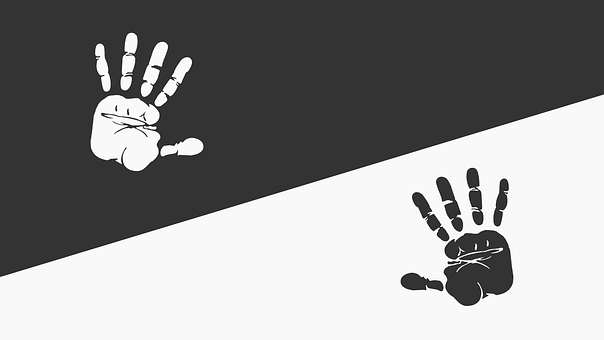
One such example is the bloodied palms of the Serve and Protect sculpture at Salt Lake City’s Public Safety building (see above). The image has garnered national acclaim and serves as a symbol of the greater movement ahead. Vandalism is a crime, but without the crime, we would not have been able to see the symbolism in what lies ahead.  

Many have come to question whether or not violence is warranted within protests, it comes down to effectiveness. Rioting has always been a valid form of protest. Since the dawn of American time, democracy has always been defended through violence. There is precedent, and thus far, protests seem to be garnering renewed support and changes are slowly being made with new laws against no-knock warrants and charges against the police officers.

White entitlement to the bodies of People of Color has gone on long enough. It is only in the last few decades that People of Color have had autonomy over their own bodies. Consider Colin Kaepernick – one of the most visual instances of a trigger to white fragility. A Black man, silently, and respectfully, going down on one knee, and the immediate uproar of anger and criminalization he faced.

It is not your place, nor mine, to speak as to how the oppressed should respond to their oppressors. The Black community is exhausted, rightfully so. They have protested peacefully, silently, politically, and are still being met with the same outrage as they have from the beginning.  Four hundred years of Black pain and anger, and they are still being killed like dogs in the streets.

If history is any indication, it takes a true spark, or in this case, it may take a bonfire, to truly ignite change. The least we can give is our solidarity in doing so.


Top 20 Politician Tweets about George Floyd

Co-Author: Claudia Morales

The nation and the world are seeing the largest movement for race equality since Martin Luther King Jr. Peaceful protests to riots, the death of George Floyd has sparked a powder keg. Many Americans are outraged.

This came right after the loosening of restrictions from social distancing. Many government officials have an opinion on this issue. Here are the top 20 from some of the biggest names in government right now.

20. Cory Booker

Senator Cory Booker of New Jersey has shown active support for the Black Lives Matter movement. On June 2nd he attended a Senate Judiciary Committee hearing to co-sponsor a bill that would prohibit police officers to engage in a choke-hold, eliminate racial profiling, increase police accountability, etc. Furthermore, Booker is wanting to end qualified immunity for police officers. Even though there is concern for a surplus number of lawsuits filed against police officers without immunity, Booker believes that priority should be placed on civilians being able to take civil action against police officers if their rights are violated.

19. Keisha Lance Bottoms

After a long day of peaceful protest in Atlanta on May 29th, riots overturned the evening into a disaster. The city began burning in flames as the situation got out of control and police officers turned to tear gassing to disperse crowds. Mayor Keisha Lance Bottoms attended a press conference at City Hall that same night to deliver a speech that received high appraisal by the nation. She expressed, “When I saw the murder of George Floyd, I hurt like a mother would hurt . . . What I see happening on the streets of Atlanta, is not Atlanta. . . If you care about this city, then go home.” Her speech proved to be effective because many returned home that night shortly after it.

Mayor Bottoms implemented a city curfew immediately, but since then there have only been peaceful protests so the curfew has been lifted. She has been serving as mayor since 2017. According to the Washington Examiner, her prospects of being vetted as a nominee to become Joe Biden’s vice president has improved as she has gained the spotlight for delivering an extraordinary speech.

18. Gavin Newsom

Along with other major cities, Los Angeles has witnessed a lot of rioting these past couple of weeks. Governor Gavin Newsom has seized the opportunity to meet with the community members and leaders to discuss police brutality and racism. He is also meeting with multiple mayors to further discuss the Black Lives Matter Movement and what can be modified in their system to provide equality to black members of the community. Many of them are considering cutting the police budget.

Newsom has recently expressed his opposition to the use of force against peaceful protesters on Twitter. He is “Calling for the creation of a new statewide standard for the use of protests” which will not be tolerated. Newsom’s approval ratings have increased significantly.

17. Tom Wolf

Philadelphia is one of the cities that has captured the nation’s attention as multiple police vehicles were set on fire, police officers were injured, and local businesses were looted. Governor Tom Wolf implemented a night curfew and declared a state of emergency calling on the national guard.

However, Governor Wolf has recently done something that is not being commonly done by other governors, he joined the protesters. Marching from Harrisburg capitol to a community center protesting police brutality and racial injustice.

16. Kate Brown

Oregon Governor Kate Brown is currently dealing with two critical issues: handling the protests in her state and challenging a county court rule in which churches can reopen. She is supporting the Black Lives Matter movement and is praising protestors. Governor Brown even included how “I count myself as one of the many white politicians whose good intentions haven’t done enough to tackle the scourge of systematic racism.” She promised that she will push for state level work to focus on racial equality.

On the other hand, multiple rural churches are challenging her COVID-19 state orders. Judge Matthew Shirtcliff issued an injunction on Brown’s order, but the State Supreme Court immediately stepped in. The court is now awaiting to set deadlines for the case.

15. Henry McMaster

Governor of South Carolina, Henry McMaster, is supportive of Trump’s perspective on how to handle protests as he witnessed firsthand the state confronting massive riots. There were historical statues being graffitied, looting, setting fire to police vehicles, etc. McMaster recently had a telephone call with Trump describing the chaos of the situation. He specifically pointed out the difference between protests that were handled on different days with force compared to those that were not. McMaster even acknowledged that Trump was right about the urgency of sending a heavy police force.

However, McMaster later tweeted support for peaceful protesters. He expressed understanding for the anger members of the community are feeling about racial injustice.

14. John Kasich

Governor John Kasich, a former 2016 Republican presidential nomination, is vocalizing his understanding for members of the community feeling frustrated and angry due to racial injustice. He has been working on issues that are centered on racial injustice since December. After the Cleveland Division of Police came under scrutiny for gunning down a 12 year old black boy named Tamir Rice, he created a task force. This task force is currently working on a state policy regarding the use of deadly force by police. The practice of recruiting and hiring police officers is also going to be modified.

13. Ron DeSantis

Governor of Florida Ron DeSantis had a telephone call meeting with Trump and other advisors, he increased the amount of police force in Florida and implemented a curfew. In a statement released by DeSantis, he proclaimed that, “Florida has zero tolerance for violence, rioting and looting . . . George Floyd’s murder was appalling . . . but this cannot be used as a pretext for violence in our Florida communities.” The amount of resources that Florida has available for security include mobilizing 700 National Guard soldiers and 1300 Highway Patrol troopers. Many protesters have since been arrested for not following curfew and misbehavior conduct.

12. JB Pritzker

Following the unrest of protesters, looting, and disaster that has taken place in Chicago, Governor JB Pritzker was one of the many governors who participated in a conference call with Trump. Pritzker confronted him by expressing how “I wanted to take this moment . . . to speak up and say that I’ve been extraordinarily concerned about the rhetoric that’s been used by you,” according to CNBC Chicago 5. Trump responded by shifting attention to the concerning rhetoric from Pritzker regarding the pandemic. Governor Pritzker and Mayor Lori Lightfoot both then publicly criticized Trump for his response in handling the situation in Minneapolis.

11. Mitt Romney

Senator Mitt Romney has recently made headlines for being the first GOP senator to actively participate in a Black Lives Matter protest. He marched with a Christian group in Washington D.C. He tweeted that “We need a voice against racism, we need many voices against racism and against brutality.” Although, he was recently criticized by Trump for participating in the march.

10. Gregg Abbott

Texas Governor Gregg Abbott has stated that, “This is the most horrific tragedy I’ve ever personally observed,” and has personally visited the Floyd Family. He has also hinted that there may be something called the George Floyd Act which would see to the restructuring of police departments and services.

His state had special attention as George Floyd’s service and burial where held in Huston.

9. Andrew Cuomo

Governor of New York Andrew Cuomo has stated that George Floyds death should not go in vain. He has stated that this is a time for change and for the nation to learn something. He is saying that this was due to decades of racial injustice.

He has also said that it is time for a new era of policing and called out Trump’s reaction as crude, mean and irresponsible.

8. Gary Herbert

Utah Governor Gary Herbert has stated support for the police and use of the national guard in Washington D.C. He has also stated that he is deeply saddened by George Floyds death, calling it “inhumane” and “Brutal.” Violent protests broke out in Salt Lake City as those asking for change not only mourned George, but local man Bernardo Palacios-Carbajal. who was gunned down by police.

7. Jay Inslee

Governor of Washington D.C Jay Inslee stated his opinion on reforming policing. He has urged those in his community to propose new legislation. He is meeting with Ethnic Minority leaders and the police department to come to the best conclusions. President Trump reached out to Governor Jay Inslee through a tweet. Trump expressed concern for the city of Seattle and the urgency of the governor and mayor to take control of the riots.

He has also heavily criticized Trump and his remarks on deploying the national guard to stop protestors stating that “These are the rantings of an insecure man trying to look strong, after building his entire political career on racism and the lie of birtherism.

6. Nancy Pelosi

Speaker of the House Nancy Pelosi has had little public statement on George’s death and protests. Participating in the moment of silence and kneeling in the Emancipation Hall for 8 mins 46 seconds. Each major member wearing Kente cloth, a traditional African scarf, has brought heavy criticism as a PR play rather than respect.

Nancy is also on board for police reform and went over some of the changes she and other members of the house would like to see like demilitarization and lynching as a federal crime and the tearing down of confederate statues.

5. Tim Walz

Tim Walz, Governor of Minnesota, has been vocal about how tragic this event has been. Going to the site where the death of George Floyd occurred he has stated that he is afraid of “white politicians appropriating black pain.” He went on to say that he is saddened that he has become friends with mothers because of events like this coming to light. He also asked his state early on June 9th to have a moment of silence in honor of George for 8 min 46 sec, the time George was on the ground suffocating.

4. Bill Barr

Attorney General William “Bill” Barr is for the police force. He has stated in interviews that a majority of Police are good people and that policing is one of the toughest jobs. He stated that you shouldn’t “automatically [assume] that the actions of an individual necessarily mean that their organization is rotten.”

Bill was involved in the unwarranted clearing of peaceful protesters so Trump could have a photo-shoot in front of a church.

3. Barack Obama

The first black president in office for two terms and a hero to many people of color, Barack Obama has been active in stating his opinion on reform. He also started and still funds the My Brother’s keeper alliance “so that every boy and young man of color in America would know that their dreams mattered as much as any other child’s.”

He has also written articles on how protesters and activists can bring real change to this problem. Being one of the best examples that equality has come a long way, but still have much further to go.

2. Joe Biden

Taking this opportunity, Joe Biden has been continually active on social media. Talking with Hollywood actor Don Cheadle, who plays Roadie in Iron Man 2 and Avengers series. Not making a direct appearance at his funeral, Joe did make a video to be played stating his condolences and understanding at the loss of loved ones.

He has also stated that reform is in order for banning choke-holds and having more accountability for officers’ actions.

1. Donald Trump

Many are criticizing Trump on his reaction to the protests. From tear gassing to clear a way to St. John’s Church, an Episcopal church, for a photo shoot. He has been retweeting videos judging George Floyd’s character (this has since been removed from his twitter feed).

The video judged George’s character and criminal history but still said that what police did was wrong. He has also tweeted, stating that official’s “Should have let police do their job and brought in National Guard on Day One, not Day Four!” in a Tweet about the protests turned into riots.

COVID-19 and the Spanish Flu, How They are Related.

The U.S. is facing a serious pandemic with Covid-19 for the first time in 100 years, as new cases rise rapidly. What’s disturbing is how similar our situation is to one of the deadliest diseases in human history, the Spanish Flu. Even with this history to drawback on, America still isn’t taking it seriously, perhaps, because history sometimes likes to repeat itself.

Spanish Flu

The most devastating of all pandemics in human history other than the Bubonic plague, the Spanish flu took 10% of the world’s population, and of that 10% were roughly 675,000 Americans.

“Officials in some communities imposed quarantines, ordered citizens to wear masks and shut down public places, including schools, churches and theaters.” according to history.com. This is the case with many pandemic level outbreaks. During this time was also the first use of the quarantine system. It has been 100 years since we have had to implement it on this scale again.

People are not happy with being shut in, especially by an entity who is supposed to let its citizens have “freedom.” There were three spikes during the Spanish flu during summer, fall and winter of 1918. 

“Historians now believe that the fatal severity of the Spanish flu’s ‘second wave’ was caused by a mutated virus spread by wartime troop movements.” wrote Dave Roose, a writer for history.com. Viruses tend to mutate, and extra exposure and changing bodies help it do so. With loosening restrictions and exposure after months indoors, we could see some devastating mutations.

Similarities

The key to containing any disease, according to Jeremy M. Berg, Ph.D in an article with nhi.gov, is containment speed and awareness. Unlike the late warnings given to the world by China about COVID-19, people in 1918 were able to lock down quickly when this began spreading to the US. 

“Introducing public health measures soon after the first cases appear could greatly reduce the number of people who get sick,” said Jeremy. But just like COVID-19, people were not too keen to be told what to do. 

Humans have a tendency to repeat history, and just like back then, today, people protested against being locked in and locked down. There were similar protests that occurred during the Spanish flu as well since this was the first implementation of quarantine. Just like in 1918 there will be a spike of new cases after large congregations.

“On Dec 19,  officials voted down a mandatory mask order, by far the worst day of flu/pneumonia deaths followed on Dec 30.” Tweeted Tim Mak, an NPR investigative correspondent. Tim has been doing extensive digging into articles, news clippings and government records to gather this information about Spanish flu protests.

Just like today there were protests against mandatory orders such as masks and business closure. The most relevant being the “Anti-Mask League” in San Francisco. According to an article from 1919 4,000–5,000 citizens attended a meeting on January 25 to protest mandatory masks. Though no solid numbers can be found, one can only guess the outcome.

Many believe that the protests today were organized by the national tea party movement according to NPR. Even so we all need to stay cognizant and understand that a virus doesn’t care what party you are fighting for or if you have a job or not. Staying at home has slowed the spread significantly according to the CDC, but has spiked around April 5th by 63,000 new cases.

Differences

The largest difference between Spanish Flu and COVID-19 is that the first came right after WWI ended. This left many communities without available care because many doctors were drafted or dead. Food, working men, and everyday life was upended because of this. Not to mention that the disease was able to spread due to troops returning home. The war and the flu were able to wipe out roughly two thirds the world’s population within 5 years. 

Medical

Another difference is the types of medicine we have available today. Even with the most severe cases we have the ability to keep someone alive to fight through their symptoms. Respirators, antibiotics, a sterile working environment and sheer knowledge give us an incredible advantage since the last pandemic.

Even with all this though many hospitals at the start didn’t have enough equipment. Stores ran out of face masks and respirators within days without hope of restock. People today panicked and rushed to get supplies when they learned that this was more than just another flu. According to the LA Times however, during the Spanish flu people were already accustomed to their pandemic.

Travel

Unlike today the airplane was just invented and not used for commercial purposes. We have the ability to get across the world in a little less than a day, they took weeks or even months to get from one continent to the other. Most people were still using trains or boats for major transport needs, not to mention the expense. The biggest reason the Spanish flu hit so hard is because of troops returning home from the war, spreading a new strand of the disease.

“The first quarantines in the region were enacted in September 1918 at the Naval Reserve Station at Los Angeles Harbor and the U.S. Army Balloon School in Arcadia,Wrote Gustavo Arellano of the LA times. Some of the first sites quarantined were naval bases or military outposts with returned soldiers.

The End?

Just like the Spanish Flu, Coronavirus will pass and it will be business as usual. Even when this will start to look better it doesn’t mean you can let your guard down. According to the CDC there will be spikes following looser restrictions, and we might not see the end for a while. Wear the mask a bit longer, wash your hands regularly, try to stay home if you are feeling ill. When the government lifts restrictions it is up to the citizens to stay vigilant and enact what we have learned. This isn’t the first and it won’t be the last pandemic humanity will have to deal with, but hopefully we will learn.

Khashoggi: America’s Loss

This piece on Jamal Khashoggi seeks to reflect the ideas portrayed in Thoreau’s Civil Disobedience. Though Thoreau’s ideas were published in 1849, his central claims maintain a key role in the American narrative today. In a modern perspective, Jamal Khashoggi is the martyr for the Civil Disobedience movement. Jamal Khashoggi was a Saudi dissident who dedicated his life to political reform for the people, by the people. Khashoggi was a columnist for the Washington Post and was outspoken against the Saudi crown and it’s repeated egregious human rights infringements, continuing to expose and persuade his audience to create a presence and make change. However, this very quality of exposure led to his assassination as he was killed and dismembered in the Saudi Consulate of Istanbul.

Khashoggi embodies Thoreau’s ideals as he seeks to inform every American and every person whom he can reach of his own experiences and hopes. Khashoggi becomes the modern day messenger of Thoreau’s principles as Thoreau says, “Let every man make it known what kind of government would command his respect, and that will be one step toward obtaining it.” (Civil Disobedience) Khashoggi spent his life’s work dedicated to informing and highlighting the injustices he and others suffered from. Khashoggi has made clear what kind of government will demand his respect. The only lingering question is whether we will listen.

Khashoggi’s death lead to subsequent articles and calls against the Saudi Government, but few came from the people themselves. It is simply indolent to claim that we as Americans “recognize [our] right to revolution”, for in the own words of Thoreau, “almost all [of us] say such is not the case now.” If the Washington Post and Jamal Khashoggi live by the words “democracy dies in darkness” then we as spectators must live the line of Thoreau: “[for] a man has not everything to do, but something.”

This art piece illustrates Jamal Khashoggi in his traditional checkered Keffiyeh, but in the colors of the American flag: red, white, and blue. The colors serve as the reminder for what Khashoggi fought and died for, the proliferation of American values. Khashoggi received a haven writing for the Washington post, and we as Americans must continue to defend those ideals that give America her maternal characteristics. Free speech and the right to peaceably protest are the government granted intrinsic qualities of Americans, but in Khashoggi’s own words, “it isn’t just the Middle East where freedom of expression is in jeopardy” (Washington Post, Khashoggi’s final column). Despite the rising denunciation from news organizations, Khashoggi’s assassination failed to bring the condemnation of the most paramount power on this planet, The United States Federal Government. In the weeks following Khashoggi’s death, his life was a story unwritten and unread.

The American people seem to have grown accustomed to solely absorbing horrific narratives that end with an oddly optimistic note. Jamal Khashoggi’s life will not follow this pattern. We as Americans must force ourselves to listen to the jarring minor discord that is now part of all our lives. Jamal Khashoggi was the modern-day flag bearer for the first amendment, but for now, it seems as though that flag is now a tattered, ripped piece of cloth that whips through the sky. If anyone is to ever carry that flag above their shoulders again, they will be forced to think twice.