
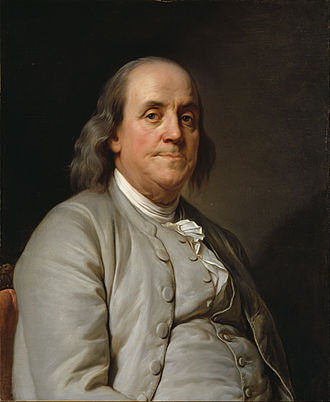
The United States is many things. It is hope for the hopeless, innovation, and superfluous. It is mixed with many great wonders and no matter which way you argue no one can deny that America is the greatest country to live in because of the freedoms and democracy it provides to its citizens. A man that embodies the dream of America is one of its founding members and presidents, Benjamin Franklin.
Born in 1706, he made many achievements in his life from a publicist to leading the modern understanding of electricity. He was every bit a scholar and the list of studies he produced and writings is astounding. He was a composer and musician and even improved upon the glass harmonica, a rotation device of glass bowls that create the sound fingers make around wet drinking glasses.
He was notably teachable and always open to study, conversation, and humility. He may have thought one way but would learn and study in his academic fashion. This was seen early in his childhood as his thirst for books was unquenchable. Originally Benjamin wanted to be a sailor, but the loss of his brother made his father fearful. Because of his avid reading, his father suggested becoming a printer instead and sent him to apprentice with his other brother.
At the age of 15, he founded the first truly independent newspaper during the times, The New-England Courant. His first real taste of politics was the paper’s controversial topics on anything that held power under the pen name Silence Dogood. His brother was thrown into prison for the remarks and printing of the Courant. While his brother was imprisoned he named Benjamin the new editor and the paper continued as usual.
After moving to Philadelphia, where he would call home, he established his 13 virtues. Being 20 at the time, this established and the very essence of the man he would be.
- Temperance: Eat not to dullness; drink not to elevation.
- Silence: Speak not but what may benefit others or yourself; avoid trifling conversation.
- Order: Let all your things have their places; let each part of your business have its time.
- Resolution: Resolve to perform what you ought; perform without fail what you resolve.
- Frugality: Make no expense but to do good to others or yourself; i.e., waste nothing.
- Industry: Lose no time; be always [employed] in something useful; cut off all unnecessary actions.
- Sincerity: Use no hurtful deceit; think innocently and justly, and, if you speak, speak accordingly.
- Justice: Wrong none by doing injuries, or omitting the benefits that are your duty.
- Moderation: Avoid extremes; forbear resenting injuries so much as you think they deserve.
- Cleanliness: Tolerate no uncleanliness in body, clothes, or habitation.”
- Tranquility: Be not disturbed at trifles, or at accidents common or unavoidable.”
- Chastity: Rarely use venery but for health or offspring, never to dullness, weakness, or the injury of your own or another’s peace or reputation.
- Humility: Imitate Jesus and Socrates.
(http://www.thirteenvirtues.com/)
He founded the prestigious University of Pennsylvania, and though he never attended college and was critical of it, Yale and Havered both presented him with a doctorate degree in the Arts for his scientific achievements. It does need to be mentioned, though most already know, that modern understanding of electricity is due in part to Benjamin’s kite experiment. Though not as lavish as stories go, he did fly a kite during a storm. It was never struck by lightning, but it did pick up the electric charge that he would use the key attached to show. He would put his hand to the key and be shocked. He not only showed lighting is electricity, but that it can be controlled and directed.
As postmaster, he delved into oceanography. This was all due to his past dream of wanting to be a sailor, and though he would live that dream when traveling abroad, his love of the ocean helped to drive this knowledge. He was able to establish the first monthly arrival postal system. During the times a letter traveled for days to months, and it was often irregular and arrival times shoddy. He was able to create a system that promised mail from around the world within a given month.
He was a diplomat, and without his connections to the French empire, America may not have been what it is today. He was only a month into his ambassadorship when he sailed off to France. Once he arrived he quickly established himself in the scientific and literary community. He worked his way through the ranks of the nobility and upper classes, trying to get France to openly declare allegiance with the American revolters. After the victory in the Battle of Saratoga, Benjamin Franklin and other American officials signed trade and treaty agreements with France, officially declaring them an ally. This debt to France ironically resulted in the United States’ ability to make the Louisiana purchase.
Though he did not invent or bring the Freemasons to the Americas, he did publish the first book for freemasons here in the US Constitutions of Free-Masons by James Anderson.
Achievement after achievement, he is a man that should be respected, despite his flaws. He was always at odds with the owning of slaves and the freedom of human life. He freed his slaves at the age of 51 and later at 54. It was different times and the reason for his support was controversial because of his on/off advocacy for slaves and other nationalities. He would say negative and positive comments about them, flip-flopping, such as “thieves and savages” and then praise them in other ways such as they are “obtaining a higher understanding… (than others)”.
He is something that everyone should achieve. His ideas, drive, and principles are undoubtedly great and should be respected. He was every bit what America was, and what it can still be.