
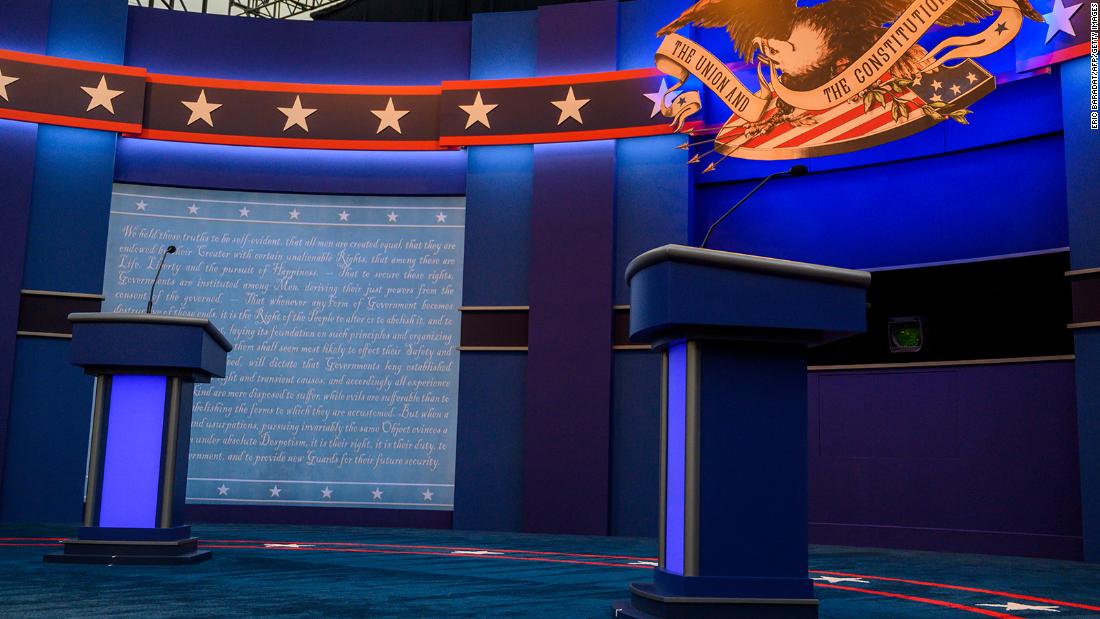
In our short history as a nation ruled by many, one has to wonder how politicians have gotten to where they are with just words. Promises of better government practice, dodging important questions, finessing through accusations – these are just some of the “acceptable” tactics that have been employed.
Though ancient Greeks solidified the idea of debating in their governments, it wasn’t until the early 18th century that it started being used in everyday thought.
As a nation, we took this idea and used it to help choose who the next leaders would be. Our presidents have been chosen based on how they sound, look, and present during this micro-war of words.
1960, Kennedy V. Nixon:
It is no surprise that the first-ever broadcast debate in US history helped sway viewers’ votes. Though Nixon had the voice, JFK had the looks according to many scholars. Many people watching from televisions back then had a luxury many at the time still could not afford. Though some say that Nixon looked tired and Kennedy youthful, the polls showed something else. Though both made great arguments about internal affairs. It was the later three debates that shaped a win for Kennedy. His opening and focus was about equality and going over the statistics of black vs white. This would have won him a large if not most of all the African-American people able to vote.
Nixon Focused on growth and statistics for income. He never touches on equality and lost out on sympathy votes from equal rights activists. This would have lost him sympathy votes from equality supporters.
| Candidate | Party | Electoral Vote | Popular Votes |
| John F. Kennedy | Democratic | 303 | 34,227,096 |
| Richard M. Nixon | Republican | 219 | 34,107,646 |
Looking at the numbers they were very close with the popular vote. The leading factors for Kennedy’s win were the electoral vote. This is also held in history as important because both candidates would end up as president of the US.
1976, Jimmy Carter V Gerald Ford:
This one makes it into the history books by setting the standard that in every election cycle there will be a set series of presidential debates. According to historians, Republican candidate, Gerald Ford, was running behind in the elections and opted to have a debate. They held three debates (the standard now).
| Candidate | Party | Electoral Vote | Popular Votes |
| Jimmy Carter | Democratic | 297 | 40,825,839 |
| Gerald R. Ford (I) | Republican | 240 | 39,147,770 |
It also is argued that this debate was the first to show how vulnerable one can be during a live debate. Ford declared that the then Soviet Union had no power in Europe. The moderator called him out about the countries being occupied and under influence of the Soviet Union. Ford stuck by his statement, though false, about the Soviets not occupying Romania, Yugoslavia, or Poland. Some argue this statement may have cost him reelection.
1980, Ronald Reagan V. Jimmy Carter
This one is argued due to the method of how each candidate presented their arguments and facts. While Carter’s Presidency was good, his presentation in the debates was fact-filled, but not interesting. Reagan on the other hand was a showman and even coined phrases like “are you better off than you were four years ago?”
| Candidate | Party | Electoral Vote | Popular Votes |
| Ronald Reagan | Republican | 489 | 43,901,812 |
| Jimmy Carter (I) | Democratic | 49 | 35,483,820 |
This type of debate showed that entertainment and presentation are just as good as hard facts and evidence. Catchphrases helped solidify his points while also driving home the party’s flaws.
1992, Bush V. Clinton V. Perot
The significance is not lost when you have both major parties and a third party member duke it out in recent history. The significance is that this is the first time in history other than Lincoln an independent came this far. It is also not lost on the fact that they take from the popular vote pool, making it more difficult for the other two major parties. This was an issue for the lagging candidate, George Bush Sr., due to the popular vote that Perot would win from these debates.
| Candidate | Party | Electoral Vote | Popular Votes |
| William J. Clinton | Democratic | 370 | 44,908,254 |
| George Bush (I) | Republican | 168 | 39,102,343 |
| Ross Perot | Independent | 0 | 19,743,821 |
There is also carelessness and a lack of attention to detail that many politicians ignore which can often cost them elections. During one of the three debates, Bush looked at his watch several times. Regardless these little details can shape how people see you. If you do not have enough time for this, how will you have time for the country?
1996, Clinton V. Dole V. Perot
This election cycle saw the end of third party candidates in primary debates. Ross Perot, the leading independent, was withheld from the main debates due to “the unlikeliness of being elected.” This set the standard that only those truly in the lead will have a chance to say their piece. This election cycle did have an independent debate session hosted by C-Span. Ross Perot declined the debate though.
| Candidate | Party | Electoral Vote | Popular Votes |
| William J. Clinton (I) | Democratic | 379 | 45,590,703 |
| Robert Dole | Republican | 159 | 37,816,307 |
| Ross Perot | Independent | 0 | 8,085,294 |
This is also the first time in history that the debates were held with a president who won two terms. Clinton’s reelection was not due to the debates themselves but rather the stability his presidency saw. The only relevance to show from this debate cycle is third party candidates would not be joining the main debates anymore.
2000, George Bush V. Dole:
The election holds significance because the then president, Bill Clinton, was one of three presidents in history to face impeachment. Richard Nixion left office before he was formally impeached, these happened within not 30 years of each other.
| Candidate | Party | Electoral Vote | Popular Votes |
| George W. Bush | Republican | 271 | 50,456,062 |
| Robert Dole | Democratic | 266 | 50,996,582 |
| Ralph Nader | Green | 0 | 2,882,955 |
There were no major pressing issues and both candidates were well focused, on point, and polite. The major advantage Bush had was the previous party’s candidate went through a scandal that helped boost Bush’s party image.
2004, George Bush V. John Kerry:
This election cycle was very important as three years prior one of the largest attacks on US soil started the “war on terror.” National security, border control, and many topics still plaguing our government all started with the Bush administration. Wartime presidents tend to stay in office, regardless of other situations.
| Candidate | Party | Electoral Vote | Popular Votes |
| George W. Bush | Republican | 286 | 62,039,073 |
| John F. Kerry | Democratic | 266 | 59,027,478 |
Bush used his actions during his time hunting Al Qaeda and his success in the “war on terror.” Bush used fear tactics and an “us v. them” mentality. This was a time when Americans had this uncertainty that we would see more attacks. John uses the cost and expenditure of troops in Iraq and Sadam Hussain being second to Osama Bin Laden. Sadly Americans wanted blood, not reason.
Bush had the advantage of satiating our thirst for justice. Though his opponent had great arguments, Bush was the first in the office to deal with it. We know now his mistakes but at the time fear kept him in.
2008, Barrack Obama V. John McCain:
The major topics and issues at the time of these debates were the worst financial crisis since the great depression. Obama started off with his argument that it is the wealthy who are getting wealthier while the middle man suffers. During a time of great financial insecurity, a man promising to share wealth would sound great.
| Candidate | Party | Electoral Vote | Popular Votes |
| Barack H. Obama | Democratic | 365 | 69,456,897 |
| John S. McCain | Republican | 173 | 59,934,814 |
Obama also made eye contact regularly with the camera rather than the audience. This gives a good effect that he is addressing the majority watching from home. This tactic of addressing the audience has been one of his defining factors and charisma. McCain focused heavily on the amount of spending and never made eye contact with the camera. Obama constantly addressed the “family, working man, middle man” and “helping the impoverished.”
During an economic crisis, Obama took advantage of using the people, mentioning constantly everyday issues, to hash out and win over desperate people. When you are struggling just to fill your tank and you hear a man promise to help you keep your family afloat, that is a big and hopeful promise.
2012, Barack Obama V. Mitt Romney:
During this time there were no major or pressing issues. The only major issues at this time are global warming and clean energy dependence. We have mostly recovered from the economic crisis, the war on terror became the new normal, and some years have passed since the 9/11 attacks. Obama did have an advantage, the end of Osama Bin Laden.
Both candidates were very charismatic and very good at using a connection method of speaking. Mitt and Obama both made great eye contact with the camera, addressing the American people. Both also used tactics of relating to each other’s views. Mitt did fight more than Obama did by interrupting the moderator several times.
| Candidate | Party | Electoral Vote | Popular Votes |
| Barack H. Obama | Democratic | 332 | 65,446,032 |
| W. Mitt Romney | Republican | 206 | 60,589,084 |
| Gary Johnson | Libertarian | 0 | 1,275,971 |
Job creation and the tax took up 1/3rd the time and how to create and keep creating more jobs. Obama did help fix the economy leveling it out by the end of his presidency. Mitt took too much time in tax cuts rather than focusing on other issues. Though both were great speakers, it was Obama who showed restraint and a little more composure.
2016, Hillary Clinton V. Donald Trump:
This debate showed that Trump is very confrontational. Unlike previous candidates who would stay mostly civil, the two would make personal and policy insults, interrupt each other and have a fanaticism with their talking. Clinton was the one who interrupted the least in this debate. Trump was the one to constantly bash and interrupt during the debates.
| Candidate | Party | Electoral Vote | Popular Votes |
| Hillary Clinton | Democratic | 365 | 69,456,897 |
| Donald Trump | Republican | 173 | 59,934,814 |
This election saw the downfall of proper debates. Trump dominated the debates, but not in the best way. His constant interruptions and passion may have helped stop Hillary from making her points. He never backed down from his point of view though, and he never took an instant to not fight for his belief or point. He called out all of her flaws and points against her including the famous line and crowd chant of “Lock her up, Lock her up”.
2020, Joe Biden V. Donald Trump
A defining moment in recent history. Not only amidst a pandemic and economic downfall, but it is also a debate that has been around one of the most information fueled populace in the world. Though the winner is not yet decided, this time will go down in history as one of the most mishandled and difficult to watch debates in US history.
The second, many would agree, was a more civil repeat of the first debate. Many of the same topics were approached. Both candidates, for the first time, had their mics muted during any non-open discussion.
(All stats for election numbers found on 270towin.com.)