What you need to know about Georgia’s new election law

Earlier this spring state lawmakers in Georgia passed a new law concerning how the state runs its elections which was signed into law by Governor Brian Kemp on March 31st. The decision comes just months after President Joe Biden defeated Donald Trump in the General Election and the state of Georgia as well by just 11,779 votes, making Biden the first Democrat to win the state of Georgia in a General Election since President Clinton in 1996. The new law will go into effect on July 1s.t. Here is what is in the bill

  • Special ballots will be created for non-partisan elections.
  • Ballots will be printed in black and white ink on security paper.
  • The cut-off date for mail-in ballots 11 days before a federal, primary, or general election or 22 days before a municipal general election or primary.
  • A 25-day deadline for the issuance of absentee ballots for federal, primary, or general elections or 22 days for a municipal general or primary election.
  • A Georgia state driver’s license number, ID card number, date of birth, and the last 4 digits of your social security number or another approved form of identification must be printed on the outside of the absentee ballot.
  • Conditions for rejecting absentee ballots if certain requirements are not met.

The new law is a massive piece of legislation that both its supporters and detractors have a lot to say about it. Ultimately this will affect all voters in Georgia so here is a detailed breakdown of what Georgia voters should look out for whenever they plan to cast their ballots in future elections.

How will it protect against voter fraud?

Georgia Secretary of State Brian Raffensperger spoke about the new bill and he said that it will weed out any “bogus” residents who will attempt to vote. According to the Secretary, everyone will be required to present a photo ID in order to verify their identity before they cast their ballot. The Secretary also noted that there were a total of 8,000 out-of-state residents who requested a ballot and they were given a letter from the state detailing the penalties were for voting in the state of Georgia if they were not permanent residents.

What’s in the bill?

Voters will be able to request a ballot 79 days before the election and mail it in 29 days before it, previously voters could mail ballots 49 days prior to an election. Early in-person voting will be expanded for general elections, two early-voting periods on Saturday are required for each county, with optional voting on Sunday from 9 a.m. to 5 p.m. Whereas in previous elections early voting began on the fourth Monday before a primary or election and ended the Friday before election day. Depending on what county you live in you could be able to vote from 9 a.m. to 5 p.m or even 7 a.m. to 7 p.m. For some smaller counties, voters will be able to cast their ballots from 7 a.m. to 7 p.m. As far as run-off elections are concerned early voting will begin as soon as possible and it will require early voting Monday through Friday prior to the election. However, counties may not be able to offer early weekend voting depending on how fast they finish the first election and move on to the second.

If you live in Fulton County you will no longer be able to use the mobile buses that were purchased a year ago to aid with long lines. While a 2019 omnibus bill allowed more early voting sites in more locations, state Republicans have written new laws that prohibit buses to be taken to the polls unless the Governor declares an emergency. Other rules in effect require a 4 by a 4-foot sign that shows where the polling locations are and that anybody except poll workers is allowed to hand out refreshments to those waiting in line to vote within 150 feet of the building. They may also not do it within 25 feet of any voter standing in line. When early voting takes place counties must keep a record of in-person voters, as well as the number of absentee ballots that were issued, used, and rejected. Early voting sites and times must also be posted publicly ahead of time.

There will also be a change in how the votes are tabulated in future elections given the fact that it took many counties a long time to release their vote totals and the general confusion is as to why the process wasn’t over on election night. One change local election officials are embracing is absentee ballots being processed two weeks prior to the election. Counties must also count all ballots non-stop as soon as the polls close at 5 p.m. Local officials will be required to report the total number of ballots cast on election day, during early voting, absentee, and provisional ballots, all by 10 p.m. on election night. This is so the public is aware of the total number of votes that were cast as the results begin to trickle in. Provisional ballots will not be counted after 5 p.m. unless the voter signs a statement stating they could not make it to their home polling place in time. Now that all of the votes must be tabulated by 5 p.m. the day after the election, lawmakers moved the certification deadline 6 days after the election rather than 10. As far as absentee ballots are concerned they will be checked using the ID information voters write on the outside envelopes.

Another change the bill would require is that there will be more flexibility for election officials concerning voting equipment for smaller races with low turnout. Officials will be required to calibrate every piece of technology used in the election. The dates and times will be posted on the county’s website, local newspapers, and the Secretary of State’s office must keep a public list. Massive polling places with more than 2,000 voters will longer waiting times and will be required to hire more workers. More than 1,500 precincts in Georgia have at least 2,000 voters. GOP legislatures also made sure that poll watchers be trained before they go to work and gives local officials the power to determine where those watchers can observe from.

There are also new rules for ballot drop boxes where a board of registrars or an absentee ballot clerk may supply one ballot drop box for absentee voters who choose to vote by mail at respected offices or voting locations. Any additional drop boxes are restricted to one box per 100,000 voters in a given county. The boxes are only accessible during advanced voting. The number of drop boxes in Georgia’s most populated counties of Fulton, Cobb, Dekalb, and Gwinnett which makes up a majority of the state’s population, will decrease drastically from 98 to 23 starting in 2022.

Another massive change featured in the bill would be that the Secretary of State can no longer serve on the election board. The new chair will be a non-partisan actor appointed by a majority of the Republican-controlled state House and Senate. The chair will not be allowed to have run for office, participate in a political party, a campaign, or have made campaign contributions in the past two years prior to being appointed. If the position were ever to become vacant the Governor would appoint a new one. The board will also have the power to intervene in state elections that are deemed underperforming. In addition to the appointed chair, the five-member board will be made up of one member appointed by the House, one in the Senate, and one appointed by both political parties. House and Senate members could also conduct an independent performance review of board members or Judges who supervise the election. According to Georgia law, this person is referred to as the superintendent. SB 202 would allow the board to suspend the multi-person elections board or probate judge and replace them with somebody else for a minimum of nine months. The Superintendent is responsible for certifying the election results, handling changes in polling places, and hearing challenges to voter eligibility. All of these must be done in a timely manner and have an unlimited number of changes. The board is limited to suspending only four members at a time.

What are critics and proponents saying about the bill?

Republicans will argue that they decided to pass the bill in order to protect the integrity of future elections against voter fraud. They support voter ID laws because if people need an ID in order to drive a car, buy alcohol, or gamble then you would require an ID in order to cast your vote in an upcoming election.

Critics of voter ID laws will argue that they are racist because voter ID laws greatly affect minority communities. 25 percent of African-Americans lack a government-issued photo ID whereas only 8 percent of whites share the same problem. Photo IDs can also be expensive for people who don’t have one. Underlying documents to acquire a photo ID when it comes to document fees, and travel expenses can add up to $75 to 175 which will greatly affect lower-income voters. Disabled and elderly voters may have to travel a long way in order to obtain a photo ID. In Rural Texas, voters may have to travel up to 170 miles to reach the nearest ID office. Voter ID laws also affect voters who live in big cities such as New York or Chicago because they might not own cars and therefore do not have a driver’s license. Voter ID laws also lower voter turnout. In 2014 a GTO study published that there was a 2 to 3 percent reduction which translates to tens of thousands of votes not being cast in a single state.

The fallout

There has also been massive corporate backlash due to the new law in Georgia. Major League Baseball for example moved the All-Star game from Truist Park in Atlanta to Coors Field in Denver. The Rockies were looking to host an All-Star game in the near future and due to Georgia’s new voter ID law, Baseball gave them a chance to do that. Prior to the change of plans, the Atlanta Braves were planning to honor the late Hank Aaron, the legendary Braves hitter who knocked 755 career home runs, who died this January at the age of 86. The All-Star game also would have given them the chance to show off their four-year-old stadium to the baseball world this summer. Hundreds of corporations have also denounced the bill including Amazon, General Motors, Google, CBS, UPS, Microsoft, Delta, Coca-Cola, and Bank of America. The CEOs of these corporations blasted the new law calling it unacceptable, they also said that the right to vote is sacred and that making it more difficult for black voters to exercise their right to vote is wrong. There are different ways you could look at the new law in Georgia, if you are a resident of the state it is important you keep all of this in mind the next time it’s time to go out and vote.


Understanding Baby Boomers in Politics

The generational divide in politics is becoming increasingly prevalent. Baby Boomers, those born in the years 1946-1964 during the post World War II Baby Boom, and Generation Z, those born in the years 1997-2012/15, have drastically different trends in political preferences. These differences have the potential to shape the future of politics as older generations tend to have more conservative political views and younger generations are statistically more liberal. 

Baby Boomers in Elections

Baby Boomers and the older generations are significantly more conservative than younger generations. This is evident from election data and approval ratings that show about 32% of Boomers are consistently or mostly conservative and 28% are mixed. Comparing this to Millennials, who are only 12% consistently or mostly conservative, we can see the generational divide. This is shown again in a study done by the Pew Research Center regarding the percentage of registered voters who lean one way or another. In this study, 46% of Boomers lean Conservative, while only 32% of Millennials do. 

In the 2016 election, Baby Boomers were a major part of the electorate that put Trump in office. They have different political goals than younger generations, and Trump’s policies align with these goals. 

Boomers and Approval Ratings

The Baby Boomer Generation has given higher approval ratings to President Trump than Millennials and Generation Z. They have a more positive view of what he accomplished during his presidency. In comparison to Obama’s approval ratings, among Boomers, they look very similar. This is a big difference when compared to Millennials. Boomers are overall split on whether or not they approve of Trump, while ⅔ of Millennials disapprove of Trump’s presidency. 

Political Attitudes

There are also extreme generational divides on political attitudes and views. For example, Baby Boomers are not as supportive of same-sex marriage, racial equality and gender equality as the younger generations. Overall, these political issues are not seen as big of a problem for them as it is for Gen Z and Millennials. 

They also disagree with younger generations on foreign policy. Boomers tend to believe that military strength is the best way to ensure peace while Millennials think good diplomacy is the best method. Baby Boomers are also more likely to say that the United States is above all other countries. They see America in a more positive light than younger generations. 

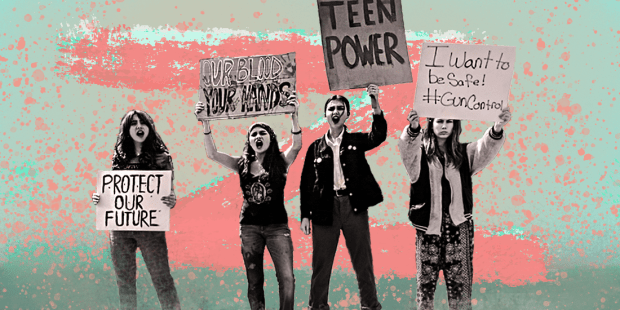
Additionally, the younger population is raising political awareness about a variety of social issues. This is in contrast to the older population who have opposing opinions on these policies. These issues include racial justice, immigration policies, gun control and environmental protection. One reason to explain these different priorities is the lack of diversity in the Baby Boomer population compared to younger generations. This new youthful diversity will contribute to the changing political scene over the coming years. 

The Future of Voters

Gen Z, Gen X and Millennials already outvoted the older generations in the 2018 midterm elections. The same is expected in the years to come as the rest of Gen Z reaches voting age. With more of the younger population voting, trends show that the votes will likely lean blue. Along with this, the Baby Boomer age range is currently about 56-74 years old. This means that as the generations continue to age, we will see less conservative votes in the years to come. It is likely that in the future, voting trends will show a higher portion of the eligible population voting liberal.

What We Can Learn From Cuban Americans About Socialism?

Cuban Americans are unique in their political stances when compared to other Hispanics.  Cuban Americans, when it has come to elections and voting, mostly identify themselves as Republicans and conservatives, contrary to the overwhelming Hispanic voters who mostly vote Democrat. This happens because Cubans in particular have different experiences with the government in which they come from, Cuba, compared to other Hispanic Americans. According to a Pew Research Center survey conducted July 27-Aug. 2, 58% of Cuban registered voters nationwide say they either lean or strictly identify themselves as Republicans while only 38% affiliate themselves to the Democratic Party. On the other hand, 65% of non-Cuban Hispanic voters lean to the Democratic Party, and only 32% vote Republican. So, why is that the case?

Explaining the Cuban American Experience

As I mentioned above, Cubans, in particular, have different experiences with the government either in the United States or in their home country, Cuba. The older generation of Cubans suffered from a brutal and racist dictatorship that instituted systematic racial segregation into government and as they got older, they watched as this dictatorship was overthrown by a communist/socialist struggle under Fidel Castro. The younger generations watched as this revolution also developed into a dictatorship with very bad economic effects on the people in addition to the lack of freedom and civil rights in the law, all under the principle of socialism. For that the younger generation decided to migrate to a country that was very close to their home and also very fierce with the socialist ideas that destroyed their lives, that was the United States. They hoped for a better life under relatively more liberal laws that can make them better off economically and socially. Most of these people migrated to Florida, as it was the nearest US State to Cuba, and now, the highest concentration of Cubans is there.

For these reasons, Cubans have more at stake in this election than most countries in Latin America as Trump’s administration is trying to bring democracy and capitalism to Cuba and its socialist ally, Venezuela. Historically, Republicans have had a more hostile approach towards socialism than democrats. For example, Obama’s visit to Cuba towards the end of his presidency and his efforts to restore relations with Cuba may have been designated as an attempt towards peace and prosperity worldwide, but among Cuban Americans, it was a scary moment that the US may also be moving towards far-left ideas or getting closer with the dictatorship that once destroyed their lives. As a result, Cuban-Americans voted in numbers in 2016 to award the State of Florida and its 29 electoral votes to President Trump who campaigned an anti-socialist rhetoric in Florida to win the state.

Cuban Voter Behavior in Florida

In 2020, with the Anti-Trump tone that was sweeping the country before the November 3rd election, Trump campaigned heavily in Florida way before the elections.  His administration repeatedly visited Florida to announce sanctions on Cuba from there, they stepped up their own anti-socialist tone to appease the Cuban American population in Florida, and as the election approached and the democratic nominee became Former VP Biden.  Republicans in Florida used President Obama’s ties with Cuba to hit Joe Biden and label him as the socialist candidate among the Cuban population which led to a huge turnout in the Cuban-American population in Florida; awarding the heavily contested battleground state to incumbent President Trump.

In the end, President Trump needed the win at the State of Florida, so he did everything possible to achieve that; he wanted to keep Senator Marco Rubio in office to keep Cuban-Americans happy, he even invited veterans of the embarrassing Bay of Pigs invasion to the White House to “reaffirm our ironclad solidarity with the Cuban People” according to the president. Luckily these policies were in line with the demands of the Cuban people who were worried about the effects of an Obama 2.0 administration on them, so they voted for Trump and gave him the state.


Understanding Generation Z (born 1995 and 2015) in Politics

Generation Z currently comprises 10% of the American electorate and 4% of likely voters. Gen Z has grown up post-9/11 and has aged through the Trump Administration. This year, the stakes are even higher: with 2020 marked as a year of reckoning with racial unrest, rioting, and a global health crisis.

Generation Z has been widely hallowed as the most liberal generation of all time, but, in reality, much of Gen Z is opposed to the long-held “binary” choices given to the American electorate: that of the Democrat and Republican parties.

Gen Z is currently twice as likely to vote Biden – rather, its clear that they are voting against Trump, and not for Biden. Gen Z is looking for a candidate that encompasses a global perspective and shows foresight and quick actions into key issues that have been mounting for decades: climate change and racial inequality – neither of which is highlighted in the current presidential candidates. For these reasons, Gen Z is more hesitant to identify as part of the Democratic Party and some choose to vote independent which could be the sign of a rising tide towards the end of the two-party system. (Politico 2020 poll takeaways )

Crucially, younger voters historically have a habit of not showing up to the polls. But with the rising amount of youth-led activism with voter registration, may suggest that turnout may be higher this November. With nationwide protests and national reckoning sparked by the murders of George Floyd and Breonna Taylor, young people can’t afford not to vote (Pew research center).

In terms of priority, the top issue for the majority of Gen Z voters is synchronous with older voters: 30 percent say is the most important and 20 percent say it’s healthcare. In regards to the economy, the majority said the country should move away from the current capitalist standard towards a more socialized economy (Politico 2020 poll takeaways).

While presently much of Gen Z is ineligible to vote this year, waves are starting to form and as more young people come of age and turn to the polls, there will be wide rippling changes for American politics as we know it.


Presidential Debates Throughout History

In our short history as a nation ruled by many, one has to wonder how politicians have gotten to where they are with just words. Promises of better government practice, dodging important questions, finessing through accusations – these are just some of the “acceptable” tactics that have been employed.

Though ancient Greeks solidified the idea of debating in their governments, it wasn’t until the early 18th century that it started being used in everyday thought.

As a nation, we took this idea and used it to help choose who the next leaders would be. Our presidents have been chosen based on how they sound, look, and present during this micro-war of words.

1960, Kennedy V. Nixon:

It is no surprise that the first-ever broadcast debate in US history helped sway viewers’ votes. Though Nixon had the voice, JFK had the looks according to many scholars. Many people watching from televisions back then had a luxury many at the time still could not afford. Though some say that Nixon looked tired and Kennedy youthful, the polls showed something else. Though both made great arguments about internal affairs. It was the later three debates that shaped a win for Kennedy. His opening and focus was about equality and going over the statistics of black vs white. This would have won him a large if not most of all the African-American people able to vote.

Nixon Focused on growth and statistics for income. He never touches on equality and lost out on sympathy votes from equal rights activists. This would have lost him sympathy votes from equality supporters.

CandidateParty Electoral VotePopular Votes
John F. KennedyDemocratic30334,227,096
Richard M. NixonRepublican21934,107,646

Looking at the numbers they were very close with the popular vote. The leading factors for Kennedy’s win were the electoral vote. This is also held in history as important because both candidates would end up as president of the US.

1976, Jimmy Carter V Gerald Ford:

This one makes it into the history books by setting the standard that in every election cycle there will be a set series of presidential debates. According to historians, Republican candidate, Gerald Ford, was running behind in the elections and opted to have a debate. They held three debates (the standard now).

CandidateParty Electoral VotePopular Votes
Jimmy CarterDemocratic29740,825,839
Gerald R. Ford (I)Republican24039,147,770

It also is argued that this debate was the first to show how vulnerable one can be during a live debate. Ford declared that the then Soviet Union had no power in Europe. The moderator called him out about the countries being occupied and under influence of the Soviet Union. Ford stuck by his statement, though false, about the Soviets not occupying Romania, Yugoslavia, or Poland. Some argue this statement may have cost him reelection.

1980, Ronald Reagan V. Jimmy Carter

This one is argued due to the method of how each candidate presented their arguments and facts. While Carter’s Presidency was good, his presentation in the debates was fact-filled, but not interesting. Reagan on the other hand was a showman and even coined phrases like “are you better off than you were four years ago?”

CandidateParty Electoral VotePopular Votes
Ronald ReaganRepublican48943,901,812
Jimmy Carter (I)Democratic4935,483,820

This type of debate showed that entertainment and presentation are just as good as hard facts and evidence. Catchphrases helped solidify his points while also driving home the party’s flaws.

1992, Bush V. Clinton V. Perot

The significance is not lost when you have both major parties and a third party member duke it out in recent history. The significance is that this is the first time in history other than Lincoln an independent came this far. It is also not lost on the fact that they take from the popular vote pool, making it more difficult for the other two major parties. This was an issue for the lagging candidate, George Bush Sr., due to the popular vote that Perot would win from these debates.

CandidateParty Electoral VotePopular Votes
William J. ClintonDemocratic37044,908,254
George Bush (I)Republican16839,102,343
Ross PerotIndependent019,743,821

There is also carelessness and a lack of attention to detail that many politicians ignore which can often cost them elections. During one of the three debates, Bush looked at his watch several times. Regardless these little details can shape how people see you. If you do not have enough time for this, how will you have time for the country?

1996, Clinton V. Dole V. Perot

This election cycle saw the end of third party candidates in primary debates. Ross Perot, the leading independent, was withheld from the main debates due to “the unlikeliness of being elected.” This set the standard that only those truly in the lead will have a chance to say their piece. This election cycle did have an independent debate session hosted by C-Span. Ross Perot declined the debate though.

CandidateParty Electoral VotePopular Votes
William J. Clinton (I)Democratic37945,590,703
Robert DoleRepublican15937,816,307
Ross PerotIndependent08,085,294

This is also the first time in history that the debates were held with a president who won two terms. Clinton’s reelection was not due to the debates themselves but rather the stability his presidency saw. The only relevance to show from this debate cycle is third party candidates would not be joining the main debates anymore.

2000, George Bush V. Dole:

The election holds significance because the then president, Bill Clinton, was one of three presidents in history to face impeachment. Richard Nixion left office before he was formally impeached, these happened within not 30 years of each other.

CandidateParty Electoral VotePopular Votes
George W. BushRepublican27150,456,062
Robert DoleDemocratic26650,996,582
Ralph NaderGreen02,882,955

There were no major pressing issues and both candidates were well focused, on point, and polite. The major advantage Bush had was the previous party’s candidate went through a scandal that helped boost Bush’s party image.

2004, George Bush V. John Kerry:

This election cycle was very important as three years prior one of the largest attacks on US soil started the “war on terror.” National security, border control, and many topics still plaguing our government all started with the Bush administration. Wartime presidents tend to stay in office, regardless of other situations.

CandidateParty Electoral VotePopular Votes
George W. BushRepublican28662,039,073
John F. KerryDemocratic26659,027,478

Bush used his actions during his time hunting Al Qaeda and his success in the “war on terror.” Bush used fear tactics and an “us v. them” mentality. This was a time when Americans had this uncertainty that we would see more attacks. John uses the cost and expenditure of troops in Iraq and Sadam Hussain being second to Osama Bin Laden. Sadly Americans wanted blood, not reason.

Bush had the advantage of satiating our thirst for justice. Though his opponent had great arguments, Bush was the first in the office to deal with it. We know now his mistakes but at the time fear kept him in.

2008, Barrack Obama V. John McCain:

The major topics and issues at the time of these debates were the worst financial crisis since the great depression. Obama started off with his argument that it is the wealthy who are getting wealthier while the middle man suffers. During a time of great financial insecurity, a man promising to share wealth would sound great.

CandidateParty Electoral VotePopular Votes
Barack H. ObamaDemocratic36569,456,897
John S. McCainRepublican17359,934,814

Obama also made eye contact regularly with the camera rather than the audience. This gives a good effect that he is addressing the majority watching from home. This tactic of addressing the audience has been one of his defining factors and charisma. McCain focused heavily on the amount of spending and never made eye contact with the camera. Obama constantly addressed the “family, working man, middle man” and “helping the impoverished.”

During an economic crisis, Obama took advantage of using the people, mentioning constantly everyday issues, to hash out and win over desperate people. When you are struggling just to fill your tank and you hear a man promise to help you keep your family afloat, that is a big and hopeful promise.

2012, Barack Obama V. Mitt Romney:

During this time there were no major or pressing issues. The only major issues at this time are global warming and clean energy dependence. We have mostly recovered from the economic crisis, the war on terror became the new normal, and some years have passed since the 9/11 attacks. Obama did have an advantage, the end of Osama Bin Laden.

Both candidates were very charismatic and very good at using a connection method of speaking. Mitt and Obama both made great eye contact with the camera, addressing the American people. Both also used tactics of relating to each other’s views. Mitt did fight more than Obama did by interrupting the moderator several times.

CandidateParty Electoral VotePopular Votes
Barack H. ObamaDemocratic33265,446,032
W. Mitt RomneyRepublican20660,589,084
Gary JohnsonLibertarian01,275,971

Job creation and the tax took up 1/3rd the time and how to create and keep creating more jobs. Obama did help fix the economy leveling it out by the end of his presidency. Mitt took too much time in tax cuts rather than focusing on other issues. Though both were great speakers, it was Obama who showed restraint and a little more composure.

2016, Hillary Clinton V. Donald Trump:

This debate showed that Trump is very confrontational. Unlike previous candidates who would stay mostly civil, the two would make personal and policy insults, interrupt each other and have a fanaticism with their talking. Clinton was the one who interrupted the least in this debate. Trump was the one to constantly bash and interrupt during the debates.

CandidateParty Electoral VotePopular Votes
Hillary ClintonDemocratic36569,456,897
Donald TrumpRepublican17359,934,814

This election saw the downfall of proper debates. Trump dominated the debates, but not in the best way. His constant interruptions and passion may have helped stop Hillary from making her points. He never backed down from his point of view though, and he never took an instant to not fight for his belief or point. He called out all of her flaws and points against her including the famous line and crowd chant of “Lock her up, Lock her up”.


2020, Joe Biden V. Donald Trump

A defining moment in recent history. Not only amidst a pandemic and economic downfall, but it is also a debate that has been around one of the most information fueled populace in the world. Though the winner is not yet decided, this time will go down in history as one of the most mishandled and difficult to watch debates in US history.

The second, many would agree, was a more civil repeat of the first debate. Many of the same topics were approached. Both candidates, for the first time, had their mics muted during any non-open discussion.

(All stats for election numbers found on 270towin.com.)

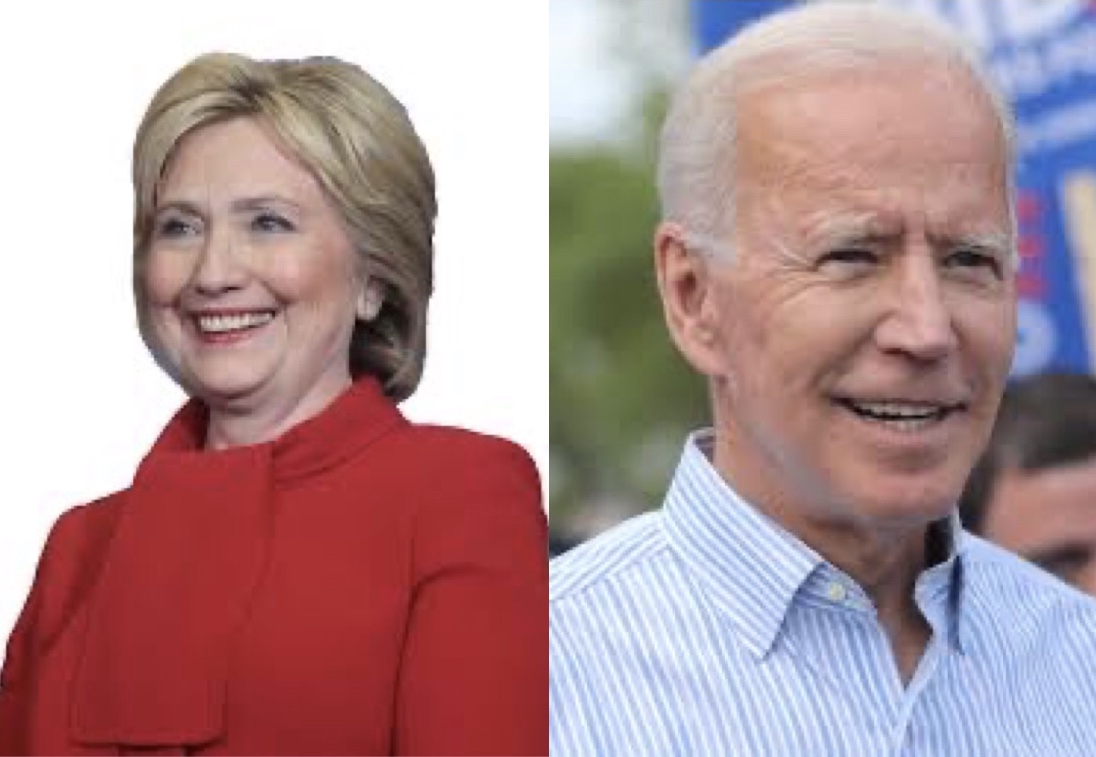
Biden vs Hillary

Hillary Clinton was the democratic nominee for the 2016 Presidential election. In 2016, the election was very tight and Clinton won the popular vote. Despite this, Trump was able to win the electoral college resulting in him winning the election. Clinton and Trump each had strong supporters and very strong haters, making the election controversial. Now, in 2020, Joe Biden is up against Trump. So far, there are similarities in the months leading up to election day, but also many differences. Biden is doing better in the polls than Hillary was at this time, but this election is still leaving the nation divided. Biden is also surrounded by less scandal than Hillary was and overall his reputation is in a better position than Hillary’s was during the 2016 election. The 2020 election is expected to be another close election, and will depend heavily on the color of the swing states. 

Education and Early Career

Hillary Clinton attended Wellesley College where she was senior class president and involved in student politics. She went on to attend Yale Law School and graduated with honors. She has held a variety of political positions throughout her career, including First Lady, US Senator, Secretary of State and Presidential candidate. 

Biden grew up in a working class family in Scranton Pennsylvania. For college, Biden attended the University of Delaware where he studied history and political science. He played football and was more interested in sports and parties for the first college years. During his junior year, he became more motivated and focused on his studies. He was accepted into Syracuse University Law School where he struggled academically. Later, he became a lawyer, started his own law firm and was elected Senator of Delaware. He first ran for president in 1987 in which he lied about his education, but dropped out of the race and continued his role as Senator until 2007 when he ran for President a second time. Again he dropped out of the election. He then became Barack Obama’s running mate, and later the Vice President of the United States. 

Between the two, Hillary wins for academic success. She was a smart, devoted student who excelled in the classroom. 

Scandals

Both Hillary and Biden have faced public scandals throughout their political careers. This section will be briefly summarizing some of these. For Hillary, she is known for lying to the public and getting caught. For example, the Benghazi scandal. She covered up documents regarding the deaths of 4 Americans, and is criticized for not realizing the danger of the situation before sending Americans in. Her most well known scandal was her private email server. Instead of using her State Department, FBI monitored email while serving as US Secretary of State, she used her own private email server to send emails containing classified information. During her campaign, these emails became a major topic of concern. It was deemed by the FBI that while her use of the private server had been incredibly careless, they recommended that no further action needed to be taken. Other scandals include Travelgate (when she fired the White House Travel staff to replace them with her own friends), Pardongate (when Bill Clinton pardoned 450 people upon leaving office, some of which directly benefited Hillary’s campaign in New York) and many others. She has a long list of controversies that have all been in the public eye, and her career in the political world has been largely surrounded by scandals. 

Biden also has been at the center of scandals, many of which happened during his time as Vice President in the Obama administration. One of his major scandals was the Ukraine controversy. It is believed that Ukraine and China were giving money to his son, Hunter, while Joe Biden was convincing the Ukraine government to fire a prosecutor who was investigating Burisma, a Ukranian company that was allegedly asking for the prosector to be fired after paying Hunter over $3 million. Other than emails recently found, there is no proof that had any connections to the Ukraine Energy company and Hunter’s business deal, but it is believed that an introduction between the two led to a funneling of money to Hunter. Biden’s other major scandals come from military action and terrorist swaps during his time as Vice President that ended in the death of American citizens. For example, while in office, the U.S traded 5 terrorists for 1 American deserter. His desertion led to the deaths of 6 American soldiers. Biden’s 1987 presidential campaign was also accused of plagiarizing other politician speeches in which he admitted to.

While both of these candidates were nowhere near short on scandal, Hillary’s have been overall more detrimental to her election, at least to this point with one month before the 2020 election. But this may be due to the fact that she was at the forefront of the public eye for a much longer period of time than Joe Biden had been.

Differences in poll status

Heading into the first presidential debate of 2020, Biden had a very different lead than Hillary did at that time in 2016. Biden had a clear advantage over Trump. The New York Times/Siena College Poll put Biden at 49% and Trump at 41% and the ABC News/Washington Post Poll had Biden at 54% and Trump at 44%. This same poll in 2016 only had Hillary up by two percentage points over Trump. Essentially, while the election is still close and could result in a win for either side, there is a significantly higher lead for the democratic candidate in 2020 than there was in 2016. The 2020 election will be harder for Trump to win than the 2016 election based on poll status. Nationally, Biden was up by 7 or 8 points going into the first debate whereas Hillary was only up by 2. After the first debate, Biden is now up by 10 points nationally, putting him in an even stronger position. Coming into the election day in 2016, Clinton was up by 3-4 points on average nationally. As of now, Biden is in a better position than Hillary was at this time in 2016. Also more promising for Biden is that there are less undecided and 3rd party voters in 2020 than in 2016. Less than half the number of 2016, most voters have already decided on their vote, leaving less up to election day.  

Appeal to Blue Collar workers

Another difference between Biden and Hillary is that Biden has a strong appeal to Blue Collar workers. He grew up as a working class boy from Scranton and this is a big part of his appeal. Additionally, he dealt with and suffered from extreme tragedy in the public light when his wife and daughter died in a car accident back in 1972 and again when his son Beau died of brain cancer in 2015. As Vice President to President Obama, he gained popularity nationally as their administration was greatly supported by a significant portion of the country. In addition to his support on the democratic side, Biden has many republican friends as well as endorsers. Throughout this election period, Biden has been endorsed by notable republican figures, including former Governor John Kasich, former Defense Secretary Chuck Hagel and others.

This same hope was not present when Hillary was running in 2016. She was caught criticizing Trump supporters and calling them “deplorables.” Additionally, Hillary was not as appealing to the working class as Biden is. Hillary is seen as more elite class, and is part of multiple controversial theories. For example, her political career has been under constant investigation from Bill Clinton’s impeachment to Benghazi to the emails. Her approval ratings were worse than Trump’s, making her the only presidential candidate in history with that statistic. 

Healthcare 

Biden and Hillary also differ on their opinions on Healthcare. They both have the same goal of expanding healthcare and making it more accessible for all Americans, but Hillary’s plan involved less change to the current system Hillary supports universal healthcare and made several pushes throughout her political career for it. She was met with great opposition and took a step by step approach when mapping out her healthcare plan for her presidential campaign. Her main goal was to expand healthcare coverage for every American. Despite opposition from private insurance companies in the 90’s, her campaign website explains “She will never give up on the fight for Universal Coverage.” She would have done this by expanding the Affordable Care Act, bringing down the costs of out of pocket expenses, reducing the cost of prescription drugs and incentivizing states to expand Medicaid. 

Biden on the other hand does not want universal healthcare, at least officially yet. He supports an expansion of the Affordable Care Act with an enhanced public option.  Additions to the Affordable Care Act would include reduction of healthcare costs, giving Americans more choices for healthcare as well as simplifying the healthcare system overall. His plan will allow Americans to have private insurance, but they will also have the choice of the public option. His plan will also expand healthcare for low-income families by guaranteeing them access to this new premium-free healthcare plan. All Americans will have access to a more affordable healthcare option under his plan, while still allowing families the ability to choose their own plan, public or private, if they wish. 

Taxes

Biden has laid out a detailed tax plan that would raise taxes, mostly on wealthy Americans. Specifically, the plan would raise personal taxes (for those earning over $400K), investment taxes and corporate taxes. By 2030, the Biden Tax Plan would decrease after-tax income by about 1.7% for all taxpayers on average and a 6.5% decrease for the top 1% of taxpayers. The plan would also result in a 1.47% reduction of GDP long term. This plan would have the largest impact on upper class Americans, as they would also see changes on itemized deductions and qualified business deductions. It would limit their ability to claim itemized deductions to 28% of value. Biden also plans on expanding the Earned Income Tax Credit for childless workers above the age of 65 as well as provide renewable energy tax credits. 

Hillary also laid out a plan for her 2016 campaign that would raise tax rates on many individuals. Her plan reduced the income of the top 1% of Americans by 6.6%, only .1% more than Biden’s plan. The difference between the two is that under Hillary’s plan, all other groups would see an increase of after tax income by at least .1%. She includes a plan to cut taxes for small businesses so that they can grow while also providing tax relief to working class families. Hillary’s plan would have led to a larger decrease in GDP than Biden’s, with a 2.6% decrease long term. Hillary also would have limited itemized deductions to a 28% tax value. Most of her tax plan consisted of proposals to raise taxes on high income earners, similar to Biden’s plan. Some of these proposals include: a minimum of 30% tax on incomes over $5 Million, an increased estate tax and financial risk fees on large banks. Her plan also included tax cuts for middle and lower class families and an expansion of the Child Tax Credit. 

Immigration

Biden sees the current immigration situation to be unjust and an unacceptable way of treating people. He also notes that over half of undocumented immigrants crossed the border legally, but that their status is the result of an overstayed visa. Additionally, he explains that most contraband enters the United States through legal ports of entry. Biden’s immigration plan involves modernizing the American immigration system. To do this, he would welcome immigrants into communities, recommit America to asylum-seekers and refugees and has committed to a fair and humane immigration system. As Vice President of the United States, Biden led and encouraged the expansion of DACA, DAPA, and other programs to help support immigrants. He also finds it important to identify the root cause of migration, rather than close off the US southern border. He promises to secure the border as president, but doing so he will uphold the legal right immigrants have to asylum. He will also ensure not to separate families or violate due process. 

Hillary also proposed immigration reform during her presidential campaign. She believes in treating immigrants with respect and upholding due process. Like Biden, she also supports DACA and DAPA. She is committed to protecting families rather than tearing them apart at the border. Other goals she laid out during her campaign were to promote naturalization, end family detention, close private immigration detention centers and support immigrant integration. Hillary proposed creating an Office of Immigrant Affairs which would work to support her goal of integration by offering resources for English and citizenship education.

While both candidates made strong promises and provided information on how they would go about immigration reform, it is difficult to compare the two plans as the status of immigration widely differed leading up to the two elections. Under Trump, immigration control has been a top priority. Biden believes his entire system needs to be abolished and it is imperative to rebuild/modernize a new one. Hillary on the other hand was able to make claims to support the work that Obama had laid out regarding immigration. She promised to defend Obama’s executive actions and see both DAPA and DACA through. Both Biden and Hillary have strong stances on immigration reform, and they both believe that immigrants deserve to be treated humanely.

Gun Control

Biden is a strong advocate for gun control. He put the Brady Handgun Violence Prevention Act through congress which established a background check system to keep firearms out of the wrong hands. He also pushed for banning assault weapons and high-capacity magazines. Biden plans to hold gun manufacturers accountable and voted against the Protection of Lawful Commerce in Arms Act. He explains that he will also require background checks for all gun sales as well as close loopholes in the federal background check system. He explains that he will reinstate the Obama-Biden policy that kept guns out of the hands of those unable to manage their affairs for mental reasons. He recognizes the importance of handling gun violence in the United States and has laid out a clear plan of how he will work to solve the issue as president.  

Hillary also committed to gun violence prevention during her campaign for president. She promised that as president she would expand background checks, keep guns out of the hands of criminals, mentally ill and abusers as well as take on the gun lobby by taking away licenses from dealers who break the law. Hillary has a history of voting for gun control. She co-sponsored  and voted for legislation to close the gun show loophole as well as extend/reinstate the assault weapons ban. She was also endorsed by the Brady Campaign to Prevent Gun Violence, the Newton Action Alliance as well as other gun violence prevention groups.

The Forgotten Heat of Texas District 7!

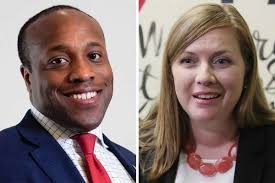
In the 2018 Midterm Elections, GOP Rep. John Culberson was dramatically ousted from office in Texas District 7 after being the district’s representative to Congress for 18 years. 2 years later, his replacement, Congresswoman Lizzie Fletcher (D) TX-07 faces a heated contest for re-election against a rising Republican star; Wesley Hunt.


Wesley Hunt is a native son of Houston and a decorated veteran of the US Army. After he graduated from West Point with a degree in mechanical engineering, he served his country for 8 years in which he flew combat missions in Iraq, for which he received a combat service medal, and served as a diplomatic liaison officer in Saudi Arabia. Now a husband, a father of 2 baby daughters, and a real estate developer; Wes decided to continue his service for this country by running for United States Congress in his home state and in his native city for Texas District 7.

As a candidate, Wesley Hunt promises to restore opportunity to Texas District 7 while protecting Houston’s and Texas’s important energy industry and increasing the security of our immigration system. He also promises to protect struggling middle-class families in District 7 by defending Houston from burdensome federal taxes and improving the affordability of quality health care. But most importantly, Hunt promises to protect Houston from flooding issues resulting from hurricanes and heavy rain. Hunt is also very critical of Congresswoman Fletcher’s left radicalization since she entered Congress and broke her promise of working as an independent for the 7th district of Texas.

On immigration, Wesley Hunt believes in tighter border security with higher funding in order to crack down on illegal immigration and thinks there shouldn’t be amnesty for illegal immigrants already in this country and attributes this to the notion of the “Rule of Law.” However, Wes is very welcoming when it comes to legal immigrants as he believes they contribute a lot to this country.

With regards to the Houston economy, Hunt promises that he will hit back at Washington’s increasingly hostile rhetoric towards Houston’s Energy Corridor by standing against Speaker Pelosi’s Green New Deal and her tough energy/environmental regulations. This way, he will save hundreds of thousands of jobs in Houston’s energy sector. He will also stand by middle-class families in District 7 by fighting to protect the 2017 tax reform bill and make it permanent. He also wants to eliminate the Special tax interest tax breaks which he thinks are unfair.

As a native Houstonian, Wes understands the increasing suffering of his fellow Houstonians with Flooding resulting from poor infrastructure and unconscious and unnecessary spending of the City’s budget. To fight that, he promises to reform the city’s infrastructure so that the excess water from heavy rain and hurricanes can flow smoothly through Bayous and tunnels into the gulf.

With the election approaching and the race tightening, both campaigns raise more promises but with the incumbent already exhausting her chance, should the rising red star get his?

The Vote To Preserve The Post Office

On August 22nd, the US House of Representatives voted to provide additional funding for the US Postal Service. The “Delivering for America Act” mandates that many of the changes enacted by the USPS since January 1, 2020, will be rolled back; these include any closing or reducing the hours of any post office or mail collection box, restricting overtime by postal workers, treating election mail as anything other than first-class mail, removing mail sorting machines, and any change to service which would delay the delivery of mail. The bill provides $25 billion in additional funding to the USPS in order to meet these requirements.

However, the bill is unlikely to pass in the Senate and has already been threatened with a presidential veto. Trump has claimed that widespread use of mail-in ballots would lead to fraud, and stated that he opposed additional funding to the USPS so that it could not process large numbers of mailed ballots: “Now they need that money in order to have the Post Office work so it can take all of these millions and millions of ballots…if they don’t get those items that means you can’t have universal mail-in voting.”

While mailed ballots are not impervious to fraud, cases are very rare. Data from the 2016 and 2018 elections in states which already conducted full vote-by-mail elections (in this case, Colorado, Oregon, and Washington) found only 372 possible fraud cases out of over 14.6 million ballots cast. If every adult in the United States—not just every voter, but every adult—voted by mail, this would suggest that there could be 8,362 possible cases with 209.1 million ballots cast, for a rate of 0.0025%, assuming these statistics hold for the likely-higher-turnout 2020 presidential election.

And mail-in ballots have safeguards. As the Pacific Standard details:

In Oregon, both the absentee envelope and ballot have a barcode unique to each voter, and in the larger counties, like Marion, a machine scans for any discrepancies between the two, or any duplicate barcodes. Then, a team of election workers trained in forensic handwriting analyzes the ballot signatures to verify the identification of the voter, who has two weeks to prove her identity should the signature be contested.

During this process, “everything that is happening is on camera at all times,” says Tayleranne Gillespie, the communications director for the Oregon Secretary of State. “No one’s ever by themselves counting ballots. It’s always done in bipartisan teams.”

That doesn’t mean that no fraud exists, of course. It’s often more common at local election levels, where races are closer and decided by fewer ballots; the East Chicago Democratic primary was re-run after the Indiana Supreme Court called it “a widespread and pervasive pattern … to cast unlawful and deceptive ballots.” Supporters of the Democratic incumbent, Robert Pastrick, had encouraged others to vote absentee and completed their ballots for the preferred candidate, and several city officials were charged with election fraud.

At the federal level, a US House election in North Carolina’s 9th district in 2018 had to be repeated after a consultant for the Republican candidate delivered absentee ballots in violation of federal law (third parties other than postal workers are not allowed to handle ballots or ballot applications), and admitted to filling out blank portions of the absentee ballots for Republican candidates.

But the race was never certified, and cases such as that are still a rarity—this was the first, and currently only, federal election ever where the race had to be repeated due to fraud, and the discrepancies were noticed within days of the election. Polling and population statistics allow any oddities—such as white voters’ absentee ballots being returned at twice the rate of Black voters’, or winning a county’s absentee vote at a much higher than expected margin—to be seen and investigated. And since mail-in and absentee ballots leave a verifiable paper trail, some government cybersecurity experts, such as Christopher Krebs, director of the Department of Homeland Security’s Cybersecurity and Infrastructure Security Agency, have said that vote-by-mail (VBM) elections will actually increase election integrity.

Nor do VBM elections favor one party over another. A recent BYU study found that VBM increased voter turnout by 2-3 percentage points in presidential and midterm races, but “has no effect on election outcomes at various levels of government”. And, in the wake of the pandemic, many states from across the political spectrum haveadopted some semblance of mailed ballots—Iowa, Ohio, Wisconsin, and Massachusetts, among others, will mail every registered voter an application for a ballot.

These changes are perhaps what led to a notable amount of bipartisanship in the bill’s final passage. 26 Republicans broke ranks and voted to pass along with 231 of the chamber’s 232 Democratic members (the lone not-voting member of the Democratic caucus was Tulsi Gabbard, HI-02, currently fulfilling her two-week Army duty requirement with the Hawaii National Guard in Alaska). In doing so, many of those Republicans spoke of its benefits to their more rural constituents:

“The U.S. Postal Service plays a critical role in our nation’s commerce and economy, and in delivering mail to all Americans, especially to those living in rural communities.” -Don Bacon, NE-02.

“We all know the Postal Service is one of our greatest institutions, and has been ever since we developed the Constitution.” -Don Young, AK-AL.

“Tasked with delivering vital medicine to seniors and last mile service for rural counties, the post office is a critical service for the constituents of TX-10.” -Michael McCaul, TX-10.

“The United States Postal Service plays a vital role in the lives of my constituents, particularly those in rural communities, from ensuring their ballots are counted to paying their bills and receiving lifesaving medication.” -Steve Stivers, OH-15.

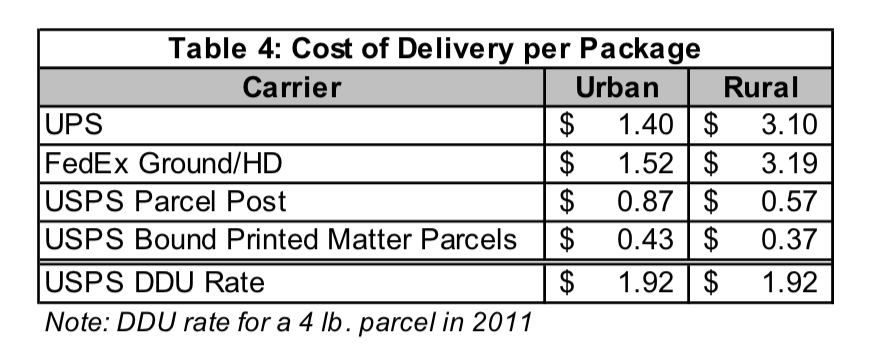
Especially in rural areas, many of which lack reliable broadband connection, the Postal Service remains a pillar of the community, a secure, cheap and effective link to the larger world. In rural locations, where commercial carriers like FedEx, UPS, and Amazon will inflate their prices or simply refuse to deliver because doing so is not cost-effective, it’s the USPS which delivers packages the “last mile” to their destination. A 2011 analysis noted that “Without such service, the businesses located in rural areas will be paying about $3.00 more per parcel and the people residing in such rural areas will be paying about $5.45 ($3.00 for Ext. DAS [Delivery Area Surcharges] and $2.45 for ground residential) more per parcel, or both businesses and consumers will be limited in ordering for direct delivery to their address.”

A table showing the cost of delivery for packages through UPS, FedEx, and USPS for rural areas.

But limiting that service has its own dangers—many seniors and residents of rural communities receive vital medications through the mail, and delays in the mail could mean that prescriptions run out before the next shipment arrives. Rob Larew, president of the National Farmers Union, writes “USPS is frequently the only affordable and convenient way to receive medication in rural areas — and…disruptions or delays could literally mean the difference between life or death.”

So why did so many rural Republicans vote against providing funding for the Postal Service?

The CityLab analysis of congressional district density found 70 districts which it classified as “purely rural”: “a mix of very rural areas and small cities with some suburban-style areas”. These are the districts which would be most affected by any changes to the USPS, and are overwhelmingly represented by Republicans, who hold 60 of those 70 districts. In many ways, these districts are the base of the GOP—they overwhelmingly voted for Trump over Clinton, 63-37, and have shifted ever more Republican over the past few years.

And yet of those 60 rural Republicans, only 5 voted to extend funding for the postal service.

Republicans Voting ‘Yes’ And How Their Districts Are Classified:

  • Don Bacon* (NE-02)—dense suburban
  • Peter King (NY-02)—dense suburban
  • Ann Wagner* (MO-02)—dense suburban


  • Troy Balderson (OH-12)—sparse suburban
  • Vern Buchanan (FL-16)—sparse suburban
  • Brian Fitzpatrick* (PA-01)—sparse suburban
  • David Joyce (OH-14)—sparse suburban
  • Chris Smith (NJ-04)—sparse suburban
  • Mike Turner (OH-10)—sparse suburban


  • Mike Bost (IL-12)—rural-suburban mix
  • Rodney Davis* (IL-13)—rural-suburban mix
  • Jeff Fortenberry (NE-01)—rural-suburban mix
  • Sam Graves (MO-06)—rural-suburban mix
  • Jaime Herrera Beutler* (WA-03)—rural-suburban mix
  • Will Hurd (TX-23)—rural-suburban mix
  • John Katko* (NY-24)—rural-suburban mix
  • Doug LaMalfa (CA-01)—rural-suburban mix
  • Michael McCaul (TX-10)—rural-suburban mix
  • Steve Stivers (OH-15)—rural-suburban mix
  • Fred Upton* (MI-06)—rural-suburban mix
  • Jeff Van Drew* (NJ-02)—rural-suburban mix


  • Pete Stauber (MN-08)—pure rural
  • Elise Stefanik (NY-21)—pure rural
  • David McKinley (WV-01)—pure rural
  • Tom Reed (NY-23)—pure rural
  • Don Young* (AK-AL)—pure rural

Those marked with an asterisk are facing competitive re-election races in the 2020 general election.

Most likely, their votes are due to partisan polarization; these districts, as the base of a Republican Party which has aligned itself with Trump, are unfavorable to representatives who buck the president: in 2018, the rural NC-09 ousted its Republican incumbent, Robert Pittenger, in the primary over a perceived failure to support Trump’s immigration policies. Trump has vowed to veto the funding bill if it passes the Senate and called it a “HOAX by the Democrats to give 25 Billion unneeded dollars for political purposes”, meaning that congressional Republicans who wished to stay in their party’s good graces had a clear political incentive to vote against the bill.

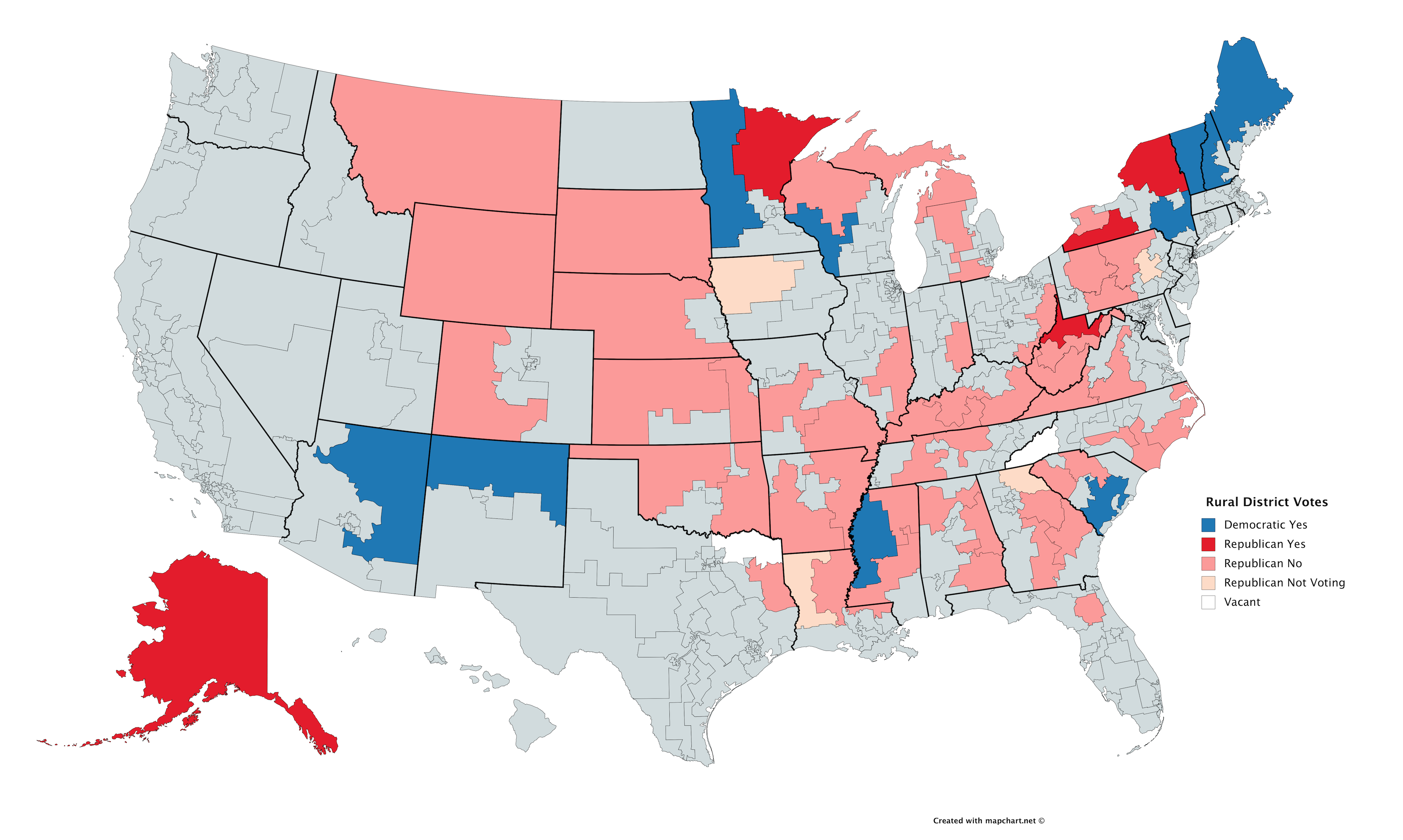
But the political contrast remains striking. Rural districts cover wide swaths of the central and eastern United States, but a wide majority saw their representatives vote against funding for a service they rely upon:

A map showing how the representatives of the 70 rural districts in the US voted. (55 Republicans voted no, 5 voted yes, along with all 10 Democratic representatives)

Colored districts are the 70 districts classified as “pure rural” by the CityLab analysis, while the greyed-out districts are not.

Biden’s $775 Billion Plan for US Caregiving

Amidst the chaos of the pandemic, Democratic presidential candidate Joe Biden unveiled an extensive spending plan to address what he calls “a child care emergency.” With uncertainty about how to guard against infection and whether to even open up at all, caregiving facilities for both children and the elderly have certainly suffered as COVID rages on. Biden hopes to address this issue through a comprehensive but costly approach.

The Plan

As part of his broad economic recovery plan, Biden hopes to spend $775 billion in total to revitalize the caregiving economy over the course of ten years. In practice, the money would be used through state subsidies and tax credits for caregiving facilities. Although Biden’s plan certainly has relevance in bailing out a failing sector of the economy during the current COVID crisis, he hopes to aid the construction of new and upgraded facilities over the coming years.

Much of Biden’s plan is targeted at helping elderly and child care providers themselves. He hopes to enforce a higher federal minimum wage as well as higher state-level standards for those working at caregiving facilities. The plan mandates that caregivers and educators be provided up to 12 weeks of paid medical or family leave. Biden estimates the plan will create close to 3 million new education and caregiving jobs while simultaneously raising job standards.

A significant provision makes pre-kindergarten education and childcare universal for children ages 3 and 4. With a free child care option for very young children, families would foreseeably save thousands on child care and early education. Biden hopes to expand the Child Care and Development Block Grant, a fund designed to help low-income families provide their children with caregiving services. He would like to both lower the eligibility requirements for aid and expand its terms to provide for weekend, summer, and after-school services. In addition to universal access to pre-kindergarten care and education, Biden’s plan addresses logistical concerns about care facilities. In order to mitigate the possibility of commutes that are too long for parents, Biden has argued that the plan would involve a substantial increase in facility construction in many geographic areas. In some cases, the plan would support on-site caregiving facilities for working parents so children can be brought to work.

Furthermore, Biden’s plan allocates $450 billion to enhance the elderly caregiving. With about 800,000 senior citizens on the waitlist for care under Medicaid, funds would be dedicated to diminishing wait times. Biden has also been vocal in his desire to empower the elderly to make their own choices about caregiving. This means funding community service options that allow seniors to live at home independently. Biden has indicated that elderly caregiving services provided under his plan would include meals, rides to appointments, daycare programs, and making their house safer. All this is possible, he claims, simply by expanding upon an existing provision of the Affordable Care Act (Obamacare).

What do the Republicans think?

His plan certainly sounds good: increasing access to care, reducing prices, maintaining quality, and providing parents’ as well as seniors’ with more choices. However, critics of the plan point out that these benefits come at a substantial cost. In response to Biden’s unveiling of his plan, the Trump campaign quickly retorted that the “unaffordable left-wing agenda gets more expensive by the day.” Biden is relying on raising the $775 billion necessary for his plan by increasing tax compliance among high earners as well as eliminating tax breaks for real estate investors who have incomes over $400,000.

For fiscal conservatives, the massive increase in spending and taxes is unacceptable. Biden’s spending plan for caregivers was unveiled shortly after his $2 trillion climate action proposal. Taken together, his ambitions reflect a desire to drastically reshape the economy through spending. Liberals advocate for this approach, citing the New Deal as evidence that spending can create jobs and effectively uplift the economy out of a recession. Conservatives are not so sure.

If Biden is to successfully fend off criticism from the Republicans, he must demonstrate that the value of his spending plan truly outweighs the cost. As the election approaches, the caregiving plan gives more insight into the plans and priorities of a potential Biden administration. Time will tell if the American people agree.

How Hard Should It Be To Vote?

With the 2020 presidential election quickly closing in, voting rights are once again coming to the forefront of debate. Some worry that the obstacles to vote are far too great to guarantee equality in access and ability to exercise the right to vote. Others are not sure about eliminating barriers due to concerns about the possibility of increasing instances of voter fraud. As equal representation persists as a fundamental ideal of democracy, the question of how voting rights should be protected is pressing.

The Right to Vote

In the United States, voting laws are dictated by Article 1 of the Constitution. The text assigns states the authority and responsibility to oversee federal elections. In addition, constitutional amendments have been passed that broaden suffrage to women, African Americans, and citizens over the age of 18. Despite the explicit decision by the Founding Fathers to take a federalist approach to elections, legislation and mandates have been enacted at the federal level in the form of anti-discrimination provisions in the Civil Rights Act and the Voting Rights Act of 1965. However, within the system of checks and balances, the Supreme Court decision in Shelby County v. Holder invalidated the Voting Rights Act’s requirement for states to receive federal preclearance before changing their voting laws. Ultimately, this curbed the power of the legislative branch and returned power to the states.

While many see the federal government’s inability to dictate voting standards as a failure to guard against voter suppression, allowing states to dictate their own laws simply creates a diverse legislative engagement with voting rights. Controversial requirements such as voter ID regulations are enforced differently and to varying extents, depending on the state.

Types of Voting Suppression

In order to understand many Americans’ desire for better voting rights protections, it is important to understand the different aspects of voting suppression. Voter suppression occurs when certain individuals are unable to exercise their right to vote. The most famous form of disenfranchisement is voter ID requirements. States who institute voter ID laws require some form of ID in order to vote. Although over two-thirds of states have ID regulations at the polls, the vast majority of these states do not maintain a strict requirement of photo IDs, instead only requesting an ID or accepting a non-photo ID. By nature, these laws inhibit citizens without a valid government-issued ID (about 21 million Americans) from voting. Furthermore, those wishing to do away with such regulations point out that citizens without IDs are disproportionately low-income and as a result, a specific subset of potential voters are under-represented. Advocates of voter ID laws point out that without being able to identify a voter, there is no way to guarantee that people are voting in the right area or voting just once. By reducing voter fraud, some see these policies as empowering the right to vote due to the fact that fraudulent balloting would dilute the impact of voters abiding by the law.

Another potential form of voter suppression comes from voter registration requirements. Depending on the state, some citizens are required to register many days before they vote and those who do register may be subjected to restrictions. During the 2016 presidential election, 90,000 New Yorkers were unable to vote because they did not register 25 days before the election. As a response to rigid registration guidelines, many Americans believe that same-day voter registration should be made available to anyone at the polls. However, proponents of maintaining current registration requirements point to the necessity of cost-intensive technology to implement same-day registration.

Voter purging is a much subtler form of voter suppression. When a citizen is purged from the voter roll, they are marked as ineligible to vote. Purging voters is an essential part of voting administration as people move, die, or become otherwise ineligible to vote in certain elections and jurisdictions. However, an increase in purges for illegitimate reasons has been reported by the Brennan Center for Justice. In this way, those who wish to discriminately suppress subsets of the voting population are able to effectively eliminate eligibility under the guise of falsified data.

Moving Forward

According to Pew Research Center, the majority of Americans (67%) support doing everything possible to make it as easy as possible for citizens to exercise their right to vote. However, despite the apparent desire to diminish voter suppression, the issue of voting rights remains partisan and gridlocked. Democrats call for loosening ID/registration requirements and granting more federal jurisdiction in the realm of conducting elections. In response, conservatives argue that loosening regulations would compromise the integrity of elections and result in an increase in voter fraud.

Conservative sentiment towards voting rights is echoed in Republican Senate Majority Leader Mitch McConnel’s refusal to allow the Voting Rights Advancement, which seeks to reinstate federal preclearance requirements for local election laws, to be voted on in the Senate. On the other side of the aisle, Democrat Senate Minority Leader Chuck Schumer argues that voting rights must be restored by Congress. With conservative voters traditionally reporting higher percentages of voter turnout, liberals criticize the GOP for bolstering support for their own party at the expense of many potential Democrat voters that are barred from participating in elections. Bipartisan progress seems unlikely in the context of a divided government. So, Americans will probably have to wait for a common partisan majority in both chambers of Congress before advancement in voting rights is achieved.

In addition to the long history of voting rights advancement, the COVID crisis presents a contemporary opportunity for progress. Physical attendance to polling locations is questionable. As a result, mail-in voting has emerged as an intense topic of debate, and could be a likely solution in 2020 for the need for social distancing due to the COVID crisis.

Libertarianism versus Anarchism

The Libertarian Party is the fastest growing and third largest political party in the United States. Each year, more and more Americans become disillusioned with the two party system that has dominated American politics and are looking at other parties and other ideologies. A large group of these people believe that when it comes to government, less is more. Less regulation, less federal spending and less people telling them how they should be living their lives. Per their official website, the Libertarian Party states that libertarians “strongly oppose any government interference into their personal, family, and business decisions. Essentially, we believe all Americans should be free to live their lives and pursue their interests as they see fit as long as they do no harm to another.” If it’s not hurting them and not hurting others, then the government doesn’t need to be a part of it. However, there must be a balance, as complete opposition to the state falls into the territory of anarchism.

What is Libertarianism?

Libertarianism rejects the control of the government over its citizens and advocates heavily for individual rights. Essentially, Libertarians just want to be left alone to be free to live their lives, and not be coerced by the Federal government. While Democrats and Republicans clash over issues such as immigration, drugs, abortion, law enforcement, and most recently the morality of our capitalist system, libertarians argue that government involvement in these areas infringes on their rights, not only as an American, but as a human being.

The libertarian philosophy supports drug decriminalization, open borders, LGBTQ+ rights, property rights, and free-market economy. With the ideas of freedom and self-ownership in mind, Libertarians consider themselves free-thinkers independent of the conservative/liberal dichotomy. Despite this, left and right wing philosophy do exist within the realm of libertarianism. The spectrum of libertarianism lies mostly with the issue of natural resources. The extent to which an individual believes in the equal distribution of natural resources is a key indicator of their right or left tendency within the libertarian philosophy. Advocating for natural resources to be distributed more evenly would put someone on the left end of libertarianism, and vice versa.

Libertarianism versus Anarchy: Understanding the Key Differences

Increasingly more Americans each year are breaking away from the Democrat/Republican dichotomy and embracing libertarianism, valuing their rights and freedom above all else. Libertarianism is a valuable and necessary philosophy for any democratic system; however, there comes a point where the focus on freedom and self-ownership can devolve into a lack of order and poor judgement. While many libertarians would argue that the effects of the state on its citizens are generally harmful and limiting, there are many inherent problems in the anarchist stance towards an established state.

The rejection of government institutions entirely is where the potential for anarchy begins to creep into the picture. Anarchism is a philosophy that is skeptical of all forms of authority and their intentions. The Russian revolutionary anarchist Mikhail Bakunin famously claimed that “If there is a State, there must be domination of one class by another and, as a result, slavery; the State without slavery is unthinkable—and this is why we are the enemies of the State.” While Libertarians are also skeptical of governmental power structures, anarchists view the authority of the state as an enemy force that they must continue to work against.

Libertarians are not advocating for abolition of government, as anarchists do. Rather, they understand that limited governmental structures are required to allow a free society to function without chaos and harm to others, providing safety for its citizens. A government that allows its citizens to participate in the open market, to be free to own property, firearms, and live according to their own desires and orientations is not a bad thing to them. If it was, a dedicated Libertarian Party wouldn’t exist in the first place.

Anarchist philosophy, such as the beliefs espoused by Bakunin, places trust in the hands of the people and seeks to abolish systems of power that are “repressive”. This philosophy becomes problematic in that it empowers people to act with full freedom and autonomy, which opens up the possibility of causing violence or danger to others, thereby infringing on their ability to live their lives and be as free as possible. When those who have adopted anarchist ideology use it as a means of acting violently in an attempt to dismantle the system, personal freedom is no longer the goal and society can quickly turn into unsafe territory. Libertarians are not advocating for an overthrow of the system, rather they are looking for a political solution that gives the power back to the people, rather than increasing government scope and power as well as government debt, which Libertarians feel will inevitably negatively affect the people.

Currently, there is no anarchist part in the US in any form in mainstream politics, but the Libertarian party is growing every year. In the 2016 US presidential election, Libertarian Party candidate Gary Johnson received 3.27% of the national vote with over 4 million votes, which though small, was the highest result for a third party candidate since Ross Perot in 1996. Compared to the party’s 2012 presidential election, which saw Libertarians win just under 1% of the vote, this is a sign of the party’s growth and increasing interest of Americans in other options beyond Democrats and Republicans. The 2020 Libertarian Party presidential candidate is Jo Jorgensen, an academic and political activist from South Carolina. It is anticipated that she will be on the ballot in all 50 states.


Putin vs Trump: How Are They Different?

Few members of the world stage are talked about quite as much as American president Donald Trump and Russian president Vladimir Putin. Both leaders preside over some of the largest countries on earth and hold tremendous power on the world stage. It’s easy to see ways in which they are similar, and lump them together, but there are many ways in which they differ. Both leaders are at the forefront of global politics. With the United States being the world’s sole superpower, it makes sense that Trump’s name is brought up constantly, whether in talks about China, the European Union or the Middle East, the United States is heavily integrated into global politics. Putin and his Russia also play a major role on the world stage, oftentimes in opposition to US interests.

Vladimir Putin has a long history of political experience in Russia. After a career as an officer in the KGB, he got into local politics in his home of Saint Petersburg. He was picked as prime minister to Boris Yeltsin in 1999 and later became acting president after Yeltsin resigned. He ran for president after and won, remaining in power ever since, currently serving his fourth term as president with one term as prime minister.  As president, Putin was charged with bringing a post-Soviet Union Russia back to global relevance. One of the world’s most polarizing leaders, many praise Putin for stabilizing Russia and bringing it back to global relevance after a tumultuous period following the fall of the Soviet Union. Many others have criticized his rule as autocratic and have referred to him as a dictator.

Donald Trump did not have the kind of military or political experience that someone like Putin had before he became president. Trump’s experience was in business and real estate, inheriting the family business and expanding it into a multinational real estate empire with the “Trump” name appearing on buildings throughout the world. While Donald Trump did not have the political experience that Putin had, he nevertheless was able to win the presidency in 2016, defeating Democratic candidate Hillary Clinton. He is currently running for reelection, with the November 2020 election determining if his term as president will end or be extended for four more years.

Though it is difficult to compare two countries with vastly different political systems, cultures and histories, there are clear differences between the two styles of leadership from the American and Russian leaders, starting with their personalities. Putin is typically more reserved and calm, more calculated than his American counterpart who often comes across as bombastic, with many instances of him resorting to name calling and inflammatory remarks over social media. This may be a result of Putin’s many years in politics on the world stage, as opposed to Trump who had never held office until his election in 2016.

Their Foreign Policy Differences

One of the key differences between the two lies in their foreign policy. US interests often find themselves in opposition to Russian interests. While the US ramps up its trade war with China, Russia and China continue to increase their cooperation as members of the BRICS alliance. Military involvement in Syria has nearly caused confrontation between the two countries as the USA supports the rebels operating in the country while Russia supports President Bashar al-Assad. In regards to their political alliances, the US remains a member of NATO, despite President Trump’s calls to remove the US from the organization due to what he perceives as lack of effort and funding by other member countries. Putin has repeatedly criticized NATO for creeping toward Russia as more members join the organization. As the US continues its cooperation with the European Union, Russia works with the Eurasian Economic Union, comprised of many former Soviet states. While Trump’s USA increases sanctions on Russia and its partners, Russia continually finds itself allying closer and closer with countries the US sees as problematic such as Syria, Iran, China, North Korea and Venezuela.

Trump made it clear since before he was even elected that he intended to follow an “America First” policy, and as a result has withdrawn the United States from several international organizations and treaties that he felt were not beneficial or taking advantage of the United States. During his presidency, the US has withdrawn from the Paris Agreement, the Trans-Pacific Partnership, the UN Human Rights Council, the World Health Organization, the Iran Nuclear Agreement as well as others. Trump has repeatedly criticized NATO and expressed interest in removing the US from the organization. Putin’s Russia knows the importance of international cooperation, especially as a result of sanctions by the United States, the European Union and others. While the US sees China as an opponent, Russia sees them as a partner.

While both countries have long histories of foreign military involvement, Trump’s approach has been different from his predecessor, Obama. Trump has ordered the withdrawal of troops from Syria and Afghanistan, as well as expressing interest in removing US military bases in Germany. Putin is no stranger to Russian military involvement in other countries. Most notably, Russia was involved in the annexation of Crimea from Ukraine as well as its role in the Ukrainian civil war which drew the ire of the international community. Russian military involvement in Georgia and Syria also occurred while Putin was either president or prime minister of Russia. Trump’s stances on military intervention have won him the praise of many as well as the condemnation of others.

Dealing with the Press

One of the major differences between the two leaders is how both Trump and Putin have dealt with the press and media. Trump lashing out at media outlets is a common occurrence, with news outlets such as CNN receiving the most ire. Trump has expressed his disdain with mainstream media, which he has often referred to as “Lame Stream Media”. Accusations of being “fake news” have been common during his time in office. Despite his attacks on media outlets, the United States does not have a state run media outlet and is ranked as a “free” country when it comes to freedom of speech. Putin’s Russia has tight control over the media, with numerous state run media outlets. Russia has repeatedly been accused of being unfree with censorship of journalists and the internet. Accusations of Putin silencing and even having journalists assassinated have occurred throughout his years in power. Among the most notable is the death of journalist Alexander Litvinenko. Litvinenko, who was extremely critical of Putin, was poisoned while residing in the United Kingdom. Numerous investigations have accused Putin and those close to him of ordering the assassination. Censorship in Russia has been a hotly debated topic during Putin’s many years in power.

Both Trump and Putin hold great power when it comes to international politics, but similarities beyond being the elected officials of their country are far fewer than the differences between the two and their leadership styles. While Trump may have no issue being loud and even abrasive as he calls out a political opponent, Putin would be calm and controlled, as he has been dating back decades to his time as a member of the KGB. What is certain is that both are at the forefront of global politics. With 2020 being an election year in the US, it remains to be seen if we’re seeing the end of Trump’s time in power, or if we’re only halfway through.