
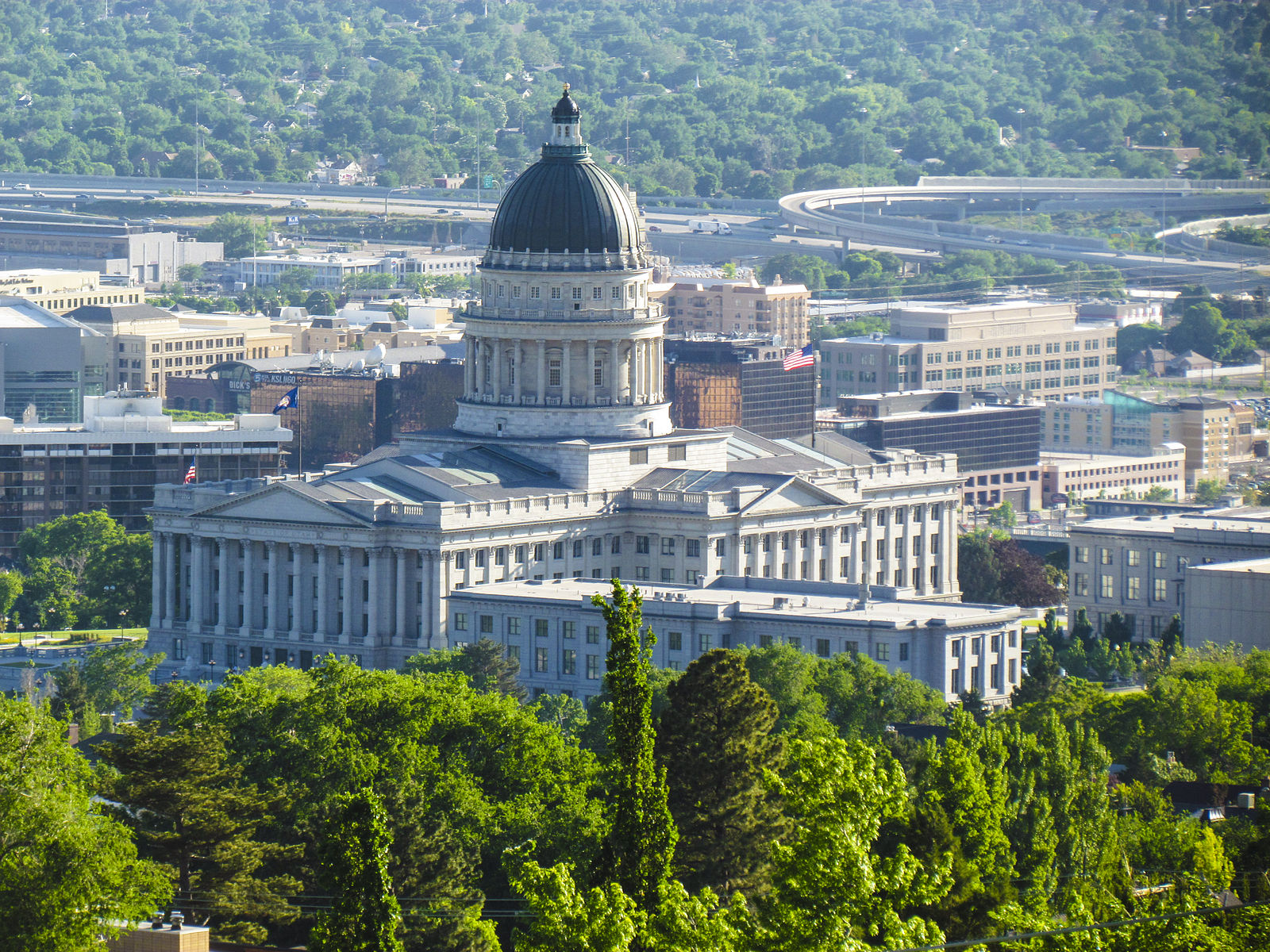
The Utah Gubernatorial Primary

Against a once-in-a-century pandemic, Utahns have until June 30th to mail in their ballots for the state’s primary election. There are various Democratic & Republican down-ballot contests across the state (and depending on congressional district), but the most-watched is surely the Republican primary for governor. Four candidates are competing for the nomination in what looks to be a close race, not to mention Utah’s first primary conducted entirely by mail.

So: who are the candidates, and what are their visions of Utah? What does the race look like, and what does the winner face in November?

The Candidates

Spencer Cox/Deidre Henderson

Cox is the current Lieutenant Governor of Utah and has already picked up some notable endorsements, including that of current governor Gary Herbert and more than half of Utah’s mayors. However, his campaign has come to be defined by the coronavirus, as Cox is the head of Utah’s pandemic taskforce, in charge of coordinating the state’s response. He seeks to cast that experience as vital for a governor who will have to lead Utah out of the damages caused by an economic shutdown, not to mention face a possible second wave of infections, saying in a debate that “[Utah] is better off than any other state in the country and the people of Utah know that,” and in a statement to KUER that “Now, more than ever, Utah needs a prepared and proven leader”.

His campaign platform has also changed with the pandemic: while before the onset of the coronavirus, he described one of his most important issues as continuing the growth of Utah’s economy that began after the recession, now he looks to rebuild that economy. Other issues central to his vision of Utah include changing the education system to minimize federal involvement and give local districts/cities more control over their hiring and curriculums.

Beyond that, Cox has largely been seen as the most moderate of the Republican candidates: in a May poll, he won over self-described ‘moderate conservatives’ by double-digits while tying ‘strong conservatives’ with former Utah House Speaker Greg Hughes. That said, he hasn’t fully embraced that view. When asked about it shortly after launching his campaign, he said that “I think sometimes we confuse kindness and moderation…people see somebody who tries to be kind and listen to others and thinks, ‘Oh, well, he must be a moderate.’ I do have some very conservative views…” (such as strong Second Amendment support, opposition to abortion, and lowering taxes)

In essence, Cox is running a fine line between two groups of people who will vote in the primary: the moderate Republicans and even Democratic crossovers on one side, and the strident conservatives on the other. To be seen as too conservative will likely pull that moderate support towards Jon Huntsman Jr.—but if voters think Cox is too moderate, they will lean towards Hughes instead, who has already criticized Cox over his comments towards the president.

Jon Huntsman Jr./Michelle Kaufusi

In contrast, Huntsman has stuck by his moderation despite its costs of strong conservative support. Some of that may be simply because of his political record: as governor of Utah, he supported many of Obama’s policies like the economic stimulus plan, a carbon cap-and-trade bill, and civil unions for same-sex couples, not to mention serving under Obama as ambassador to China. Now, he seeks to return to the governorship with a promise that his experience as ambassador will make Utah competitive not just within the US but on the world stage.

Like Cox, one of Huntsman’s first priorities is revitalizing Utah’s economy, which he sets as a precursor to his “Utah Unlimited” plan, which Huntsman claims will more than double the state’s GDP. This growth, he claims, will be created largely in the fields of biotechnology, defense, and financial services. Other priorities on his list include giving the state and local communities greater control over Utah’s public lands, improving air quality across the state, and giving people access to mental health resources (especially as rates of depression and suicide have skyrocketed in Utah and other Mountain West states).

Will it be enough? For much of 2019, Huntsman led in polling, but sometime around March 2020—when the pandemic made its impact in the US—he lost that lead to Cox. In the most recent poll, he and the Lieutenant Governor are polling within three points of one another, and it seems likely that the race could tip either way. If it does lean towards Huntsman in the end, he may have an unusual constituency to thank: Democrats and more progressive voters.

Since Utah is an overwhelmingly Republican state, many Democrats and independents (such as former state senator Jim Dabakis) are registering as Republicans to have a say in the primary (which is closed to only registered party members). Huntsman leads among that group 42% to 30%, and it may be the votes of the only-temporarily-Republicans that could hand him the nomination.

Greg Hughes/Victor Iverson

While many have described the Republican primary as a “two-person race” [between Cox and Huntsman], the candidate most likely to break into that race is Greg Hughes, former Speaker of Utah’s House of Representatives. In the Republican convention, he beat out Huntsman for second place (and, more importantly, a spot on the primary ballot), and has surged in more recent polls to trailing the two frontrunners by only single digits, the biggest change in polling so far in the race.

Hughes seeks to sell himself and Washington County Commissioner Victor Iverson as the “conservative ticket”, and has tied his fortunes to that of President Donald Trump in the state. Hughes was an early supporter of Trump during the 2016 primary, and has run ads featuring the nickname given to him by the president: “The Original”, as well as attacking Cox for distancing himself from Trump. Hughes is also the only candidate of the four who doesn’t believe in human-caused climate change, and boasts about his opposition to the Affordable Care Act.

Fighting to earn the votes of the most conservative voters also puts Hughes most at odds with the current governor—he gave the state a ‘D’ rating for its response to the pandemic, calling it a “heavy-handed lockdown” and referring to a short-lived effort to track entrances into Utah as “communist-style snitch hotlines”.

It remains to be seen whether Hughes will benefit or suffer from his association with the president. Despite Utah’s heavy Republican lean, Trump is not particularly popular in the state, with recent polls showing Trump leading former vice president Joe Biden by only three points (though Trump’s approval remains higher among registered Republicans).

Thomas Wright/Rob Bishop

If Hughes is the conservative candidate, Wright seeks to portray himself as the outsider. The former chair of the Utah Republican Party and the owner, president, and principal broker of Sotheby’s International Realty, his pitch to voters is that a combination of business and political experience will let him make the best decisions for the state of Utah.

He lists his top priority as reopening the economy and getting Utahns back to work, using vocational schools to retrain unemployed workers and cutting items from the budget when necessary. Wright has also called for development of an efficient mass transit system in order to take cars off the road and improve air quality, as well as policies addressing education, housing, and rural development, which all candidates agree need to be addressed.

Wright’s campaign hasn’t taken off, however, even as ballots are being sent out — he hasn’t gotten above 10% in any primary polls. Though he claims internal polling still shows a path to the nomination, his voters may instead be the kingmakers in the race between Cox, Huntsman, and Hughes, for Wright’s own path is difficult to see so late in the race (barring a drastic change in the state of the primary).

What Comes Next

Whoever wins the Republican primary will face Democrat Chris Peterson, a professor at the University of Utah and former official in the Consumer Financial Protection Bureau. One of his top priorities is challenging predatory loan companies in the state, as well as expanding access to health care, which he calls a ‘basic human right’. He was chosen at a virtual Democratic convention with more than 88% of the vote.

Peterson acknowledges that his campaign will be a “tough uphill climb” in a state that hasn’t elected a Democratic governor since Scott Matheson in 1980, which is also the reason many Democrats are switching registrations. The race is rated Safely Republican, meaning many believe the candidate who wins the Republican primary will be Utah’s next governor come November.
Utah’s 2020 Gubernatorial Race

In light of a pandemic and racial unrest, Utah is looking for a leader who can lead them through these hardships and take control. As of right now there is 1 democrat and 4 republicans running for governor in the 2020 Utah gubernatorial race.

The Candidates

Chris Peterson

To start, there is Chris Peterson, democratic nominee for governor. He is a professor of law at the University of Utah, and previously worked for both the U.S. Department of Defense and the Consumer Financial Protection Bureau. He believes in helping Utah on a smaller level by helping build up small businesses and local family farms, and on larger issues such as promoting clean air in Utah and providing more funding for Utah’s school systems.

Spencer Cox

In no particular order, the first republican running for Utah’s governor is Spencer Cox. Spencer grew up in Utah and currently serves as lieutenant governor, and previously served as a councilman, mayor, and state representative. With his history in law and politics, it shouldn’t come as a surprise that he strongly supports the constitution, specifically citizens’ second amendment rights. Similar to Peterson, he also supports increased funding for Utah’s school systems. He also believes in preserving Utah by supporting its rural area and managing public lands fairly.

Greg Hughes

Next is Greg Hughes, former speaker for the Utah House of Representatives. Hughes is a small business owner who moved to Utah for college and didn’t leave. He is a strong supporter of the second amendment similar to Cox and also wants to support veterans and their families, which shows by his creation of the Utah Department of Veterans’ and military affairs.

Jon Huntsman Jr.

Third is Jon Huntsman jr. who has participated greatly in national politics, serving as both U.S. ambassador to China and U.S. ambassador to Russia. He has also served as governor of Utah before. Like Peterson and Cox, Huntsman wants to create better support for Utah schools. He also has a similar stance to air quality as Peterson, wanting to improve air quality. One area Huntsman wants to focus on is mental health and making sure that people get the help that they need.

Thomas Wright

Last but not least is Thomas Wright. Born and raised in Utah, Wright currently lives there with his wife and children. He owns a self built reality business. He recently represented Utah in the Republican National Committee. He stands with most of the other candidates wanting to increase funding for Utah schools. Included in funding for Utah schools he believes that mental health should be focused on in schools. He also is behind the second amendment, similar to Cox and Hughes.

What Happened in the Primaries Last Night

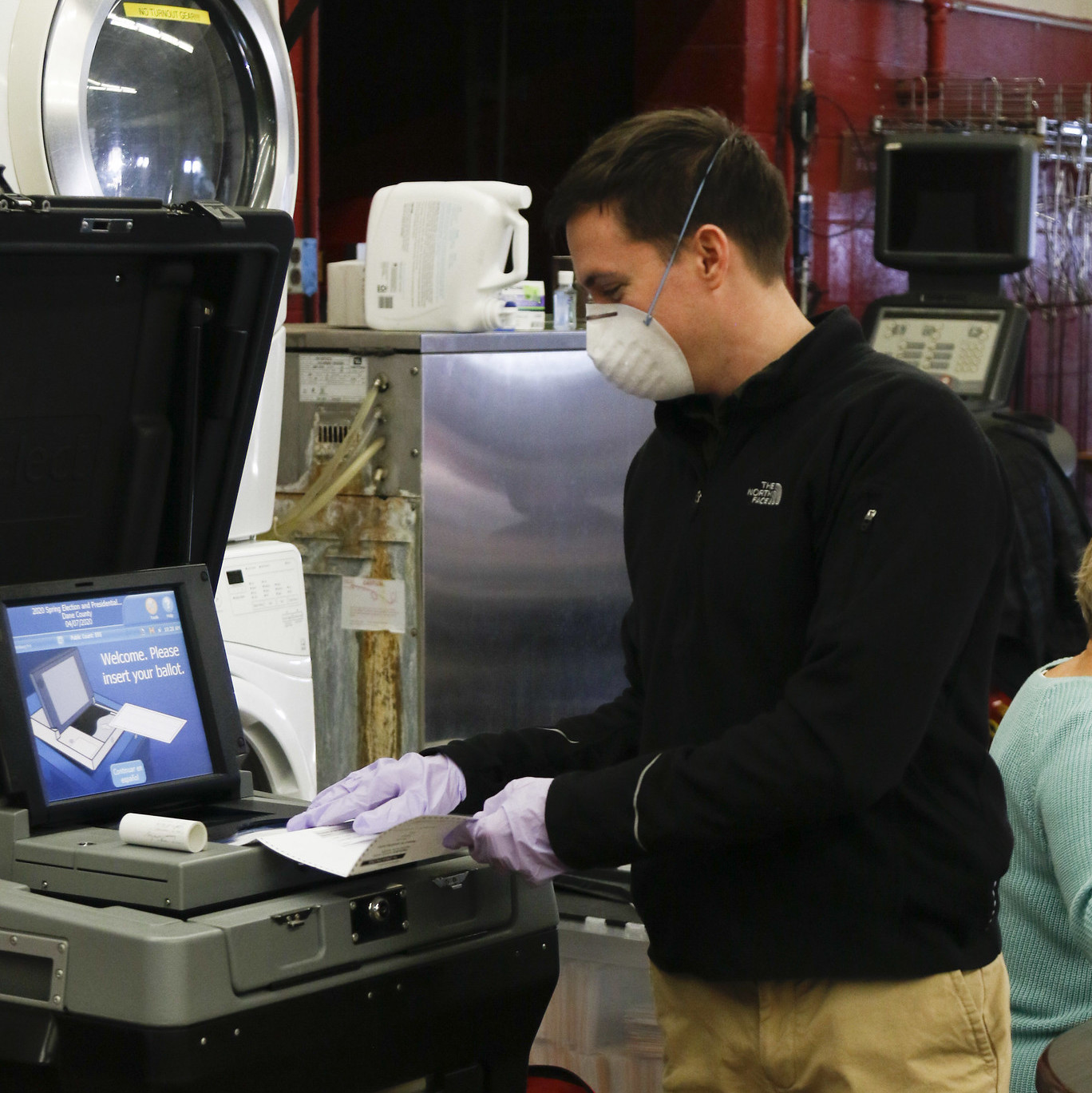
Last night saw primaries in nine states and DC for the congressional, (in some cases) gubernatorial, and presidential elections. Some of the biggest takeaways from each state, keeping in mind that, due to the prevalence of mail-in ballots, many races cannot be called yet:

Iowa

In Iowa’s Fourth Congressional District, nine-term representative Steve King lost his primary to state senator Randy Feenstra. King had become controversial in recent years, even among his own party, after questioning why white supremacy was considered offensive and being stripped of his committee assignments. Many Republicans also believed that he was endangering their chances in a district Trump carried by 27 points in 2016, and that a less polarizing candidate would allow them to hold onto the seat.

The Democratic House primaries were all uncontested, so the story of the night was the Senate primary to run against Republican Senator Joni Ernst. Theresa Greenfield was the choice of the DSCC and Emily’s List (an organization that aims to elect Democratic female legislators), though faced strong opposition in retired Admiral Michael Franken. She ended up taking 47.7% of the vote, more than enough to avoid a runoff, to Franken’s 25%.

Montana

With current governor Steve Bullock term-limited (and now running for Senate), the governor’s race in Montana is open this year. The Democratic primary was a contest between current Lieutenant Governor Mike Cooney, who Bullock endorsed, and businesswoman Whitney Williams, who had the support of Emily’s List and various conservation organizations. Cooney won the primary by about ten points, and will now face off against Montana’s lone House member, Greg Gianforte. Gianforte defeated Tim Fox, the Attorney General of Montana, after having previously run for governor in 2016 and lost narrowly to Bullock.

The primary for Senate saw Bullock handily win the Democratic nomination, and the incumbent Republican Steve Daines saw little challenge in his own primary, setting up the race for November. Kathleen Williams, a former state lawmaker endorsed by the DCCC, won the Democratic nomination for the at-large House seat; she will be running against Auditor Matt Rosendale, who ran unsuccessfully for Senate in 2018 against Jon Tester.

Indiana

Two House seats in Indiana are open in 2020: the Fifth Congressional District, a competitive suburban seat held by a retiring Republican, saw a large field of candidates on both sides of the aisle. Christian Hale, a former state representative, won the Democratic nomination for the seat, while state senator Victoria Spartz took the Republican nomination for what’s likely to be a close race. In the First Congressional District, a safely Democratic seat, Frank Mrvan won the Democratic primary with the endorsement of retiring Rep. Peter Visclosky. All other districts saw current incumbents win their primaries.

Maryland

All of Maryland’s House incumbents easily won their seats — Kweisi Mfume, who won a special election in April after the death of Rep. Elijah Cummings, held onto his seat by a 3-1 margin, and other incumbents won theirs by even larger margins. Steny Hoyer, the current House Majority Leader, was challenged by a progressive candidate endorsed by the same group which supported Alexandria Ocasio-Cortez in 2018, but Hoyer easily won with around 75% of the vote counted thus far.

New Mexico

In the Second District, Republicans are hoping to take back a district that Trump carried by 10 points but nevertheless voted for Democratic Rep. Xochitl Torres Small in 2018. Yvette Herrell, the former representative who lost the seat in 2018, won the primary to challenge Torres Small again, after backing by the House Freedom Caucus and even an outside Democratic group, in the belief that Herrell would be the easier candidate to face in November. And in the Third District, Teresa Legar Fernandez defeated the former CIA operative Valerie Plame for the safely Democratic seat, despite Plame’s splashy announcement video and high fundraising.

Rhode Island

Rhode Island featured only the Democratic presidential primary on Tuesday. Joe Biden carried the state with 62% of the vote, with Bernie Sanders receiving 30% despite having dropped out at the beginning of April (though this represents less than half of all ballots cast, as most mail ballots are still being counted over the course of the week)

Idaho

Idaho featured a primary that was only vote-by-mail, delayed from May 19th after an order from Governor Little. Paulette Jordan won the Democratic Senate primary to run against Jim Risch, who was uncontested, in the safely Republican Senate seat. The two Republican House members from Idaho, Russ Fulcher and Mike Simpson, both faced primaries, and both incumbents won with over 70% of the vote. Fulcher will run against Rudy Soto in the First District and Simpson against Aaron Swisher in the Second District.

South Dakota

With the presidential primary all but decided, only congressional Republicans faced primary challenges in South Dakota. Current Senator Mike Rounds was challenged by state representative Scyller Borglum, but easily won re-nomination, as did the state’s lone House member Dusty Johnson, whose November election will be unopposed. (Rounds will face Dan Ahlers in the Senate race—Ahlers was uncontested in the Democratic primary for the seat).

Pennsylvania

Many of Pennsylvania’s races cannot be called yet — Governor Wolf released an order saying that mail-in ballots can be received and counted until the 9th of June, and though the order is facing legal challenges, it means that close races can still swing one way or the other.

Among the House races facing the most competition is Pennsylvania’s First District, currently represented by moderate Republican Brian Fitzpatrick. He is on track to win his primary despite a challenge from Andy Meehan, and appears likely to be challenged by Democrat Christina Finello. The district is named as a target by the DCCC, but Fitzpatrick has strong crossover appeal: in 2018, he won his House race even as the Democratic Governor and Senator carried the district by double digits. A similar district, though one with a very different candidate, is Pennsylvania’s Tenth: its current Republican representative, Scott Perry, has the most conservative voting record of Pennsylvania’s delegation and looks to be facing Eugene DePasquale, the Democratic auditor general who carried the district in 2016. But Republicans have their own pickup opportunities as well. In the Seventh, Lisa Scheller is leading a close race to take on Representative Susan Wild, and in the Eighth, less than a percentage point separates the Republican candidates to run against Matt Cartwright, a Democratic candidate in a district Trump carried by 9 points in 2016.

Statewide, the closest primary is the Democratic one for auditor general: with DePasquale not running again, six candidates are vying for the seat. Michael Lamb, the Pittsburgh city controller, currently leads his closest opponent, former Philadelphia deputy mayor Nina Ahmed, by about eight points.

Washington D.C.

Like other states, any ballots postmarked by June 2 can be counted through June 12th, so the close elections for the city’s Council can’t be called yet (most notably the Democratic race in Ward 2, in which the candidates are separated by single digits). The races for DC Senate, the US Delegate, and the US representative were all uncontested.

Another complication facing voters in DC and Philadelphia were the curfews enacted after days of protests. Though the city leaders made statements to reassure voters that they were exempt from the curfew, many voting-rights advocates worried that the lack of specific information and clear-cut guidelines would serve to discourage potential voters. As ballots are still being counted and tallied, it cannot be said yet whether the curfews affected turnout or not.