What you need to know about Georgia’s new election law

Earlier this spring state lawmakers in Georgia passed a new law concerning how the state runs its elections which was signed into law by Governor Brian Kemp on March 31st. The decision comes just months after President Joe Biden defeated Donald Trump in the General Election and the state of Georgia as well by just 11,779 votes, making Biden the first Democrat to win the state of Georgia in a General Election since President Clinton in 1996. The new law will go into effect on July 1s.t. Here is what is in the bill

  • Special ballots will be created for non-partisan elections.
  • Ballots will be printed in black and white ink on security paper.
  • The cut-off date for mail-in ballots 11 days before a federal, primary, or general election or 22 days before a municipal general election or primary.
  • A 25-day deadline for the issuance of absentee ballots for federal, primary, or general elections or 22 days for a municipal general or primary election.
  • A Georgia state driver’s license number, ID card number, date of birth, and the last 4 digits of your social security number or another approved form of identification must be printed on the outside of the absentee ballot.
  • Conditions for rejecting absentee ballots if certain requirements are not met.

The new law is a massive piece of legislation that both its supporters and detractors have a lot to say about it. Ultimately this will affect all voters in Georgia so here is a detailed breakdown of what Georgia voters should look out for whenever they plan to cast their ballots in future elections.

How will it protect against voter fraud?

Georgia Secretary of State Brian Raffensperger spoke about the new bill and he said that it will weed out any “bogus” residents who will attempt to vote. According to the Secretary, everyone will be required to present a photo ID in order to verify their identity before they cast their ballot. The Secretary also noted that there were a total of 8,000 out-of-state residents who requested a ballot and they were given a letter from the state detailing the penalties were for voting in the state of Georgia if they were not permanent residents.

What’s in the bill?

Voters will be able to request a ballot 79 days before the election and mail it in 29 days before it, previously voters could mail ballots 49 days prior to an election. Early in-person voting will be expanded for general elections, two early-voting periods on Saturday are required for each county, with optional voting on Sunday from 9 a.m. to 5 p.m. Whereas in previous elections early voting began on the fourth Monday before a primary or election and ended the Friday before election day. Depending on what county you live in you could be able to vote from 9 a.m. to 5 p.m or even 7 a.m. to 7 p.m. For some smaller counties, voters will be able to cast their ballots from 7 a.m. to 7 p.m. As far as run-off elections are concerned early voting will begin as soon as possible and it will require early voting Monday through Friday prior to the election. However, counties may not be able to offer early weekend voting depending on how fast they finish the first election and move on to the second.

If you live in Fulton County you will no longer be able to use the mobile buses that were purchased a year ago to aid with long lines. While a 2019 omnibus bill allowed more early voting sites in more locations, state Republicans have written new laws that prohibit buses to be taken to the polls unless the Governor declares an emergency. Other rules in effect require a 4 by a 4-foot sign that shows where the polling locations are and that anybody except poll workers is allowed to hand out refreshments to those waiting in line to vote within 150 feet of the building. They may also not do it within 25 feet of any voter standing in line. When early voting takes place counties must keep a record of in-person voters, as well as the number of absentee ballots that were issued, used, and rejected. Early voting sites and times must also be posted publicly ahead of time.

There will also be a change in how the votes are tabulated in future elections given the fact that it took many counties a long time to release their vote totals and the general confusion is as to why the process wasn’t over on election night. One change local election officials are embracing is absentee ballots being processed two weeks prior to the election. Counties must also count all ballots non-stop as soon as the polls close at 5 p.m. Local officials will be required to report the total number of ballots cast on election day, during early voting, absentee, and provisional ballots, all by 10 p.m. on election night. This is so the public is aware of the total number of votes that were cast as the results begin to trickle in. Provisional ballots will not be counted after 5 p.m. unless the voter signs a statement stating they could not make it to their home polling place in time. Now that all of the votes must be tabulated by 5 p.m. the day after the election, lawmakers moved the certification deadline 6 days after the election rather than 10. As far as absentee ballots are concerned they will be checked using the ID information voters write on the outside envelopes.

Another change the bill would require is that there will be more flexibility for election officials concerning voting equipment for smaller races with low turnout. Officials will be required to calibrate every piece of technology used in the election. The dates and times will be posted on the county’s website, local newspapers, and the Secretary of State’s office must keep a public list. Massive polling places with more than 2,000 voters will longer waiting times and will be required to hire more workers. More than 1,500 precincts in Georgia have at least 2,000 voters. GOP legislatures also made sure that poll watchers be trained before they go to work and gives local officials the power to determine where those watchers can observe from.

There are also new rules for ballot drop boxes where a board of registrars or an absentee ballot clerk may supply one ballot drop box for absentee voters who choose to vote by mail at respected offices or voting locations. Any additional drop boxes are restricted to one box per 100,000 voters in a given county. The boxes are only accessible during advanced voting. The number of drop boxes in Georgia’s most populated counties of Fulton, Cobb, Dekalb, and Gwinnett which makes up a majority of the state’s population, will decrease drastically from 98 to 23 starting in 2022.

Another massive change featured in the bill would be that the Secretary of State can no longer serve on the election board. The new chair will be a non-partisan actor appointed by a majority of the Republican-controlled state House and Senate. The chair will not be allowed to have run for office, participate in a political party, a campaign, or have made campaign contributions in the past two years prior to being appointed. If the position were ever to become vacant the Governor would appoint a new one. The board will also have the power to intervene in state elections that are deemed underperforming. In addition to the appointed chair, the five-member board will be made up of one member appointed by the House, one in the Senate, and one appointed by both political parties. House and Senate members could also conduct an independent performance review of board members or Judges who supervise the election. According to Georgia law, this person is referred to as the superintendent. SB 202 would allow the board to suspend the multi-person elections board or probate judge and replace them with somebody else for a minimum of nine months. The Superintendent is responsible for certifying the election results, handling changes in polling places, and hearing challenges to voter eligibility. All of these must be done in a timely manner and have an unlimited number of changes. The board is limited to suspending only four members at a time.

What are critics and proponents saying about the bill?

Republicans will argue that they decided to pass the bill in order to protect the integrity of future elections against voter fraud. They support voter ID laws because if people need an ID in order to drive a car, buy alcohol, or gamble then you would require an ID in order to cast your vote in an upcoming election.

Critics of voter ID laws will argue that they are racist because voter ID laws greatly affect minority communities. 25 percent of African-Americans lack a government-issued photo ID whereas only 8 percent of whites share the same problem. Photo IDs can also be expensive for people who don’t have one. Underlying documents to acquire a photo ID when it comes to document fees, and travel expenses can add up to $75 to 175 which will greatly affect lower-income voters. Disabled and elderly voters may have to travel a long way in order to obtain a photo ID. In Rural Texas, voters may have to travel up to 170 miles to reach the nearest ID office. Voter ID laws also affect voters who live in big cities such as New York or Chicago because they might not own cars and therefore do not have a driver’s license. Voter ID laws also lower voter turnout. In 2014 a GTO study published that there was a 2 to 3 percent reduction which translates to tens of thousands of votes not being cast in a single state.

The fallout

There has also been massive corporate backlash due to the new law in Georgia. Major League Baseball for example moved the All-Star game from Truist Park in Atlanta to Coors Field in Denver. The Rockies were looking to host an All-Star game in the near future and due to Georgia’s new voter ID law, Baseball gave them a chance to do that. Prior to the change of plans, the Atlanta Braves were planning to honor the late Hank Aaron, the legendary Braves hitter who knocked 755 career home runs, who died this January at the age of 86. The All-Star game also would have given them the chance to show off their four-year-old stadium to the baseball world this summer. Hundreds of corporations have also denounced the bill including Amazon, General Motors, Google, CBS, UPS, Microsoft, Delta, Coca-Cola, and Bank of America. The CEOs of these corporations blasted the new law calling it unacceptable, they also said that the right to vote is sacred and that making it more difficult for black voters to exercise their right to vote is wrong. There are different ways you could look at the new law in Georgia, if you are a resident of the state it is important you keep all of this in mind the next time it’s time to go out and vote.


What We Can Learn From Cuban Americans About Socialism?

Cuban Americans are unique in their political stances when compared to other Hispanics.  Cuban Americans, when it has come to elections and voting, mostly identify themselves as Republicans and conservatives, contrary to the overwhelming Hispanic voters who mostly vote Democrat. This happens because Cubans in particular have different experiences with the government in which they come from, Cuba, compared to other Hispanic Americans. According to a Pew Research Center survey conducted July 27-Aug. 2, 58% of Cuban registered voters nationwide say they either lean or strictly identify themselves as Republicans while only 38% affiliate themselves to the Democratic Party. On the other hand, 65% of non-Cuban Hispanic voters lean to the Democratic Party, and only 32% vote Republican. So, why is that the case?

Explaining the Cuban American Experience

As I mentioned above, Cubans, in particular, have different experiences with the government either in the United States or in their home country, Cuba. The older generation of Cubans suffered from a brutal and racist dictatorship that instituted systematic racial segregation into government and as they got older, they watched as this dictatorship was overthrown by a communist/socialist struggle under Fidel Castro. The younger generations watched as this revolution also developed into a dictatorship with very bad economic effects on the people in addition to the lack of freedom and civil rights in the law, all under the principle of socialism. For that the younger generation decided to migrate to a country that was very close to their home and also very fierce with the socialist ideas that destroyed their lives, that was the United States. They hoped for a better life under relatively more liberal laws that can make them better off economically and socially. Most of these people migrated to Florida, as it was the nearest US State to Cuba, and now, the highest concentration of Cubans is there.

For these reasons, Cubans have more at stake in this election than most countries in Latin America as Trump’s administration is trying to bring democracy and capitalism to Cuba and its socialist ally, Venezuela. Historically, Republicans have had a more hostile approach towards socialism than democrats. For example, Obama’s visit to Cuba towards the end of his presidency and his efforts to restore relations with Cuba may have been designated as an attempt towards peace and prosperity worldwide, but among Cuban Americans, it was a scary moment that the US may also be moving towards far-left ideas or getting closer with the dictatorship that once destroyed their lives. As a result, Cuban-Americans voted in numbers in 2016 to award the State of Florida and its 29 electoral votes to President Trump who campaigned an anti-socialist rhetoric in Florida to win the state.

Cuban Voter Behavior in Florida

In 2020, with the Anti-Trump tone that was sweeping the country before the November 3rd election, Trump campaigned heavily in Florida way before the elections.  His administration repeatedly visited Florida to announce sanctions on Cuba from there, they stepped up their own anti-socialist tone to appease the Cuban American population in Florida, and as the election approached and the democratic nominee became Former VP Biden.  Republicans in Florida used President Obama’s ties with Cuba to hit Joe Biden and label him as the socialist candidate among the Cuban population which led to a huge turnout in the Cuban-American population in Florida; awarding the heavily contested battleground state to incumbent President Trump.

In the end, President Trump needed the win at the State of Florida, so he did everything possible to achieve that; he wanted to keep Senator Marco Rubio in office to keep Cuban-Americans happy, he even invited veterans of the embarrassing Bay of Pigs invasion to the White House to “reaffirm our ironclad solidarity with the Cuban People” according to the president. Luckily these policies were in line with the demands of the Cuban people who were worried about the effects of an Obama 2.0 administration on them, so they voted for Trump and gave him the state.


Understanding Generation Z (born 1995 and 2015) in Politics

Generation Z currently comprises 10% of the American electorate and 4% of likely voters. Gen Z has grown up post-9/11 and has aged through the Trump Administration. This year, the stakes are even higher: with 2020 marked as a year of reckoning with racial unrest, rioting, and a global health crisis.

Generation Z has been widely hallowed as the most liberal generation of all time, but, in reality, much of Gen Z is opposed to the long-held “binary” choices given to the American electorate: that of the Democrat and Republican parties.

Gen Z is currently twice as likely to vote Biden – rather, its clear that they are voting against Trump, and not for Biden. Gen Z is looking for a candidate that encompasses a global perspective and shows foresight and quick actions into key issues that have been mounting for decades: climate change and racial inequality – neither of which is highlighted in the current presidential candidates. For these reasons, Gen Z is more hesitant to identify as part of the Democratic Party and some choose to vote independent which could be the sign of a rising tide towards the end of the two-party system. (Politico 2020 poll takeaways )

Crucially, younger voters historically have a habit of not showing up to the polls. But with the rising amount of youth-led activism with voter registration, may suggest that turnout may be higher this November. With nationwide protests and national reckoning sparked by the murders of George Floyd and Breonna Taylor, young people can’t afford not to vote (Pew research center).

In terms of priority, the top issue for the majority of Gen Z voters is synchronous with older voters: 30 percent say is the most important and 20 percent say it’s healthcare. In regards to the economy, the majority said the country should move away from the current capitalist standard towards a more socialized economy (Politico 2020 poll takeaways).

While presently much of Gen Z is ineligible to vote this year, waves are starting to form and as more young people come of age and turn to the polls, there will be wide rippling changes for American politics as we know it.


The Hunter Biden Scandal: What is it and Why it Matters

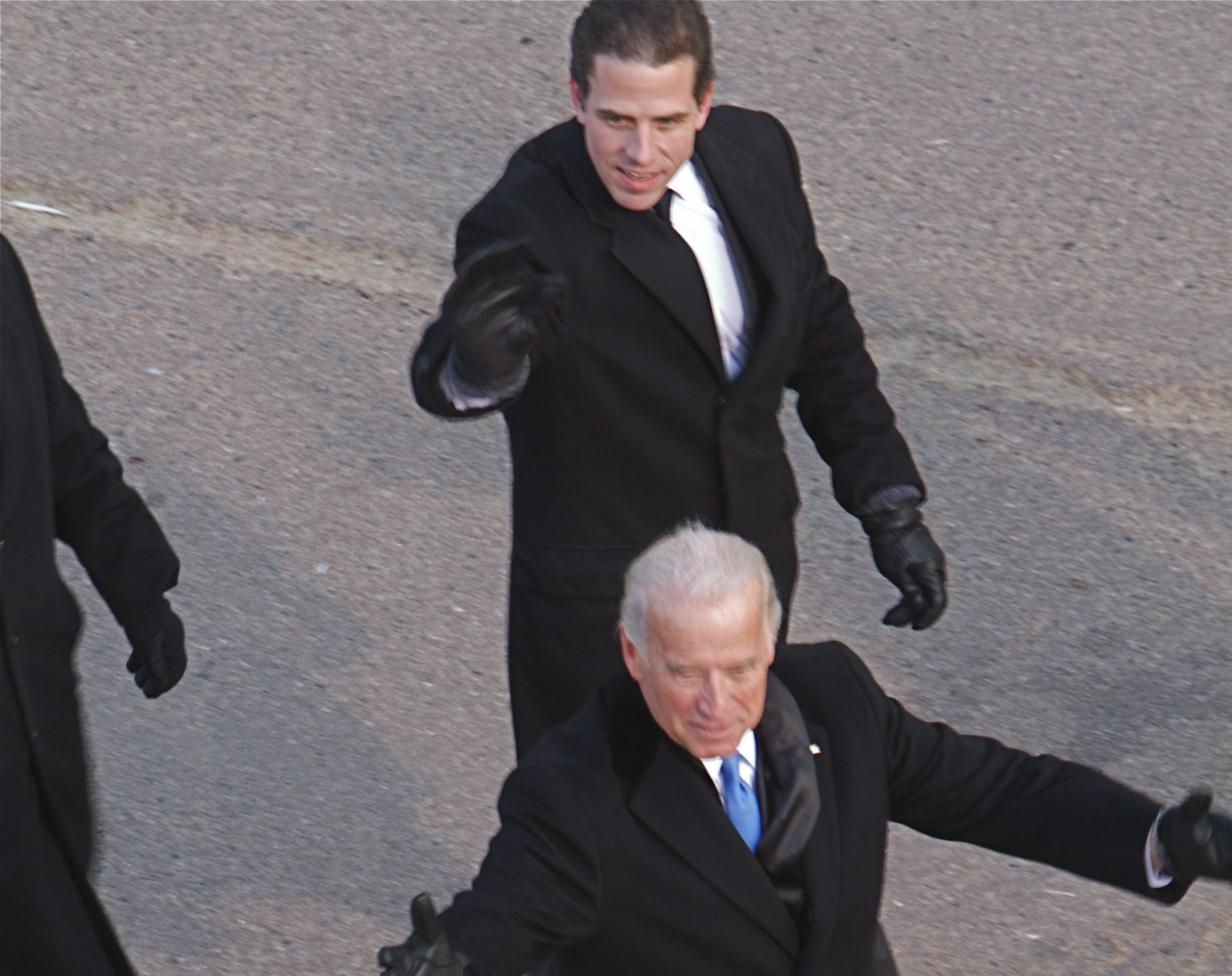
In September 2019, the house of Representatives led by Speaker Nancy Pelosi launched a successful attempt at impeaching US President Donald Trump from office on charges of abusing power and obstruction of Congress. The inquiry was initiated after a CIA whistleblower claimed that President Trump tried to get the President of Ukraine to investigate Hunter Biden, the Son of the former vice-president, and the Democratic nominee Joe Biden. While the president of Ukraine Volodymyr Zelensky denied the charges against President Trump, Congress proceeded with the inquiry and in a partisan House vote, successfully impeached the President in December 2019.  Ten months later, leaked emails from Hunter Biden’s laptop did prove that Hunter used his father’s office, the then US Vice-President Joe Biden for private business gains, particularly in Ukraine. This is not the first time we have had negative speculation about Hunter Biden.

MBNA

In 2008, The New York Times found that Hunter Biden received consulting fees from the financial service and credit card company MBNA from 2001 to 2005. A company official said that Hunter was receiving $100,000 per year according to the times. While Hunter was an executive at MBNA since 1996, the consulting fees in question, strangely, came years after he departed the company as a full-time employee. The action was happening while the then-Senator Joe Biden was pushing successfully for legislation that was promoted by the credit card industry and opposed by consumer groups. The legislation made it harder for consumers to obtain bankruptcy protection in the courts according to CBS.  The Story broke during the presidential marathon of 2008 where Biden made a successful bid at the vice-presidency of this nation.

China

Hunter was one of nine members of the BHR board of directors. While BHR is a private-equity company, it is controlled by stakeholders loyal to the Chinese government. Although Hunter resigned from the board which he was a member of since its founding in 2017, he didn’t become a shareholder until October 2017. Hunter Biden was accused of receiving a $10 million annual fee for “introductions alone” from a Chinese billionaire according to one of Hunter’s emails.

Additionally, Hunter received an email explaining how he and his family would be paid for a Chinese energy deal in CEFC including Jim Biden at 10%, then 10% for “the big guy held by H.”  This email was confirmed by Tony Bobulinski, a business partner to the Biden family. Tony also confirmed that Jim’s share increased to 20% unexpectedly, making it seem that he might be getting his brother’s, Joe’s, share.

On July 26, 2017, the Chinese also proposed that an interest-free loan which the Bidens claimed was “Based on their trust in the Biden family.”  Another $5 million was reported by a recent Senate report to go directly to Hunter Biden and from there, no one knows, but it didn’t make it to the business.

Tony Bobulinski, a previous Democrat donor and supporter, also claimed that Hunter became the personal attorney to CEFC as they were closing a deal that would allow CEFC to own 14% of a Russian state-owned energy company at $9 billion.  Tony also refuted the claim that Joe was not involved in business transactions as he received text messages confirming that Joe was involved in key decisions.

Ukraine

Despite all this, the greatest hits of the suspicions surrounding Hunter Biden are with Ukraine. In April 2014, Hunter and his friend Devon Archer joined the natural gas company Burisma Holdings board. While this could be overlooked, Hunter was not known to speak Ukrainian or have experience with natural gas. The interesting thing here is that Hunter Biden introduced his father, then Vice-President Joe Biden to a top executive from the board of Burisma named Vadym Pozharskyi less than a year before the former Vice-President publicly acknowledged on camera that he successfully pressured Ukraine to fire its then top prosecutor Viktor Shokin, who was reportedly investigating corruption in Bursima holdings when he got fired.  The answer is clear to why Joe Biden, the VP of the U.S., would seek to have the Ukranian government fire a lowly prosecutor against Burisma in a lawsuit… collusion and helping out his son with a favor which, seems ironically familiar to the abuse of power and obstruction of Congress to which Trump was charged for in his impeachment trial, in which evidence and testimony by the Ukranian president did not fully support.

To summarize further, Hunter Biden joined a natural gas company in Ukraine at a reported salary of up to $50,000 a month with virtually no natural gas experience or speaking Ukrainian in 2014. Then in 2015, he introduces one of his bosses to the vice-president of the United States, who later succeeds to pressure Ukraine to fire its top prosecutor who was actually investigating the company that Hunter joined with neither the experience nor the language that would qualify him for the job at the reported salary.

In summation, according to Joe Bobulinski, the emails found on Hunter Biden’s laptop and the recent Senate report, Hunter Biden used his father’s influence to take jobs he didn’t qualify for, then made a lot of money out of shady dealings that were a textbook case of collusion and political scandal. Joe Biden used his influence to pressure a sovereign government to fire its top prosecutor and bragged about it to the media according to multiple sources.


Vice Presidential Debate Summary

Co-Authors: Claudia Morales and Charles Bonkowsky

The Vice-Presidential debates have ended, leaving Americans with a better idea of the views of each candidate. This article will break down the policies, views, and opinions. We will also fact check the information for statements on topics like COVID-19, the battle over the Supreme Court, and racial division and unification.

Main Topic: Covid-19

Sub-Question: Why is the US death toll higher than that of every other wealthy country?

Mike Pence: Pence diverted from the question.

“From the first day, Mr. Trump has put the health of Americans first. People were suspended from traveling to and from there. This was the greatest national mobilization and saved thousands of lives. Doctors and nurses were able to have the resources they need as well as the development of a vaccine.” Biden’s plan (to aid Americans during the pandemic) is very similar to ours. We are advancing testing, creating personal protective equipment, etc. which seems like “plagiarism” on their end. Pence mentioned how Dr. Fauci even noted that the Trump administration did everything right, but that still would not have saved everyone.

Sub-Question: How can you explain to Americans to follow the safety guidelines for COVID when the White House does not follow those guidelines? A recent example is at the Rose Garden where guests were not following safety precautions.

Mike Pence:

“Americans are willing to put the health of their own families first and we trust them to take the information in and put it into practice. We told them what needed to be done and Americans did what needed to happen. At the Rose Garden event, many people were tested for COVID before entering and it was an outdoor event. We trusted the people there to make the best choices for themselves. We are about freedom and respecting the American people.”

Fact Check:

Comparing the two campaigns’ plans for fighting coronavirus, they have some similarities—driven by the recommended scientific guidelines—but differ in the specifics. Trump’s plan appears to be centered around the development of a vaccine and a “Return to Normal in 2021”, while Biden’s gives no definite end-date, has mentioned potential national shutdowns and instead speaks of the need for protection from the virus as well as economic relief.

While Trump set restrictions on travel to and from China, it wasn’t a complete and total ban—as US citizens and family members were permitted to return home, which was reported to be about 40,000 people since the bans were put in place.

And while it’s true that part of the Rose Garden event was held outside (though with many of the guests still maskless, contradicting health guidelines), many guests were also photographed, maskless, indoors at the Whitehouse.

Sub-topic: 39 states have rising numbers and set records for COVID cases. Even with a vaccine that is available, what would your party do to combat this?

Kamala Harris:

She goes over the failures of the President and VP about the handling of COVID-19. In addition, she reviews her and Biden’s plan regarding national strategy, contact tracing, and free vaccines for all. She said, “We need to save our country. Clearly whatever your administration is doing isn’t working.” She mentions how the presidency knew about COVID-19 in early January 2019 but ultimately did nothing.

“You respect the American people when you speak the truth.” She recites how facts are hard, but they need to be known. She further adds, “ Now you are standing in food lines because we have an administration that lies”.

Sub-Topic: Half of Americans say they will not take a vaccine. Should Americans take it and will you take it?

Kamala Harris:

“If doctors say to take it I will. If Donald Trump says to take it I will not.”

Fact Check:

The administration did appear to be aware of the threat of COVID-19 before it was conveyed to the public. In excerpts from Bob Woodward’s book, he recounts an interview with the president where Trump told him the virus was “deadly stuff”; 3 days later, he told supporters that “I think the virus is going to be — it’s going to be fine.”

Within hours of President Trump’s Covid-19 China travel ban on January 31 (the first travel restriction the U.S. implemented due to Covid-19), several top Democrats and media figures stated that the move to ban travel from China was xenophobic and not needed.  These figures included Joe Biden coming out with a tweet, echoing voices from other Democrats that the U.S. “needs to lead the way with science not Trump’s record of hysteria, xenophobia…”  He claimed later that these remarks were not in connection with the China travel restrictions, which some have said it is hard to believe as the tweet seemed to echo many other media and Democrat voices over the previous 24 hours.

Main Topic: Role of the Vice President

Main question: Being Vice President to what will be the oldest President in the office on both sides, have either parties discussed working on presidential disability?

Note: Both candidates diverted from the question but we will keep what they say for the record.

Kamala Harris:

Goes over her time when she first got the call that Biden wanted her as his running mate. She expressed her views on the values of hard work and public service. Goes over her career being the first in many instances like the first black woman. Diverts from the question with her history and values.

Mike Pence:

“Public confidence in a vaccine is being undermined by Harris. The reality is that we will have a vaccine, probably by the end of this year. It’s unacceptable to undermine this. We saw failure in US history through the swine flu back in the Obama administration.”

Fact Check:

The US government effort to develop a vaccine has said that, while vaccine trials may be completed by November or December, large-scale production can likely not begin until early 2021. It’s true that the H1N1 flu-infected many more Americans than the COVID-19 pandemic has—60 million had H1N1 to the estimated count of 7.6 million total COVID cases in the US—the CDC estimates that no more than 12,500 Americans were killed by it. To whit, the coronavirus has killed over 210,000 Americans.

Sub-Question: Do the American people need to know the current health of the President during these types of situations?

Kamala Harris:

Joe Biden has been transparent in regards to his health records. She then diverts to discussing tax issues regarding Trump’s tax record for $750 paid in taxes in 2016 and 2017. “We now know Donald Trump owes $400 million.”

Mike Pence:

“The care that Trump received was exceptional along with the transparency that has been given about his health.”

Fact Check:

Joe Biden’s campaign website has a link to his health records; the report on President Trump’s taxes released by the New York Times shows that he paid only $750 in taxes for 2016 and 2017, and is approximately $421 million in debt.

The president’s care was exceptional—he received care from a team of providers, and was administered an experimental drug that less than 10 others have received. However, his providers haven’t answered due to HIPAA privacy laws about when he last tested negative, as well as given conflicting answers about the state of his health.


Main Topic: Economy

Main Question: 11 million jobs have not been replaced. Those hardest hit are minorities such as Latinos and African Americans. How will both parties deal with the current crisis and recession?

Sub-Topic: Would raising taxes put those already at risk in more debt?

Kamala Harris:

Joe Biden believes you measure the health of the economy based on Americans’ health. She elaborates on the tax bill that would increase taxes on the wealthy and businesses. Biden’s administration will direct money on taxes towards infrastructure, science, and education. Furthermore, Americans will be offered free tuition at a two-year community college. Anyone who makes less than $125,000 can attend a public university for free as well. In addition, anyone with student loan debt will have it cut by $10,000.

Joe Biden will not raise taxes on anyone making $400,000 a year. Biden will not end fracking and was responsible for the recovery act during the Great Recession. She discusses the significance of the Affordable Care Act and protecting pre-existing conditions.

Fact Check:

Joe Biden’s tax plan includes a tax rate increase on personal income, corporate, investment and payroll taxes.  For personal taxes, tax increases will only apply to those earning more than $400,000 per year. Corporate taxes would increase from 21% to 28% with a minimum tax on book income.   Under Biden’s plan, the Tax Foundation estimates a negative 1.47% GDP and loss of over 500,000 jobs.

Biden has called for “no new fracking” during a town hall but also stated he would not end it. And when the Recovery Act of 2009 was signed, Obama thanked Biden for working behind the scenes to make it happen. He delegated the supervision of the stimulus money to his vice-president.

Sub-Topic: Should Americans be brazed for an economic comeback that might take a year or more to recover from?

Mike Pence: 

“When Biden was VP they tried to regulate our taxes. Trump cut taxes. There was a rise in wages for blue-collar jobs. From day one Biden will raise your taxes and bury our economy through the Green New Deal.” Pence stated what the ban on fossil fuels will cost and that half of our trade deficits were with China alone. He said his administration fought for fair wages to families. “The American economy is on the ballot. Trump has a plan to protect American health. Biden’s administration would crush American energy and allow surrender to China. We will keep America growing.”

Fact Check:

Wages for blue-collar workers have risen (barring effects from the pandemic, which throws off many traditional analyses), though analysts credit not only Trump, but also minimum wages rising.

Biden has committed to ending fossil fuel subsidies.

In August, the US trade deficit was the highest it’s been in 14 years,  although the deficit with China fell 6.7%.

Trump currently has no official policy for a new healthcare plan other than the executive order he signed on September 24 and Second term plans in which he has promised to protect those with pre-existing conditions.


Main Topic: Climate Change

Main Question: What will your party do about the issue of climate change?

Sub Question: As a co-sponsor of the green new deal, Joe Biden says he does not support it. What is your stance towards the Green New Deal?

Kamala Harris:

She gives a reminder once again that  “Joe Biden will not ban fracking, that is a fact.” She then stated that Moody’s will create more jobs than Trump ever has. Biden understands that the west coast is burning. The gulf states are being battered by storms. Biden believes in science. Climate change and science have been taken off the website by Trump’s administration. They are of the opinion that “Science does not know.” Biden will focus on renewable energy. They plan to achieve zero-emission and carbon-neutral by 2025 and re-enter the Paris Accord.

Concerning what was accomplished with China in the Trade War, the economy worsened because of it. America lost 300,000 factory jobs. We are in a manufacturing recession because of this. Overall, we will have lost more jobs than any other administration in history. 

Joe Biden saved the auto industry as well.

Fact Check:

References to climate change were removed from many government websites, although not all—Climate.gov and CLEANet.org, government-administered websites, and Trump’s second term plans.

The idea that America lost 300,000 manufacturing jobs due to the trade war is not true. Before the COVID-19 pandemic hit, the US gained 483,000 manufacturing jobs under Trump. Due to the pandemic—but not the trade war—the total record under Trump is now -164,000 manufacturing jobs.

Sub Question: With record-breaking climate issues like hurricanes, wildfires, and temperatures. What do you think should be done about these issues and climate change?

Mike Pence:

I’m very proud of our record on the environment. Our air and land are cleaner than they are compared to anywhere else. Trump made a commitment to environmental conservation. We will continue to listen to the scientist in regards to climate change. The Green New Deal will crush American jobs. The progress we have made in a clean environment is due to a strong economy. We have done this through innovation and natural gas. Biden wants to abolish fossil fuel. In regards to wildfires, we believe that we need to work on forest management. There are no more hurricanes today than there were 100 years ago.”

Fact Check:

The US does not have the cleanest air in the world (reports estimate that such a title would likely belong to Australia or New Zealand), and the country experienced far more polluted air days in any of the past four years than it did during Obama’s presidency.

It’s true that there aren’t, on average, more hurricanes than 100 years ago.

Sub Question: Do you believe that climate change is an existential threat?

Mike Pence:

Pence states that harris is denying the fact that they will raise the taxes and the Trump tax cuts will be repealed. He states how terrible it would be to rejoin the Paris accord. “We have made great progress in reducing CO2, we don’t need a Green New Deal that will harm the economy. Trump will put jobs first.”

Pence said that the administration never lost the war with China, but that Biden did during Obama’s administration. “In our first three years, we sold 500,000 jobs.”

Fact Check:

In terms of CO2 output, there was a spike in emissions in 2018 followed by more decline—however, emissions are still higher than before he took office.


Main Topic: China

Main Question: What is our current standing with China right now?

Mike Pence:

Pence went over on Trump’s actions to stand up against China. He blames China for the pandemic. He further adds how Biden was opposed to Trump’s decision to impose travel bans. “Biden has not stood up to China during Obama’s administration.”

Kamala Harris:

She discusses how there is a strange obsession with Trump to destroy what Obama created.  There was a way for us to track pandemics in the White House and the Trump administration destroyed that. The trade war with China resulted in the loss of thousands of manufacturing jobs. Also, there was a price hike in goods due to the loss of China manufacturing. She stated that PEW has done an analysis of leaders from all of our allies and they hold greater respect for the Xi Jinping than for Trump.

Fact Check:

Recent evidence has resulted from a Chinese whistleblower who recently stated that China’s government ‘intentionally’ released Covid-19.

Trump did disband the National Security Council pandemic response office created by Obama in 2018.

The trade war with China did not result in the loss of jobs, although it has raised prices for consumers.

Sub Question: What is the definition of the role of US leadership in 2020?

Kamala Harris:

“Joe said foreign policy is not complicated, it is relationships. You have to be loyal and stick by them, know who your adversaries are and keep them in check.” 

Trump has embraced dictators around the world. Russia interfered in 2016 and is trying to do the same now. “Trump takes the word of Vladimir Putin over the American intelligence community.” He has pulled us out of the nuclear deal which will result in a substantial nuclear arsenal. 

What happened with the American deaths is tragic. After the strike on Soleimani there was a counter attack on American troops. Some suffered severe trauma and he called those injuries “Headaches.” What Trump said about John McCain that he does not deserve to be a hero is not acceptable. On the other hand, Russia had bounties on the head of American soldiers. Trump had six opportunities to bring this up with Putin but failed to do so.

Mike Pence:

Today two of the Isis killers were brought to justice for Kayla Mueller. The reality is that when Biden was VP, we had an opportunity to save Mueller. The military came to Obama’s administration and notified Mueller’s location, but they took so long in their response. If that had happened during Trump’s administration, Mueller would still be alive today.” Pence also recalls that it has been through a military force that the Trump administration has been able to make progress in strengthening alliances in the Asia Pacific and countering terrorists in the Middle East.

Fact Check:

The Obama administration was criticized over their response to Kayla Mueller.


Main Topic: Supreme Court

Main question: With the new Supreme Court nominee Judge Cony Barret, it could enable more restrictions on abortion or overturn acts like Roe v. Wade. What is each party’s stance on this?

Sub Topic: What would you like California to do in regard to access to abortion?

Kamala Harris:

Joe Biden and I are people of faith.”  Biden will be the second practicing Catholic as President of the United States if elected. Over 4 million people have already voted. She strongly supports that women have rights to their own bodies, especially in regard to abortion. Obamacare is immensely helping people during this pandemic with pre-existing conditions. However, Trump’s administration wants to overturn this, and people with these conditions will lose coverage.

Fact Check:

Joe Biden would be the second Catholic president if elected—John F. Kennedy was the first.  However, Biden has been denied Holy Communion because of his pro-abortion views.

Yes, more than four million people have already voted in the 2020 election.

There is currently a pending Supreme Court case (California v. Texas), supported by the administration, which seeks to invalidate the entirety of the Affordable Care Act.

Sub Topic: If Roe V. Wade is overturned, what would Indiana do? Would you want your home state to ban abortions altogether?

Mike Pence:

Pence diverted from the question to respond to the previous topic. “Trump and I cannot be more enthusiastic to see Connie Berrett become a Supreme Court Justice. We hope she gets a fair hearing. The Democratic chairman of the Judiciary Committee expressed concern that the dogma of Berrett’s faith lived loudly in her. Harris attacked her because Berrett expressed support for pro-life.”

Kamala Harris:

In 1864 one of the political heroes, Abraham Lincoln, 27 days before the election had an open seat in the Supreme Court. He decided to wait for this stating “a President is four years, a Judge is a lifetime.” The American people are voting now and it is their decision to choose who sits in the Supreme Court. Out of the 50 people Trump has wanted to appoint to the Supreme Court, none of them were black.

Fact Check:

The Democratic ranking member of the Judiciary Committee, Senator Feinstein (D-CA) did state that “the dogma lives loudly within you” during her 2017 hearing to the Court of Appeals.

The “history lesson” Harris provides is largely true: Lincoln had his Chief Justice pass away just weeks before an election, and told his aides that he was “waiting to receive expressions of public opinion from the country,” before nominating anyone else.

Sub Question: How would the administration take the dismantle of Roe V. Wade?

Mike Pence:

I couldn’t more proud to support Trump’s view on pro-life. Harris wants to increase funding for planned parenthood. We will continue to stand strong for pro-life. Biden’s party is openly advocating open seats to the courts if they can’t win by the rules. Are they going to pack the Supreme Court to get your way? Harris never answered this question.

Fact Check:

Biden said a few days after the debate that he would wait until after the election to give his stance on “packing the court” with more supreme court justices that support Democrat ideologies. The Biden campaign does call for restoring federal funding to Planned Parenthood.

Sub Question: In the case of Breonna Taylor, was justice served?

Kamala Harris:

I have talked to the family and they deserve justice. Her life was taken unjustifiably.” She elaborates on other unjust actions that have recently occurred. An American man was tortured and killed by a uniformed police officer. People marched shoulder to shoulder to fight inequality. “I was a part of those protests. Bad cops are bad for good cops.” Biden’s administration plans to ban chokeholds, require a national registry, get rid of private prisons and decriminalize marijuana.

“I am the only one on stage who has personally prosecuted child abuse, for big banks taking advantage of the American people. The president took a debate stage and refused to condemn white supremacists. He called Mexicans rapists and criminals and enacted a Muslim ban. I was the first to institute police to wear body cameras and have training on implicit bias.”

Mike Pence:

Taylor’s family has our sympathy, but I trust our justice system. In regards to George Floyd, there is no excuse for that. There is also no excuse for rioting. This presumption that you hear consistently from Harris and Biden that America is systemically racist is an insult to the men and women who serve in law enforcement. The media selectively edits information.” Pence furthers his discussion by counteracting Harris’s statement that Trump supports White Supremacy. Pence claimed that “Trump condemns white supremacists and he respects and cherishes all American people. When Harris was DA in San Francisco, Africans were more likely to be prosecuted as well as for Latinos.”

Fact Check:

Harris is correct about Biden’s plans for criminal justice, which can be found here on his campaign website.

Harris is correct that Trump has called Mexicans “rapists” and “criminals”—his travel ban was not instituted explicitly towards Muslims, but banned travel from many majority-Muslim countries.

Pence’s statistics on relative arrests of African-Americans and Latinos are correct, but reference arrests, not prosecutions.


Main Topic: Presidential Transition

Main Question: What steps would you and President Biden take for a peaceful transition into the White House?

Kamala Harris:

Joe and I are proud of our coalition and have the broadest coalition.” She states how seven members of George W. Bush’s cabinet are in support of them.  Of course, we have the support of Democrats, but also independents and Republicans. In fact, seven members of president George W. Bush’s cabinet are supporting our ticket. We have the support of Colin Powell, Cindy McCain, John Kasich.”  She then states they have 500 generals, retired generals, and former national security experts and advisors are supporting their campaign. She states her administration believes in democracy and that people should “vote early.”

Fact Check:

Yes, all those Republicans have endorsed Biden.

Sub-Topic: If Biden wins the election and Trump refuses a peaceful transition what will you do?

Mike Pence:

“I personally believe we will win this election. Trump has launched a movement for everyday Americans and walks of life. I have confidence that they will see how we have revived our economy by standing next to men and women in our law enforcement, delivering tax cuts, etc. When Biden was VP, the CIA was spying on Trump. Those allegations were supposedly coming from the Clinton campaign, but this wasn’t the case. We are fighting in the courthouse every day to make sure we have a fair election.”


Final Question: The Utah debate commission wrote questions for tonight. An 8-year-old Utah resident wrote “When I watch the news all I see is arguing between Democrats and Republicans… If our leaders can’t get along, how are we supposed to get along?”

Kamala Harris:

She stated that she loves hearing from the young leaders of our country. Joe Biden decided to run after Charlottesville that there was so much hate and division. “Joe works in a bipartisan way and has a history of fighting for dignity. Joe has known pain, suffering and love.” She goes onto say when you think of the future it is bright, we will fight and we will vote.

Mike Pence:

I started following the news when I was very young. We believe in the freedom of an open debate. Don’t assume that what you’re seeing in the local news presents reality. Ruth Ginsburg and Scalia are polar opposites, but they were very close friends. When the debate is over, we come together as friends. We are going to work every day to have a government that is as good as the American people.”

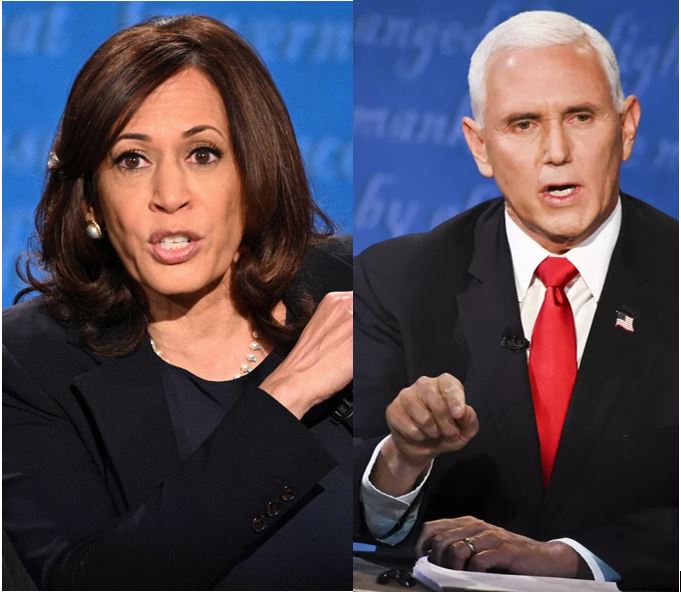
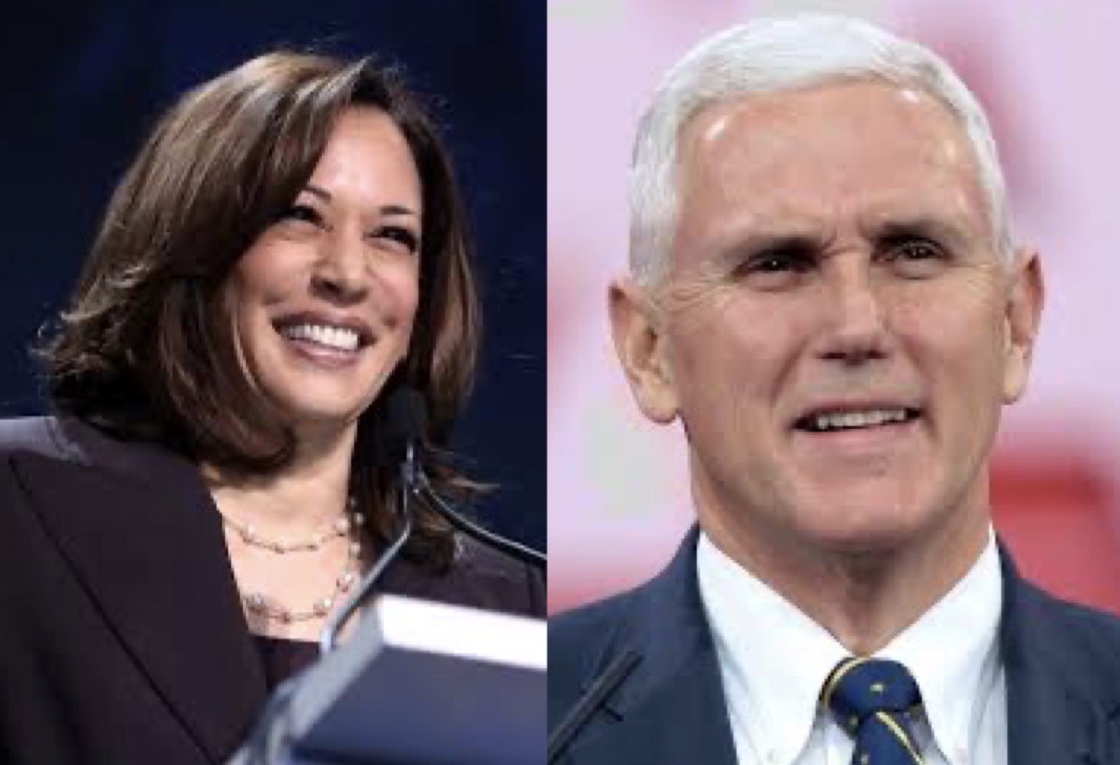
Mike Pence vs Kamala Harris

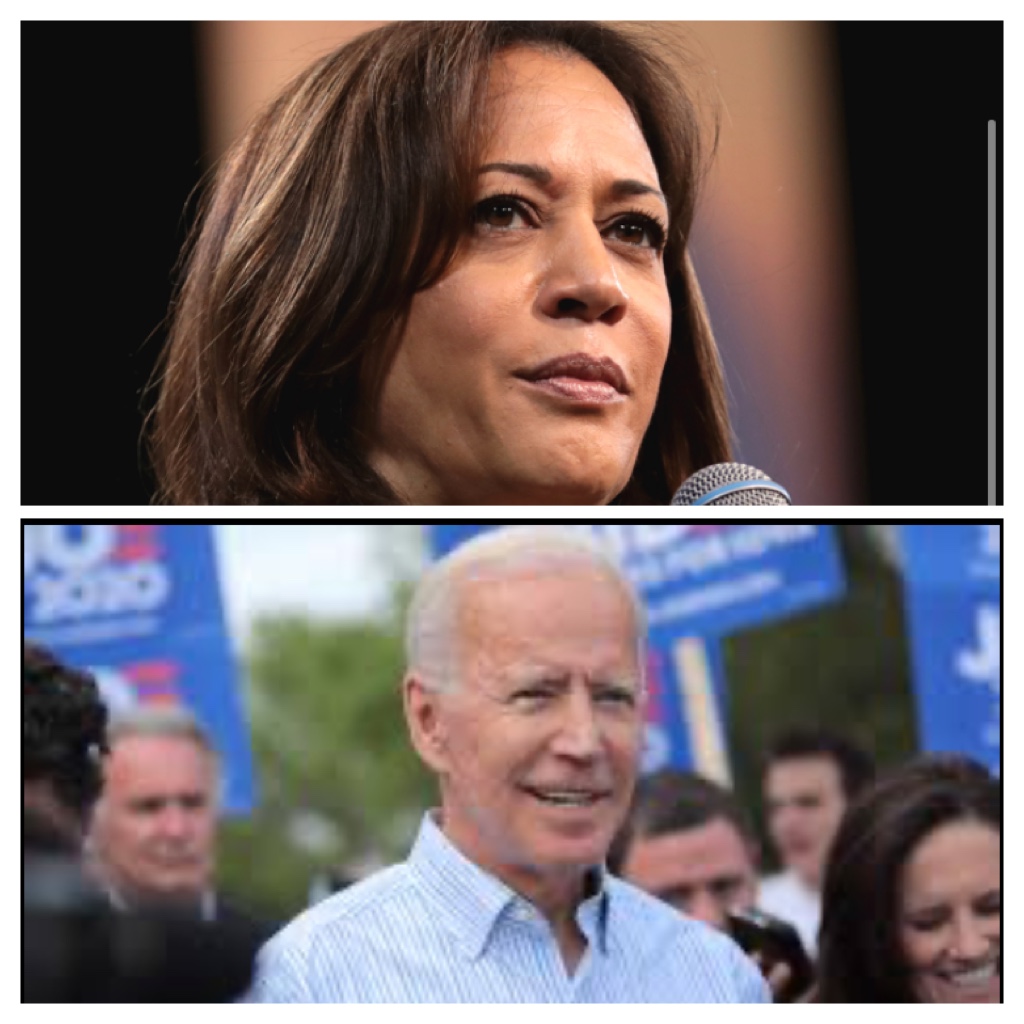
Mike Pence and Kamala Harris are the Vice Presidential candidates for the 2020 election. Mike Pence has held the position of Vice President under President Trump since his inauguration in 2017. Previously, he was the governor of Indiana and a member of the House of Representatives. Most recently, he was appointed chairman of the White House Coronavirus Task Force. Kamala Harris is the current Senator of California. Prior to this, she served as California Attorney General and was the first woman to ever hold this position. Biden chose Harris as his running mate for the 2020 election on August 11. This article will examine the differences between these two candidates.

LGBTQ community

One of the major differences between Pence and Harris is their perspectives about the LBGTQ community. They both disagree on how the other has handled the LGBTQ community.  Kamala believes the community is not being treated as equally or fairly as they should. Pence believes in Christianity which has often opposed same-sex marriage, but has loosened up his stance over time.

Harris has a pro-LGBTQ rights political record dating back to 2004 when she took office in San Francisco as district attorney. The Biden-Harris duo is described as “the most pro-equality ticket in history,”  (NBC). Throughout her career, Harris has made strides to bring equality to the LGBTQ community. In 2004, she created a hate crimes investigation unit in California to prosecute those connected to LGBTQ violence. In 2006, she created a team to end the gay and transgender panic defense in California and went on to introduce a bill to ban the practice on the national level. Harris has consistently been a proponent of equal rights for the LGBTQ community and has shown her support through her drive to establish legislation.

Pence has had a history of opposing same-sex marriage but has loosened his stance over time. In 2000, he stated, “Congress should oppose any effort to put gay and lesbian relationships on an equal legal status with heterosexual marriage.” In 2004, he co-sponsored an amendment that was proposed in order to define marriage as only between a man and a woman. In 2014, he supported a bill to ban same-sex marriage in Indiana. Despite voting against same-sex marriage, in 2015, as governor, he passed the Religious Freedom Restoration Act, ensuring businesses cannot use the law to deny services to same-sex couples, eliminating businesses from discriminating against the LGBTQ community.

Public vs Private Schools

Another difference is Pence and Harris’ stance on schooling. Harris is a supporter of the public school system while Pence supports private schools, school vouchers, and charter schools and their expansion. Both believe that providing a strong education to all Americans is important.  The difference falls in how to achieve it through funding, bigger versus smaller government proposals, and associated taxes.

In her first term as California Senator, she was given the grade of an A for “her focus on attracting and maintaining educators in neighborhood schools, and for understanding how this translated to the success of students in every zip code at a time when America is in the midst of a nationwide teacher shortage,” (NEA). Kamala Harris is known to be an advocate for the public school system and its students. Harris is also a supporter of the teachers themselves and believes they should be paid more for the work they do. She is against for-profit charter and private schools and has shown this through her votes against vouchers. She also advocates for increased funding for public schools and disagreed with Trump’s promise to re-allocate public school funding to private school vouchers. She wants to make college more affordable for everyone by offering free-college.

Pence is a supporter of private education, school vouchers, and charter schools. Pence has advocated for charter school expansion and sees the privatization of education as a way to improve its quality. Pence believes in the local control and regulation of schools. He believes that the federal government should provide funding, not strict rules and guidelines for the school system. He is a strong proponent of parent choice in where their children are going to school.

Pence finds schooling very important and believes that children should have access to the best school, whether that means public or private. A huge part of the children’s schooling is the teachers. Pence supports the idea of making teaching a more sought after career and created a grant in Indiana that would provide students in the top of their class with a scholarship if they committed to teaching for at least five years. Pence has also voted to eliminate the No Child Left Behind testing requirements and has made advancements to keep education regulations at the local level.

Abortion

Harris and Pence also differ on their opinions about abortion. Harris is Pro-Choice while Pence is Pro-Life. Pence has highlighted the fact that Trump’s administration is the most Pro-Life administration in history. He has also thanked Trump for supporting the anti-abortion movement and stated that “Life is winning in America today.” Pence believes that the Supreme Court needs more conservatives and that it is important that Trump is president for another four years in order to ensure this. This statement followed a supreme court decision to block abortion restrictions in Louisiana.

Harris is a strong supporter of allowing abortion in the U.S. For abortion rights activists, Harris was the ideal choice for Biden’s running mate. Harris is supported by Planned Parenthood because of her dedication to reproductive rights and healthcare. Harris has defended abortion and Pro-Choice, and has emphasized the importance of moving forward in women’s rights. She also advocates for access to birth control and reproductive health care to all.

Climate Change 

Another difference between Harris and Pence is their levels of concern regarding climate change. The Trump/Pence administration has continued to approve oil pipelines and fossil fuel production. Pence called the Paris Climate Accord “disastrous” and “job-killing.” Notwithstanding, Pence has stated that climate change “has some impact on climate.” He has scaled back or eliminated 100 environmental regulations that were meant to prioritize clean energy. He has done this with the idea of putting American jobs first, while helping the energy department provide pathways to clean energy innovation.  The energy department has been making changes to funding and international agreements to push clean energy innovation in the private sector.  The energy department under Trump-Pence has supported clean energy technologies and privatization of clean-coal, emission-free nuclear reactors, offshore wind, and underwater energy turbines.

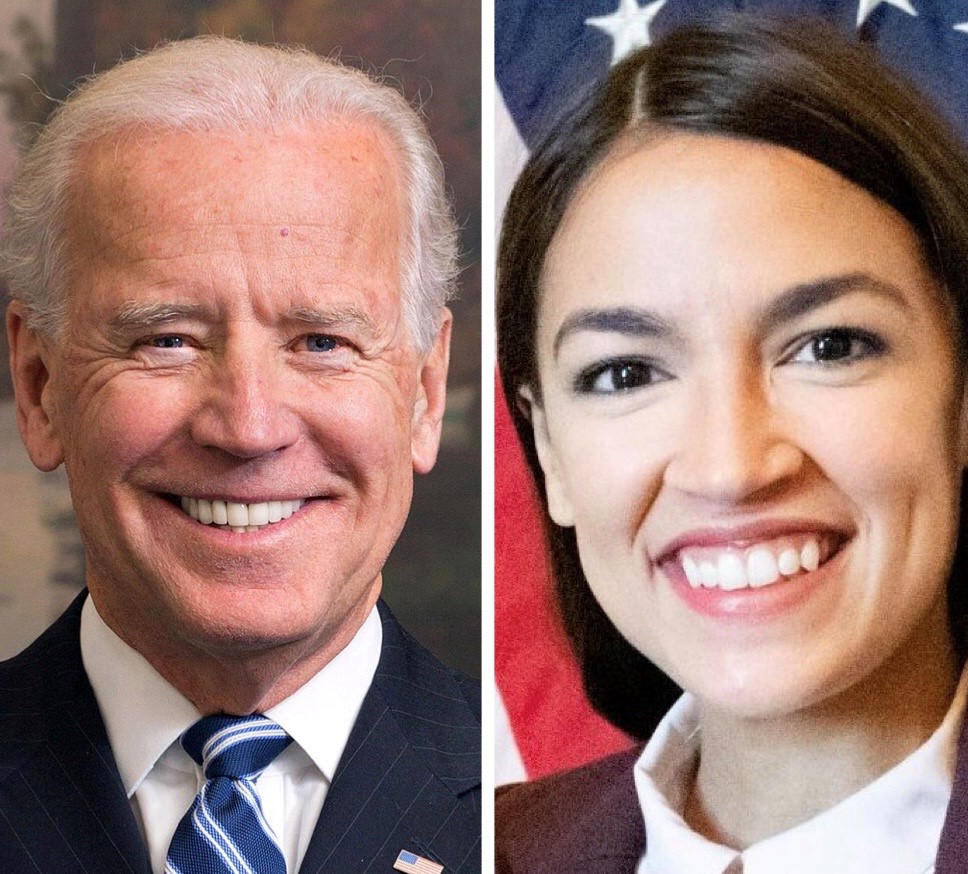
Harris sees climate change as a pressing issue that needs to be addressed. She calls it a fight that we need to be participating in and that our “leaders need to lead.” She does not think that as a nation we need to choose between jobs and climate protection, but that we can create more green jobs that will not cause harm to the environment. Harris finds it extremely important that as a country we make sure that ourselves and our children will have access to clean air and water. Throughout her political career, she has consistently fought to defend clean energy. For example, she has stood up for polluted communities that are positioned next to industrial plants. She also fought for and won an $86 million settlement from Volkswagen after they were caught cheating on emissions tests as well as won indictments after an oil spill off the coast of California. She was also the original co-sponsor with AOC in the Green New Deal, which was estimated to cost anywhere from $50–$90 trillion over the next decade, according to Holtz-Eakin, a former director of the Congressional Budget Office, and “is prepared to get rid of the filibuster in order to pass the Green New Deal.” Harris calls environmental awareness a national security issue. She believes that though right now people are fighting over oil, soon they will be fighting over clean water.

Immigration

Pence is pro-legal immigration and believes that immigration loopholes need to be closed. He believes that people should not just be able to come into this country and then disappear without showing up to their immigration hearing in court. While he believes that the conditions at the border are unacceptable, he blames this on the democrats in congress that are not passing bills to allow more bed space. Pence states that the borders are in this horrible condition because of the overwhelming amount of people that are trying to take advantage of the U.S and the loopholes. He calls the unsecured Mexican border a National Emergency.

Overall, Harris is pro-immigration, but the issue is not a priority for her campaign. Her plan around immigration focuses on the treatment of the illegal immigrants who are already in the United States rather than the process of making crossing the border legal. She explains that she would use executive authority to give illegal immigrants legal status or deferred action.  If elected, Harris has indicated she would pursue policy that would provide a pathway to citizenship for undocumented immigrants residing in the United States and restore DACA and DAPA protections. She would also increase oversight on ICE and CBP to prevent human rights abuses. She also promises to fix the family-visa backlog but does not elaborate on the specifics.

Religious Freedom

Pence finds religious freedom to be important, and says that it is especially important to him because of his relationship with Jesus. During the 2nd Annual Religious Freedom Ministerial. “As Vice President of the United States, I stand for the freedom of religion that animated the American founding and is enshrined in our Bill of Rights.” He also calls himself a “champion of religious freedom at home and abroad.” He believes that religious freedom is a human right, not a law.

Harris has a narrower view of religious freedom. She has previously shown hostility towards the Catholic religion. She also believes the publicly professing one’s faith and using it to make political decisions disqualifies them from this public life. In 2019, Harris introduced the Do Not Harm Act, which would neutralize the Religious Freedom Restoration Act that protects religious rights and practices. She explained that RFRA was being used to deny healthcare or other services. For example, the Do Not Harm Act would require a Catholic doctor to perform an abortion if they receive federal reimbursement, even if it is extremely against their own religious beliefs. Additionally, she has shown support of policies that have restricted religious freedom, such as one that banned Sikh prison guards from keeping beards for religious reasons, and when she filed an amicus brief in 2014, telling the Supreme Court not to give Hobby Lobby a religious exemption for Obama’s contraceptive mandate for all employees.

Military Spending

Pence believes that military spending should be increased. He finds it extremely important that the funds are there to support the military with resources. While Trump stated that he does not want to increase the federal deficit with military spending in the 2018 plan, he explained that he would be re-allocating the funds from other areas to the military.  Pence and Trump plan on rebuilding the military and restoring its power to increase national security. The U.S. military has served as a stabilizing presence globally for years, but limits on the budget make it harder to maintain that stability. Pence also wants to ensure that the American military is prepared for a conflict with a comparable nation military-wise.

Contrarily, Harris is a supporter of reducing defense spending. She believes that a portion of the funds should be re-allocated to communities in need in the U.S. However, she did vote against the proposal Bernie Sanders made to cut 10% of the pentagon’s budget. She stated “I unequivocally agree with the goal of reducing the defense budget and redirecting funding to communities in need, but it must be done strategically.” She goes on to explain that she hopes a more specific solution will be sought in the future that will solve the complicated issues of the defense budget while supporting national communities in need.

Gun Control

Pence has shown strong support of the Second Amendment through his pro-gun rights voting record. He is supportive of gun ownership and believes that it makes communities safer. He has an A rating from the NRA and is a defender of the 2nd amendment. He also has voted yes on prohibiting lawsuits of gun manufacturers for product misuse. He finds it important that kids are educated on gun safety and supports the Eddie Eagle GunSafe program. Overall, Pence supports loosening gun restrictions. He wants to make guns more accessible, but as with President Trump, has been supportive of criminal background checks and other measures to protect guns from getting in the wrong hands.

Harris supports gun control. She believes there needs to be restrictions and that precautions need to be taken with gun sales. She stated that she would require background checks for customers of firearm dealers as well as close the boyfriend loophole, which allows known abusers to possess a gun if they have a dating partner, but not a spouse. Harris also wants to ban assault rifle and semi-automatic weapons as well as prevent fugitives from purchasing handguns or weapons.

Healthcare

Pence is a supporter of private healthcare with pre-existing conditions and other reduced stipulations carried over from Obamacare, but has supported its repeal and replace efforts. In the 2020 Trump-Pence plan, the administration supports lowering of drug prices. He does not believe that Medicaid is useful as it stands now, explaining that 2 out of 3 children on the plan could not see a specialist if they needed to. Additionally, he has also worked to strip funds from Planned Parenthood and stop abortions in the US and abroad as well as get rid of protections for transgender patients, meaning transgender patients who don’t use their original sex in their healthcare or treatment appointment could be refused service.

When running as a presidential candidate, Harris proposed Medicare for All, or Universal Healthcare. She is passionate about the issue as her mother battled cancer but gratefully was on Medicare which allowed pre-existing conditions. In her plan, she would still allow private insurers to be involved.  They could offer a plan, but it would have restrictions and requirements to make it more affordable. Additionally, her plan would be phased in over a period of 10 years. When both Harris and Biden were candidates instead of running mates, they fought over healthcare issues. They had different ideas of what coverage should look like and she claimed that his plan would leave some Americans without coverage at all.

Taxes

In the early democratic debates, Harris proposed her own tax reform. She wants to increase the marginal tax rates for the top 1% of earners up to 39.6% as well as implement a 4% tax on households making over $100,000 to fund her healthcare plan. Harris also proposed a number of other changes to the tax code that would increase after-tax income. She also wants to increase taxes on capital gains and corporate income. Biden and Harris had differing views on taxes during these debates, but there were similarities including raising the corporate income tax rate and taxing capital gains and dividends at the normal income tax rates.  Under Biden-Harris, they propose that no one making under $400,000 per year will receive a tax increase, but that is not possible, if they plan to repeal Trump’s tax cuts.

Pence on the other hand is supportive of simplifying the tax code. He also has been supportive of tax relief rather than stimulus bills. He supports tax cuts for working families. Pence believes that cutting taxes will help Americans prosper and that tax rates need to be lowered. He is in favor of a flat tax rate in addition to, of course, the Trump-Pence tax cuts passed in 2018.


The Democrats: Differences Between Biden and Harris

Three months out from the presidential election, Democratic candidate Joe Biden chose California Senator Kamala Harris as his pick for Vice President. Considering their clash during the Democratic primary, their newfound unity sets a new tone between the two politicians. With a long track record in politics, both Democrats have been praised and criticized for their stances and how well they complement one another. But, so far, surveys such as the NBC News/Wall Street Journal poll indicate that voters are happy with Harris’ addition to the Democratic ticket with a 39% of Americans with a positive rating and 35% with a negative rating.

Why Kamala Harris?

Before making his pick, Biden spent much of his campaign deciding between various potential running mates. Publicly promising that he would choose a female Vice President, many wonder what other criteria the Democratic candidate used to put Harris on the ticket.

The pick clearly shows that Biden is appealing to more left-leaning, radical democrats, as Kamala Harris was ranked as the most liberal senator in 2019. Additionally, sensing a lack of support from black voters and the unrest surrounding people’s resistance to perceived racial injustice, Biden likely chose Harris to energize and mobilize voters. Harris is the first black woman and the first Asian American to be included on the ticket of a major party. Biden’s campaign has not been idle in touting the historic milestones.

Compared to other options for Vice President, Kamala was, above all else, safe. Her main competition, Susan Rice, was a U.N. Ambassador. While picking Rice would have signaled Biden’s intention to strengthen his stance on foreign policy given her credentials, she had never run for elected office. In contrast, Harris has been elected in California as both attorney general and Senator. In addition, she had already been vetted in her presidential campaign and had proven herself to be formidable in the eye of the public. As polls demonstrated a lead against Trump, Biden had no reason to shake things up by choosing a running mate inexperienced in the electoral process.

Policy

Kamala Harris’ foreign policy preferences generally fall in line with Biden’s. Despite growing solidarity with Palestinians among the Democratic Party, both Biden and his running mate believe in aligning America’s interest with Israel. Outside the scope of the Middle East, the Democrats take a decidedly anti-Trump stance in advocating for decreased negotiations with North Korea and Russia. However, while much of Harris’ positions on foreign policy remain unspoken, Biden expands his goals to include narrow uses of force for counterterrorism objectives. He has also stated his reluctance towards unilateral action to effect change in foreign governments.

Both Biden and Kamala are in favor of affirmative action. As attorney general of California, Harris expressed her support for affirmative action during the Supreme Court case of Fisher v. University of Texas. The plaintiff sought to challenge affirmative action in the race-based admissions policies of the university. Despite California’s banning of affirmative action, Harris decided to defy voters in her state by filing legal papers in the Supreme Court case that supported race-based admissions criteria. In addition, she filed papers in 2013 that advocated for affirmative action at the University of Michigan. Biden also supports affirmative action as he openly used gender as a primary factor in choosing Harris. In addition, he promised to appoint the first female, black Supreme Court justice. Harris’ and Biden’s stance on affirmative action carries with it an unavoidable irony as the Supreme Court ruled in the case of Fisher v. University of Texas that the gender and race-based conditions that Biden promises to follow in his Supreme Court appointment are unconstitutional.

Watching the Democratic debate, it would seem that Biden and Harris disagree over gun control legislation. However, further investigation indicates that contention about gun legislation revolves around how to enact legislation, not the substance of regulations. Both Democrats support dramatically expanding background checks for potential gun owners. In addition, they both hope to ban assault weapons and high capacity magazines. Biden and Harris diverge in the extent to which they would impose gun regulations given an uncooperative Congress. During her presidential campaign, Harris has stated that she would give Congress 100 days to pass gun control reform. If Congress refused, she promised to override their complacency with executive action. Biden retorted that such an act from the executive branch would be unconstitutional.

Both Democrats promise to prioritize action to address climate change. During the presidential campaign, Biden and Harris’ plans differed significantly in their costs. Biden proposed a $2 trillion plan while Harris advocated for a large-scale $10 trillion plan. Despite the difference in scope and cost, both remain committed to addressing environmental concerns.

Trade represents an area of disagreement between Biden and Harris. Initially, Kamala vocalized her support for free-trade policies. However, in practice, she has a protectionist record. She voted against the United States-Mexico-Canada Agreement (USMCA), a free-trade agreement between Mexico, Canada, and the US. She also stated that she would not have voted for the North American Free Trade Agreement (NAFTA), an agreement that preceded the USMCA. In contrast, Biden voted in favor of NAFTA and has declared his support for the USMCA. Thus, Biden and Harris stand opposed on the topic of free trade.

They are also divided on how to approach health care reform. Harris has demonstrated her support for a single-payer health care system in which universal health care would be financed by a public system. She has signed on to Bernie Sanders’ Medicare for All Act and raised her hand during the Democratic debate when asked who would abolish employer-provided insurance in favor of a government-provided plan. She later attempted to walk back her position and propose a plan that would simply make Medicare and Medicare Advantage plans available to all. Biden does not want Medicare for All. In contrast to Harris’ fluctuating position on reform, Biden would simply like to expand health care access and choice by protecting the Affordable Care Act, health care reform put in place by the Obama administration. Despite their differences in policies, both Biden and Harris are committed to working towards universal access to health care.

In addition to areas of contention, Biden and Harris agree on many policy preferences. Both argue for stronger legislative protections for LGBT people. They are also both in favor of rolling back Trump’s immigration policies, reforming but not abolishing Immigration and Customs Services (ICE), and protecting Deferred Action for Childhood Arrivals (DACA). Harris and Biden oppose the death penalty. Finally, both advocate for reversing the tax rates imposed by the Tax Cuts and Jobs Act of 2017 which lowered the top marginal individual income tax bracket to 37%.

Moving Forward

The differences between Biden and Harris’ policy preferences demonstrate that a Biden administration would be mostly united on Democratic approaches to policy. However, their disagreements highlight the fact that Harris holds more radical liberal views than any other democrat, surprisingly more than Bernie Sanders. That is, her positions are more left-leaning and she is far more willing to bypass constitutional regulations or democratic processes to further her agenda.

As the rift between moderate Democrats and radical leftists grows, Biden hopes to unify his base. Kamala provides a running mate choice that illustrates support for far left policies without having to compromise on his own moderate platform. However, if a Biden administration becomes a reality, we will see whether Harris affects policy in practice.

The Vote To Preserve The Post Office

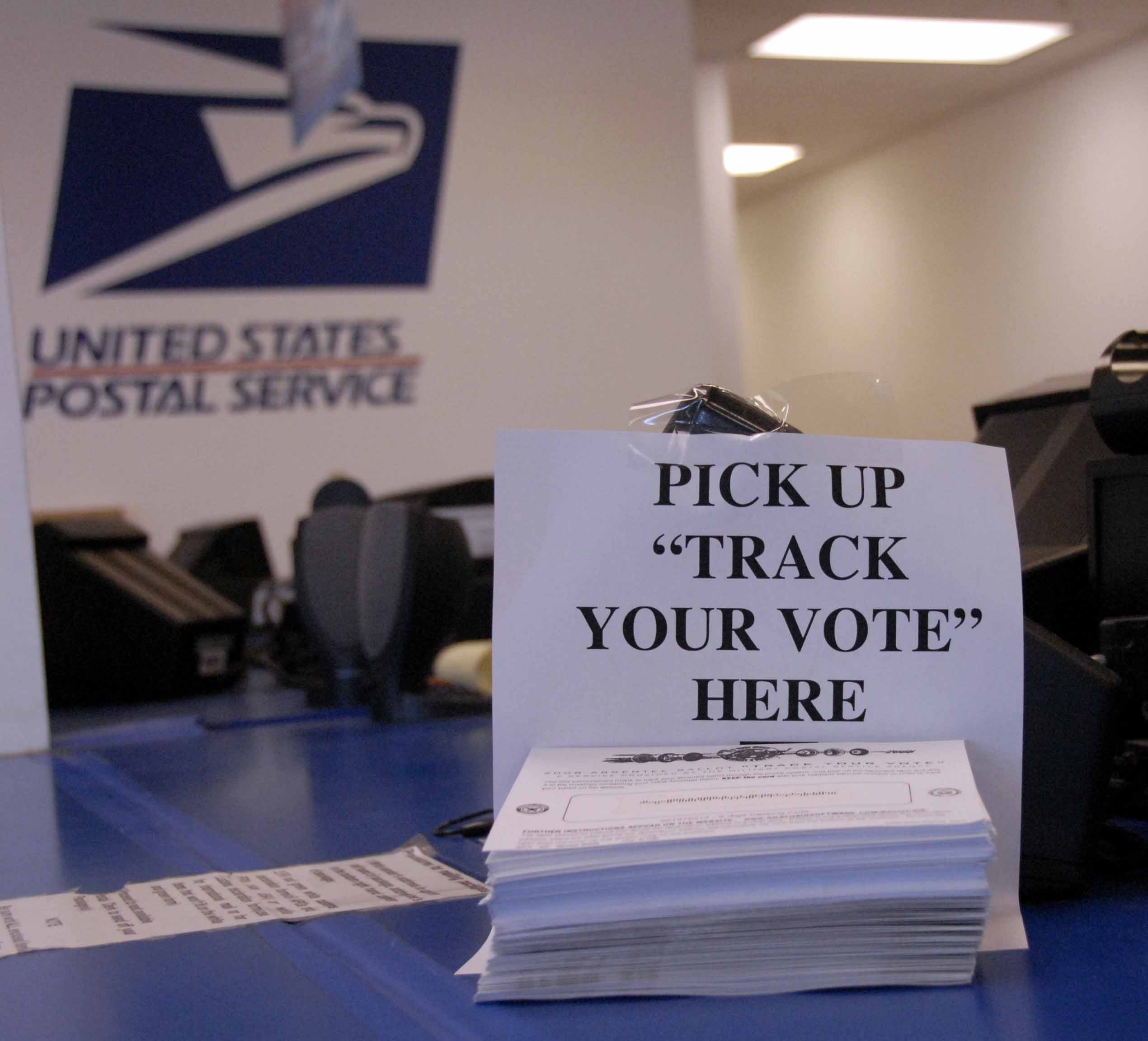
On August 22nd, the US House of Representatives voted to provide additional funding for the US Postal Service. The “Delivering for America Act” mandates that many of the changes enacted by the USPS since January 1, 2020, will be rolled back; these include any closing or reducing the hours of any post office or mail collection box, restricting overtime by postal workers, treating election mail as anything other than first-class mail, removing mail sorting machines, and any change to service which would delay the delivery of mail. The bill provides $25 billion in additional funding to the USPS in order to meet these requirements.

However, the bill is unlikely to pass in the Senate and has already been threatened with a presidential veto. Trump has claimed that widespread use of mail-in ballots would lead to fraud, and stated that he opposed additional funding to the USPS so that it could not process large numbers of mailed ballots: “Now they need that money in order to have the Post Office work so it can take all of these millions and millions of ballots…if they don’t get those items that means you can’t have universal mail-in voting.”

While mailed ballots are not impervious to fraud, cases are very rare. Data from the 2016 and 2018 elections in states which already conducted full vote-by-mail elections (in this case, Colorado, Oregon, and Washington) found only 372 possible fraud cases out of over 14.6 million ballots cast. If every adult in the United States—not just every voter, but every adult—voted by mail, this would suggest that there could be 8,362 possible cases with 209.1 million ballots cast, for a rate of 0.0025%, assuming these statistics hold for the likely-higher-turnout 2020 presidential election.

And mail-in ballots have safeguards. As the Pacific Standard details:

In Oregon, both the absentee envelope and ballot have a barcode unique to each voter, and in the larger counties, like Marion, a machine scans for any discrepancies between the two, or any duplicate barcodes. Then, a team of election workers trained in forensic handwriting analyzes the ballot signatures to verify the identification of the voter, who has two weeks to prove her identity should the signature be contested.

During this process, “everything that is happening is on camera at all times,” says Tayleranne Gillespie, the communications director for the Oregon Secretary of State. “No one’s ever by themselves counting ballots. It’s always done in bipartisan teams.”

That doesn’t mean that no fraud exists, of course. It’s often more common at local election levels, where races are closer and decided by fewer ballots; the East Chicago Democratic primary was re-run after the Indiana Supreme Court called it “a widespread and pervasive pattern … to cast unlawful and deceptive ballots.” Supporters of the Democratic incumbent, Robert Pastrick, had encouraged others to vote absentee and completed their ballots for the preferred candidate, and several city officials were charged with election fraud.

At the federal level, a US House election in North Carolina’s 9th district in 2018 had to be repeated after a consultant for the Republican candidate delivered absentee ballots in violation of federal law (third parties other than postal workers are not allowed to handle ballots or ballot applications), and admitted to filling out blank portions of the absentee ballots for Republican candidates.

But the race was never certified, and cases such as that are still a rarity—this was the first, and currently only, federal election ever where the race had to be repeated due to fraud, and the discrepancies were noticed within days of the election. Polling and population statistics allow any oddities—such as white voters’ absentee ballots being returned at twice the rate of Black voters’, or winning a county’s absentee vote at a much higher than expected margin—to be seen and investigated. And since mail-in and absentee ballots leave a verifiable paper trail, some government cybersecurity experts, such as Christopher Krebs, director of the Department of Homeland Security’s Cybersecurity and Infrastructure Security Agency, have said that vote-by-mail (VBM) elections will actually increase election integrity.

Nor do VBM elections favor one party over another. A recent BYU study found that VBM increased voter turnout by 2-3 percentage points in presidential and midterm races, but “has no effect on election outcomes at various levels of government”. And, in the wake of the pandemic, many states from across the political spectrum haveadopted some semblance of mailed ballots—Iowa, Ohio, Wisconsin, and Massachusetts, among others, will mail every registered voter an application for a ballot.

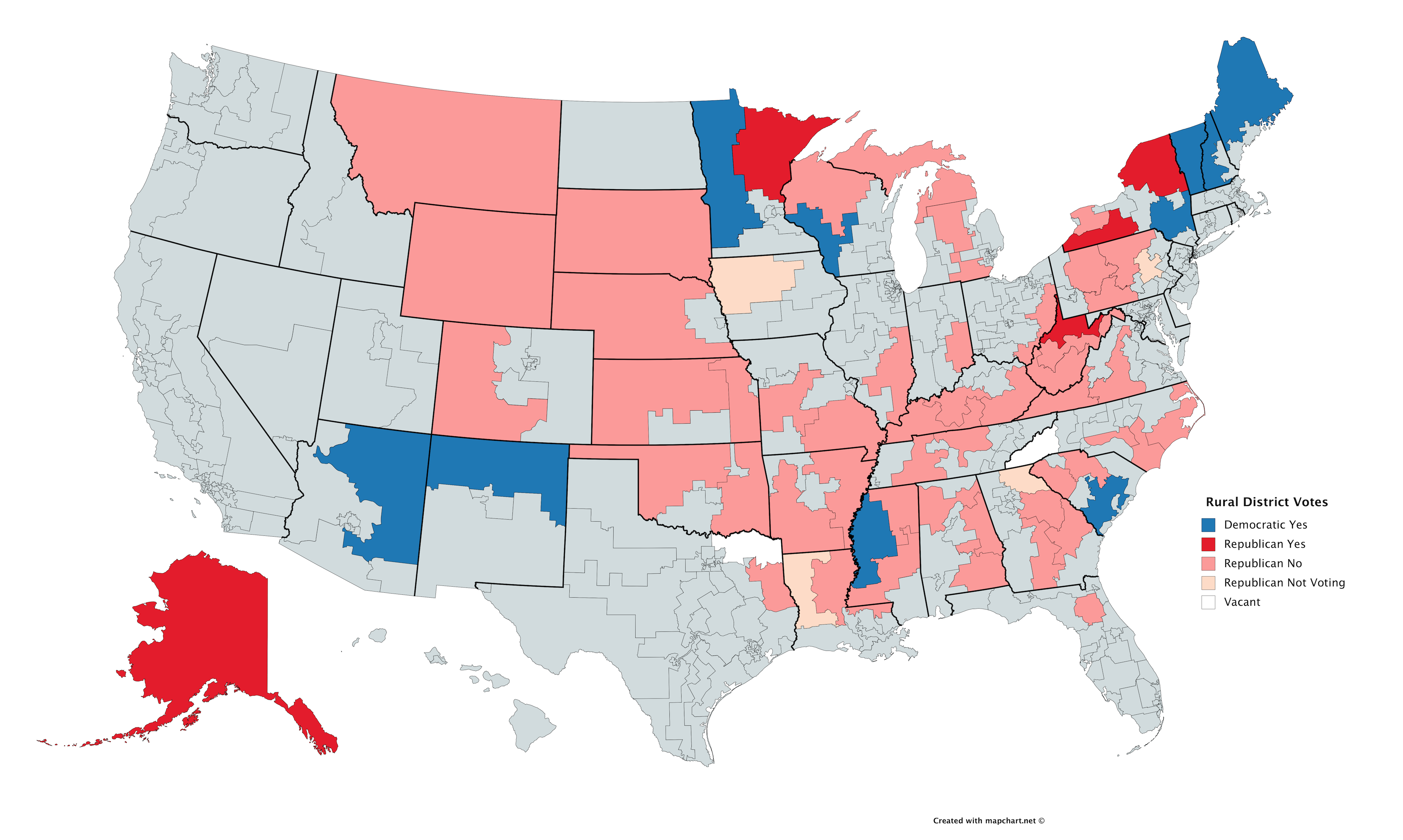
These changes are perhaps what led to a notable amount of bipartisanship in the bill’s final passage. 26 Republicans broke ranks and voted to pass along with 231 of the chamber’s 232 Democratic members (the lone not-voting member of the Democratic caucus was Tulsi Gabbard, HI-02, currently fulfilling her two-week Army duty requirement with the Hawaii National Guard in Alaska). In doing so, many of those Republicans spoke of its benefits to their more rural constituents:

“The U.S. Postal Service plays a critical role in our nation’s commerce and economy, and in delivering mail to all Americans, especially to those living in rural communities.” -Don Bacon, NE-02.

“We all know the Postal Service is one of our greatest institutions, and has been ever since we developed the Constitution.” -Don Young, AK-AL.

“Tasked with delivering vital medicine to seniors and last mile service for rural counties, the post office is a critical service for the constituents of TX-10.” -Michael McCaul, TX-10.

“The United States Postal Service plays a vital role in the lives of my constituents, particularly those in rural communities, from ensuring their ballots are counted to paying their bills and receiving lifesaving medication.” -Steve Stivers, OH-15.

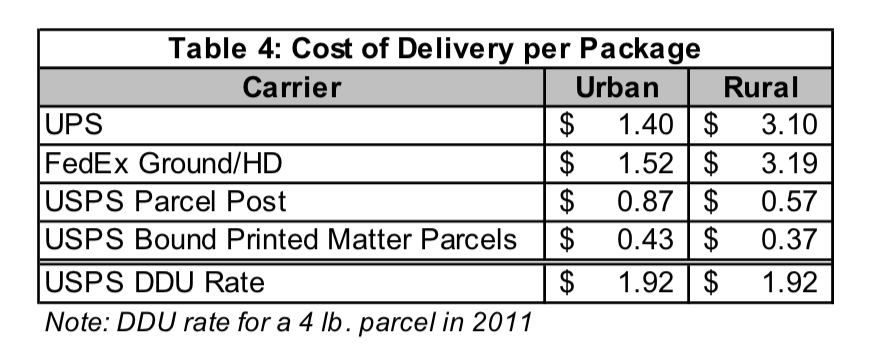
Especially in rural areas, many of which lack reliable broadband connection, the Postal Service remains a pillar of the community, a secure, cheap and effective link to the larger world. In rural locations, where commercial carriers like FedEx, UPS, and Amazon will inflate their prices or simply refuse to deliver because doing so is not cost-effective, it’s the USPS which delivers packages the “last mile” to their destination. A 2011 analysis noted that “Without such service, the businesses located in rural areas will be paying about $3.00 more per parcel and the people residing in such rural areas will be paying about $5.45 ($3.00 for Ext. DAS [Delivery Area Surcharges] and $2.45 for ground residential) more per parcel, or both businesses and consumers will be limited in ordering for direct delivery to their address.”

A table showing the cost of delivery for packages through UPS, FedEx, and USPS for rural areas.

But limiting that service has its own dangers—many seniors and residents of rural communities receive vital medications through the mail, and delays in the mail could mean that prescriptions run out before the next shipment arrives. Rob Larew, president of the National Farmers Union, writes “USPS is frequently the only affordable and convenient way to receive medication in rural areas — and…disruptions or delays could literally mean the difference between life or death.”

So why did so many rural Republicans vote against providing funding for the Postal Service?

The CityLab analysis of congressional district density found 70 districts which it classified as “purely rural”: “a mix of very rural areas and small cities with some suburban-style areas”. These are the districts which would be most affected by any changes to the USPS, and are overwhelmingly represented by Republicans, who hold 60 of those 70 districts. In many ways, these districts are the base of the GOP—they overwhelmingly voted for Trump over Clinton, 63-37, and have shifted ever more Republican over the past few years.

And yet of those 60 rural Republicans, only 5 voted to extend funding for the postal service.

Republicans Voting ‘Yes’ And How Their Districts Are Classified:

  • Don Bacon* (NE-02)—dense suburban
  • Peter King (NY-02)—dense suburban
  • Ann Wagner* (MO-02)—dense suburban


  • Troy Balderson (OH-12)—sparse suburban
  • Vern Buchanan (FL-16)—sparse suburban
  • Brian Fitzpatrick* (PA-01)—sparse suburban
  • David Joyce (OH-14)—sparse suburban
  • Chris Smith (NJ-04)—sparse suburban
  • Mike Turner (OH-10)—sparse suburban


  • Mike Bost (IL-12)—rural-suburban mix
  • Rodney Davis* (IL-13)—rural-suburban mix
  • Jeff Fortenberry (NE-01)—rural-suburban mix
  • Sam Graves (MO-06)—rural-suburban mix
  • Jaime Herrera Beutler* (WA-03)—rural-suburban mix
  • Will Hurd (TX-23)—rural-suburban mix
  • John Katko* (NY-24)—rural-suburban mix
  • Doug LaMalfa (CA-01)—rural-suburban mix
  • Michael McCaul (TX-10)—rural-suburban mix
  • Steve Stivers (OH-15)—rural-suburban mix
  • Fred Upton* (MI-06)—rural-suburban mix
  • Jeff Van Drew* (NJ-02)—rural-suburban mix


  • Pete Stauber (MN-08)—pure rural
  • Elise Stefanik (NY-21)—pure rural
  • David McKinley (WV-01)—pure rural
  • Tom Reed (NY-23)—pure rural
  • Don Young* (AK-AL)—pure rural

Those marked with an asterisk are facing competitive re-election races in the 2020 general election.

Most likely, their votes are due to partisan polarization; these districts, as the base of a Republican Party which has aligned itself with Trump, are unfavorable to representatives who buck the president: in 2018, the rural NC-09 ousted its Republican incumbent, Robert Pittenger, in the primary over a perceived failure to support Trump’s immigration policies. Trump has vowed to veto the funding bill if it passes the Senate and called it a “HOAX by the Democrats to give 25 Billion unneeded dollars for political purposes”, meaning that congressional Republicans who wished to stay in their party’s good graces had a clear political incentive to vote against the bill.

But the political contrast remains striking. Rural districts cover wide swaths of the central and eastern United States, but a wide majority saw their representatives vote against funding for a service they rely upon:

A map showing how the representatives of the 70 rural districts in the US voted. (55 Republicans voted no, 5 voted yes, along with all 10 Democratic representatives)

Colored districts are the 70 districts classified as “pure rural” by the CityLab analysis, while the greyed-out districts are not.

Biden and Alexandria Ocasio-Cortez: Difference Among Democrats

With the presidential election on the horizon, Democrat candidate Joe Biden commissioned a “joint task force” with Vermont Senator Bernie Sanders to develop a policy agenda. New York Rep. Alexandria Ocasio-Cortez (AOC) was among the most notable appointees of the task force. In addition to the explicit function of the working group to inform specific areas of policy, the joint task force serves as a symbol of unity between perceived moderates such as Biden and more radical Democrats such as Rep. Ocasio-Cortez. Some worry about the possible rift opening up between Democratic politicians and their policy preferences. A review of Biden and Ocasio-Cortez agreements and areas of contention help shed light on the varying stances within the Democratic Party.

What Are Their Policy Positions?

Some Democrats were disappointed with Biden’s reluctance to embrace a single-payer healthcare system in his approach to health care reform. He is not against citizens’ access to a public option. Rather, he advocates for maintaining the Affordable Care Act (Obamacare) and lowering requirements for those wishing to enroll in Medicare, providing more of a hybrid approach. AOC insists that Biden’s approach is not enough. Instead of accepting the status quo, she argues that a “Medicare for All” would be more successful in ensuring equal and affordable access to health care.

In addition to health care reform, Biden and Ocasio-Cortez differ in their stance on how to address climate change. Although they both agree on the need to rejoin the Paris Climate Agreement and to upgrade public transportation to accommodate climate change, they differ slightly in how they view emission quotas. Biden has proposed that the US reach net zero emissions by 2050. This plan lags 20 years behind AOC’s Green New Deal which calls for the country to reach the zero emissions quota in just 10 years. In addition, Ocasio-Cortez calls for the banning of fracking and natural gas while Biden does not.

Both Biden and AOC would like to implement the provisions of the College for All Act which would eliminate tuition and fees at public universities for all families below an income of $125,000. Comparing their overall stance on loan forgiveness, Rep. Ocasio-Cortez takes a decidedly more broad and simple approach. She advocates for wide-scale student loan forgiveness. In contrast, Biden would like to confine loan forgiveness to public universities and only up to a certain amount ($10,000 for each borrower during COVID). He also supports a plan where citizens are relieved after paying 5% of their income for 20 years.

In terms of their tax reform preferences, Ocasio-Cortez and Biden maintain a typical Democratic preference to increase taxes. AOC is somewhat more extreme in her view that the top marginal income bracket should confiscate 70% from top earners. In comparison, Biden simply hopes to reverse the top income bracket to 39.6% which reflects the tax rate before the enactment of President Trump’s tax bill, the Tax Cuts and Jobs Act of 2017.

One of the main aspects of Rep. Ocasio-Cortez’s platform involves the vocal denunciation of the Immigration and Customs Enforcement (ICE) due to the apparent inhumane treatment of illegal immigrants. Although Biden hopes to reform the agency and increase transparency, he does not see abolition as an effective approach. However, they are unified in their efforts to uphold DACA and their opposition to the construction of a physical wall on the Southern Border.

As part of “the squad,” a group of radical Congresswomen including Representatives Ilhan Omar, Ayanna Pressley, and Rashida Tlaib, Ocasio-Cortez has broken with the tradition of a pro-Israel stance in the Democratic Party. With concern for the oppression of Palestinians, AOC characterizes herself as defending the persecution of Muslims through the condemnation of Israeli foreign policy decisions. Despite no position on how to limit the sectarian violence experienced by many Muslims in the Middle East outside the lense of the Israel-Palestine conflict, she specifically speaks out against the Israeli occupation of the West Bank. In comparison, Biden takes a pro-Israel stance in line with mainstream Democrats such as Nancy Pelosi. He has praised President Trump’s recent brokering of the peace deal between the United Arab emirates (UAE) and Israel which codifies the UAE’s recognition of Israel’s statehood and lays the foundation for the normalization of economic relations in the Middle East.

The Future of the Democratic Party

With Rep. Ocasio Cortez’s affinity for progressive policies such as Medicare for All and the Green New Deal, she stands apart from the more moderate policies promised by a Biden administration. Proponents of AOC hope to elect Biden to eliminate the possibility of a Trump administration and pull him towards more progressive policies during his presidency. Thus, Biden is charged with balancing his own moderate preferences while appeasing those in the Democratic party who lean farther left. Many people point to young Democrats such as Ocasio-Cortez as a foreshadowing of a more progressive party platform as many people look to the future of the Democratic Party as a whole. However, it is not yet clear whether the rift between moderate and radical Democrats will serve as a means of higher accountability and innovative ideas within the party or whether it will simply hinder Biden’s ability to rally a large enough base to win the presidency.

Joe Biden: The ‘Most Progressive President’ Ever?

The Democratic primary was largely decided in March (Senator Bernie Sanders dropped out at the beginning of April), but those five months can make all the difference in the world. March marked a time before the US economy contracted by a third, before tens of millions faced housing eviction and protests over another police killing of a Black man rocked every state in the nation.

And during that time, presumptive nominee Joe Biden has seemed to change as well. During the primary, he was defined by incrementalism and the long shadow of his decades in the Senate—but now, his plans and his actions have brought Sanders to describe him as, if those plans are implemented, “the most progressive president since FDR.” Biden himself has stated that, if elected, he and his administration “won’t just rebuild this nation—we’ll transform it.”

But in many ways, Biden’s apparent change is less a radical departure from his positions of the past, and more an acceptance of his position as the standard-bearer of a party that has shifted around him.

Biden Is Historically In The Center (Of The Party)

Biden was first elected to the Senate in 1979, and over that time, many of his views have shifted significantly. In the 1990s, he voted for the Defense of Marriage Act, which prevented same-sex marriages; in 2012, he was the first high-ranking Democrat to endorse it, even before the president. And some of the most contentious points in the primary came over his support for the 1994 Violent Crime Control and Law Enforcement Act and the Anti-Drug Abuse Act of 1988, both of which he has said he regrets.

But his views have evolved with the party. The majority of Democratic senators voted for the Defense of Marriage Act (32 of 46), the Violent Crime Act (54 of 56) and the Anti-Drug Abuse Act (49 of 54). In fact, tracking his voting records through Congress, Biden is dead center of the Democratic caucus:

A .gif showing Biden's votes in the Senate, falling largely in the center of the Democratic caucus.

(the left bloc generally represents Democratic senators, the right bloc Republican senators. Biden’s position among them is marked in blue. On average, Biden was more liberal than 51% of Democratic senators and more conservative than 49% of Democratic senators).

So the question of where Biden stands is, in its broadest sense, a question of where the Democratic Party stands—and there’s evidence to suggest that the party is further left than it’s ever been. Even if ideas like Medicare-for-all or the Green New Deal weren’t enough to win the primary, the discussions they sparked in public opinion and the ideas they proposed were the catalyst which carved out the space in which Biden’s plans now fall.

So What Are Biden’s Plans?

Biden’s campaign website features an extensive list of policy plans, many targeted at specific communities. After the primary ended, several of these plans were reworked or added to with input from activists, legislators, and prominent Democratic figures. A joint task force between the more establishment and progressive wings released guidelines on some major policy areas, and what Biden’s plans have become in response:

Education

Biden’s plans on education represent a drastic shift from the Obama-era policy, perhaps driven in response to Secretary of Education Betsy DeVos’ championing of charter schools. In K-12 education, Biden pledges a massive investment in public schools (especially Title I schools in low-income areas; his plan calls for tripling funding for those schools) and teachers, though he has not yet adopted the recommendation of stricter federal oversight on charter schools.

Post-high-school, while Biden has adopted the progressive tenet of free public college for all at least to a degree: his plan says that colleges will be free for families earning under $125,000, and that community colleges will be free for everyone. Beyond that, Biden says that he will work to reform the student loan system to reduce administrative burden and—like many other of his plans—specifically invest in colleges and universities that serve communities of color.

Economy

The task force called for a comprehensive plan that specifically addressed communities of color, which Biden’s campaign has made the fourth pillar of his “Build Back Better” program. Though it does not include some of the policies championed by Sanders and Warren such as a “wealth tax”, it embraces the role of government in creating jobs (and assisting economic recovery in the wake of the pandemic) through the creation of a Public Works Job Corps.

His current economic plan, of which more details are expected to be released soon, is also interconnected with many other areas such as climate change, where Biden’s platform details that infrastructure development will also be designed to electrify and decarbonize much of the US’ existing infrastructure.

Immigration

On immigration, Biden’s plans (and even the task force recommendations) fall most in line with his primary campaign: the idea that, as president, Biden will work simply to undo much of what Trump has done. Much of Biden’s immigration plans amount to a dismantling of the restrictions implemented since 2016, such as the travel bans on Middle-Eastern countries and changes to the asylum system which forced immigrants to wait in Mexico or other Central American countries while their cases are processed.

While Sanders made waves in the primary for calling to abolish ICE and decriminalize illegal immigration (making it a civil penalty rather than a criminal one), Biden makes no such pledges. He calls for expanding the visa system to make more potential immigrants eligible, and creation of an oversight panel on ICE—another sign that, while pushed by the left, he is not the “Trojan horse” for their policies that many Republicans have attacked him as.

Climate

In a primary which saw broad, sweeping climate plans from candidates like Gov. Jay Inslee of Washington and of course the Green New Deal championed by Senator Sanders, Biden was criticized by progressive groups like the Sunrise Movement for being less willing to take bold steps, especially on an issue that many young voters—a weak area for him—care heavily about.

Yet just a few months later, the presumptive nominee’s sweeping new climate plan has been largely hailed by those groups. For one thing, they had a hand in crafting it: Biden’s plan came about as a result of one of his unity task forces between the progressive and establishment wings of the party, including people like John Kerry and Alexandria Ocasio-Cortez, and parts of it are drawn heavily from Inslee’s comprehensive, 200-page-plus path he laid out in the primary.

And it’s likely climate where Biden carves out his path to being the “most progressive president since FDR”. For one thing, it calls heavily for both government spending and investment in public-works programs, and has been supported by large groups of organized labor.

That said, Biden has also made efforts to continue his appeal as a more moderate candidate; in Midwestern states like Pennsylvania and Ohio, he has stated that he will not ban fracking—something that more progressive Democrats have called for and Republicans have attacked them over.

Criminal Justice

Criminal justice and police reform is another issue where the party (and public opinion) has shifted rapidly following the killing of George Floyd and nationwide protests. And once again, Biden has not moved as far left as some prominent Democratic figures: he doesn’t agree with completely “defunding the police”, and has stated that some funding should be “redirected” to less confrontational services such as social workers or mental health counselors, and says that police forces today are too heavily militarized.

His platform is also a repudiation of the bills of the 1980s and 1990s that adopted a “tough on crime” stance, calling for billions in investments to reduce incarceration and end mandatory minimums for nonviolent crimes—an especially important step for a candidate long dogged by his votes for those bills, and as public perception shifts away from the ideals of “law and order” that President Trump has pushed in response to the protests.

Health Care

Joe Biden’s healthcare plan has shifted left as well: he proposes creating a public option for health insurance administered by Medicare. This is most similar to the option presented in the primary as “Medicare for all who want it”—a plan that would not abolish private insurance but allow another option, especially for low-income families or those who don’t receive employer-based healthcare.

Also among his healthcare plans, but less contentious among Democratic voters and activists, are plans meant to prevent pharmaceutical companies from overpricing the drugs and medication that many Americans need: Medicare would directly negotiate the prices for all purchasers,  as well as restrictions on launch prices and price increases.

Housing

The pandemic has exposed the cracks in the United States’ housing system, showing just how vulnerable millions of people are to losing their homes when uncertain times hit—it’s estimated that almost 40 million people are at risk of eviction as the federal moratoriums expire. In response, President Trump signed an executive order which instructs the relevant departments to ‘consider’ limiting evictions or providing more money in aid, but doesn’t necessarily force them to do so.

Biden’s plan is founded on the view that even stricter eviction bans are no more than a stopgap measure. It calls for an extension of the Section 8 housing voucher program, which provides vouchers to low-income families that landlords may redeem, that would make it fully universal rather than capped at whatever Congress allocates. Even under normal conditions, it’s estimated that three-quarters of eligible households don’t receive help because there isn’t enough money in the pool, and that isn’t accounting for a pandemic which puts millions more at risk. Making the program universal, like Medicare or SNAP, would mean that—in theory—everyone eligible for benefits would receive them.

Procedure

While not policy-specific, many of Biden’s proposals call for huge investments in government spending, and will face steep opposition in the Senate even if Democrats win a majority in the fall—and, perhaps spurred by the failure of many of Obama’s policies over budget concerns and the filibuster, many Democrats have signaled willingness to end the filibuster and allow deficits to rise, allowing major increases to the national debt.

In a way, Democrats are borrowing here from Republicans’ playbooks to change the rules of Congress when it benefits their party, such as the ending of ‘blue slips’ for judge confirmations and reducing the amount of debate each judicial nominee receives before the Senate must vote on their confirmation. And the same appears to be true of budget deficits and the national debt. Republicans have long held the mantle of the fiscally-responsible party, but the national debt has surged under Trump, and his former chief of staff Mick Mulvaney stated that the party’s position on deficits shifts based on who occupies the White House: “My party is very interested in deficits when there is a Democrat in the White House,” he said in an overseas speech. “Then Donald Trump became president, and we’re a lot less interested as a party.”

Facing such opposition, not to mention the unprecedented economic downturn caused by the coronavirus pandemic, Biden and Congressional Democrats seem less inclined to rein in the budget as they have previously. Even the Blue Dog coalition, a group of moderate Democrats who promote fiscal responsibility, have called the unprecedented government spending “necessary”. And Biden’s plans, calling for trillions of dollars in spending, have only increased in scale—he himself has not mentioned the national debt, but House lawmakers have concurred that now is not the time for it: “We should be using our strong balance sheet to borrow to stimulate the economy. And that may involve more programs like climate and transportation going into the Biden administration,” said Rep. Scott Peters (D-CA), the vice chair of the moderate New Democrat Coalition.

Of course, Biden’s exact approach to procedure will be unknown unless he wins the White House in November. But progressive groups are hopeful that, especially on sweeping legislation such as climate, they won’t see the same failure as with Obama’s climate bill—without 60 votes in the Senate, it never even came to the floor.

The Most Progressive President?

Biden’s plans have been compared to FDR’s of the mid-20th century, both for their large investment in public-works projects and their creation in response to a sharp and unprecedented economic downturn that has left record numbers unemployed (though for very different reasons). But comparing the two on a single one-dimensional spectrum from liberal to conservative leaves out a very important difference between them—while perhaps similarly bold on economic issues, Biden’s plans and stances are consistently far more progressive than FDR’s on social issues (including healthcare, education, climate change, criminal justice, and housing).

The New Deal coalition that propelled Democrats to power from 1932 to the late 1960s was based largely on economic issues, uniting disparate groups such as white, socially conservative Southerners with ethnic and racial minorities under broad economic plans that benefitted almost all workers—but to do so, the coalition largely suppressed differences on social issues. In essence, it was an economically-liberal coalition which contained both socially liberal and conservative members. And when it fell apart, it did so due to backlash in the South to the civil rights movement and racial integration.

Biden, in contrast, explicitly addresses both economic and social issues in his platform—social issues on which his change over the years is especially evident. And it may be that which sets his particular progressivism apart from presidents of the past.

Is Religious Freedom a Social or Economic Issue?

“Congress shall make no law respecting an establishment of religion, or prohibiting the free exercise thereof; or abridging the freedom of speech, or of the press; or the right of the people peaceably to assemble, and to petition the Government for a redress of grievances,” reads the First Amendment of the United States Constitution. The Bill of Rights, or the first ten amendments of the Constitution, are some of the most protected and principal rights of Americans. However, none are more prominent and well known than those mentioned in the First Amendment. First Amendment rights include religion, speech, press, to peacefully assemble, and to petition unjust governmental actions.

What makes these rights so important is that they are indisputably just and enable freedom of choice. They allow people to freely believe in and pursue their own opinions and ideas. They are designed to prevent suppression of opinions and to protect, not restrict, take away, or harm the rights of anyone else.

The first right mentioned is Freedom of Religion. Rights, such as Freedom of Religion, are often correlated with harmonious societies. However, there are positive, unanticipated consequences that result from granting the Freedom of Religion, and this matter has seldom been studied.

Economics of Religious Freedom

An article written by Brian J. Grim from Georgetown University titled, Is Religious Freedom Good For Business?: A Conceptual and Empirical Analysis, explores the economic impact religious freedom has on countries.

The study explores several different areas in which religious freedom benefits society and how religious restrictions serve as a detriment to society.

Grim wrote about how religious freedom creates peace and stability which will directly allow for more fluent business operations as well as greater socioeconomic results. As well, most countries that exercise freedom of religion are likely to grant other freedoms. “Religious freedom is also correlated with one of the key ingredients of sustainable economic development: lower corruption,” he wrote. Where there is freedom of worship and religion, there is seemingly less incentive to malfeasance.

Establishing his belief that religious freedom allows for better economic outcomes, Grim mentions six theories as to why this may be. The most accurate of his claims is the religious economy model which implies that religious activity is economic activity. “Religious freedom results in more religious activity, hence more economic growth.”

Several areas are studied within the inquiry such as GDP growth, competitiveness, and economic outcomes. The data accumulated in the study suggests that from a business and economic perspective, religious freedom is quite beneficial to society. It triggers global competitiveness as well as GDP growth.

Along with the uncoverings found within the study, religious freedom engenders more opportunities for businesses to thrive. If the freedom of only one religion is granted, the proscriptions of this religion would become the prominent focus of business opportunities. When religious freedom is unanimously granted, business opportunities remain everywhere.

What the findings suggest is that there are unforeseen results for people and politicians to advocate for religious freedom other than from a human rights standpoint.

Advocating For Religious Freedom

“Our Founders understood that no right is more fundamental to a peaceful, prosperous, and virtuous society than the right to follow one’s religious convictions,” said President Donald Trump who values “America’s first freedom.” President Trump believes in safeguarding religious freedom including allowing prayer in schools along with equal treatment of all practices and organizations. However, some have accused Trump of acting differently than his words, favoring Christian freedom over other religions.

An editorial from the Los Angeles Times suggests that while Trump claims that he favors religious freedom for all, he mainly favors it for Christians. The editorial explains how Trump has created an illusion through this “religious freedom initiative” that Christians in America are under attack and that action must be taken to prevent further harm. Part of the initiative is a reminder that voluntary prayer is allowed in schools which is a reaffirmation of an already existing law. The editorial insists that Trump has made this law appear as his own in order to secure a crucial Christian conservative vote in the 2020 election.

President Trump’s voiced decision to protect religious freedom, in this case, was made in terms of a freedom standpoint, and the data analyzed by Grim would only stoke President Trump’s support. Donald Trump runs a business and economic-based presidency and taking into account the great economic benefits that religious freedom rewards would only strengthen his stance on the issue.

Another prominent name in Politics, Ted Cruz, who ran for office in the 2016 election is a strong supporter of religious freedom. “I do not think the federal government should be able to force Catholic nuns or Priests for Life to pay for abortion-inducing drugs and others. I think that violates their free exercise rights,” said Cruz in 2018 at a hearing titled Threats to Religious Liberty Around the World. Cruz went on to mention circumstances beyond that of Christianity such as Jehovah’s Witnesses, Seventh Day Adventists, and Orthodox Jews. “To attack religious liberty is to attack the dignity of a person,” was his underlining remark. Cruz believes in protecting religious liberty at its fullest extent.

President Trump’s opposition in this upcoming election, Joe Biden, a Roman Catholic, also claims to support religious freedom but his record and presidential plans prove otherwise.  He said in his plan to advance LGBTQ+: “Religious freedom is a fundamental American value. But states have inappropriately used broad exemptions to allow businesses, medical providers, social service agencies, state and local government officials and others to discriminate against LGBTQ+ people.”  Biden’s statement indicates his desire to limit religious freedom in several aspects which opens the door for future exploitations on religious freedom including institutions potentially not being able to withhold membership priveledges of the LGBTQ+ practicing communities. Biden said in response to his Athenagoras Human Rights Award from The Greek Orthodox Church in 2015. “We defend religious liberty, not just because it’s a moral imperative because it improves and will improve the security of people everywhere against violent extremists.” Biden believes that religious freedom is not only important for those who practice it, but implies peace and tolerance, two virtues that the United States was founded upon.  Conservatives have been apprehensive in supporting Biden’s religious freedom policy.

Exceptions to Religious Freedom

In a modern, American society, opposing the freedom of religion as a whole would be a very difficult political stance. However, the issue is not typically regarding one’s individual practices, but how they impinge on the practices and beliefs of others. Examples of this include refusing service to LGBT members or refusing to pay for birth control due to religious practices, similar to Biden’s stance. Politicians may favor the freedom of religion across all circumstances and others may believe that business cannot discriminate due to religious reasons.

Senator Kamala Harris from California, also under consideration for Biden’s running mate, believes that the government has the power to force non-discriminatory actions despite religious beliefs. This includes fighting Hobby Lobby’s supreme court petition for a religious exemption to not require the company to provide contraceptives to all of its employees pursuant to Obama’s contraceptive mandate.

Elizabeth Warren, another politician, that supports religious freedom in the same way that Kamala Harris does. Warren believes in religious freedom without the right to discriminate and believes attacks on women’s birth control access are an attack on women’s economic freedom.

In any of the political stances mentioned above, it is important to consider the findings in Grim’s article when making these decisions especially considering the fact that religious restrictions have increased globally from 2007-2017 according to PEW Research.

So what do these findings mean? The study suggests that religious freedom is not only something that should be supported due to its benefits but is easy to support. It suggests that religious freedom is not just a social issue, but an economic one as well, and provides the underlying fabric to a fully functioning democracy that provides a moral framework to help entice people to do good. In the political stances noted above, every statement considers the issue a social one. Typically issues are separated into the category of social or economic. For example, LGBT rights, gun rights, are social issues while tax rates and healthcare, are economic issues. Religious freedom can now be considered both. Religious freedom should not only be seen as a basic right and America’s first freedom but an economic catalyst as well.

Libertarianism versus Anarchism

The Libertarian Party is the fastest growing and third largest political party in the United States. Each year, more and more Americans become disillusioned with the two party system that has dominated American politics and are looking at other parties and other ideologies. A large group of these people believe that when it comes to government, less is more. Less regulation, less federal spending and less people telling them how they should be living their lives. Per their official website, the Libertarian Party states that libertarians “strongly oppose any government interference into their personal, family, and business decisions. Essentially, we believe all Americans should be free to live their lives and pursue their interests as they see fit as long as they do no harm to another.” If it’s not hurting them and not hurting others, then the government doesn’t need to be a part of it. However, there must be a balance, as complete opposition to the state falls into the territory of anarchism.

What is Libertarianism?

Libertarianism rejects the control of the government over its citizens and advocates heavily for individual rights. Essentially, Libertarians just want to be left alone to be free to live their lives, and not be coerced by the Federal government. While Democrats and Republicans clash over issues such as immigration, drugs, abortion, law enforcement, and most recently the morality of our capitalist system, libertarians argue that government involvement in these areas infringes on their rights, not only as an American, but as a human being.

The libertarian philosophy supports drug decriminalization, open borders, LGBTQ+ rights, property rights, and free-market economy. With the ideas of freedom and self-ownership in mind, Libertarians consider themselves free-thinkers independent of the conservative/liberal dichotomy. Despite this, left and right wing philosophy do exist within the realm of libertarianism. The spectrum of libertarianism lies mostly with the issue of natural resources. The extent to which an individual believes in the equal distribution of natural resources is a key indicator of their right or left tendency within the libertarian philosophy. Advocating for natural resources to be distributed more evenly would put someone on the left end of libertarianism, and vice versa.

Libertarianism versus Anarchy: Understanding the Key Differences

Increasingly more Americans each year are breaking away from the Democrat/Republican dichotomy and embracing libertarianism, valuing their rights and freedom above all else. Libertarianism is a valuable and necessary philosophy for any democratic system; however, there comes a point where the focus on freedom and self-ownership can devolve into a lack of order and poor judgement. While many libertarians would argue that the effects of the state on its citizens are generally harmful and limiting, there are many inherent problems in the anarchist stance towards an established state.

The rejection of government institutions entirely is where the potential for anarchy begins to creep into the picture. Anarchism is a philosophy that is skeptical of all forms of authority and their intentions. The Russian revolutionary anarchist Mikhail Bakunin famously claimed that “If there is a State, there must be domination of one class by another and, as a result, slavery; the State without slavery is unthinkable—and this is why we are the enemies of the State.” While Libertarians are also skeptical of governmental power structures, anarchists view the authority of the state as an enemy force that they must continue to work against.

Libertarians are not advocating for abolition of government, as anarchists do. Rather, they understand that limited governmental structures are required to allow a free society to function without chaos and harm to others, providing safety for its citizens. A government that allows its citizens to participate in the open market, to be free to own property, firearms, and live according to their own desires and orientations is not a bad thing to them. If it was, a dedicated Libertarian Party wouldn’t exist in the first place.

Anarchist philosophy, such as the beliefs espoused by Bakunin, places trust in the hands of the people and seeks to abolish systems of power that are “repressive”. This philosophy becomes problematic in that it empowers people to act with full freedom and autonomy, which opens up the possibility of causing violence or danger to others, thereby infringing on their ability to live their lives and be as free as possible. When those who have adopted anarchist ideology use it as a means of acting violently in an attempt to dismantle the system, personal freedom is no longer the goal and society can quickly turn into unsafe territory. Libertarians are not advocating for an overthrow of the system, rather they are looking for a political solution that gives the power back to the people, rather than increasing government scope and power as well as government debt, which Libertarians feel will inevitably negatively affect the people.

Currently, there is no anarchist part in the US in any form in mainstream politics, but the Libertarian party is growing every year. In the 2016 US presidential election, Libertarian Party candidate Gary Johnson received 3.27% of the national vote with over 4 million votes, which though small, was the highest result for a third party candidate since Ross Perot in 1996. Compared to the party’s 2012 presidential election, which saw Libertarians win just under 1% of the vote, this is a sign of the party’s growth and increasing interest of Americans in other options beyond Democrats and Republicans. The 2020 Libertarian Party presidential candidate is Jo Jorgensen, an academic and political activist from South Carolina. It is anticipated that she will be on the ballot in all 50 states.