The 50 Most Powerful Politicians in Washington D.C.

Washington D.C is known for more than just the Washington Monument, The Lincoln Memorial, The Capitol, and the White House. It is home to the Nation’s elected officials who make incredibly important decisions that affect the lives of every single American voter. They vote on bills that address important issues such as climate change, Covid, taxes, healthcare, and much more. They also reside in President Biden’s administration, helping him make important decisions on how he should run the country. Here are the 50 Most Powerful Politicians in Washington D.C.

#50 Republican Senatorial Committee Chairman Rick Scott
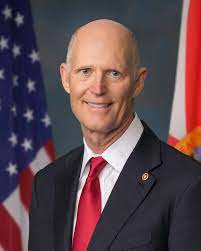
Party: Republican Home State: Florida Assumed Office: January 8, 2019, Twitter: @SenRickScott 350K followers

Scott is a Navy Veteran who once ran for Governor of Florida in 2010, defeating Bill McCollum in a tightly contested primary race and defeating Alex Sink in the general election. He would be re-elected in 2014, defeating Charlie Crist. After term limits barred him from seeking a third term, he opted to run for the U.S. Senate, defeating Bill Nelson in 2018. Scott has an A+ rating from the NRA because he signed more pro-gun bills in a single term than any other Governor in the State’s history.

#49 Vice-Chair of the Senate Republican Conference Joni Ernst 
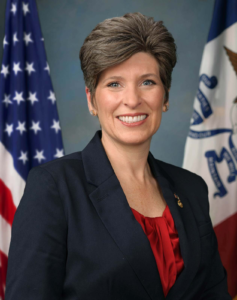
Party Republican Home State: Iowa Assumed Office: January 3, 2015, Twitter: @SenJoniErnst 113K followers

Once considered a “long shot” to win her 2014 Senate campaign, she received many campaign donations from the Koch brothers to push her over the edge. She is a longtime critic of Obama and has been a loyal ally to Donald Trump. Ernst served in the Iowa National Guard from 2003 to 2004 and was stationed in Kuwait. She has supported defunding Planned Parenthood as well as repealing Obamacare. She has also advocated eliminating the EPA and the federal minimum wage.  

#48 Republican Policy Committee Chairman Roy Blunt
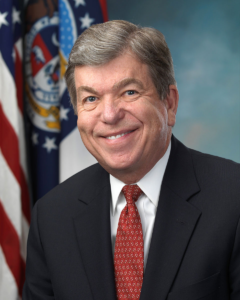
Party: Republican Home State: Missouri Assumed Office: January 3, 2011, Twitter: @RoyBlunt 125K followers

Blunt served as the Missouri Secretary of State from 1985 to 1993 and was elected to the U.S. House of Representatives in 1996. He then served as the Republican Whip from 2003 to 2009. Blunt ran a victorious Senate campaign in 2010, and the following year he was elected Vice-Chairman of the Republican Conference. He is the dean of Missouri’s Congressional delegation and was elected to serve as the Policy Committee Chairman in 2018.

#47 Republican Conference Chairman John Barrasso
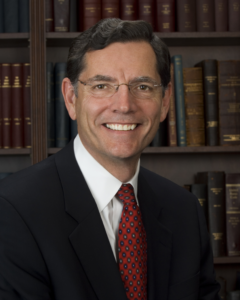
Party: Republican Home State: Wyoming Assumed Office: June 25, 2007, Twitter: @SenJohnBarasso 150K followers

Barrasso graduated from Georgetown University, where he received his B.S. and M.D. He conducted his medical residency at Yale before moving to Wyoming to practice orthopedics. Blunt first ran for Senate in 1996, where he lost a close primary race to Mike Enzi. Barrasso got elected to the State Senate in 2002, where he would stay until he was appointed to the U.S. Senate in 2007 following the death of Craig L. Thomas. He was elected to finish the late Senator’s term and then re-elected twice. He is the dean of Wyoming’s Congressional Delegation. 

#46 Vice-Chair of Policy and Communications Committee Cory Booker
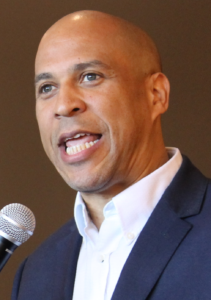
Party: Democrat Home State: New Jersey Assumed Office: October 31, 2013, Twitter: @CoryBooker 4.9M followers

Booker is a former Attorney who served as Mayor of Newark from 2006 to 2013. Booker also served in the Municipal Council of Newark for the Central Ward from 1998 to 2002. He won the seat by staging a 10-day hunger strike and briefly living inside of a tent to draw attention to urban development issues in the city. During his first term as Mayor, affordable housing doubled, and he won a second term in 2010. Booker was elected to the U.S. Senate during a special election in 2013 and got re-elected twice more. Booker also ran for the Democratic nomination in 2020 but did not gain any traction on the campaign trail amidst a very crowded field. 

#45 Vice Chair of Conference Elizabeth Warren
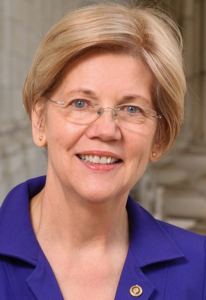
Party: Democrat Home State: Massachusetts Assumed Office: January 3, 2013, Twitter: @SenWarren 6.9M followers

Warren’s signature accomplishment would be creating the Consumer Financial Protection Bureau, which is designed to handle mortgages, credit cards, and student loans and protects people from unfair or deceptive business practices. Her other bread and butter issues include student debt relief and raising taxes on the rich. Before her political career began, she was one of the most influential professors on bankruptcy law. Her public profile grew after the financial crisis of 2008 as she made very forceful stances in favor of strong banking regulations. She ran for President in 2020 and was briefly considered a front-runner for the nomination. 

#44 Chairwoman of Policy and Communication Committee Debbie Stabenow
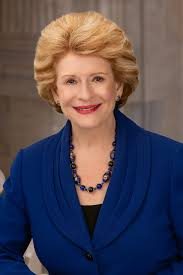
Party: Democrat Home State: Michigan Assumed Office: January 3, 2001 @SenStabenow 136K followers

Stabenow became Michigan’s first female Senator after she defeated incumbent Republican Spencer Abraham. Before her victory, she served in the U.S. House of Representatives, representing Michigan’s 8th congressional district. She chaired the Senate Agriculture Committee from 2011 to 2015 and became Chair of the Senate Democratic Policy Committee in 2017.

#43 Assistant Democratic Leader Patty Murray
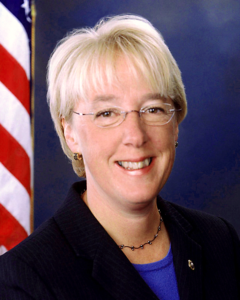
Party: Democrat Home State: Washington Assumed Office: January 3, 1993, Twitter: @PattyMurray 467K followers

Murray is a retired educator who has been serving in the U.S. Senate for almost 30 years and is Washington’s first female Senator. Her background in education includes teaching pre-school and community college. She is an advocate of environmental and education issues. She served one term in the Washington State Senate before being elected to the U.S. Senate in 1993. She was re-elected four times and plans to run for a sixth term in 2022.

#42 Chief of Staff Ron Klain
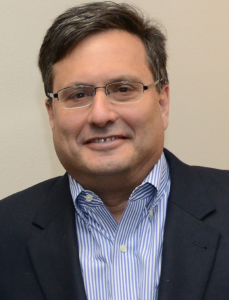
Party: Democrat Assumed Office: January 20, 2021, Twitter @RonaldKlain 406K followers

Klain is currently serving under his third administration, where he was named Chief of Staff under Vice Presidents Al Gore and Joe Biden. He also worked as Obama’s Ebola Response Coordinator. When he worked in the Clinton White House, he oversaw judicial nominations and directed judicial selection efforts that got Ruth Bader Ginsberg confirmed to the Supreme Court.  

#41 Presidential Science Advisor and Director of the Office of Science and Technology Policy Eric Lander.

Party: Democrat Assumed Office: June 2, 2021, Twitter:eric_lander 66.7K followers

Lander is a professor at the Massachusetts Institute of Technology (MIT), a professor of systems biology at Harvard Medical School, and a Rhodes Scholar. He co-chaired President Obama’s Council of Advisors on Science and Technology. In 2004 TIME magazine named him as one of their 100 most influential people. In 2013 he was awarded the first Breakthrough Prize in Life Sciences, and in 2016, the Semantic Scholar A.I. program ranked him as #1 on its list of biomedical researchers. 

https://commons.wikimedia.org/wiki/File:Eric_Lander_(cropped).jpg

#40 Administrator of the Small Business administration Isabel Guzman
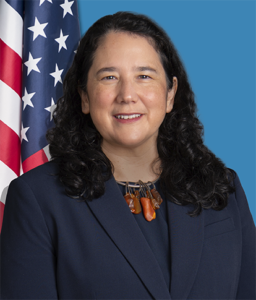
Party: Democrat Assumed Office: March 17, 2021, Twitter: @IsabelCGuzman 4,929 followers

Guzman will be the 27th person to serve her position. Her responsibilities will include leading a workforce of over 9,000 SBA employees and administering the SBA’s portfolio of loans, investments, disaster assistance, contracting, and counseling. Additionally, she will implement critical financial relief for small businesses impacted by the pandemic through the economic disaster loan program, paycheck protection program, and additional support in the American Rescue Program.

#39 Chair of the Council of Economic Advisors Dr. Cicilila Rouse
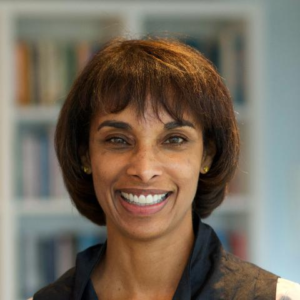
Party: Democrat Assumed Office: March 12, 2021, Twitter: @CeciliaERouse 22.3K followers

Rouse served in the National Economic Council under President Clinton and was one of President Obama’s economic advisors from 2009 to 2011. She is the Dean of Princeton’s School of Public International Affairs and the founding director of the University’s Education Research Section. She is a member of the National Academy of Education. Her primary research interests are in labor economics with a focus on the economics of education. 

#38 United States Ambassador to the United Nations Linda-Thomas Greenfield
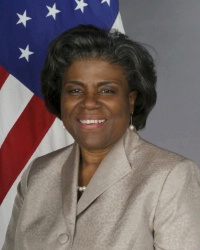
Party: Democrat Assumed Office: February 25th, 2021 Twitter: @LindaT_G 199K followers

Greenfield’s 34-year Foreign Service career includes ambassadorship to Liberia (2008-2012) and foreign postings in Switzerland, Pakistan, Kenya, The Gambia, and Jamaica. In addition to the Bureau of Human Resources, she has worked with the Bureau of African Affairs. She served as Principal Deputy Assistant Secretary, the Bureau of Population, Refugees, and Migration, where she served as Deputy Assistant Secretary. 

#37 United States Trade Representative Katherine Tai
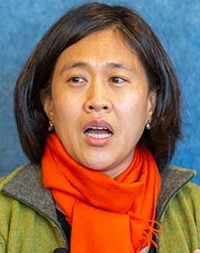
Party: Democrat Assumed Office: March 21, 2021, Twitter: @AmbassadorTai 24.4K followers

She served as the chief trade counsel for the United States House Committee on Ways and Means. She served in the Trade Representative’s Office of General Counsel, where she worked on trade cases at the World Trade Organization, and she was named chief trade counsel in 2017. During her tenure on the Ways and Means Committee, she played a significant role in the House’s negotiations with the Trump administration with the United States-Canada-Mexico Agreement. The Associated Press called her a problem-solving-pragmatist on her trade policy.

https://commons.wikimedia.org/wiki/File:Katherine_Tai_(cropped).jpg

#36 Director of National Intelligence Avril Haines 
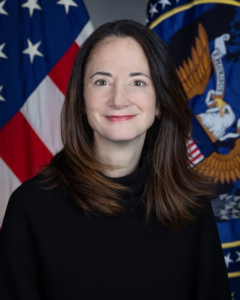
Party: Democrat Assumed Office:  January 21, 2021, Twitter: @WRLD46 133 followers

Daines has a lot of experience in National Security; during the Obama administration, she served as the Assistant to the President and Deputy National Security Advisor from 2015 to 2017. During this time, she led the National Security Council Deputies Committee. From 2013 to 2015, Haines was Deputy Director of the CIA and the first woman to hold both positions. Over the past 20 years, she has worked in all three branches of government. 

#35 Administrator of the Environmental Protection Agency Michael Regan
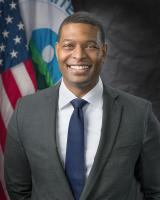
Party: Democrat Assumed Office: March 11, 2021, Twitter: Michael_S_Regan 27.1K followers

Regan is the first black man and the second person of color to lead the EPA. He is a resident of Goldsboro, North Carolina, where he developed a passion for the environment while hunting and fishing with his father and grandfather exploring the waters and coastal plains of North Carolina. Before he was named head of the EPA, Regan served as the Secretary of Environmental Quality. Under his leadership, he secured the largest coal ash cleanup in U.S. history. He also established North Carolina’s first Environmental Justice and Equity Board to better environmental protection and community empowerment.  

#34 Secretary of Homeland Security Alejandro Mayorkas
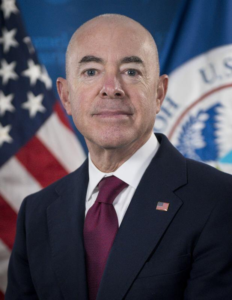
Party: Democrat Assumed Office: February 2, 2021, Twitter: @SecMayorkas 47.7K followers

Mayorkas is the first Latino to serve as Secretary of Homeland Security and has a 30-year career as a law enforcement official and a nationally recognized lawyer in the public sector. He served as Deputy Secretary of Homeland Security from 2013 to 2016 and Director of U.S. Citizenship and Immigration Services from 2009 to 2013. During his tenure there, he led the development of DACA, negotiated cybersecurity and homeland security agreements with foreign governments, led the department’s response to the Ebola outbreak, and developed an emergency relief program for orphaned children during the 2010 earthquake in Haiti. 

#33 Secretary of Veterans Affairs Denis McDonough
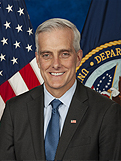
Party: Democrat Assumed Office: February 9, 2021, Twitter: @DenisMcDonnough 42.4K followers

Secretary McDonough served as President Obama’s Chief of Staff; he managed the White House staff and worked across the cabinet to advance Obama’s agenda. McDonough confronted management issues facing the federal government, devised and enforced goals and performance standards to preserve the Obama-Biden administration’s ethical and practical operations criteria. Before being Chief of Staff, he served as Principal Deputy National Security Advisor, Chief of Staff of National Security Staff, and chaired the National Securities Council Deputies Committee.  

#32 Secretary of Education Miguel Cardona
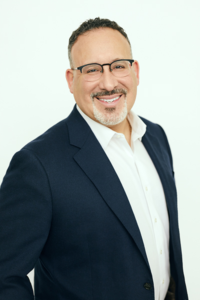
Party: Democrat Assumed Office: March 2, 2021, Twitter: @teachcardona 74K followers

Cardona is the previous Commissioner of Education in Connecticut, where he faced an unprecedented battle of responding to the Covid-19 pandemic and safely reopening the State’s schools. He accomplished this by providing schools with guidelines and oversight to provide meaningful opportunities for students while prioritizing public health. He arranged for students to have access to technology to assist them with remote learning. His team also collaborated with Yale Center for Emotional Intelligence to provide free social and emotional learning courses.  

#31 Secretary of Energy Jennifer Granholm
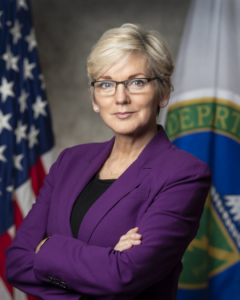
Party: Democrat Assumed Office: January 25, 2021, Twitter: @JenGranholm 165K followers

Granholm assists the DOE in helping Joe Biden reach his goal of net-zero carbon emissions by 2050 and advancing cutting-edge clean energy technologies, plus creating millions of decent-paying union clean energy jobs and building an equitable clean energy future. She also promotes American leadership in scientific discovery, maintaining the nuclear deterrent and reducing atomic danger, and remediating the environmental harm caused by legacy defense programs.   


#30 Secretary of Transportation Pete Buttigieg
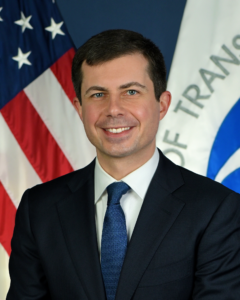
Party: Democrat Home State: Indiana Assumed Office: February 3, 2021, Twitter: @PeteButtigieg 3.4M followers

Before becoming Secretary of Transportation, Buttigieg was a two-term mayor of South Bend, Indiana. He is also a graduate of Harvard, a Rhodes Scholar at Oxford. Buttigieg has also served seven years in the U.S. Navy Reserve, taking a leave of absence for a deployment in Afghanistan. While he was Mayor, income grew, poverty fell, and unemployment got cut in half. His leadership sparked city-wide job growth and facilitated innovative public partnerships like Commuters Trust, a benefits program designed to improve the city’s transportation experience for workers. 

#29 Secretary of Housing and Urban Development Marcia Fudge
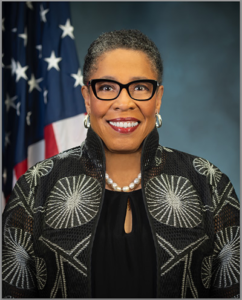
Party: Democrat Home State: Ohio Assumed Office: March 10th, 2021 Twitter: @RepMarciaFudge 54.1K followers

Throughout her career Secretary Fudge has worked hard to assist low-income families, seniors, and communities across the country. She represented Ohio in the House of Representatives from 2008 to 2021 and is the former Chair of the Congressional Black Caucus. When she was Mayor of Warrensville Heights, she worked with local officials to protect citizens against predatory lending and addressed the city’s foreclosure crisis by forming a partnership that helped residents maintain the financial security needed to keep or buy a home.

#28 Secretary of Health and Human Services Xavier Becerra
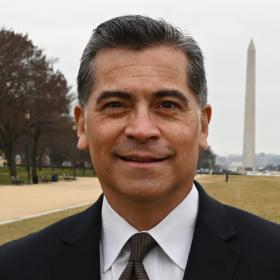
Party: Democrat Assumed Office: March 19, 2021, Twitter: @XavierBecera 56.9K followers

Becerra is the 25th Secretary of Health and Human Services and the first Latino to hold the position and will work with Joe Biden to assure that every American has access to healthcare. He served over 20 years in the House of Representatives, and he was the ranking member of the Ways and Means Subcommittee on Social Security and the Subcommittee of Health. He introduced the Medicare Savings Program Improvement Act of 2007 that expanded cost-sharing subsidies for low-income seniors on Medicare and Medicaid by increasing the resources they could receive.

#27 Secretary of Labor Marty Walsh
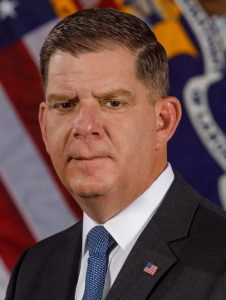
Party: Democrat Assumed Office: March 23, 2021, Twitter: @SecMartyWalsh 15.2K followers

Before joining the Biden administration, Walsh was the 54th Mayor of Boston who was elected twice. Mayor Walsh significantly strengthened the city’s schools as he funded extended learning, added hundreds of pre-kindergarten seats, and secured tuition-free community college. Walsh also upgraded the city’s digital infrastructure and used technology to transform government services. At the same time, he created opportunities for low-income workers such as the “learn and earn” apprenticeship program of financial empowerment. His administration significantly addressed housing as he set records for affordable middle-class homes. He built a state-of-the-art homeless shelter putting the city on the right path to ending homelessness. 

https://commons.wikimedia.org/wiki/File:Secretary_Marty_Walsh_(cropped).jpg

#26 Secretary of Commerce Gina Raimondo
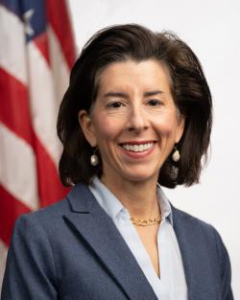
Party: Democrat Assumed Office: March 3, 2021, Twitter: @SecRaimondo 16.3K followers

Gina Raimondo is the 40th U.S. Secretary of Commerce, and her goal is to spur good-paying jobs, empower entrepreneurs to grow, and help American workers and businesses compete. She is the first female Governor of Rhode Island, where she served two terms. While she was Governor, she made record investments in the State’s infrastructure. She also fought hard to create economic opportunities for all Rhode Islanders. Early in her administration, she launched a workforce development program that develops pro-business partnerships to address challenges in the workplace. 

#25 Secretary of Agriculture Tom Vilsack
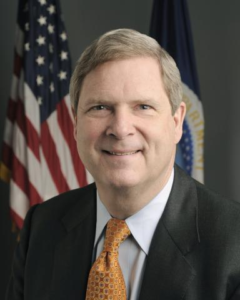
Party: Democrat Assumed Office: February 24, 2021Twitter: @SecVilsack 26.9K followers

Vilsack served as the 30th Secretary of Agriculture under the Obama administration. He worked hard to strengthen the American Agriculture economy, built vibrant economies, and created markets for innovation in Rural America. He also invested heavily in rural infrastructure and renewable energy. Under his leadership, the USDA supported farmers who drove America’s rural economy forward and supplied a safe, nutritious food supply for the American people. The USDA also provided healthier school meals to benefit 50 million children. 

#24 Secretary of the Interior Deb Haaland
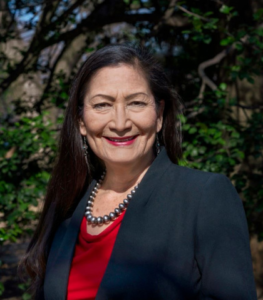
Party: Democrat Home State: New Mexico Twitter: @DebHaalandNM 293K followers

Deb Haaland is the first Native American to serve as a cabinet secretary. She comes from a military family. Her father served 30 years in the U.S. military and was awarded the Silver Star for saving six of his fellow soldiers in Vietnam. She ran her enterprise selling and producing Pueblo Salsa; she has served as a tribal administrator at San Felipe Pueblo and became the first woman elected to the Laguna Development Corporation Board of Directors. She oversees business operations, the second largest tribal gaming enterprise in New Mexico. She is one of the first Native American women to serve in congress, and she focuses largely on environmental justice and climate change.

#23 Budget Committee Chairman Senator Bernie Sanders
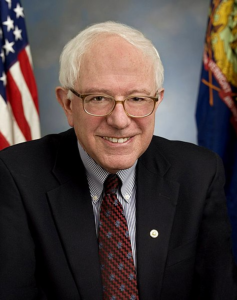
Party: Democrat Home State: Vermont Assumed Office: January 3, 2007, Twitter: @BernieSanders 15.2M followers

Senator Sanders has had a very long and consistent career in Washington. He has served as Vermont’s congressional representative from 1991 to 2006, and he has been one of the State’s Senators since 2007. He has been an advocate for Medicare for All, Free College, raising taxes on the rich, and campaign finance reform for the duration of his long career. His bold policy stance has won him the respect of millions of younger voters all over the country, and his policy ideas were able to move the Overton window to the left, helping birth groups like Justice Democrats and Our Revolution.  

#22 Attorney General Merrick Garland
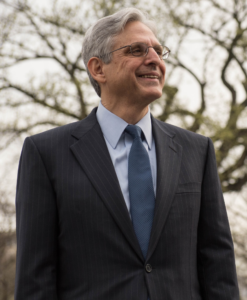
Party: Democrat Assumed Office: March 11, 2021

Garland is the 86th Attorney General of the United States; he was nominated to the U.S. Supreme Court by President Obama in 2016 but was blocked from serving on the court in an unprecedented move by Mitch McConnell for 293 and was never able to serve as a Supreme Court Justice. The seat was filled by Neil Gorsuch, who was nominated by President Trump in 2017. Garland was nominated for his current position by President Biden in January of 2021 and was confirmed by a 70 to 30 vote two months later.

https://commons.wikimedia.org/wiki/File:2016-03-22_Senator_Chuck_Schumer_meets_with_Merrick_Garland_06_(cropped_to_Garland).jpg

#21 Secretary of Defense Lloyd Austin
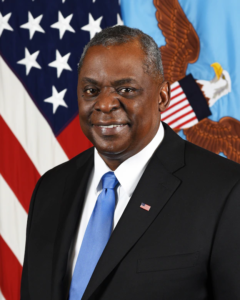
Party: Democrat Assumed Office: January 22, 2021, Twitter: @SecDef 339K followers

Austin has a 41-year career in the Army, including command at the corps, division battalion, and brigade levels. He was awarded the Silver Star for his leadership in the Army’s Third Infantry Division during the 2003 invasion of Iraq. He has also battled ISIS in Iraq and Syria and retired from the Army in April of 2016. Since retirement, he serves on the Board of Directors of Raytheon Technologies. 

#20 Secretary of the Treasury Dr. Janet Yellen
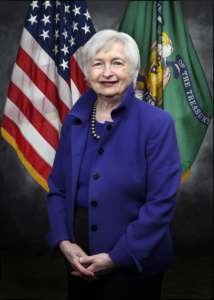
Party: Democrat Assumed Office: January 26, 2021, Twitter: @SecYellen 289K followers

The former economist took office after almost 50 years working in academics; Yellen is the first person in U.S. history to have led the White House Council of Economic Advisors, the Federal Reserve, and the Treasury Department. She graduated from Brown University in 1967 and was an assistant professor at Harvard until 1976, when she began working at the Federal Reserve Board. Three years after President Clinton appointed her to the Federal Reserve Board of Governors, he named her Chair of the White House of Economic Advisors. She has since served as Vice-Chair and Chair of the Federal Reserve under the Obama administration. 

#19 Senator Kyrsten Sinema
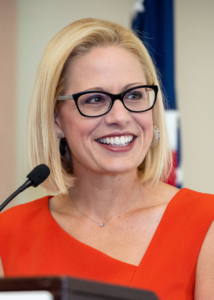
Party: Democrat Home State: Arizona Assumed Office: January 3, 2019, Twitter: @kyrstensinema 163K followers

Sinema began her career working with the Arizona Green Party and rose to prominence for her LGBT rights activism and opposition to the war on terror. She left the Green Party in 2004 and joined the Arizona Democratic Party, where she got elected to the U.S. House of Representatives in 2012. She is a member of the blue dog coalition and the bipartisan problem solvers caucus as she holds one of the more right-wing voting records compared to her fellow Democrats. She and Joe Manchin are two of the eight Democrats who opposed the $15/hour minimum wage bill this winter. 

#18 Senator Joe Manchin
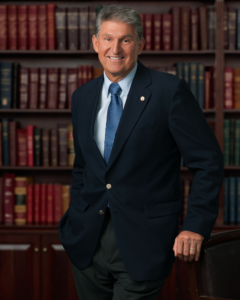
Party: Democrat Home State: West Virginia Assumed Office: November 15, 2010, Twitter: @Sen_JoeManchin 269K followers

Joe Manchin is one of the most influential people in the Senate because he can sway the deadlocked Senate to either pass a bill Joe Biden wants to sign via reconciliation or watch it die before it can even reach Biden’s desk. Manchin has since expressed he does not want to get rid of or reform the filibuster, meaning that it will require 60 votes to pass a bill Biden would like to sign into law rather than 51. This process would require reconciliation, something Manchin opposes.

#17 Secretary of State Anthony Blinken
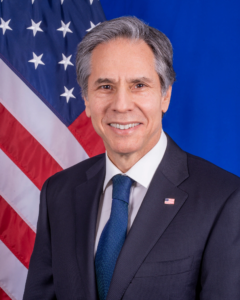
Party: Democrat Assumed Office: January 26, 2021, Twitter: @SecBlinken 694K followers

Blinken is currently serving as the 71st Secretary of State under President Biden; he served as deputy national security advisor and deputy secretary of State under the Obama administration. During the Clinton years, he served in the state department and senior positions in the National Security Council. He also supported the 2003 invasion of Iraq and served on the Senate Foreign Relations Committee from 2002 to 2008. He also helped the Obama administration with their Afghanistan policy and dealing with Iran’s nuclear program. 

#16 President Pro-Tempore Patrick Leahy 
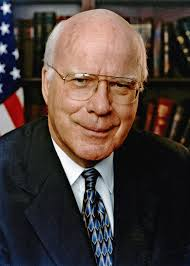
Party: Democrat Home State: Vermont Assumed Office: January 3, 1975, Twitter:@SenatorLeahy 230K followers

Senator Leahy previously served as the Pro-Tempore from 2012 to 2015 and is the last of the Senate’s Watergate Babies” who were the first Democrats elected to congress following Nixon’s resignation in 1974. Leahy is also the longest-serving U.S. Senator and the first Democratic Senator from Vermont. He is the former Chairman of the Agriculture and Judiciary Committees. Leahy is a longtime supporter of the NAACP and a big proponent of affirmative action. He has called for a moratorium on the death penalty and more DNA testing for death row inmates. He believes the role of prisons should be to rehabilitate rather than punish first-time offenders. 

#15 Congressman Gary Palmer 
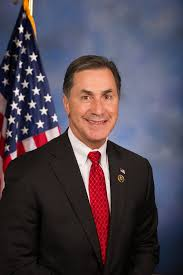
Party: Republican Home State: Alabama Assumed Office: January 3, 2015, Twitter: @USRepGaryPalmer 21.3K followers

Palmer Heads the Conference Forum for Policy Development, and he represents Alabama’s sixth largest congressional district. The district includes the wealthier parts of Birmingham, as well as most of the city’s suburbs. He has also co-founded and served as President of the Alabama Policy Institute, a right-wing think tank. He is a member of the Freedom Caucus, and since 2019, he has been the Chairman of the Republican Party Committee. 

#14 Conference Chairwoman Elise Stefanik 
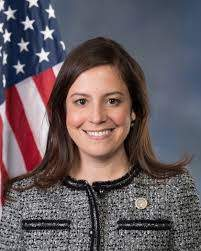
Party: Republican Home State: New York Assumed Office: January 3, 2015, Twitter: @RepStefanik 223K followers

Stefanik is the third-ranking House Republican after the party ousted Liz Cheney from leadership earlier this spring. She was elected to congress in 2014 at the age of 30 and is the youngest woman ever elected to congress. She was initially elected as a moderate but has moved further to the right over time and has become a strong supporter of Donald Trump, defending him during his first impeachment trial. She also supported the former President following his attempts to overturn the 2020 election and objected to Pennsylvania’s electoral college votes following the insurrection at the Capital.

#13 Minority Whip Steve Scalise
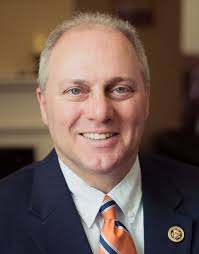
Party: Republican Home State: Louisiana Assumed Office: May 3, 2008, Twitter: @SteveScalise 461K followers

Scalise is a strong opponent of gun control, and he boasts an A+ rating from the NRA, although he was shot during a baseball practice saying he is still a gun-rights supporter. He also supported Donald Trump’s ban on citizens of seven majority-Muslim countries from entering the U.S. Scalise also opposes legalizing marijuana claiming that it is a gateway drug. 

#12 Minority Leader Kevin McCarthy
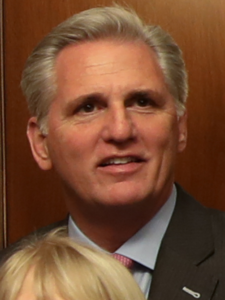
Party: Republican Home State: California Assumed Office: January 3, 2007, Twitter: @GOPLeader 1.2M followers

McCarthy is the current minority House Leader and served as the Majority House leader from 2014 to 2019. He also serves as Chairman of California Young Republicans and Young Republican National Federation. He is a staunch defender of Donald Trump and refused to concede the election claiming fraud and took part in the efforts to overturn the results. McCarthy is a massive proponent of the second amendment and opposes all gun restrictions. 

https://commons.wikimedia.org/wiki/File:Kevin_McCarthy_(49395640118).jpg

#11 Republican Whip John Thune
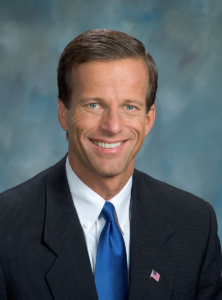
Party: Republican Home State: South Dakota Assumed Office: January 3, 2005, Twitter: @SenJohnThune 111K followers

Thune has worked in politics and civic organizations since he completed his MBA degree. He served in the U.S. House of Representatives for South Dakota from 1997 to 2003. Thune served as the Chief Deputy Whip from 2007 to 2009 and as Chairman of the Senate Republican Policy Committee from 2009 to 2012. He holds the third-ranking position in the Senate.

#10 Senate Majority Whip Dick Durbin 
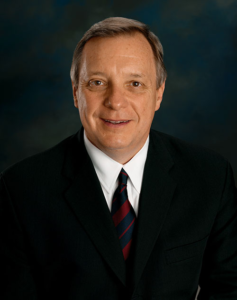
Party: Democrat Home State: Illinois Assumed Office: January 3, 1997, Twitter: @SenatorDurbin 726K followers

Senator Durbin is one of the most powerful Democrats in the Senate and is second to only Chuck Schumer. He has held the position of Majority Whip since 2005 and chairs the Senate Judiciary Committee. Durbin is also the dean of Illinois’s congressional delegates. Durbin has supported overturning Citizens United, and he has helped introduce the Voter Empowerment Act to modernize and inform every voter.

#9 Democratic Caucus Chairman Hakeem Jeffries
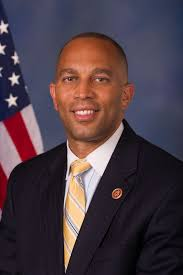
Party: Democrat Home State: New York Assumed Office: January 3, 2013, Twitter: @RepJeffries 407K followers

Jeffries is a former attorney who has worked for Paul, Weiss, Rifkind, Wharton & Garrison, then Viacom and CBS before being elected to the New York State Assembly from 2007 to 2012, representing the states 57th district. He was elected to the House of Representatives in 2013 and had been chairing the House Democratic Caucus since 2019, representing a district that covers eastern Brooklyn and southwest Queens. 

#8 Assistant Speaker Katherine Clark
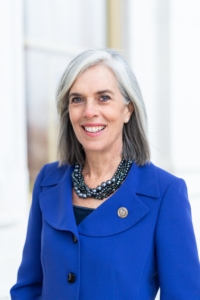
Party: Democrat Home State: Massachusetts Assumed Office: December 12, 2013, Twitter: @RepKClark 90.2K followers

Clark is a former member of the Massachusetts House of Representatives from 2008 to 2011 and the Massachusetts Senate from 2011 to 2013. She won a special election in 2013, which earned her a seat in the U.S. House of Representatives as she succeeded now-Senator Ed Markey, and she sits on the House Appropriations Committee. She is the fourth-ranking member in the House leadership

#7 House Majority Whip Jim Clyburn
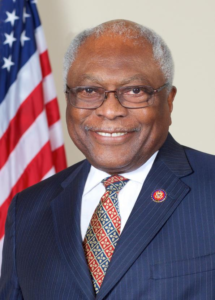
Party: Democrat Home State: South Carolina Assumed Office: January 3, 1993, Twitter: @WhipClyburn 149K followers

Clyburn is a two-time majority whip, with his current term beginning in 2019 and his first term lasting from 2007 to 2011. He is the third-ranking House Democrat behind Pelosi and Hoyer and serves as the Dean of South Carolina’s congressional delegation. Clyburn’s endorsement of Joe Biden’s presidential campaign helped turn the race on its head after Biden had three embarrassing losses to begin the race. Biden then won South Carolina and later Super Tuesday by massive numbers putting him in the driver’s seat for the nomination.  

#6 Majority House Leader Steny Hoyer
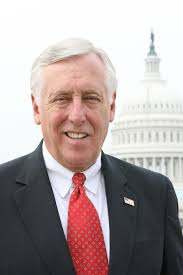
Party: Democrat Home State: Maryland Assumed Office: May 19, 1981, Twitter: @LeaderHoyer 157K followers

Since 2003 Hoyer has been the second-ranking House Democrat behind Nancy Pelosi. Hoyer is currently serving his second time serving as House Majority Leader, with his first stint running from 2007 to 2011. He has also served as Minority Whip under Pelosi twice from 2003 to 2007 and 2011 to 2019.

#5 Senate Minority Leader Mitch McConnell 
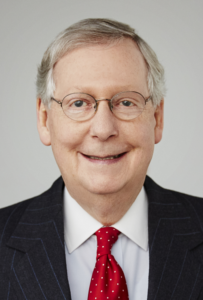
Party: Republican Home State: Kentucky Assumed Office: January 3, 1985, Twitter: @LeaderMcConnell 2M followers

McConnell said Republicans had not given up hope for a bipartisan infrastructure bill when talks concluded earlier this week with fellow Republicans. The proposal is expected to cost around $900 billion, but the group has yet to lock in a top-line figure. There is also widespread skepticism that the proposal will reach the required 60-vote threshold required for it to pass. Democrats want to pass it using reconciliation, allowing them to bypass the 60 vote filibuster using only 51 votes. 

#4 Senate Majority Leader Chuck Schumer
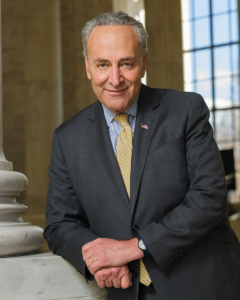
Party: Democrat Home State: New York Assumed Office: January 3, 1999, Twitter: @SenSchumer 3.2M followers

Schumer does not support Medicare for All and says that all efforts should be directed towards improving Obamacare to make healthcare more affordable and accessible to all Americans. Schumer also believes in passing stronger gun laws to protect our citizens. He also considers himself to be pro-choice as is in favor of protecting planned parenthood’s budget. He also opposes the death penalty, saying that it is expensive, outdated, and doesn’t benefit society.

#3 Speaker Nancy Pelosi     
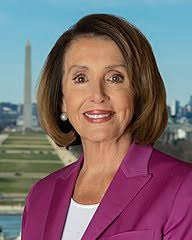
Party: Democrat Home State: California Assumed Office: June 2, 1987, Twitter: @SpeakerPelosi 7.1M followers

Pelosi is a strong voting rights advocate; she has supported the “For the People Act,” which has election reforms such as making election day a national holiday. She believes that we need more gun control laws in this country, including stricter background checks to make it harder for criminals to obtain a firearm. 

#2 Vice President Kamala Harris
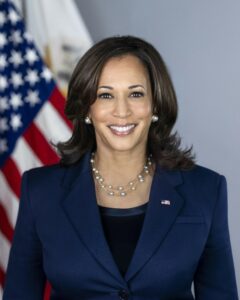
Party: Democrat Home State: California Assumed Office: January 20, 2021, Twitter: @KamalaHarris 18.5M followers

When on the campaign trail during the Democratic Primary, Harris said she favored a middle-class tax cut, raised taxes on corporations, and advocated for increasing the estate tax. Harris has also voiced support for codifying Roe v. Wade because she believes reproductive rights are constitutional rights and supports federal funding for planned parenthood. Harris cast a tie-breaking vote for the Covid Stimulus bill that was passed in February of 2021. In her first international trip as Vice President visiting Guatemala and Mexico in an attempt to address the causes of increased migration from South and Central America to the United States, she warned migrants that they should not make the trip. 

#1 President Joe Biden
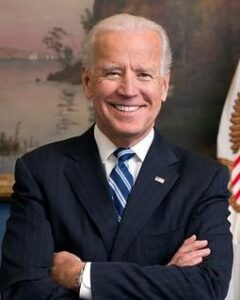
Party: Democrat Home State: Delaware Assumed Office: January 20, 2021, Twitter: @JoeBiden 30.5M followers

Since becoming President this January, President Biden was able to pass the covid stimulus bill that provided $1,400 checks to millions of Americans in need. He also reversed many of Trump’s policies, such as his transgender military ban, and brought the U.S. back into the Paris Climate Agreement. He has also exceeded his goal of vaccinating 100 million people in his first 100 days, as we have seen over 200 million in that period. Under the Biden/Harris administration, the Federal Government has currently spent $4.8 trillion. Two-thirds of those expenses must go to programs such as Medicare and Medicaid and $1.9 trillion of that has gone to the Covid Stimulus bill. 
 

The Top 20 Politicians in Wyoming

Wyoming may be best known for its breathtaking National Parks such as Yellowstone and Grand Teton as well as its Old West history and its many mountain peaks, wild rivers, and wide-open plains. It also has Devil’s Tower and one of the country’s top skiing destinations at Jackson Hole Mountain Resort.

Wyoming also has a diverse range of politicians from both political parties with their own share of accomplishments, responsibilities and overall power status within the state. We have compiled a list of the 20 Most Powerful Politicians in Wyoming.

#20 Superintendent of Public Instruction Jillian Balow

Party: Republican. Assumed Office: January 5th, 2015. Twitter: @jillian4supt 1,918 followers

Balow oversees the state’s education as one of the state’s elected five constitutional officers. She also sits on the student loan and education board as well as the State Board of Land Commissioners. Balow helped transform the state’s literacy laws to among the most rigorous in the country to assure all students read at or above grade level. She also worked with tribal partners to enact the “Indian Education for all” so that Wyoming students learn about the history of the Northern Araphao and Shoshone Tribes.

#19 State Auditor Kristi Racines

Party: Republican Assumed Office: January 7th, 2019. Facebook: Racines4Auditor.

Racines chaired a committee to help businesses survive the Covid-19 pandemic. She worked with banks and other entities to see if businesses can get more time to pay off the rent. She also discusses with other state officials how renters can avoid being evicted after they lost their jobs.

#18 State Treasurer Curt Meier

Party: Republican Assumed Office: January 7th, 2019 Facebook: Curt Meier for Wyoming

Over Meier’s long career in the Senate, he has sat on the Joint Appropriations Committee for eight years. He has also sat on the Senates Transportation, Highway, and Military Affairs Committee, as well as Political Subdivisions and Select Water Committee. Meier says he is very proud of his work in the Senate and he has been recognized by numerous organizations for the work he has done for the people of Wyoming. He was once presented with the Patrick Henry Award for his work with military service members and the National Guard.

#17 House Minority Whip Andi Clifford

Party: Democrat Assumed Office: January 8th, 2019 Facebook: Representative Andi Clifford, HD 33, Wyoming, D Committee Assignments: Committee on Tribal Relations, Labor, Health, and Social Services, Corporations, Elections, and Political Subdivision.
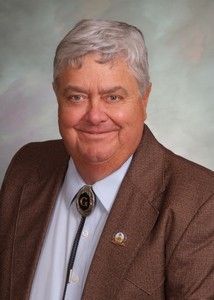
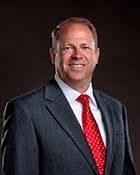
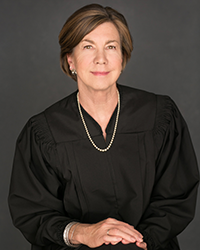
Clifford recently announced her opposition to House Bill 75 calling it “voter suppression.” The legislation would require voters to show their state-issued ID in order to cast their vote. She says that if the bill becomes law it may discourage people from voting. She would often tell friends of hers “if you don’t vote, the system won’t include you, your vote is your voice. It’s about breaking down structural barriers. When people get civically engaged it enables a more diverse pipeline of political balance, especially for people of color.” She says we need to do everything in our power to encourage young people and people of color to vote and the bill doesn’t do that. She calls the bill restrictive because of the fact that people will be turned away at the polls if it were to pass because not everyone has a state-issued ID.

#16 Senate Minority Whip Mike Gierau

Party: Democrat Assumed Office: January 7th, 2019 Facebook: Mike Giearu Committee Assignments: Travel, Recreation, Wildlife, and Cultural Resources

Senator Gierau recently spoke on a new bill that would require voters to show their photo ID in order to cast their ballots. “I know virtually every elected official in the state of Wyoming, and they would rather lose an arm than run a bad election. It is absolutely incredible that this would even come up.” Giearu said. The Senator also added that he believes the bill will end up passing.

#15 Legal Review Administrator Kathleen B. Carlson

Party: Republican Assumed Office: 2012

Carlson graduated from Ohio State University with a degree in political science. Before joining the Attorney General’s office she was a Wyoming State Law Librarian. She also worked for the United States District Court, Eastern District of Kentucky. She has also served as a board member for the American Association of Law Libraries Chair of the State Court and Special Interest Section, and President of the Western Pacific Association of Law Libraries

#14 Special Assistant Attorney General Jay A. Jerde

Party: Republican Assumed Office December of 2013

Jerde attended the University of Wyoming and graduated in 1988 with a degree in economics. After graduating he served in the Peace Corps as a volunteer in Samoa for two years teaching economics at Samoa College. He later graduated from the Wyoming College of Law in 1994, he would serve as the law clerk under judges Edward Grant and Nicholas Kalokathis. Before joining the Attorney General’s Office in 1996. He has represented banking regulatory law, state tax law, civil rights, and tort defense litigation. He has recently represented the state in environmental cases. He reached his current position in 2013 when then-Attorney General Pete Michael asked him to be his Special Assistant

#13 Chief Deputy Attorney General Ryan Shelhaas

Party: Republican Assumed Office: March 2019

After graduating from the University of Wyoming Ryan Shelhass began his career as a civil litigator with Hirst Applegate then he joined the Civil Division of Wyoming’s Attorney General’s office in 2003. He began his career with the department as a tax litigator representing the Department of Revenue. Since joining the office he has also represented Wyoming State Parks and Cultural Resources, Military Department, Livestock Board, Secretary of State, State Auditor, and Banking Commissioner.

#12 Attorney General Bridget Hill

Party: Republican Assumed Office: March 15th, 2019

Bridget Hill grew up in Saratoga, Wyoming where she attended the University of Wyoming and earned her undergraduate degree in law and accounting. After School, she served as a staff attorney under Justice Larry Lehman and Michael Goldman of the Wyoming Supreme Court. After her time with the court, she joined the Wyoming Attorney General’s office as an Assistant Attorney General where she represented The Office of State Lands and Investments, State Loan and Investment Board, and the Board of Land Commissioners. She has also served as State Projects Attorney and Director of the Office of State Lands before she was appointed to Attorney General by Governor Mark Gordon.

#11 Secretary of State Edward Buchanan

Party: Republican Assumed Office: March 1st, 2018 Facebook: Ed Buchanan Secretary Buchanan serves as the State’s Election Officer, Securities Commissioner, Corporations Administer, and Notaries Public Commissioner. In addition, he serves on the state’s canvassing board as well as the State Loan and Investment Board, and The Board of Land Commissioners, along with other Wyoming elected officials. He also served in the Air Force as an intelligence briefer to senior command. After his service, he earned a Law degree from Wyoming College of Law. He was elected to the State House of Representatives in 2002 where he represented Goshen County for 10 years while he practiced law. As a State Representative, he served as Chairman of Judiciary, Majority Floor Leader, and Speaker of the House.

#10 Justice Kate M. Fox

Fox was appointed by former Governor Matt Mead and was sworn in January 2014. Prior to her time on t

he court, she worked for a law firm named Davis & Cannon LLP. She joined the firm after she served as a law clerk in a Federal District Court Judge named Clarence A. Brimmer

#9 Chief Justice Michael K Davis

Assumed Office July 1st, 2018, Appointed by: Governor Matt Mead
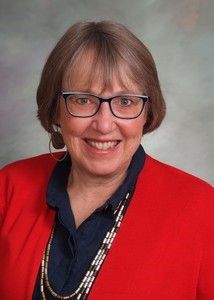
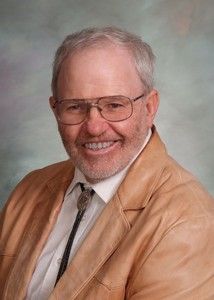
Judge Davis served as a member of the United States Army from 1973 to 1975, after he got out the Army he received his B.A. in summa cum laude from Western State College of Colorado in 1977 and a Juris Doctorate with Honor from the University Of Wyoming College Of Law in 1980. He practiced law at Yankee and Toner in Sheridan from 1980 to 2006 and then from a Cheyenne office branch from 2006 to 2008 until he became a District Judge.  He is also a Judicial Fellow of the American College of Trial Lawyers.

#8 Minority House Leader Cathy Connolly

Party: Democrat Assumed Office: January 10th, 2017 Committee Assignments: Management, House Education, House Labor, Health and Social Services, Rules and Procedure, Department of Family Services Advisory Council, Educational Attainment Advisory Council, State Workforce Investment Board, and Executive Committee.

This year she co-sponsored a bill to end capital punishment in the state of Wyoming along with 12 Republicans. The arguments coming out of the House were both moral and fiscal ones. Death Penalty cases tend to be more expensive giving the length of the trials, appeals, and jury selection. Connolly said that the push to end capital punishment was a long time coming. As far as reaching across the aisle is concerned Connolly said that is what she is here for. “That is why I do the job that I do in a body that is kind of a supermajority. I believe in the system, I believe that as a state, as a bipartisan body we can come up with solutions, and the only way to do that is to work together.” Connolly said. Despite the bipartisan support the bill would fail in the Senate by eight votes.

#7 Majority Leader Albert Sommers

Party: Republican Facebook: Albert Sommers Assumed Office: January 12th, 2021 Committee Assignments: Management Council, Broadband Task Force, House Education, Rules and Procedure, and Colorado River Basin Forum.

Sommers is among a group of lawmakers that would shift authority over an elk feeding ground closure from the Wyoming Game and Fishing Department to the Governor. It would require the Governor to consider Game and Fish recommendations. Four of the bill’s sponsors list ranching as one of the professions. Close quarters on 23 of the state’s feeding grounds would worsen the spread of Chronic Wasting Disease which is an incurable and deadly disease similar to Mad Cow Disease. “The bill establishes a transparent process that would impact more than just wildlife. I want to make sure this is a discussion with all agencies involved.” Sommers said.

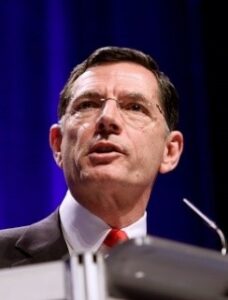
#6 Senator John Barrasso

Party: Republican Assumed Office: June 5th, 2007 Twitter: @barrassoforwyo 730 followers

Senator Barrasso has a medical degree and has practiced orthopedics in Casper, Wyoming where he briefly served as Wyoming’s Medical Chief of Staff. He has also served as President of Wyoming’s Medical Society, President of National Association of Physician Broadcasters, and as a member of the American Medical Association of Ethics and Judicial Affairs. As an elected official he says he supports limited government, lower taxes, less spending, traditional family values, a strong national defense, and he considers himself pro-life. As a Senator, he sits on the Energy and Natural Resource Committee as the Ranking Member.

https://commons.wikimedia.org/wiki/File:John_Barrasso_(5449498110)_(cropped).jpg

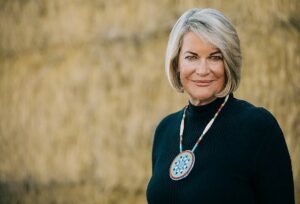
#5 Senator Cynthia Lummis

Party: Republican Assumed Office: January 3rd, 20221 Twitter: @CynthiaMLummis 25.5k followers

Senator Lummis is the first woman to represent Wyoming in the United States Senate. As a politician, she served in the Wyoming House of Representatives two times from 1979 to 1983 and from 1985 to 1993. She also served as a State Senator from 1993 to 1995, State Treasurer from 1999 to 2007, and as a US congresswoman from 2009 to 2017. She has supported bills such as the Restoring Healthy Forests for Healthy Communities Act, which would direct the US Department of Agriculture to establish at least one Forrest Revenue Area within each unit of the National Forrest System designed for forest management for the production of forest materials and forest reserve revenues.

https://commons.wikimedia.org/wiki/File:Lummis_Official_Senate_Photo.jpg

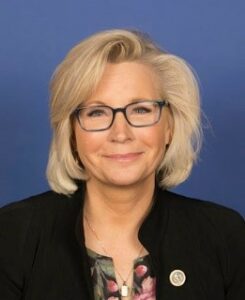
#4 Representative Liz Cheney

Party: Republican Assumed Office: January 3rd, 2019 Twitter: @Liz_Cheney 199k followers

Liz Cheney is the eldest daughter of former Vice President Dick Cheney and served positions in the Bush administration such as Deputy Assistant for Secretary of State for Near Eastern Affairs. She is also a pro-business socially conservative neoconservative who supports regime change in Iran. In 2009 she founded the Keep America Safe non-profit organization with Bill Kristol which deals with national security issues. She is also one of few Republicans to support Donald Trump’s second impeachment after the attempted insurrection that took place on January 6th.

https://commons.wikimedia.org/wiki/File:Liz_Cheney_116th_Congress.jpg

#3 Speaker Pro-Tempore Mike Greear


Party: Republican Assumed Office: January 12th, 2021 Committee assignments: House Rules and Procedure, House, Minerals, Business, and Economic Development, Enhanced and Improved Oil Recovery Commission, UW Energy and Resource Council.

Greear voice his concerns about an annual conversation stamp increase from $9 to $21. The new law is designed to provide a reliable source of funding for the Wyoming Game and Fishing Departments’ “Access Yes” program where the department negotiates with landowners to provide hunting and fishing around the state. The increased fees will generate $1.67 million in revenue every year. 85 percent of the funds will be directed to funding the purchase of access agreements to provide public access to state lands that are inaccessible to the public for hunting or fishing purposes. The last 15 percent will go to wildlife conservation efforts. “What happens if Game and Fish are unable to find landowners willing to participate in the “Access Yes” program? What happens if they are not a willing seller? Where does the money go? What happens if they don’t spend it in three years?” Greear said. The bill passed on March 11th by a vote of 36 to 26.

#2 Speaker of the House Eric Barlow

Party: Republican Assumed Office: January 12th, 2021 Committee Assignments: Management Council, Rules and Procedure, and Management Audit Committee

Speaker Barlow served in the Wyoming House of Representatives representing the third district of Wyoming since 2013 and became the Majority Leader in 2019.  One of the first bills he fought for as Speaker of the House was a bill to expand Medicaid to the citizens of Wyoming. Expanding the current program would have given healthcare to 24,000 uninsured residents by opening eligibility to include non-disabled adults who make less than $8.25 an hour in a 40-hour workweek. These people fall into a “coverage gap” meaning they cannot afford private insurance and are not poor enough to qualify for Medicaid. The health department estimates 54,000 people fall into that gap and that expanding the program would cover 14,000 to 38,000 of them. They also estimate that the exact number is close to 24,000 would be covered. Despite the momentum it had in the House it never made it to the Senate floor and it died 3-2 in a five-person committee after state officials voiced concerns that the federal program would force the state to support abortions and “transgender surgery.”

#1 Governor Mark Gordon

Party: Republican Assumed Office: January 7th, 2019 Twitter: @GovernorGordon 7,502 followers

During his tenure as Governor, he has imposed a statewide mask mandate in December of 2020 which he later lifted in March and imposed restrictions on indoor and outdoor gatherings. In November of 2020, he proposed a $500 million budget cut to account for the declining revenue of the fossil fuel industry, which is crucial to Wyoming’s economy. In April of 2021, he signed a $430 million cut due to the imposed budget forecasts for the year 2021 and the stimulus checks that President Biden sent out earlier this spring.


The Top 20 Politicians in Utah

The people on this list are some of the most prominent Utahns in politics.  Some of them are enacting change within the state as others use their power on the national stage.  These politicians range from representatives in Congress to local politicians in Utah.

Considering the length of incumbency, national prominence, and influence on the legislative process and politics, we have compiled a list of the top 20 politicians in Utah.

20. Connor Boyack

Boyack is the president of the Libertas Institute, a conservative think tank based in Utah. Boyack is also the author of 29 books. He supports free markets and has advocated for legislation that supports the free market. The Libertas Institute has an 82% success rate in changing laws relating to privacy, drugs, property rights, and education.

19. Derek Miller

Miller leads the state through the growth and development of the business community. As president and CEO of the Salt Lake Chamber and Downtown Alliance, he wields influence in attracting investment and increasing exports. His role plays a vital part in expanding Utah’s economy.

18. Brad Wilson

Wilson is a member of the Utah House of Representatives. He has held that position since 2010. He is the CEO of Destination Homes, a construction company. Wilson has served on the Davis County Economic Advisory Council and the Davis Chamber of Commerce.

17. Sean Reyes

Reyes has been under the public eye since 2012 when he ran for State Attorney General. He also participated in national lawsuits regarding Obamacare and opioids. Recently, he has been criticized for joining other Republican Attorney Generals in a lawsuit to overturn the 2020 presidential election results. However, Reyes has not expressed any concerns against the criticism and could be planning to continue to play an esteemed role in government.

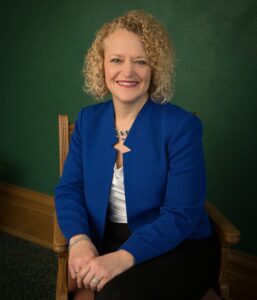
16. Jackie Biskupski

Biskupski caught the state’s attention as the second female and openly lesbian mayor. She developed the Growing SLC plan that has increased affordable housing to more than 2,000 units since 2016. She gained national influence as part of the U.S Olympics Committee in selecting Salt Lake City as a potential location for the 2030 Winter Games. Although she decided not to run for a second term as mayor, time will tell if and how she will progress her political career. If so, her platform as mayor will play to her advantage.

15. Stuart Adams

Adams is one of Utah’s state senators. He has been the Senate President since 2018.  He became a state representative in 2002 and a state senator in 2009. Adams has served on committees relating to public education, transportation, infrastructure, and labor.


14. Francis Gibson

Gibson has been a member of the Utah House of Representatives since 2009. Gibson served on the Mapleton city council from 2003 to 2007. Gibson is currently on the state’s Public Education Appropriations Subcommittee and the House Law Enforcement and Criminal Justice Committee. In the past, Gibson has chaired the Education Standing Committee.

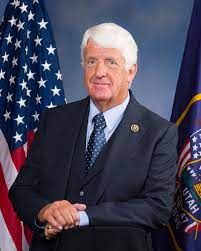
13. Rob Bishop

Bishop represented Utah in the U.S. House of Representatives from 2003 to 2021. Before working in Congress, Bishop was a state representative from 1978 to 1994, where he was the House Majority Leader at the end of his tenure. As a congressman, Bishop introduced legislation that would repeal funding from wildlife and land conservation.

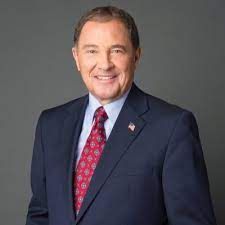
12. Gary R. Herbert

Herbert has held many political positions throughout his career. He served as the Lieutenant Governor of Utah from 2005 until 2009. He served as Utah’s Governor from 2009 to 2021. He led the growth of Silicon Slopes, the relocation of the prison, and oversaw the development of the Inland Port. His political portfolio wields an influence on whatever step he decides to take next.

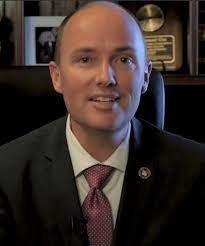
11. Spencer Cox

Cox was preceded by Governor Gary Herbert and assumed office as Utah’s Governor in January of 2021. Throughout his political career, he has led multiple efforts on issues such as homelessness, suicide prevention, bullying, and the current coronavirus crisis. As the Governor, he wields power through the bills he passes, especially in these areas of concentrated effort.


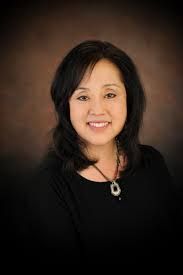
10. Jani Iwamoto

Iwamoto has been a member of the Utah State Senate since 2014. Iwamoto served as a member of the Salt Lake County Council from 2009 to 2013. Before that, she worked as an attorney. Iwamoto was the first Asian woman to hold office in Utah. She has sponsored legislation that promotes environmental justice, such as clean water and air. Iwamoto was elected to the position of Minority Assistant Whip in 2018.

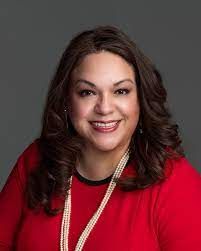
9. Luz Escamilla

Escamilla has been a member of the Utah State Senate since 2009 when she defeated the incumbent Republican, Carlton Christensen. Escamilla worked as a banker before turning to politics. Escamilla is currently a member of the Senate Health and Human Services Committee and the Senate Judiciary, Law Enforcement, and Criminal Justice Committee. Senator Escamilla is also the Minority Whip, meaning that she assists the minority leader.

8. Ann Millner

Millner has been a member of the Utah State Senate since 2015. Before that, she was the President of Weber State University. Millner has sponsored legislation that expands public education programs and supports students. Millner serves on the Senate Education Committee and the Public Education Appropriations Subcommittee. Millner is currently the Majority Whip, meaning that she assists the majority leader and assumes his role when he is absent.

7. Evan Vickers

Vickers is the Senate Majority Leader in the Utah State Senate. He has been involved in politics since 2009 when he became a member of the Utah House of Representatives. Before becoming a politician, Vickers worked as a pharmacist. He has served on the Senate Health and Human Services Committee and the Natural Resources, Agriculture, and Environment Interim Committee.

6. Chris Stewart

Stewart is a member of the U.S. House of Representatives. Stewart has represented Utah since 2013. Before venturing into politics, Stewart was in the U.S. Air Force.  Stewart has published 17 books. He is currently a member of the House Permanent Select Committee on Intelligence and the Appropriations Committee. Stewart has sponsored legislation that supports veterans and the environment.

5. Ben McAdams

McAdams represented Utah in the U.S. House of Representatives from 2019 to 2021. McAdams was the only Democrat representing Utah in Congress. McAdams earned a law degree from Columbia Law School. He then worked as an attorney until 2009 when he became a state representative.  In 2012, McAdams became the mayor of Salt Lake City. He has supported pro-LGBT bills and has worked to end homelessness.

4. Mia Love

Love is a political commentator for CNN and a former U.S. Representative for Utah. Love made history as the first black person from Utah to be elected to Congress. She was also the first black woman to be elected as a Republican in Utah.  Before being elected to Congress, Love served on the city council of Saratoga Springs. She later served as the mayor of the city.

3. Mike Lee

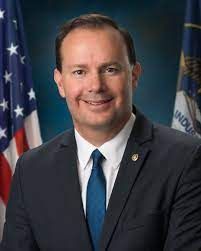
Lee has served as the Senior Utah Senator since 2011. He voted against the Senate version of the AHCA along with several other Republicans which ultimately stopped the bill from proceeding. He was also among those who voted against implementing a carbon tax, or a fee on carbon emissions, which led to it not passing. However, sometimes he does support legislation that is supported by Democrats. For example, he was among a few Republicans that opposed a spending bill that would prevent another government shutdown. Due to these past experiences of being among a few that ultimately made a huge difference in the passing or vetoed legislation, his position and the choices he makes are significant.

2. Orrin Hatch

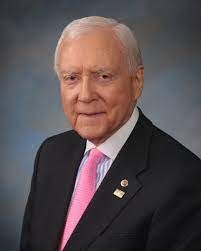
Hatch is a retired politician who was a U.S. Senator. He was the longest-serving Republican senator, with a tenure of 42 years. Throughout his career, Hatch introduced legislation that would balance the federal budget. He opposed the Affordable Care Act, the DREAM Act, and the Paris Agreement. He chaired multiple committees, including the Senate Finance Committee and the Senate Committee on Health, Education, Labor, and Pensions. Toward the end of his career, Hatch was one of the most influential members of Congress, becoming the president pro tempore of the Senate.

1. Mitt Romney

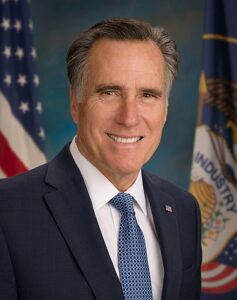
Romney assumed office as Utah’s senator in Congress in 2019. He was the Republican Party’s nominee for the 2012 presidential election. Before that, he was the Governor of Massachusetts from 2003 to 2007. Romney has been involved in politics since the 1990s. As a senator, Romney represents Utah in national politics.  He voted to impeach Donald Trump during both of his impeachment trials.

I Grew Up in a Bipartisan Household: This is What I Learned

It’s no secret that the partisan divide is wider than ever at this moment in history. Even moderates tend to be lumped together with conservatives, erasing any gray area in politics and leaving voters with black-or-white issues, when in reality, seldom anything is truly that simple. I know about this gray area between extremes more than anything because I have lived it–I grew up in a household with one conservative, traditionalist parent, and one liberal, progressive parent. While I don’t fall in the middle of the spectrum because of this experience or identify as a moderate, this article isn’t necessarily about my personal political views (in fact, let’s not even go there). And I would also be naive to think that because of my experience I know the whole of the human experience and have all of the knowledge required to make sweeping assumptions about bipartisan politics. What I can testify to, however, is the unique vantage point I’ve been able to have and how it’s shaped my perspective on bipartisanism and what has driven the immensely thick wedge between ends of the political spectrum. Maybe you’ve had the same observations yourself, or maybe your experience has been drastically different–and that’s okay. This is what I’ve personally learned from living in a politically-divided household.

1. Pain informs politics.

This might seem like a bold statement, and well, it kind of is. But there’s no denying that the things that have hurt us the most tend to be the things that we care about most, in politics, but also just in our everyday life. Our personal experiences shape who we are as people, but also what we tend to dwell on most because we know the inner-workings of certain situations and experiences, and thus are more attuned to the issues inherent in these situations and experiences. For example, if you’ve ever been homeless, you’re likely never to take a roof over your head for granted, and may even become passionate about helping the homeless yourself. Or if you’ve ever suffered from a mental illness, you may be especially sensitive and empathetic to those with mental health issues and may even advocate for reforms to make mental illness treatment better in some respect. It all comes down to what hits home for us, what resonates with our personal experiences, and what we have an emotional connection to. If a certain political ideology or individual politician doesn’t take into account or shed enough light on a certain facet of our experience, we would obviously be less inclined to support it/them. The more we understand this, the more we can understand people’s pain points, our own biases informed by our own pains, and that truly all people are hurting in different ways, albeit certain pains are more systemic and chronic than others.

2. Black-and-white thinking seems like the easy way out–but it’s not. 

Black-and-white thinking is easy because if you simply identify yourself with one group or political ideology and adhere to its most extreme version, you never have to think deeply and critically about highly nuanced political issues. However, this is a dangerous trap to fall into because it prevents you from truly making political decisions that resonate with you and immerses you in herd-like mentality in which a group thinks the exact same way as each other with little to no room for dialogue or discussion about alternative views. Now that is not to say that it’s bad to be completely shifted in one direction in regard to a certain issue or area of policy. After all, that’s the point of political awareness–once you open yourself up to well-rounded political education and give yourself agency over your own political decisions, you have the freedom to align yourself with whatever political ideologies and belief systems and to whatever degree resonates the most authentically with you. Because at the end of the day, do we really want what’s easier, or what’s most authentic, genuine, healthy, and beneficial for ourselves and others? Extremism can become unhealthy when it’s the default way of being, and in the current political climate, it seems that’s the only option we are aware of.

3. Social justice does not have to be a partisan issue.

But often it’s treated as such. It doesn’t matter what political party or ideological framework you most resonate with–you are able to support human rights, Black Lives Matter, #MeToo, or any of the myriad other social justice movements that demand attention from people of all sides of the political spectrum. At the end of the day, we are all human beings with unique experiences and wants and needs, which, going back to my first point, are often informed by our own pain. It’s okay to admit to ourselves that we do not understand another person’s experience and still support them. It’s okay to not have walked in someone’s shoes and still stand by them in solidarity. It’s okay to be afraid of that which we do not understand because this fear is primal and deeply ingrained as long as this fear does not manifest in harmful, destructive, and life-threatening ways. But it’s not okay to demonize that which we do not know or understand simply because we do not know or understand it, or to deny others any of our time, attention, or consideration simply because their experience does not line up with ours. We owe that much to each other, that we at least consider experiences other than ours regardless of whether this consideration, education, and information results in decisive action or whether it leaves us unmoved. Empathy is not inherently partisan or political whatsoever–so let’s stop acting like it is.

4. Politicians are bad representations of parties as a whole.

It’s very natural for us to take the most extreme version of whatever we are presented with and let that version color our entire lens on a certain group or ideology. And while it’s not wrong or inaccurate for us to acknowledge those politicians whose policies deeply conflict with our own moral values and virtues and decline to offer them support, it’s a bit of a stretch to make the most extreme version inform our opinion on the entire group they identify themselves with. As someone who leans more on one side of the political spectrum than the other but who has seen the rationales behind both sides of the spectrum throughout my “political awakening” journey as a child, adolescent, and young adult, I know that there are politicians on the other end of the spectrum who have endorsed legislation I support, care about issues that I care about, and have overall very similar political ideologies to my own. Just because there may be a few areas of policy we don’t agree with, this does not mean we are not able to support certain policies and politicians and leave the rest. In fact, we would be hard-pressed to find a politician whose entire platform we wholeheartedly agree or disagree with if we were to dissect every bit of their political agenda, and even when we do find such a politician, there still may be others that we align with much more in some areas but disagree with more in other areas. This is part of the uncomfortable, murky, gray area of politics that requires work and research but also has the potential to more deeply inform or confirm our own political leanings rather than latching onto exaggerated stereotypes of extremist politicians whose views are not truly representative of the whole of their respective party.

If there is anything I want you to take from this ranty, hopefully-not-standing-on-a-soapbox-sounding reflection it’s this: you have the agency to make your own political decisions. No one is backing you into a corner or forcing you to take sides. If you want to take a side, do so out of your own informed opinion based on research and well-rounded education. And, if you don’t know where you fall on the political spectrum, that’s okay too! Let’s normalize the process of “political awakening” and discovering where we stand on political issues. Even once you find a political stance that you resonate with, it may change–and that’s okay too! Politics is a process and we are constantly changing and evolving, as is the world and the political landscape, so the pressure to stay statically in the same political position for the rest of our lives is an odd expectation to have for oneself. Whatever your political ideology, personal experiences, passions, interests, and background, I hope you can find ways to empower yourself to make informed political decisions in a time in which so many people (including myself) have succumbed to camp-y bipartisan politics just because it’s trendy. You’re the ultimate source of your own education, involvement, and advocacy, so delve into the issues deeper with our Compare Politicians tool and let the political awakening begin!

Understanding Baby Boomers in Politics

The generational divide in politics is becoming increasingly prevalent. Baby Boomers, those born in the years 1946-1964 during the post World War II Baby Boom, and Generation Z, those born in the years 1997-2012/15, have drastically different trends in political preferences. These differences have the potential to shape the future of politics as older generations tend to have more conservative political views and younger generations are statistically more liberal. 

Baby Boomers in Elections

Baby Boomers and the older generations are significantly more conservative than younger generations. This is evident from election data and approval ratings that show about 32% of Boomers are consistently or mostly conservative and 28% are mixed. Comparing this to Millennials, who are only 12% consistently or mostly conservative, we can see the generational divide. This is shown again in a study done by the Pew Research Center regarding the percentage of registered voters who lean one way or another. In this study, 46% of Boomers lean Conservative, while only 32% of Millennials do. 

In the 2016 election, Baby Boomers were a major part of the electorate that put Trump in office. They have different political goals than younger generations, and Trump’s policies align with these goals. 

Boomers and Approval Ratings

The Baby Boomer Generation has given higher approval ratings to President Trump than Millennials and Generation Z. They have a more positive view of what he accomplished during his presidency. In comparison to Obama’s approval ratings, among Boomers, they look very similar. This is a big difference when compared to Millennials. Boomers are overall split on whether or not they approve of Trump, while ⅔ of Millennials disapprove of Trump’s presidency. 

Political Attitudes

There are also extreme generational divides on political attitudes and views. For example, Baby Boomers are not as supportive of same-sex marriage, racial equality and gender equality as the younger generations. Overall, these political issues are not seen as big of a problem for them as it is for Gen Z and Millennials. 

They also disagree with younger generations on foreign policy. Boomers tend to believe that military strength is the best way to ensure peace while Millennials think good diplomacy is the best method. Baby Boomers are also more likely to say that the United States is above all other countries. They see America in a more positive light than younger generations. 

Additionally, the younger population is raising political awareness about a variety of social issues. This is in contrast to the older population who have opposing opinions on these policies. These issues include racial justice, immigration policies, gun control and environmental protection. One reason to explain these different priorities is the lack of diversity in the Baby Boomer population compared to younger generations. This new youthful diversity will contribute to the changing political scene over the coming years. 

The Future of Voters

Gen Z, Gen X and Millennials already outvoted the older generations in the 2018 midterm elections. The same is expected in the years to come as the rest of Gen Z reaches voting age. With more of the younger population voting, trends show that the votes will likely lean blue. Along with this, the Baby Boomer age range is currently about 56-74 years old. This means that as the generations continue to age, we will see less conservative votes in the years to come. It is likely that in the future, voting trends will show a higher portion of the eligible population voting liberal.

10 BIPOC Politicians You Should Know

The 116th Congress represents the most diverse Congressional body in American history, with nearly 22% of its members (1 in 5) identifying as non-white. However, we still have a long way to go before Congress is a true representation of the demographics of the citizens it serves. Representation of the voices of people of color is important now more than ever in light of the Black Lives Matter movement, although underrepresentation of people of color in politics has been a systemic issue since the beginnings of the nation. Here are just a few of the politicians serving and representing black and indigenous people of color (BIPOC) in Congress and in our communities (in no particular order).

1. Kamala Harris (D-CA)

 Kamala Harris, current Democratic Senator from California and Vice President Elect, has been a champion for social justice reform since the dawn of her political career. Harris, whose father immigrated from Jamaica and mother immigrated from India, grew up in Oakland, CA and later went on to study law at Howard University and UC Hastings. Harris has previously served as the District Attorney of San Francisco and California’s Attorney General, and currently serves on the Homeland Security and Governmental Affairs Committee, the Select Committee on Intelligence, the Committee on the Judiciary, and the Committee on the Budget. Several causes and measures supported by Harris include pathways for citizenship for undocumented immigrants through policies such as the DREAM Act, progressive taxation, the ban of all assault weapons for public purchase and use, LGBTQ+ and civil rights, bias trainings and body-cam monitoring of law enforcement, protection of reproductive rights, and the passage of environmental regulations and stronger enforcement of emissions standards on polluting industries. Harris will become the first female Vice President, as well as the first female Vice President of color, making her victory a huge landmark for political representation of women and people of color.

2. Raphael Warnock (D-candidate for GA Senate)

 Reverend Raphael Warnock, Democratic candidate for the Senate from Georgia, is a well-known advocate for accessible healthcare, social justice, and environmental protection. Coming from a low-income family in Savannah, Georgia, he knows firsthand the struggle many Americans face in making ends meet to afford basic needs and obtain higher education. Warnock currently serves as a pastor at Ebenezer Baptist Church in Atlanta, the same church where Martin Luther King, Jr. once preached at the pulpit. Among the many reform measures he supports, Warnock wants to strengthen and improve the Affordable Care Act and expand Medicaid, provide resources and services to marginalized communities, eliminate private prisons in favor of rehabilitation over incarceration, uphold the legalization of abortion, and aggressively pursue climate change protections and regulations with the goal of transitioning to 100% clean energy by 2050. Additionally, Warnock is endorsed by numerous prominent organizations and PACs such as NARAL Pro-Choice, the Planned Parenthood Action Fund, League of Conservation Voters, and the Human Rights Campaign.

3. Marco Rubio (R-FL)

 Marco Rubio is a household name when it comes to politics, but not nearly enough light is shed on his achievements in fighting for human rights and economic prosperity. Rubio was born to Cuban refugees who sought after and achieved the “American Dream” through their work ethic and determination. Rubio went on to earn a degree in political science from University of Florida and later, a law degree from University of Miami School of Law. Rubio has an impressive track record of political involvement, including being elected city commissioner for West Miami and serving as chairman of the Senate Committee on Small Business and Entrepreneurship and chairman of the Subcommittee on Western Hemisphere, Transnational Crime, Civilian Security, Democracy, Human Rights, and Global Women’s Issues. Rubio continues to aggressively pursue human rights legislation and in just 2019 alone, he sponsored nine pieces of human rights legislation, including the Hong Kong Human Rights and Democracy Act of 2019.

4. Cory Booker (D-NJ)

 Cory Booker, New Jersey’s first African-American Senator, has been a tireless advocate for marginalized communities through his work both at the grassroots and federal levels. After experiencing housing discrimination firsthand as a child, he became passionate about helping other marginalized folks fight for fair housing. Upon graduating from Yale, Booker became involved in community organizing and tenants rights in Newark, NJ and was later elected as the city’s mayor. Some key issues Booker has addressed through sponsored legislation and advocacy efforts are justice for marginalized communities and people of color, women’s rights and reproductive rights, LGBTQ+ rights, environmental justice, and criminal justice reform through his sponsorships of the First Step Act and Fair Chance Act.

5. Tim Scott (R-SC)

 Tim Scott came from humble beginnings, growing up in a poor working-class family in North Charleston. As a teenager, Scott became exposed to politics and from then on became invested in it, graduating from Charleston Southern University with a degree in political science. Scott later went on to open up his own small business, and eventually, was elected to serve in Congress. Scott is one of the first three African-American members of Congress and the first African-American overall to serve in both chambers. He is well known for creating Opportunity Zones, a measure under the 2017 tax reform bill, which gives financial aid to communities in need. Committees Scott has been assigned to include the Senate Finance Committee; Senate Committee on Health, Education, Labor, and Pensions; Banking, Housing, & Urban Affairs; Small Business and Entrepreneurship; and the Senate Special Committee on Aging. As a member of Congress, Scott is committed to addressing issues within the workforce, education, and diversity.

6. Deb Haaland (D, NM-01)

 As a 35th-generation New Mexican and member of the Pueblo of Laguna tribe, Deb Haaland is one of the first two Native-American women to serve in Congress. Haaland was raised in a military family and is a single mother, making her sympathetic to the struggles and hardships of military and single-parent households. She studied at the University of New Mexico and UNM Law School and has a long list of accomplishments and contributions, including volunteering full-time for Barack Obama’s 2008 campaign, leading the passage of SB 482 which allows New Mexican tribes in-state tuition regardless of residency, and allying with New Mexican LGBTQ+ rights activists to pass a ban on conversion therapy in New Mexico. Haaland is an advocate for Native rights, LGBTQ+ equality, environmental protection, and affordable and accessible healthcare for all, among many other causes.

7. Will Hurd (R, TX-23)

 Will Hurd is one of the only Republican African-Americans in Congress (along with Tim Scott), making him an important voice for African-American members of the GOP. Hurd grew up in San Antonio and attended Texas A&M, graduating with a Bachelor’s in computer science and a minor in international relations. He worked with the CIA for nine-years, specializing in intelligence and cybersecurity, before running for and being elected to Congress. Hurd serves within the Subcommittee on Military Construction and Veterans Affairs, the Subcommittee on Transportation, Housing, and Urban Development, and the Subcommittee on Intelligence Modernization and Readiness. He is also a member of several caucuses, including the Congressional Caucus on Black-Jewish Relations, the Roosevelt Conservation Caucus, and the Congressional Latino-Jewish Caucus.

8. Amata Coleman Radewagen (R, American Samoa)

 Amata Radewagen is the first woman to represent American Samoa in Congress and since 2012, has been the most senior member of the National Republican Committee. After receiving a degree in psychology from the University of Guam, Radewagen went on to serve as staff for several U.S. Representatives and eventually for the House Republican Conference. In 2001, she was appointed by President George W. Bush to serve as a Commissioner on the President’s Advisory Commission on Asian American and Pacific Islanders (AAPI), and was reappointed to this role by Donald Trump in 2019. She also serves on the House Veterans’ Affairs Committee, House Committee on Small Business, and the House Natural Resources Committee, as well as numerous subcommittees. She advocates for legislation regarding health, education, welfare, political status, and the rights and protections of U.S. territories as well as indigenous people.

9. Mike Garcia (R, CA-25)

 Mike Garcia, first-generation American, is the first Hispanic Republican to serve in the House since 1883. He grew up in Santa Clarita and received his Bachelor’s of Science in political science from the United States Naval Academy, later receiving a Master’s in national security policy studies from Georgetown University. Garcia served in the navy from 1998 to 2012, and from 2009 to 2018 was a business development manager at Raytheon Intelligence and Space. As a newly-elected Congressman, Garcia is assigned to the House Committee on Transportation and Infrastructure; House Committee on Science, Space, and Technology, and House Committee on Homeland Security.

10. Rashida Tlaib (D, MI-13)

 Rashida Tlaib is the first Palestinian woman to serve in the United States Congress as well as the first Muslim woman to be elected to the Michigan State Legislature and one of the two first Mulsim women elected to Congress, along with Ilhan Omar.Tlaib grew up in a working-class Palestinian family in Detroit as the oldest of fourteen children, and went on to study political science at Wayne State University and receive a law degree from Western Michigan University Cooley Law School. Tlaib has been dedicated to social justice since the onset of her involvement in politics and advocacy. She organized the We Have a Right to Breathe campaign in response to the pollution caused by semi-trucks in her neighborhood, and also worked as an attorney at the Sugar Law Center for Economic and Social Justice. Issues Tlaib is passionate about include environmental justice, racial equality, supporting small businesses, minimizing the influence of corporations, and economic support for working-class and low-income families through passage of the BOOST Act.

The demographic  statistics are still to be analyzed and publicized for the 117th Congress, but if the 2020 Congressional election is consistent with the previous progress we have seen in Congressional representation, this may be our most diverse Congress yet. Thanks to the contributions of legislators of color, there is increasingly more hope for a truly representational government that we can wholeheartedly see as a voice for the people, by the people.

The Psychological Impact of Politics

Psychology impacts politics in numerous different ways. Humans are predisposed to particular political beliefs before they even reach their first birthday. Our natural tendencies to follow the lead of others translates to our challenge to form our own political opinions. We are more likely to follow the opinions of others and the media. The biased news that we are exposed to significantly impacts our political opinions. This article will discuss in depth the different ways that our psychology impacts our voting behavior and the way we participate in politics. 

Media Bias

It is known that mass opinion sways individual opinion. Citizens in large, modern countries such as the United States depend on political elites for information via news outlets, articles or speeches. Although this may sound harmless, it is clear that not everyone is getting the entirety of the information.  Each news source is relaying skewed information, and only hearing from one source results in a lack of information for the viewer. Without hearing from multiple stories and sides on the issue, it makes it much harder to understand the issue in its entirety. 

Secondly, the specific items that the media chooses to focus on impact the public’s view of what issues are most important. The media has the power to control what social and political issues are under the spotlight. For example, if an issue is brought up across news channels during a period, more awareness will come to the subject, generating groups of people that are politically active for change. By bringing attention to these issues, they are creating groups of people both for and against it as well as creating traction for each. Essentially, the media controls which issues are most important by deciding whether or not to report on it. 

Unfortunately, most news sources, such as FOX or CNN, are biased, and the public do not have a choice but to follow the elite opinion. The psychology of the human brain predisposes us to follow this elite opinion, as the news broadcasters are in a place of power over us. To the viewer, they are an expert on the topic. Their job is solely to report to the community what is going on politically. As humans, we tend to trust this professional opinion and without hearing the other side and opinions, it becomes easy to believe this biased, one-sided information. The spheres of influence that are created by the media inhibit people from forming opinions of their own. 

Voting along Partisan Lines:

It is common for individuals to identify with a political party, but it becomes an issue when they vote along party lines without being informed. A highly impactful factor in someone’s political beliefs are the values of their family. For example, growing up in a family of active democrats predisposes one to lean towards democratic candidates. The environment of an individual’s upbringing evidently has large effects on their political beliefs, making their ability to form unbiased political opinions difficult. 

In the 2020 election, it was very common to see people voting straight party tickets. Only 4% of voters said they planned on voting for a congressman of the opposite party of the presidential candidate they were voting for. 

Psychologists have also discovered that citizens are becoming increasingly callous towards the opposing party. According to a survey done by the Inter-university Consortium for Political and Social Research, in 1960, only 4% of parents would be disappointed if their child married someone of the opposite political party. A similar study was done in 2018 by the Public Religion Research Institute and the results showed that now 35-45% of parents would be disappointed if their child married someone of the opposite political party. This shows that party divisions are more evident now than in the past, and that the party you belong to is an increasingly important characteristic. 

Despite this, there are a few key reasons why people do actually switch political parties. A person’s political attitude may be swayed if a favorable policy they feel passionate about is being addressed by the other party. Converse says that the person has two options, “either a change in attitude towards the party or a change of position on the issue.” 

Partisan Divides

People are becoming more and more polarized which results in concern among Americans. According to a study done by the Pew Research Center, 78% of people believe that partisan divisions in the United States are increasing, and an even larger percentage are expressing concern over the issue. This issue has become increasingly important over the past 30 years. In 2000, only 55% of Americans saw major differences between the Democrats and Republicans. Now, 74% of Republicans say that the party differences are extreme. 

Second to this, the study also determined that the two parties disagree on more than just politics.  Only 26% of people believe that although they disagree on politics, they can agree on “basic facts.” Additionally, both parties believe that little to no good ideas come from the other party. As the world becomes more polarized, humans are only hearing one side of the political field. With the news they watch and the family members they are surrounded with only speaking about issues in their party, the information that comes as a result is significantly skewed. 

Negative Effects of Politics on Psychology

It is commonly perceived that being too involved in politics is negative and harmful. This negative view launched a multitude of researchers to investigate why politics is perceived in this way. One main cause of this is negative partisanship. This creates a hateful atmosphere in which the republicans and democrats strongly dislike each other and disagree in almost all aspects of life – not just politics. This negative partisanship fuels Americans and is a binding force for people of the same party. It doesn’t even need to be about politics for republicans and democrats to argue. Rather than bonding over a sense of purpose, they bond over their hatred for the other party. Since 1980, the two parties have grown to dislike each other more and more. 

Knowing this, it creates a negative connotation surrounding political conversations. People often avoid bringing up politics to prevent creating controversy or starting a disagreement. Others purposely bring it up just to start something. Overall, it is becoming more challenging for Americans to discuss politics without starting a political feud. Political discussions quickly turn to debate, explaining why politics are perceived so negatively. 

Conclusion

Essentially, human psychology shows that we are vulnerable to the political opinions of others. Whether those opinions come from the media, friends or family, the people we surround ourselves with are likely to impact how we view the world politically. The world is becoming increasingly polarized, especially with elections every two years. Along with this polarization, politics are perceived more negatively than in the past, creating a more hostile relationship between Americans on opposite sides of the political spectrum.

What We Can Learn From Cuban Americans About Socialism?

Cuban Americans are unique in their political stances when compared to other Hispanics.  Cuban Americans, when it has come to elections and voting, mostly identify themselves as Republicans and conservatives, contrary to the overwhelming Hispanic voters who mostly vote Democrat. This happens because Cubans in particular have different experiences with the government in which they come from, Cuba, compared to other Hispanic Americans. According to a Pew Research Center survey conducted July 27-Aug. 2, 58% of Cuban registered voters nationwide say they either lean or strictly identify themselves as Republicans while only 38% affiliate themselves to the Democratic Party. On the other hand, 65% of non-Cuban Hispanic voters lean to the Democratic Party, and only 32% vote Republican. So, why is that the case?

Explaining the Cuban American Experience

As I mentioned above, Cubans, in particular, have different experiences with the government either in the United States or in their home country, Cuba. The older generation of Cubans suffered from a brutal and racist dictatorship that instituted systematic racial segregation into government and as they got older, they watched as this dictatorship was overthrown by a communist/socialist struggle under Fidel Castro. The younger generations watched as this revolution also developed into a dictatorship with very bad economic effects on the people in addition to the lack of freedom and civil rights in the law, all under the principle of socialism. For that the younger generation decided to migrate to a country that was very close to their home and also very fierce with the socialist ideas that destroyed their lives, that was the United States. They hoped for a better life under relatively more liberal laws that can make them better off economically and socially. Most of these people migrated to Florida, as it was the nearest US State to Cuba, and now, the highest concentration of Cubans is there.

For these reasons, Cubans have more at stake in this election than most countries in Latin America as Trump’s administration is trying to bring democracy and capitalism to Cuba and its socialist ally, Venezuela. Historically, Republicans have had a more hostile approach towards socialism than democrats. For example, Obama’s visit to Cuba towards the end of his presidency and his efforts to restore relations with Cuba may have been designated as an attempt towards peace and prosperity worldwide, but among Cuban Americans, it was a scary moment that the US may also be moving towards far-left ideas or getting closer with the dictatorship that once destroyed their lives. As a result, Cuban-Americans voted in numbers in 2016 to award the State of Florida and its 29 electoral votes to President Trump who campaigned an anti-socialist rhetoric in Florida to win the state.

Cuban Voter Behavior in Florida

In 2020, with the Anti-Trump tone that was sweeping the country before the November 3rd election, Trump campaigned heavily in Florida way before the elections.  His administration repeatedly visited Florida to announce sanctions on Cuba from there, they stepped up their own anti-socialist tone to appease the Cuban American population in Florida, and as the election approached and the democratic nominee became Former VP Biden.  Republicans in Florida used President Obama’s ties with Cuba to hit Joe Biden and label him as the socialist candidate among the Cuban population which led to a huge turnout in the Cuban-American population in Florida; awarding the heavily contested battleground state to incumbent President Trump.

In the end, President Trump needed the win at the State of Florida, so he did everything possible to achieve that; he wanted to keep Senator Marco Rubio in office to keep Cuban-Americans happy, he even invited veterans of the embarrassing Bay of Pigs invasion to the White House to “reaffirm our ironclad solidarity with the Cuban People” according to the president. Luckily these policies were in line with the demands of the Cuban people who were worried about the effects of an Obama 2.0 administration on them, so they voted for Trump and gave him the state.


Understanding Generation Z (born 1995 and 2015) in Politics

Generation Z currently comprises 10% of the American electorate and 4% of likely voters. Gen Z has grown up post-9/11 and has aged through the Trump Administration. This year, the stakes are even higher: with 2020 marked as a year of reckoning with racial unrest, rioting, and a global health crisis.

Generation Z has been widely hallowed as the most liberal generation of all time, but, in reality, much of Gen Z is opposed to the long-held “binary” choices given to the American electorate: that of the Democrat and Republican parties.

Gen Z is currently twice as likely to vote Biden – rather, its clear that they are voting against Trump, and not for Biden. Gen Z is looking for a candidate that encompasses a global perspective and shows foresight and quick actions into key issues that have been mounting for decades: climate change and racial inequality – neither of which is highlighted in the current presidential candidates. For these reasons, Gen Z is more hesitant to identify as part of the Democratic Party and some choose to vote independent which could be the sign of a rising tide towards the end of the two-party system. (Politico 2020 poll takeaways )

Crucially, younger voters historically have a habit of not showing up to the polls. But with the rising amount of youth-led activism with voter registration, may suggest that turnout may be higher this November. With nationwide protests and national reckoning sparked by the murders of George Floyd and Breonna Taylor, young people can’t afford not to vote (Pew research center).

In terms of priority, the top issue for the majority of Gen Z voters is synchronous with older voters: 30 percent say is the most important and 20 percent say it’s healthcare. In regards to the economy, the majority said the country should move away from the current capitalist standard towards a more socialized economy (Politico 2020 poll takeaways).

While presently much of Gen Z is ineligible to vote this year, waves are starting to form and as more young people come of age and turn to the polls, there will be wide rippling changes for American politics as we know it.


The Iran Nuclear Deal: Trump, Obama, Iran, and Nukes… Who Won?

The Islamic Republic of Iran has always had problems with the West led by the United States over its nuclear ambitions. Iran always considered it to be a sovereign right and a sacred duty to own a deterrence weapon to protect itself from outside aggression. However, In July 2015, Iran reached a landmark agreement over its nuclear capabilities, along with the United States, Germany, Russia, China, the United Kingdom, and France. The agreement was officially called The Joint Comprehensive Plan of Action (JCPOA), also known as the Iran Nuclear Deal. At the time when it first came out, everyone had hoped for it since it appeared to limit Iran’s nuclear aspirations, but as US President Donald Trump ascended to power in 2016, there was a lot of speculation over the deal, until he ultimately decided to officially withdraw from the agreement altogether in May 2018. So, what went wrong with the JCPOA?

Circumstances Before Iran Nuclear Deal

Before the agreement, Iran was not letting inspectors from the International Atomic Energy Agency (IAEA) to its nuclear facilities. In addition, Iran was known to be less than 12 months away from obtaining a “Turn-Key” nuclear weapon, meaning that they have mastered many parts of the fuel cycle, the weapon design, and the missile delivery system using their formidable ballistic missiles program. In the Bushehr Reactor, Iran’s only nuclear power plant, Iran had a large stockpile of uranium-235, which is the isotope needed to obtain a nuclear bomb. They also had more than 20,000 centrifuges to enrich uranium to weapons-grade. This number of centrifuges along with this large stockpile of Uranium-235 was said to be enough for 10 atomic bombs according to the Obama Administration. All they needed was to enrich the Uranium, using the centrifuges to the required level to obtain a bomb, which is about 90%.

The Terms of the JCPOA:  Iran Nuclear Deal

There is no evidence of a secret part of the JCPOA, but public information, particularly from BBC states that with the agreement in place, Iran was required to decrease the number of centrifuges by about 25% to 5,060, until 2026. It also agreed to reduce its stockpile of enriched Uranium by 98% and limit uranium enrichment to 3.67%. On top of that, it allowed access for inspectors from the IAEA to visit Iran’s nuclear facilities. According to the New York Times,  By the time President Trump took control in January 2016, The IAEA declared that Iran was following the agreement and the nuclear-related sanctions against Iran were lifted, but there were inherent issues with the deal that we will discuss further.

Problems with the Iran Nuclear Deal

President Trump was a critic of the deal even before he took power, considering the deal to be toothless with Iran, saying he will get a much stronger deal that will force Iran to comply with it.

Iran was free to leave the deal in 2026 using a sunset clause which meant they could re-engage their program in 2026 without encountering sanctions. There was a consensus among scientists that Iran would be less than 12 months away from obtaining a nuclear bomb if they followed the terms of the agreement and ended it when scheduled in 2026. This could mean that the Obama administration was just trying to solve the problem for the short term.

One of its biggest problems is that it didn’t allow adequate inspection of Iran’s Nuclear plants.  According to CBS, it would take 24 days to visit the site, in person, after requesting an inspection. These terms were overly-friendly to Iran, allowing them to hide Nuclear activities and materials within those 24 days if needed.  Remote monitoring systems do exist at certain plants like the nuclear facilities at Fordow fuel enrichment plant and the Natanz enrichment facility.  However, sensitive military sites including those that U.S. officials have suspected nuclear weapons to exist can only be visited with permission which may not be granted.

Another issue is that Iran had a formidable Ballistic missile program which includes short, medium, and long-range ballistic missiles, in addition to their newly tested inter-continental ballistic missile (ICBM)- Shahab-3- which can easily carry a nuclear warhead and reach as far as Europe. The ICBM program was not addressed in the JCPOA and it meant that Iran can move forward with its missile delivery system, and by 2026, they will have everything ready to achieve their final target, a nuclear bomb.

For a while after America’s withdrawal, Iran remained in compliance with the deal (according to the IAEA), although officially withdrawing from the agreement on January 5, 2019. With President Trump’s increasingly critical comments towards the Iranian government, and reinstating the sanctions, Iran announced that it would raise its enrichment percentage of Uranium-235 along with increasing its stockpile of the material itself, both to be above the limits defined by the JCPOA. After that, Iran announced that they will develop more advanced centrifuges to provide quicker enrichment of uranium, meaning they were trying to make up for the time lost when they were complying with the agreement.  However, according to the New York Times, Iran is still willing to return to the agreement and cooperate with the IAEA if the sanctions were lifted.

Also, the deal was not pleasing to American allies in the Middle East such as Israel and Saudi Arabia. Both these countries, especially Israel believed that this deal would take a lot of pressure off the rogue Iranian government, which the deal was called “A Historical Mistake” by Prime Minister Netanyahu of Israel. Republicans in addition to the Israelis did not like the deal because it awarded billions of dollars to a rogue regime that cannot be trusted.

Speaking of billions, it is believed that in the 1970s, Iran’s Shah regime made a weapons deal with the United States and paid $400 million for the deal at that time. However, when the Islamic revolution broke out, The US decided not to send any weapons as sanctions were placed on Iran. What happened was that Iran insisted to have that money returned to it as part of the deal and with interest. The Obama administration reportedly agreed to the proposal and made the $400 million payment in cash and shipped it to Iran in a cargo plane. The US also reportedly agreed to make interest payments that mount a total of $1.3 Billion after Iran signed the agreement. The problem here is that the $400 million payment was made to Iran while it was still under sanctions. Why did the U.S. violate its own sanctions to make a deal?  Also, why did we agree to pay interest of over a Billion dollars on sanctioned money?

Since 2016, the IAEA has issued 11 reports certifying that Iran has met its requirements under the deal. The Agency also said it has gained access to all requested sites in 2017. However, the inspections have not included military sites. Statements by Iranian leaders have concerned officials in Washington. “The Americans will take their dream of visiting our military and sensitive sites to their graves… It will never happen,” Ali Akbar Velayati, a top adviser to Supreme Leader Ayatollah Ali Khamenei, Iran’s highest authority, said in 2017.

Conclusion

The JCPOA looked like a very good deal initially but after digging deeper, many have found the following problems:

  • The inspection system does not allow visits to sensitive military sites that could harbor nuclear weapons.
  • The U.S. promised to repay $400 million of sanctioned money and billions in interest on top of it.
  • The agreement has a sunset clause allowing Iran to walk away anytime.
  • The agreement does not stop Iran from developing dangerous ballistic missiles.
  • Lastly, it’s not a permanent agreement.

In Addition, America’s two most important allies in the Middle East never agreed to it.


The Forgotten Heat of Texas District 7!

In the 2018 Midterm Elections, GOP Rep. John Culberson was dramatically ousted from office in Texas District 7 after being the district’s representative to Congress for 18 years. 2 years later, his replacement, Congresswoman Lizzie Fletcher (D) TX-07 faces a heated contest for re-election against a rising Republican star; Wesley Hunt.


Wesley Hunt is a native son of Houston and a decorated veteran of the US Army. After he graduated from West Point with a degree in mechanical engineering, he served his country for 8 years in which he flew combat missions in Iraq, for which he received a combat service medal, and served as a diplomatic liaison officer in Saudi Arabia. Now a husband, a father of 2 baby daughters, and a real estate developer; Wes decided to continue his service for this country by running for United States Congress in his home state and in his native city for Texas District 7.

As a candidate, Wesley Hunt promises to restore opportunity to Texas District 7 while protecting Houston’s and Texas’s important energy industry and increasing the security of our immigration system. He also promises to protect struggling middle-class families in District 7 by defending Houston from burdensome federal taxes and improving the affordability of quality health care. But most importantly, Hunt promises to protect Houston from flooding issues resulting from hurricanes and heavy rain. Hunt is also very critical of Congresswoman Fletcher’s left radicalization since she entered Congress and broke her promise of working as an independent for the 7th district of Texas.

On immigration, Wesley Hunt believes in tighter border security with higher funding in order to crack down on illegal immigration and thinks there shouldn’t be amnesty for illegal immigrants already in this country and attributes this to the notion of the “Rule of Law.” However, Wes is very welcoming when it comes to legal immigrants as he believes they contribute a lot to this country.

With regards to the Houston economy, Hunt promises that he will hit back at Washington’s increasingly hostile rhetoric towards Houston’s Energy Corridor by standing against Speaker Pelosi’s Green New Deal and her tough energy/environmental regulations. This way, he will save hundreds of thousands of jobs in Houston’s energy sector. He will also stand by middle-class families in District 7 by fighting to protect the 2017 tax reform bill and make it permanent. He also wants to eliminate the Special tax interest tax breaks which he thinks are unfair.

As a native Houstonian, Wes understands the increasing suffering of his fellow Houstonians with Flooding resulting from poor infrastructure and unconscious and unnecessary spending of the City’s budget. To fight that, he promises to reform the city’s infrastructure so that the excess water from heavy rain and hurricanes can flow smoothly through Bayous and tunnels into the gulf.

With the election approaching and the race tightening, both campaigns raise more promises but with the incumbent already exhausting her chance, should the rising red star get his?

The Politicization of School Reopening

In mid-June, as cases of coronavirus began to surge once again, Pew Research published a poll showing how attitudes towards the pandemic had shifted. The differences between political parties were especially stark: just 23% of Democrats, but 61% of Republicans, believed that the worst was already behind us; 77% of Democrats, and only 45% of Republicans, were worried about unknowingly spreading the coronavirus. Most notably, the poll found that partisanship was the single biggest driver of attitudes towards the pandemic—dwarfing other dividing lines such as race, gender, geography, or age:

So why the partisan polarization? Many Republicans have called for the same or similar public health measures as their Democratic counterparts—Senate Majority Leader Mitch McConnell (R-KY) stated that “Wearing simple face coverings is not about protecting ourselves, it is about protecting everyone we encounter,” on the Senate floor, and GOP governors in states such as Arkansas, West Virginia, and Alabama have issued statewide mask mandates.

But, in many ways, the Republican Party is the party of Trump—several of his early critics were defeated or retired from the party, and Republican primaries (such as the recent Senate runoff in Alabama) have become a test of who is more loyal to the president. And in much the same way, the Democratic Party has aligned itself against Trump: the drawn-out presidential primary was less a contest of grand ideas and more a test of who, regardless of their particular brand of liberalism, could defeat Trump in 2020.

What does this mean? It’s a departure from both the leadership that Americans have come to expect from the White House, and the public reaction to such statements or orders. When Trump criticizes mask-wearing, or states that schools must reopen, he turns the issue from public health into partisanship—and, as above, a partisan gulf opens between the two groups. Over the course of the pandemic, as Trump has called masks a “double-edged sword” and said “I’m not going to be doing it” [wearing a mask], in contrast to the statements from Democratic leadership that a federal mask mandate is “long overdue”, an almost 30-point gap has opened between Democrats and Republicans on the issue of mask-wearing.

School reopening has followed a similar trajectory. Trump and Education Secretary Betsy DeVos have spoken strongly in favor of in-person education resuming this fall—in Arizona, Trump said that “Schools should be opened. Kids want to go to school. You’re losing a lot of lives by keeping things closed,” and DeVos stated in a hearing that “Kids need to be in school… we can’t not allow that or not be intent on that happening,” with DeVos even threatening to cut federal funding from schools which stay closed. Several of his allies in Congress, such as members of the conservative Freedom Caucus, have followed his lead: Representatives Andy Harris (R-MD) and Morgan Griffith (R-VA) have claimed, counter to CDC guidelines and new studies out of South Korea, that “it’s safe for children to go back to school,” and “the risk is extremely low that anything will happen to them.” But other Republicans have resisted.


Proposed school-reopening plans as of Thursday, July 30th.

  • ‘Planned to re-open’ indicates that the governor/state leadership have stated that schools will be open, in some capacity, come fall
  • ‘Some open, some online’ indicates that current restrictions, combined with opening plans, mean that some districts will be resuming online-only
  • ‘Guidelines released, opening unclear’ indicates that state government have released guidelines on re-opening, but there is no state order yet/most districts have not yet released plans
  • ‘No guidelines yet’ indicates that there are not (widely available) state guidelines yet on how/when to reopen school districts

Partisanship is an indicator of whether schools are currently slated to reopen, but also notable is which states have broken ranks. The Republican governors of Alaska, Wyoming, Nebraska, Indiana, Ohio, Mississippi, Maryland, and New Hampshire have largely left their decisions to local school districts, giving them the options of continuing online if cases are high in their area, citing flexibility and local autonomy as reasons for their decision. And Hawaii, Nevada, Illinois, and Rhode Island, all Democratic-governed states, have committed to reopening.

Hawaii has the lowest case count of any state in the US. But coronavirus is surging in most of the continental US, including many Southern states whose governors have stated that schools will reopen in just a few weeks. In Florida, where new cases are quickly approaching the levels seen in New York during the early days of the pandemic, Governor DeSantis has announced that public schools will reopen at full capacity, with district-defined social-distancing measures in place. He’s faced backlash from pediatrics associations and teachers’ unions for this move, but has defended it by saying that reopening is critical to the state’s economy.

And in Missouri, Governor Mike Parson has sparked outrage by saying that “These kids have got to get back to school…They’re at the lowest risk possible. And if they do get COVID-19, which they will — and they will when they go to school — they’re not going to the hospitals. They’re not going to have to sit in doctor’s offices. They’re going to go home and they’re going to get over it.” As Missouri approaches 1,000 new cases a day, local and state officials have criticized Parson for his seeming blitheness to the risk of catching the coronavirus, as well as the possibility of children spreading the disease to older or more-at-risk family members.

But this polarization, unlike similar events in the past, may not yet have caught hold with the majority of the public. Recent polling suggests that 42% of voters think that school should not reopen at all—that classes should continue online and via distanced learning, as was the policy for most of the spring—and only barely more think that schools should reopen at all—that group disagrees, 26% to 19%, on whether schools should partially or fully reopen respectively. And parents are especially wary of returning to school—a majority, 54%, said that they would not want their child to attend any in-person classes in the fall.

Reopening schools is thorny business—for any semblance of normality to return, especially for the roughly one-third of working adults with children under 18, many experts agree that they have to. But no one knows quite how it should be done, or whether it can be done safely (and what ‘safely’ even means, in a world of relative risks and percentages). And with a growing partisan split emerging on the issue, it seems unlikely that a consensus will be reached before schools begin to reopen.