
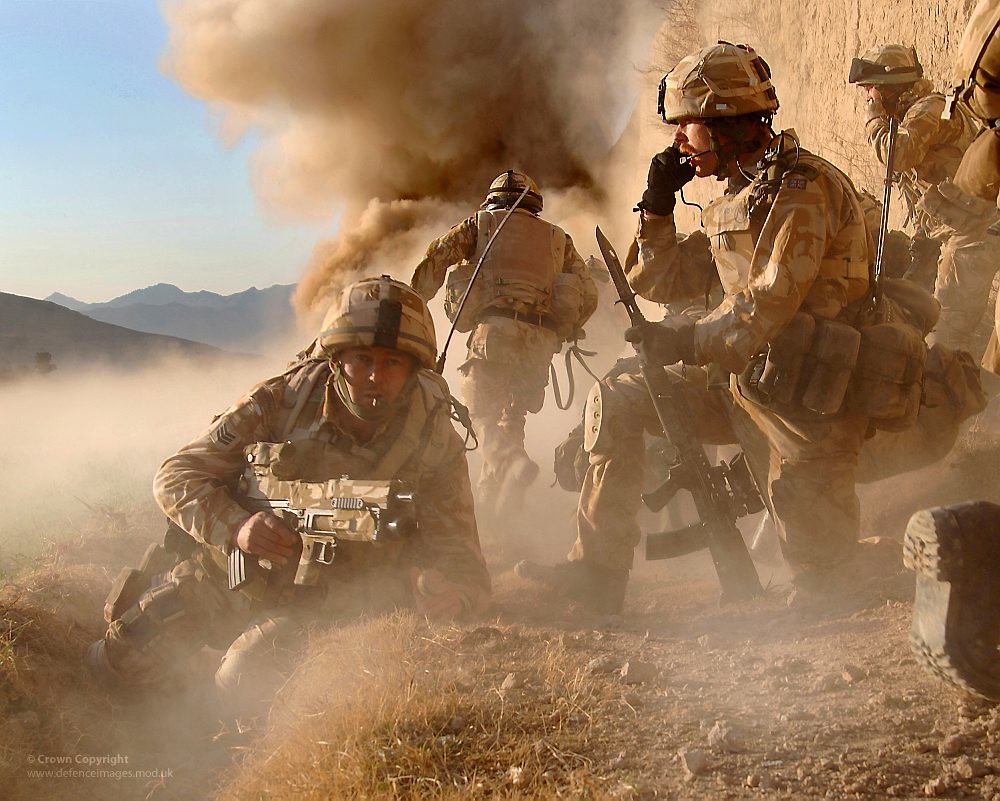
After the September 11th attacks on the World Trade Center and the Pentagon, the United States began the war on terror in October of 2001 when President George W. Bush invaded Afghanistan. The mission was to kill and capture Osama Bin Laden and to defeat the Taliban. 20 years later Bin Laden has been dead for a decade and the Taliban have only increased their presence in Afghanistan. This April, President Joe Biden announced that the United States will completely withdraw from Afghanistan on the 20th anniversary of 9/11. In that time support for the war has plunged. After two decades of endless war spread across four different administrations, why are we pulling out so late?
What has been going on in Afghanistan?
In December of 2019 the Afghanistan Papers were released and in them were several Government documents detailing that US Officials were lying about the war in Afghanistan. The documents were collected in several hundred interviews by the special inspector general for Afghanistan reconstruction. (SIGAR) In the documents collected they show U.S. officials making optimistic pronouncements that they knew were false and they hid evidence detailing that the war was unwinnable. Three Star Army General Douglas Lute said “We were devoid of any fundamental understanding of Afganistan, we had no idea what we were doing.” Since 2001, the United States has deployed more than 775,000 troops to Afghanistan, we have seen 2,300 die and 20,589 combat troops have been wounded. In addition to the US service members lost there have also been over 100,000 civilian casualties in Afghanistan and a $2.4 trillion price tag as a massive consequence of 20 years of endless war.
The interviews also detail how during the Bush, Obama, and Trump administrations their military commanders were unable to prevail in Afghanistan. US officials acknowledged that their fighting strategies were heinously flawed and Washington had wasted enormous amounts of money trying to rebuild Afghanistan into a modern nation. The documents published contradicted public statements made by Presidents and US Military commanders who assured the American people year after year that progress was being made and it was a war worth fighting. Several of those who were interviewed detailed that the US government had been deliberately lying about the war in Afghanistan. They said that it was common at not only the US military headquarters in Kubal, but the White House to distort statistics to make it look like America was winning the war when they knew it was not the case. “Every data point was altered to present the best picture possible.” Colonel Bob Crowly said. Secretary of Defense David Rumsfeld wrote a memo six months into the war stating “We are never going to get out of Afghanistan unless we take care to see that something is going on that will provide the stability that will be necessary for us to leave. Help.” he wrote.
How is this similar to Vietnam?
Much like the Pentagon Papers that were released in 1971 detailing the government’s deceit with the war in Vietnam, the Afghanistan papers are doing a very similar thing today. The initial goal of invading Afghanistan was to retaliate for the 9/11 attacks. As the war went on the goals and overall mission kept changing. Some U.S. officials wanted to turn Afghanistan into a democracy, some people wanted to transform its culture and elevate women’s rights, and others wanted to reshape the regional balance of power between Iran, Russia, and Pakistan. U.S. military commanders struggled to comprehend who they were fighting, was it al-Qaeda or the Taliban? What are they supposed to do about the Islamic State or other jihadists? As a result of the confusion, the US could not tell who their allies and enemies were. In September of 2003, Rumsfeld wrote “I have no visibility who the bad guys are. We are woefully deficient in human intelligence.”
No matter whose administration was in charge whether it be Bush, Obama, or Trump they all failed to avoid the trap of “nation-building” in Afghanistan. US officials tried to set up a democratic government in Kabul from scratch which would prove to be a foreign concept to the Afghan people. The biggest similarity between Vietnam and Afghanistan would be public manipulation on the part of U.S. military officials. No matter how the war was going, even if it was going badly those in charge would emphasize how they are making progress. For example in October of 2006 Rumsfeld’s speechwriters delivered a paper titled “Afghanistan: Five Years Later” it highlighted 50 promising facts and figures as to why the US should feel optimistic about the war. Despite the stunning lack of progress on the battlefield, U.S. generals have all reported that the war was progressing well. Major General Jeffery Schloesser told reporters that “we were making some steady progress” despite the fact U.S. commanders were asking for more troops to be deployed to cope with a rising number of Taliban fighters.
During the Vietnam War, U.S. military commanders relied on statistics such as body counts or enemy fighters killed in action and inflated the measurements of success. During the Obama years, there was consistent pressure from the White House and the Pentagon to produce figures to show the troop surge from 2009 to 2011 was working despite evidence to the contrary. A senior NSC official stated that it was impossible to create good metrics, none of them were accurate, and that they were always manipulated for the duration of the war. When casualty counts looked bad the White House and the Pentagon would have suicide bombings spun to look like a sign of desperation, and rising US troop deaths were cited as evidence that American troops were fighting a successful fight. The senior NSC official said, “this would go on for two reasons to make everyone involved look good, and to make it look like the troops were having the desired effect where removing them would cause the country to deteriorate.” During two decades worth of fighting, it didn’t matter how bad the conditions on the ground were, they claimed they were making progress no matter what.
How did the military-industrial complex play a role in the war?
Even though the Pentagon has thrown away $2 trillion of taxpayer money when they were well aware that the war in Afghanistan was unwinnable is due to the influence of the military-industrial complex that President Eisenhower warned about in his 1961 farewell address. Six decades after Eisenhower left office the military-industrial complex is thriving like never before as defense contractor profits are incentivized over much more necessary things we could spend $2 trillion on such as infrastructure spending, ending homelessness, and combating climate change. The notorious “revolving door” that ushers Pentagon officials into defense industry jobs, as well as defense-industry figures into key positions at the Pentagon, helps add to the endless nightmare of our forever wars. The people the media look to for expertise on our foreign policy are paid shills of the defense industry who will tell us that we must keep the war going. In 2008 The New York Times revealed that the Pentagon had launched a program recruiting 150 retired military officers turned pundits to speak favorably about the war in Iraq. Seeing this play out on the networks the public just assumed that the former military officials were speaking their minds. The former military officials never disclosed that they had financial ties to more than 150 Pentagon contractors. Given their glaring financial interests they can’t remain objective as they try to secure as many jobs for their colleagues and humanly possible.
This obvious conflict of interest is designed to help steer the public debate to the side of the arms industry who has made a staggering $398 billion in just 2017 alone. The United States is home to five of the world’s ten biggest defense contractors, those same companies account for 57 percent of the world’s total arms sales. The biggest profiteer of that would be the Maryland-based Lockhead Martin who has made an astounding $44.9 billion in arms sales in 2017. That same company received plenty of public scrutinies when a bomb it sold to Saudi Arabia was dropped on a school bus killing 40 children and 11 adults as they commit genocide in Yemen is the world’s worst humanitarian crisis. Lockheed’s total revenue it collects from the government is more than the IRS and the EPA combined. The Stockholm International Peace Research Institute found that 11 of the top 20 world defense contractors are based in the United States who have combined over $368 trillion in arms sales and made more than $30 billion in profits. Given these jaw-dropping financial figures, it is easy to see why the United States spends more money on its military than the next 10 countries combined.
The way all of this works is the weapons systems produced by all of the big defense firms that feature retired generals and congressional representatives sitting on their boards come in overpriced and are delivered behind schedule while failing to have the abilities advertised. The reason for this is because every administration struggles with budgets and how to balance development efforts with risks of inflated budgets and schedules. Contractors will also struggle for months evaluating proposals to verify financial assumptions. Contractors will also underestimate development costs due to performance in contracts exceeding 10 years, these programs are expected to grow but the government doesn’t plan ahead for these changes. An example of this would be Ford’s aircraft carriers produced by Huntington Ingalls Industries has been stifled by problems that have totaled a costly $13 billion. Another example would be Lockhead Martin’s F-35 fighter jet which carries a price tag of more than $100 million per aircraft while having one of the worst rates of combat readiness while being the most expensive program in Pentagon history. Despite all of this no one is held accountable for all of these problematic failures. One crucial reason for the lack of accountability is the elected officials who sit on these committees accept a lot of campaign contributions from the defense industry and just like the Pentagon, members of those committees go on to become lobbyists for those same federal contractors.
With this in mind, the defense industry will spread their contracts to produce weapons into as many states as possible, this practice of political engineering is used to buy as many politicians from both parties as they possibly can. The Pentagon will also spend just as much money on “services” as they do on the weaponry itself. For example, the F-35 program is estimated to cost $1.5 trillion, and $1 trillion of that is going to be spent on maintenance alone. This means that the defense contractors can hold the Pentagon hostage for the lifetime of the weaponry.
A recent example of this would be from a company called TransDigm, a company that purchases other companies so they can provide spare parts for weapons systems. This gives them the power to increase their prices without fear of losing business where they once received a 2,400 percent increase in excess profits for a half-inch metal pin. An investigation by the House Oversight and Reform Committee found that employees had been told to resist providing cost or pricing information to the government so fewer overcharges would be challenged. In one case a subsidiary of TransDigm failed to provide such information until the government was desperate for parts for weapons to be used in Iraq and Afghanistan was forced to capitulate for fear of the lives of US service members. TransDigm would later repay $16 million to the government but only after a hearing by the House Oversight and Reform Committee shamed the company into doing so. The worst part is that TransDigm’s behavior is common amongst doing business with the government and they share this practice with about 20 other industry players. For far too long Congress has not held the defense industry accountable, rather they continue to vote for bigger and bigger military budgets throughout the years despite two decades of losing wars and mismanagement of weapons programs.
How has Afghanistan’s opium production affected US presence in the country?
Opium production is at an all-time high in Afghanistan even though the US has spent $7.5 billion attempting to combat it. Opium cultivation in Afghanistan covers up to 516,230 acres of land and has seen a 36 percent increase since 2012. During this time narcotics use in Afghanistan has spiked. In a country with 32 million people, about 1.3 million people in Afghanistan are regular drug users compared to 1 million in 2009, and opium users grew from 130,000 to 230,000 from 2005 to 2009. Three-quarters of the world’s opium production occurs in Afghanistan where poppy seed cultivation happens almost entirely in the country’s southern and western provinces. Those areas are home to Kandahar and Helmand which is the bulk of where the US deployed their forces in a 2010-2012 troop surge.
In 2013 Afghan forces seized 41,000kg of opium while Afghans produced 5.5 million kilograms of it. The overall operation has been down 17 percent since 2011, whereas opium seizures are down 57 percent and heroin seizures are down 77 percent. Much of the country’s drug trafficking is inaccessible due to the Afghan forces being funded by the US. The reason for this is because drug labs, storage sights, and trafficking networks are located in rural areas that are off-limits to Afghan forces due to the International Security Assistance Force drawdown within these areas. While eradication did account for a large part of the US counter-narcotics strategy in the mid-2000s, the US has shifted away from it since they concluded that crop destruction drove those farmers into the hands of the Taliban. The Obama administration had the US military implore Afghan farmers to grow grapes, pomegranate, and wheat as an alternative. The state department still funds the Afghan drug eradication effort. In 2013 the Afghan Ministry of Counter Narcotics reported the destruction of 18,031 acres of poppy fields which barely cover 3 percent of the cultivated opium fields. The eradication effort has left the areas of high poppy concentration intact. The explosion in Afghanistan’s opium production has been unaffected by the $7.5 billion used to combat it since 2002. With all of that money being spent unsuccessfully trying to combat Afghanistan’s opium production on top of how much we’ve spent there on just the war itself, the United States cannot get out of Afghanistan fast enough.
Why are we leaving?
The Afghanistan war has been an objective failure when you look at the trillions of dollars we have spent fighting a war our intelligence officials have admitted they had no idea how to fight or who to fight against. The Taliban now controls 52 percent of the land in Afghanistan which is more than what they controlled since 2001 when we first invaded, not to mention all of the lives we needlessly lost sending brave, young men and women overseas to fight and die in a war we knew could not be won, along with all of the civilian lives that were lost due to two decades of endless bombing from the United States.
In mid-April President Biden announced his plans to completely pull all US military forces out of Afghanistan by September 11th. The President concluded that there is no military solution for the problems in Afghanistan and that he will put the full weight of the US government to reach a peace agreement between the Taliban and the Afghan government. This is all good news coming from a man who as a Senator voted to invade Afghanistan, loudly pushed for the illegal invasion of Iraq, and later oversaw the destruction of Libya while he was Vice President. We have a long way to go until September and we should remain cautiously optimistic until then due to the fact he did preside in an Administration that planned to pull out after 2014 but didn’t. However, if Joe Biden legitimately removes all US forces from Afghanistan, bringing an end to America’s longest war, it will be the greatest accomplishment a President has had in a very long time.