
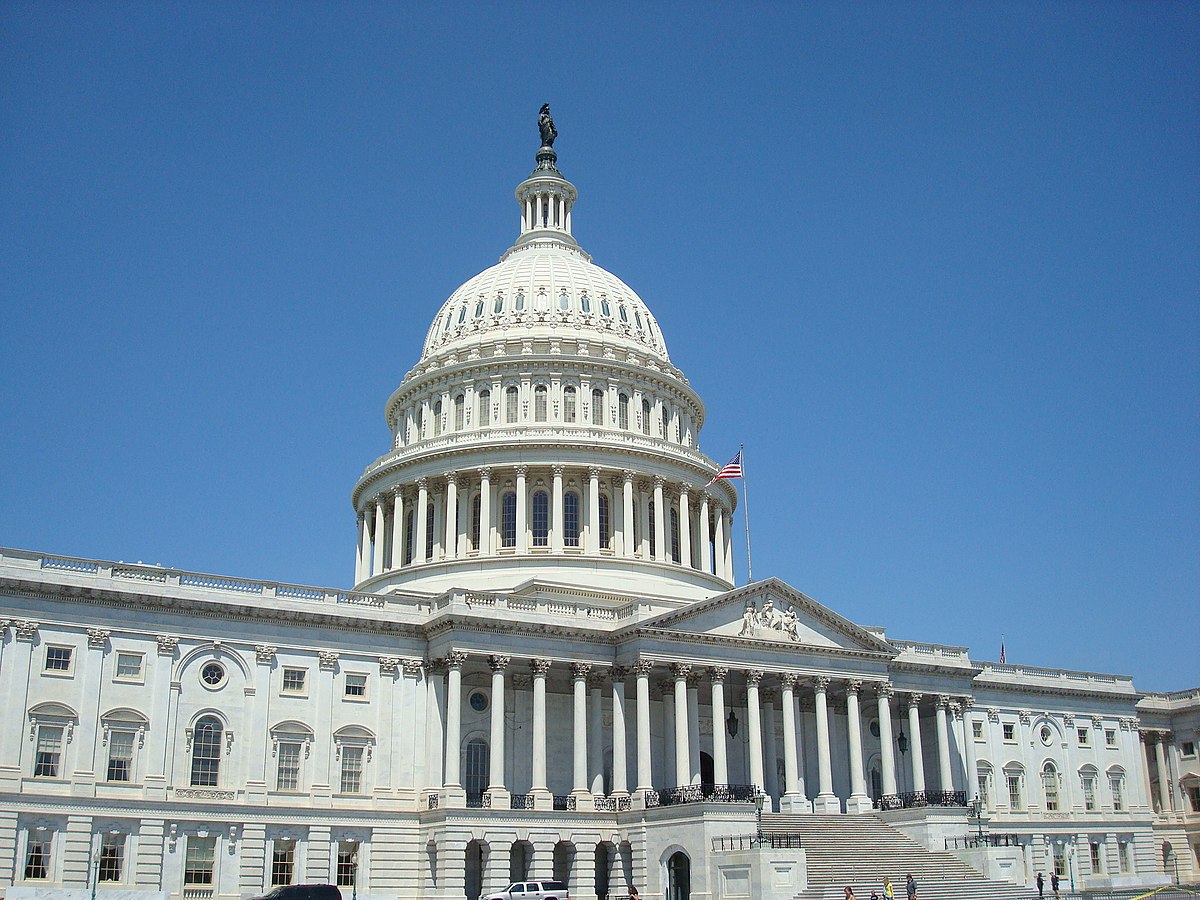
Washington D.C is known for more than just the Washington Monument, The Lincoln Memorial, The Capitol, and the White House. It is home to the Nation’s elected officials who make incredibly important decisions that affect the lives of every single American voter. They vote on bills that address important issues such as climate change, Covid, taxes, healthcare, and much more. They also reside in President Biden’s administration, helping him make important decisions on how he should run the country. Here are the 50 Most Powerful Politicians in Washington D.C.
#50 Republican Senatorial Committee Chairman Rick Scott
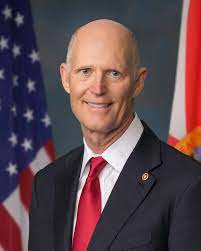 Party: Republican Home State: Florida Assumed Office: January 8, 2019, Twitter: @SenRickScott 350K followers
Scott is a Navy Veteran who once ran for Governor of Florida in 2010, defeating Bill McCollum in a tightly contested primary race and defeating Alex Sink in the general election. He would be re-elected in 2014, defeating Charlie Crist. After term limits barred him from seeking a third term, he opted to run for the U.S. Senate, defeating Bill Nelson in 2018. Scott has an A+ rating from the NRA because he signed more pro-gun bills in a single term than any other Governor in the State’s history.
#49 Vice-Chair of the Senate Republican Conference Joni Ernst
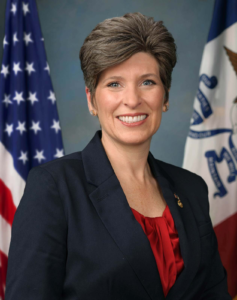 Party Republican Home State: Iowa Assumed Office: January 3, 2015, Twitter: @SenJoniErnst 113K followers
Once considered a “long shot” to win her 2014 Senate campaign, she received many campaign donations from the Koch brothers to push her over the edge. She is a longtime critic of Obama and has been a loyal ally to Donald Trump. Ernst served in the Iowa National Guard from 2003 to 2004 and was stationed in Kuwait. She has supported defunding Planned Parenthood as well as repealing Obamacare. She has also advocated eliminating the EPA and the federal minimum wage.
#48 Republican Policy Committee Chairman Roy Blunt
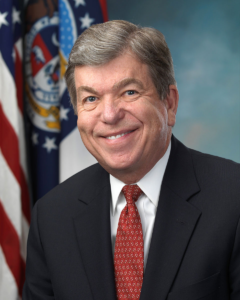 Party: Republican Home State: Missouri Assumed Office: January 3, 2011, Twitter: @RoyBlunt 125K followers
Blunt served as the Missouri Secretary of State from 1985 to 1993 and was elected to the U.S. House of Representatives in 1996. He then served as the Republican Whip from 2003 to 2009. Blunt ran a victorious Senate campaign in 2010, and the following year he was elected Vice-Chairman of the Republican Conference. He is the dean of Missouri’s Congressional delegation and was elected to serve as the Policy Committee Chairman in 2018.
#47 Republican Conference Chairman John Barrasso
 Party: Republican Home State: Wyoming Assumed Office: June 25, 2007, Twitter: @SenJohnBarasso 150K followers
Barrasso graduated from Georgetown University, where he received his B.S. and M.D. He conducted his medical residency at Yale before moving to Wyoming to practice orthopedics. Blunt first ran for Senate in 1996, where he lost a close primary race to Mike Enzi. Barrasso got elected to the State Senate in 2002, where he would stay until he was appointed to the U.S. Senate in 2007 following the death of Craig L. Thomas. He was elected to finish the late Senator’s term and then re-elected twice. He is the dean of Wyoming’s Congressional Delegation.
#46 Vice-Chair of Policy and Communications Committee Cory Booker
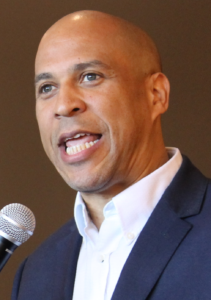 Party: Democrat Home State: New Jersey Assumed Office: October 31, 2013, Twitter: @CoryBooker 4.9M followers
Booker is a former Attorney who served as Mayor of Newark from 2006 to 2013. Booker also served in the Municipal Council of Newark for the Central Ward from 1998 to 2002. He won the seat by staging a 10-day hunger strike and briefly living inside of a tent to draw attention to urban development issues in the city. During his first term as Mayor, affordable housing doubled, and he won a second term in 2010. Booker was elected to the U.S. Senate during a special election in 2013 and got re-elected twice more. Booker also ran for the Democratic nomination in 2020 but did not gain any traction on the campaign trail amidst a very crowded field.
#45 Vice Chair of Conference Elizabeth Warren
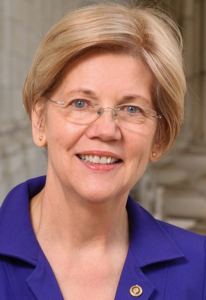 Party: Democrat Home State: Massachusetts Assumed Office: January 3, 2013, Twitter: @SenWarren 6.9M followers
Warren’s signature accomplishment would be creating the Consumer Financial Protection Bureau, which is designed to handle mortgages, credit cards, and student loans and protects people from unfair or deceptive business practices. Her other bread and butter issues include student debt relief and raising taxes on the rich. Before her political career began, she was one of the most influential professors on bankruptcy law. Her public profile grew after the financial crisis of 2008 as she made very forceful stances in favor of strong banking regulations. She ran for President in 2020 and was briefly considered a front-runner for the nomination.
#44 Chairwoman of Policy and Communication Committee Debbie Stabenow
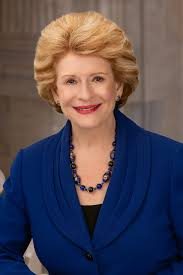 Party: Democrat Home State: Michigan Assumed Office: January 3, 2001 @SenStabenow 136K followers
Stabenow became Michigan’s first female Senator after she defeated incumbent Republican Spencer Abraham. Before her victory, she served in the U.S. House of Representatives, representing Michigan’s 8th congressional district. She chaired the Senate Agriculture Committee from 2011 to 2015 and became Chair of the Senate Democratic Policy Committee in 2017.
#43 Assistant Democratic Leader Patty Murray
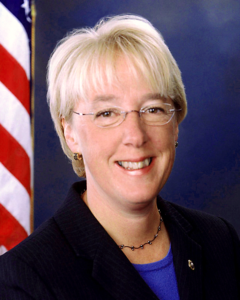 Party: Democrat Home State: Washington Assumed Office: January 3, 1993, Twitter: @PattyMurray 467K followers
Murray is a retired educator who has been serving in the U.S. Senate for almost 30 years and is Washington’s first female Senator. Her background in education includes teaching pre-school and community college. She is an advocate of environmental and education issues. She served one term in the Washington State Senate before being elected to the U.S. Senate in 1993. She was re-elected four times and plans to run for a sixth term in 2022.
#42 Chief of Staff Ron Klain
 Party: Democrat Assumed Office: January 20, 2021, Twitter @RonaldKlain 406K followers
Klain is currently serving under his third administration, where he was named Chief of Staff under Vice Presidents Al Gore and Joe Biden. He also worked as Obama’s Ebola Response Coordinator. When he worked in the Clinton White House, he oversaw judicial nominations and directed judicial selection efforts that got Ruth Bader Ginsberg confirmed to the Supreme Court.
#41 Presidential Science Advisor and Director of the Office of Science and Technology Policy Eric Lander.
 Party: Democrat Assumed Office: June 2, 2021, Twitter:eric_lander 66.7K followers
Lander is a professor at the Massachusetts Institute of Technology (MIT), a professor of systems biology at Harvard Medical School, and a Rhodes Scholar. He co-chaired President Obama’s Council of Advisors on Science and Technology. In 2004 TIME magazine named him as one of their 100 most influential people. In 2013 he was awarded the first Breakthrough Prize in Life Sciences, and in 2016, the Semantic Scholar A.I. program ranked him as #1 on its list of biomedical researchers.
https://commons.wikimedia.org/wiki/File:Eric_Lander_(cropped).jpg
#40 Administrator of the Small Business administration Isabel Guzman
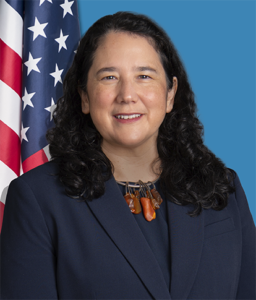 Party: Democrat Assumed Office: March 17, 2021, Twitter: @IsabelCGuzman 4,929 followers
Guzman will be the 27th person to serve her position. Her responsibilities will include leading a workforce of over 9,000 SBA employees and administering the SBA’s portfolio of loans, investments, disaster assistance, contracting, and counseling. Additionally, she will implement critical financial relief for small businesses impacted by the pandemic through the economic disaster loan program, paycheck protection program, and additional support in the American Rescue Program.
#39 Chair of the Council of Economic Advisors Dr. Cicilila Rouse
 Party: Democrat Assumed Office: March 12, 2021, Twitter: @CeciliaERouse 22.3K followers
Rouse served in the National Economic Council under President Clinton and was one of President Obama’s economic advisors from 2009 to 2011. She is the Dean of Princeton’s School of Public International Affairs and the founding director of the University’s Education Research Section. She is a member of the National Academy of Education. Her primary research interests are in labor economics with a focus on the economics of education.
#38 United States Ambassador to the United Nations Linda-Thomas Greenfield
 Party: Democrat Assumed Office: February 25th, 2021 Twitter: @LindaT_G 199K followers
Greenfield’s 34-year Foreign Service career includes ambassadorship to Liberia (2008-2012) and foreign postings in Switzerland, Pakistan, Kenya, The Gambia, and Jamaica. In addition to the Bureau of Human Resources, she has worked with the Bureau of African Affairs. She served as Principal Deputy Assistant Secretary, the Bureau of Population, Refugees, and Migration, where she served as Deputy Assistant Secretary.
#37 United States Trade Representative Katherine Tai
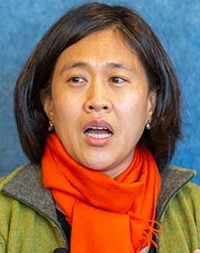 Party: Democrat Assumed Office: March 21, 2021, Twitter: @AmbassadorTai 24.4K followers
She served as the chief trade counsel for the United States House Committee on Ways and Means. She served in the Trade Representative’s Office of General Counsel, where she worked on trade cases at the World Trade Organization, and she was named chief trade counsel in 2017. During her tenure on the Ways and Means Committee, she played a significant role in the House’s negotiations with the Trump administration with the United States-Canada-Mexico Agreement. The Associated Press called her a problem-solving-pragmatist on her trade policy.
https://commons.wikimedia.org/wiki/File:Katherine_Tai_(cropped).jpg
#36 Director of National Intelligence Avril Haines
 Party: Democrat Assumed Office: January 21, 2021, Twitter: @WRLD46 133 followers
Daines has a lot of experience in National Security; during the Obama administration, she served as the Assistant to the President and Deputy National Security Advisor from 2015 to 2017. During this time, she led the National Security Council Deputies Committee. From 2013 to 2015, Haines was Deputy Director of the CIA and the first woman to hold both positions. Over the past 20 years, she has worked in all three branches of government.
#35 Administrator of the Environmental Protection Agency Michael Regan
 Party: Democrat Assumed Office: March 11, 2021, Twitter: Michael_S_Regan 27.1K followers
Regan is the first black man and the second person of color to lead the EPA. He is a resident of Goldsboro, North Carolina, where he developed a passion for the environment while hunting and fishing with his father and grandfather exploring the waters and coastal plains of North Carolina. Before he was named head of the EPA, Regan served as the Secretary of Environmental Quality. Under his leadership, he secured the largest coal ash cleanup in U.S. history. He also established North Carolina’s first Environmental Justice and Equity Board to better environmental protection and community empowerment.
#34 Secretary of Homeland Security Alejandro Mayorkas
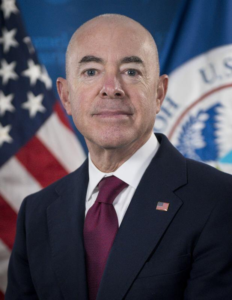 Party: Democrat Assumed Office: February 2, 2021, Twitter: @SecMayorkas 47.7K followers
Mayorkas is the first Latino to serve as Secretary of Homeland Security and has a 30-year career as a law enforcement official and a nationally recognized lawyer in the public sector. He served as Deputy Secretary of Homeland Security from 2013 to 2016 and Director of U.S. Citizenship and Immigration Services from 2009 to 2013. During his tenure there, he led the development of DACA, negotiated cybersecurity and homeland security agreements with foreign governments, led the department’s response to the Ebola outbreak, and developed an emergency relief program for orphaned children during the 2010 earthquake in Haiti.
#33 Secretary of Veterans Affairs Denis McDonough
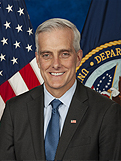 Party: Democrat Assumed Office: February 9, 2021, Twitter: @DenisMcDonnough 42.4K followers
Secretary McDonough served as President Obama’s Chief of Staff; he managed the White House staff and worked across the cabinet to advance Obama’s agenda. McDonough confronted management issues facing the federal government, devised and enforced goals and performance standards to preserve the Obama-Biden administration’s ethical and practical operations criteria. Before being Chief of Staff, he served as Principal Deputy National Security Advisor, Chief of Staff of National Security Staff, and chaired the National Securities Council Deputies Committee.
#32 Secretary of Education Miguel Cardona
 Party: Democrat Assumed Office: March 2, 2021, Twitter: @teachcardona 74K followers
Cardona is the previous Commissioner of Education in Connecticut, where he faced an unprecedented battle of responding to the Covid-19 pandemic and safely reopening the State’s schools. He accomplished this by providing schools with guidelines and oversight to provide meaningful opportunities for students while prioritizing public health. He arranged for students to have access to technology to assist them with remote learning. His team also collaborated with Yale Center for Emotional Intelligence to provide free social and emotional learning courses.
#31 Secretary of Energy Jennifer Granholm
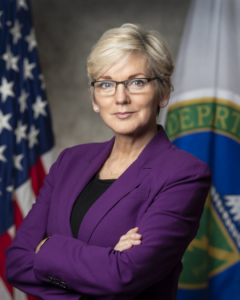 Party: Democrat Assumed Office: January 25, 2021, Twitter: @JenGranholm 165K followers
Granholm assists the DOE in helping Joe Biden reach his goal of net-zero carbon emissions by 2050 and advancing cutting-edge clean energy technologies, plus creating millions of decent-paying union clean energy jobs and building an equitable clean energy future. She also promotes American leadership in scientific discovery, maintaining the nuclear deterrent and reducing atomic danger, and remediating the environmental harm caused by legacy defense programs.
#30 Secretary of Transportation Pete Buttigieg
 Party: Democrat Home State: Indiana Assumed Office: February 3, 2021, Twitter: @PeteButtigieg 3.4M followers
Before becoming Secretary of Transportation, Buttigieg was a two-term mayor of South Bend, Indiana. He is also a graduate of Harvard, a Rhodes Scholar at Oxford. Buttigieg has also served seven years in the U.S. Navy Reserve, taking a leave of absence for a deployment in Afghanistan. While he was Mayor, income grew, poverty fell, and unemployment got cut in half. His leadership sparked city-wide job growth and facilitated innovative public partnerships like Commuters Trust, a benefits program designed to improve the city’s transportation experience for workers.
#29 Secretary of Housing and Urban Development Marcia Fudge
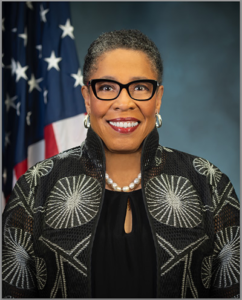 Party: Democrat Home State: Ohio Assumed Office: March 10th, 2021 Twitter: @RepMarciaFudge 54.1K followers
Throughout her career Secretary Fudge has worked hard to assist low-income families, seniors, and communities across the country. She represented Ohio in the House of Representatives from 2008 to 2021 and is the former Chair of the Congressional Black Caucus. When she was Mayor of Warrensville Heights, she worked with local officials to protect citizens against predatory lending and addressed the city’s foreclosure crisis by forming a partnership that helped residents maintain the financial security needed to keep or buy a home.
#28 Secretary of Health and Human Services Xavier Becerra
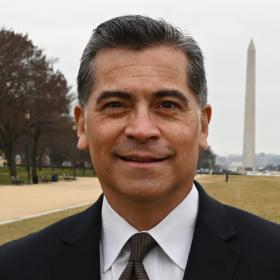 Party: Democrat Assumed Office: March 19, 2021, Twitter: @XavierBecera 56.9K followers
Becerra is the 25th Secretary of Health and Human Services and the first Latino to hold the position and will work with Joe Biden to assure that every American has access to healthcare. He served over 20 years in the House of Representatives, and he was the ranking member of the Ways and Means Subcommittee on Social Security and the Subcommittee of Health. He introduced the Medicare Savings Program Improvement Act of 2007 that expanded cost-sharing subsidies for low-income seniors on Medicare and Medicaid by increasing the resources they could receive.
#27 Secretary of Labor Marty Walsh
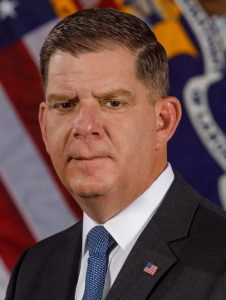 Party: Democrat Assumed Office: March 23, 2021, Twitter: @SecMartyWalsh 15.2K followers
Before joining the Biden administration, Walsh was the 54th Mayor of Boston who was elected twice. Mayor Walsh significantly strengthened the city’s schools as he funded extended learning, added hundreds of pre-kindergarten seats, and secured tuition-free community college. Walsh also upgraded the city’s digital infrastructure and used technology to transform government services. At the same time, he created opportunities for low-income workers such as the “learn and earn” apprenticeship program of financial empowerment. His administration significantly addressed housing as he set records for affordable middle-class homes. He built a state-of-the-art homeless shelter putting the city on the right path to ending homelessness.
https://commons.wikimedia.org/wiki/File:Secretary_Marty_Walsh_(cropped).jpg
#26 Secretary of Commerce Gina Raimondo
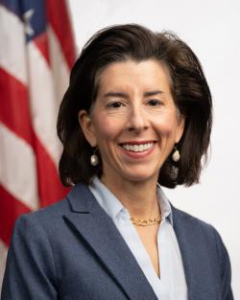 Party: Democrat Assumed Office: March 3, 2021, Twitter: @SecRaimondo 16.3K followers
Gina Raimondo is the 40th U.S. Secretary of Commerce, and her goal is to spur good-paying jobs, empower entrepreneurs to grow, and help American workers and businesses compete. She is the first female Governor of Rhode Island, where she served two terms. While she was Governor, she made record investments in the State’s infrastructure. She also fought hard to create economic opportunities for all Rhode Islanders. Early in her administration, she launched a workforce development program that develops pro-business partnerships to address challenges in the workplace.
#25 Secretary of Agriculture Tom Vilsack
 Party: Democrat Assumed Office: February 24, 2021Twitter: @SecVilsack 26.9K followers
Vilsack served as the 30th Secretary of Agriculture under the Obama administration. He worked hard to strengthen the American Agriculture economy, built vibrant economies, and created markets for innovation in Rural America. He also invested heavily in rural infrastructure and renewable energy. Under his leadership, the USDA supported farmers who drove America’s rural economy forward and supplied a safe, nutritious food supply for the American people. The USDA also provided healthier school meals to benefit 50 million children.
#24 Secretary of the Interior Deb Haaland
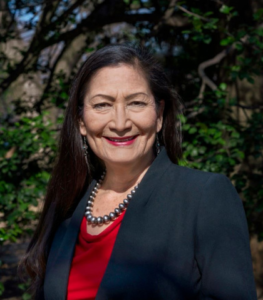 Party: Democrat Home State: New Mexico Twitter: @DebHaalandNM 293K followers
Deb Haaland is the first Native American to serve as a cabinet secretary. She comes from a military family. Her father served 30 years in the U.S. military and was awarded the Silver Star for saving six of his fellow soldiers in Vietnam. She ran her enterprise selling and producing Pueblo Salsa; she has served as a tribal administrator at San Felipe Pueblo and became the first woman elected to the Laguna Development Corporation Board of Directors. She oversees business operations, the second largest tribal gaming enterprise in New Mexico. She is one of the first Native American women to serve in congress, and she focuses largely on environmental justice and climate change.
#23 Budget Committee Chairman Senator Bernie Sanders
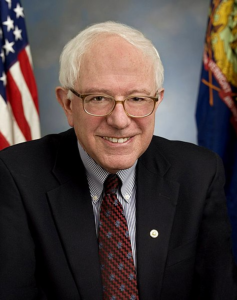 Party: Democrat Home State: Vermont Assumed Office: January 3, 2007, Twitter: @BernieSanders 15.2M followers
Senator Sanders has had a very long and consistent career in Washington. He has served as Vermont’s congressional representative from 1991 to 2006, and he has been one of the State’s Senators since 2007. He has been an advocate for Medicare for All, Free College, raising taxes on the rich, and campaign finance reform for the duration of his long career. His bold policy stance has won him the respect of millions of younger voters all over the country, and his policy ideas were able to move the Overton window to the left, helping birth groups like Justice Democrats and Our Revolution.
#22 Attorney General Merrick Garland
 Party: Democrat Assumed Office: March 11, 2021
Garland is the 86th Attorney General of the United States; he was nominated to the U.S. Supreme Court by President Obama in 2016 but was blocked from serving on the court in an unprecedented move by Mitch McConnell for 293 and was never able to serve as a Supreme Court Justice. The seat was filled by Neil Gorsuch, who was nominated by President Trump in 2017. Garland was nominated for his current position by President Biden in January of 2021 and was confirmed by a 70 to 30 vote two months later.
https://commons.wikimedia.org/wiki/File:2016-03-22_Senator_Chuck_Schumer_meets_with_Merrick_Garland_06_(cropped_to_Garland).jpg
#21 Secretary of Defense Lloyd Austin
 Party: Democrat Assumed Office: January 22, 2021, Twitter: @SecDef 339K followers
Austin has a 41-year career in the Army, including command at the corps, division battalion, and brigade levels. He was awarded the Silver Star for his leadership in the Army’s Third Infantry Division during the 2003 invasion of Iraq. He has also battled ISIS in Iraq and Syria and retired from the Army in April of 2016. Since retirement, he serves on the Board of Directors of Raytheon Technologies.
#20 Secretary of the Treasury Dr. Janet Yellen
 Party: Democrat Assumed Office: January 26, 2021, Twitter: @SecYellen 289K followers
The former economist took office after almost 50 years working in academics; Yellen is the first person in U.S. history to have led the White House Council of Economic Advisors, the Federal Reserve, and the Treasury Department. She graduated from Brown University in 1967 and was an assistant professor at Harvard until 1976, when she began working at the Federal Reserve Board. Three years after President Clinton appointed her to the Federal Reserve Board of Governors, he named her Chair of the White House of Economic Advisors. She has since served as Vice-Chair and Chair of the Federal Reserve under the Obama administration.
#19 Senator Kyrsten Sinema
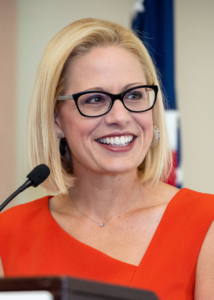 Party: Democrat Home State: Arizona Assumed Office: January 3, 2019, Twitter: @kyrstensinema 163K followers
Sinema began her career working with the Arizona Green Party and rose to prominence for her LGBT rights activism and opposition to the war on terror. She left the Green Party in 2004 and joined the Arizona Democratic Party, where she got elected to the U.S. House of Representatives in 2012. She is a member of the blue dog coalition and the bipartisan problem solvers caucus as she holds one of the more right-wing voting records compared to her fellow Democrats. She and Joe Manchin are two of the eight Democrats who opposed the $15/hour minimum wage bill this winter.
#18 Senator Joe Manchin
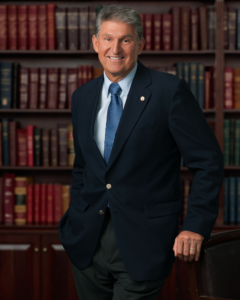 Party: Democrat Home State: West Virginia Assumed Office: November 15, 2010, Twitter: @Sen_JoeManchin 269K followers
Joe Manchin is one of the most influential people in the Senate because he can sway the deadlocked Senate to either pass a bill Joe Biden wants to sign via reconciliation or watch it die before it can even reach Biden’s desk. Manchin has since expressed he does not want to get rid of or reform the filibuster, meaning that it will require 60 votes to pass a bill Biden would like to sign into law rather than 51. This process would require reconciliation, something Manchin opposes.
#17 Secretary of State Anthony Blinken
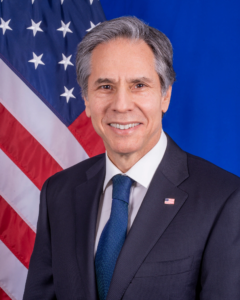 Party: Democrat Assumed Office: January 26, 2021, Twitter: @SecBlinken 694K followers
Blinken is currently serving as the 71st Secretary of State under President Biden; he served as deputy national security advisor and deputy secretary of State under the Obama administration. During the Clinton years, he served in the state department and senior positions in the National Security Council. He also supported the 2003 invasion of Iraq and served on the Senate Foreign Relations Committee from 2002 to 2008. He also helped the Obama administration with their Afghanistan policy and dealing with Iran’s nuclear program.
#16 President Pro-Tempore Patrick Leahy
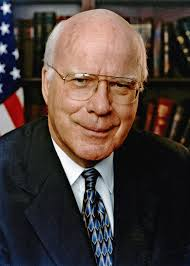 Party: Democrat Home State: Vermont Assumed Office: January 3, 1975, Twitter:@SenatorLeahy 230K followers
Senator Leahy previously served as the Pro-Tempore from 2012 to 2015 and is the last of the Senate’s Watergate Babies” who were the first Democrats elected to congress following Nixon’s resignation in 1974. Leahy is also the longest-serving U.S. Senator and the first Democratic Senator from Vermont. He is the former Chairman of the Agriculture and Judiciary Committees. Leahy is a longtime supporter of the NAACP and a big proponent of affirmative action. He has called for a moratorium on the death penalty and more DNA testing for death row inmates. He believes the role of prisons should be to rehabilitate rather than punish first-time offenders.
#15 Congressman Gary Palmer
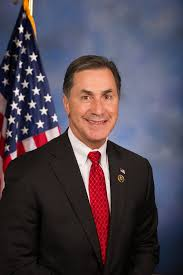 Party: Republican Home State: Alabama Assumed Office: January 3, 2015, Twitter: @USRepGaryPalmer 21.3K followers
Palmer Heads the Conference Forum for Policy Development, and he represents Alabama’s sixth largest congressional district. The district includes the wealthier parts of Birmingham, as well as most of the city’s suburbs. He has also co-founded and served as President of the Alabama Policy Institute, a right-wing think tank. He is a member of the Freedom Caucus, and since 2019, he has been the Chairman of the Republican Party Committee.
#14 Conference Chairwoman Elise Stefanik
 Party: Republican Home State: New York Assumed Office: January 3, 2015, Twitter: @RepStefanik 223K followers
Stefanik is the third-ranking House Republican after the party ousted Liz Cheney from leadership earlier this spring. She was elected to congress in 2014 at the age of 30 and is the youngest woman ever elected to congress. She was initially elected as a moderate but has moved further to the right over time and has become a strong supporter of Donald Trump, defending him during his first impeachment trial. She also supported the former President following his attempts to overturn the 2020 election and objected to Pennsylvania’s electoral college votes following the insurrection at the Capital.
#13 Minority Whip Steve Scalise
 Party: Republican Home State: Louisiana Assumed Office: May 3, 2008, Twitter: @SteveScalise 461K followers
Scalise is a strong opponent of gun control, and he boasts an A+ rating from the NRA, although he was shot during a baseball practice saying he is still a gun-rights supporter. He also supported Donald Trump’s ban on citizens of seven majority-Muslim countries from entering the U.S. Scalise also opposes legalizing marijuana claiming that it is a gateway drug.
#12 Minority Leader Kevin McCarthy
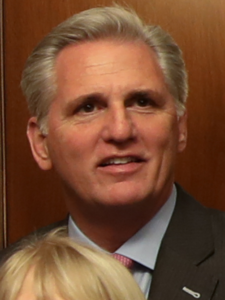 Party: Republican Home State: California Assumed Office: January 3, 2007, Twitter: @GOPLeader 1.2M followers
McCarthy is the current minority House Leader and served as the Majority House leader from 2014 to 2019. He also serves as Chairman of California Young Republicans and Young Republican National Federation. He is a staunch defender of Donald Trump and refused to concede the election claiming fraud and took part in the efforts to overturn the results. McCarthy is a massive proponent of the second amendment and opposes all gun restrictions.
https://commons.wikimedia.org/wiki/File:Kevin_McCarthy_(49395640118).jpg
#11 Republican Whip John Thune
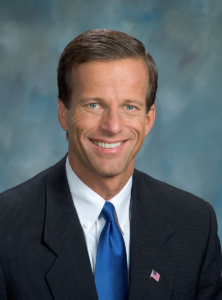 Party: Republican Home State: South Dakota Assumed Office: January 3, 2005, Twitter: @SenJohnThune 111K followers
Thune has worked in politics and civic organizations since he completed his MBA degree. He served in the U.S. House of Representatives for South Dakota from 1997 to 2003. Thune served as the Chief Deputy Whip from 2007 to 2009 and as Chairman of the Senate Republican Policy Committee from 2009 to 2012. He holds the third-ranking position in the Senate.
#10 Senate Majority Whip Dick Durbin
 Party: Democrat Home State: Illinois Assumed Office: January 3, 1997, Twitter: @SenatorDurbin 726K followers
Senator Durbin is one of the most powerful Democrats in the Senate and is second to only Chuck Schumer. He has held the position of Majority Whip since 2005 and chairs the Senate Judiciary Committee. Durbin is also the dean of Illinois’s congressional delegates. Durbin has supported overturning Citizens United, and he has helped introduce the Voter Empowerment Act to modernize and inform every voter.
#9 Democratic Caucus Chairman Hakeem Jeffries
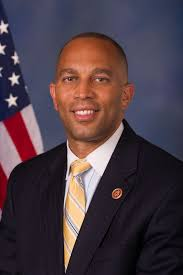 Party: Democrat Home State: New York Assumed Office: January 3, 2013, Twitter: @RepJeffries 407K followers
Jeffries is a former attorney who has worked for Paul, Weiss, Rifkind, Wharton & Garrison, then Viacom and CBS before being elected to the New York State Assembly from 2007 to 2012, representing the states 57th district. He was elected to the House of Representatives in 2013 and had been chairing the House Democratic Caucus since 2019, representing a district that covers eastern Brooklyn and southwest Queens.
#8 Assistant Speaker Katherine Clark
 Party: Democrat Home State: Massachusetts Assumed Office: December 12, 2013, Twitter: @RepKClark 90.2K followers
Clark is a former member of the Massachusetts House of Representatives from 2008 to 2011 and the Massachusetts Senate from 2011 to 2013. She won a special election in 2013, which earned her a seat in the U.S. House of Representatives as she succeeded now-Senator Ed Markey, and she sits on the House Appropriations Committee. She is the fourth-ranking member in the House leadership
#7 House Majority Whip Jim Clyburn
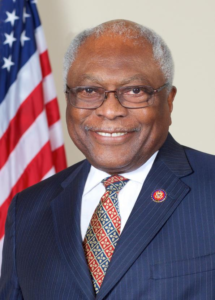 Party: Democrat Home State: South Carolina Assumed Office: January 3, 1993, Twitter: @WhipClyburn 149K followers
Clyburn is a two-time majority whip, with his current term beginning in 2019 and his first term lasting from 2007 to 2011. He is the third-ranking House Democrat behind Pelosi and Hoyer and serves as the Dean of South Carolina’s congressional delegation. Clyburn’s endorsement of Joe Biden’s presidential campaign helped turn the race on its head after Biden had three embarrassing losses to begin the race. Biden then won South Carolina and later Super Tuesday by massive numbers putting him in the driver’s seat for the nomination.
#6 Majority House Leader Steny Hoyer
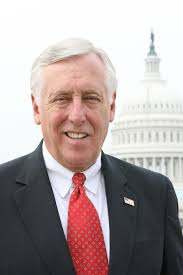 Party: Democrat Home State: Maryland Assumed Office: May 19, 1981, Twitter: @LeaderHoyer 157K followers
Since 2003 Hoyer has been the second-ranking House Democrat behind Nancy Pelosi. Hoyer is currently serving his second time serving as House Majority Leader, with his first stint running from 2007 to 2011. He has also served as Minority Whip under Pelosi twice from 2003 to 2007 and 2011 to 2019.
#5 Senate Minority Leader Mitch McConnell
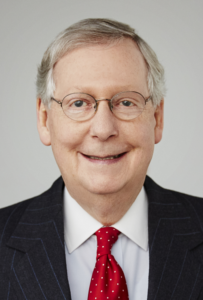 Party: Republican Home State: Kentucky Assumed Office: January 3, 1985, Twitter: @LeaderMcConnell 2M followers
McConnell said Republicans had not given up hope for a bipartisan infrastructure bill when talks concluded earlier this week with fellow Republicans. The proposal is expected to cost around $900 billion, but the group has yet to lock in a top-line figure. There is also widespread skepticism that the proposal will reach the required 60-vote threshold required for it to pass. Democrats want to pass it using reconciliation, allowing them to bypass the 60 vote filibuster using only 51 votes.
#4 Senate Majority Leader Chuck Schumer
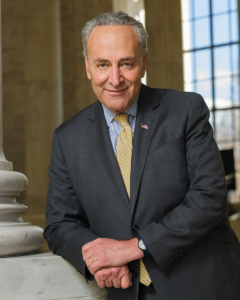 Party: Democrat Home State: New York Assumed Office: January 3, 1999, Twitter: @SenSchumer 3.2M followers
Schumer does not support Medicare for All and says that all efforts should be directed towards improving Obamacare to make healthcare more affordable and accessible to all Americans. Schumer also believes in passing stronger gun laws to protect our citizens. He also considers himself to be pro-choice as is in favor of protecting planned parenthood’s budget. He also opposes the death penalty, saying that it is expensive, outdated, and doesn’t benefit society.
#3 Speaker Nancy Pelosi
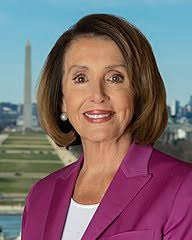 Party: Democrat Home State: California Assumed Office: June 2, 1987, Twitter: @SpeakerPelosi 7.1M followers
Pelosi is a strong voting rights advocate; she has supported the “For the People Act,” which has election reforms such as making election day a national holiday. She believes that we need more gun control laws in this country, including stricter background checks to make it harder for criminals to obtain a firearm.
#2 Vice President Kamala Harris
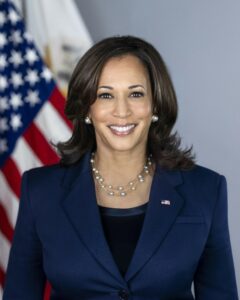 Party: Democrat Home State: California Assumed Office: January 20, 2021, Twitter: @KamalaHarris 18.5M followers
When on the campaign trail during the Democratic Primary, Harris said she favored a middle-class tax cut, raised taxes on corporations, and advocated for increasing the estate tax. Harris has also voiced support for codifying Roe v. Wade because she believes reproductive rights are constitutional rights and supports federal funding for planned parenthood. Harris cast a tie-breaking vote for the Covid Stimulus bill that was passed in February of 2021. In her first international trip as Vice President visiting Guatemala and Mexico in an attempt to address the causes of increased migration from South and Central America to the United States, she warned migrants that they should not make the trip.
#1 President Joe Biden
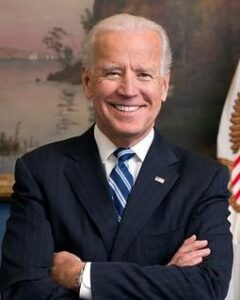 Party: Democrat Home State: Delaware Assumed Office: January 20, 2021, Twitter: @JoeBiden 30.5M followers
Since becoming President this January, President Biden was able to pass the covid stimulus bill that provided $1,400 checks to millions of Americans in need. He also reversed many of Trump’s policies, such as his transgender military ban, and brought the U.S. back into the Paris Climate Agreement. He has also exceeded his goal of vaccinating 100 million people in his first 100 days, as we have seen over 200 million in that period. Under the Biden/Harris administration, the Federal Government has currently spent $4.8 trillion. Two-thirds of those expenses must go to programs such as Medicare and Medicaid and $1.9 trillion of that has gone to the Covid Stimulus bill.


.jpg)
.jpg)