The Forgotten Heat of Texas District 7!

In the 2018 Midterm Elections, GOP Rep. John Culberson was dramatically ousted from office in Texas District 7 after being the district’s representative to Congress for 18 years. 2 years later, his replacement, Congresswoman Lizzie Fletcher (D) TX-07 faces a heated contest for re-election against a rising Republican star; Wesley Hunt.


Wesley Hunt is a native son of Houston and a decorated veteran of the US Army. After he graduated from West Point with a degree in mechanical engineering, he served his country for 8 years in which he flew combat missions in Iraq, for which he received a combat service medal, and served as a diplomatic liaison officer in Saudi Arabia. Now a husband, a father of 2 baby daughters, and a real estate developer; Wes decided to continue his service for this country by running for United States Congress in his home state and in his native city for Texas District 7.

As a candidate, Wesley Hunt promises to restore opportunity to Texas District 7 while protecting Houston’s and Texas’s important energy industry and increasing the security of our immigration system. He also promises to protect struggling middle-class families in District 7 by defending Houston from burdensome federal taxes and improving the affordability of quality health care. But most importantly, Hunt promises to protect Houston from flooding issues resulting from hurricanes and heavy rain. Hunt is also very critical of Congresswoman Fletcher’s left radicalization since she entered Congress and broke her promise of working as an independent for the 7th district of Texas.

On immigration, Wesley Hunt believes in tighter border security with higher funding in order to crack down on illegal immigration and thinks there shouldn’t be amnesty for illegal immigrants already in this country and attributes this to the notion of the “Rule of Law.” However, Wes is very welcoming when it comes to legal immigrants as he believes they contribute a lot to this country.

With regards to the Houston economy, Hunt promises that he will hit back at Washington’s increasingly hostile rhetoric towards Houston’s Energy Corridor by standing against Speaker Pelosi’s Green New Deal and her tough energy/environmental regulations. This way, he will save hundreds of thousands of jobs in Houston’s energy sector. He will also stand by middle-class families in District 7 by fighting to protect the 2017 tax reform bill and make it permanent. He also wants to eliminate the Special tax interest tax breaks which he thinks are unfair.

As a native Houstonian, Wes understands the increasing suffering of his fellow Houstonians with Flooding resulting from poor infrastructure and unconscious and unnecessary spending of the City’s budget. To fight that, he promises to reform the city’s infrastructure so that the excess water from heavy rain and hurricanes can flow smoothly through Bayous and tunnels into the gulf.

With the election approaching and the race tightening, both campaigns raise more promises but with the incumbent already exhausting her chance, should the rising red star get his?

The Democrats: Differences Between Biden and Harris

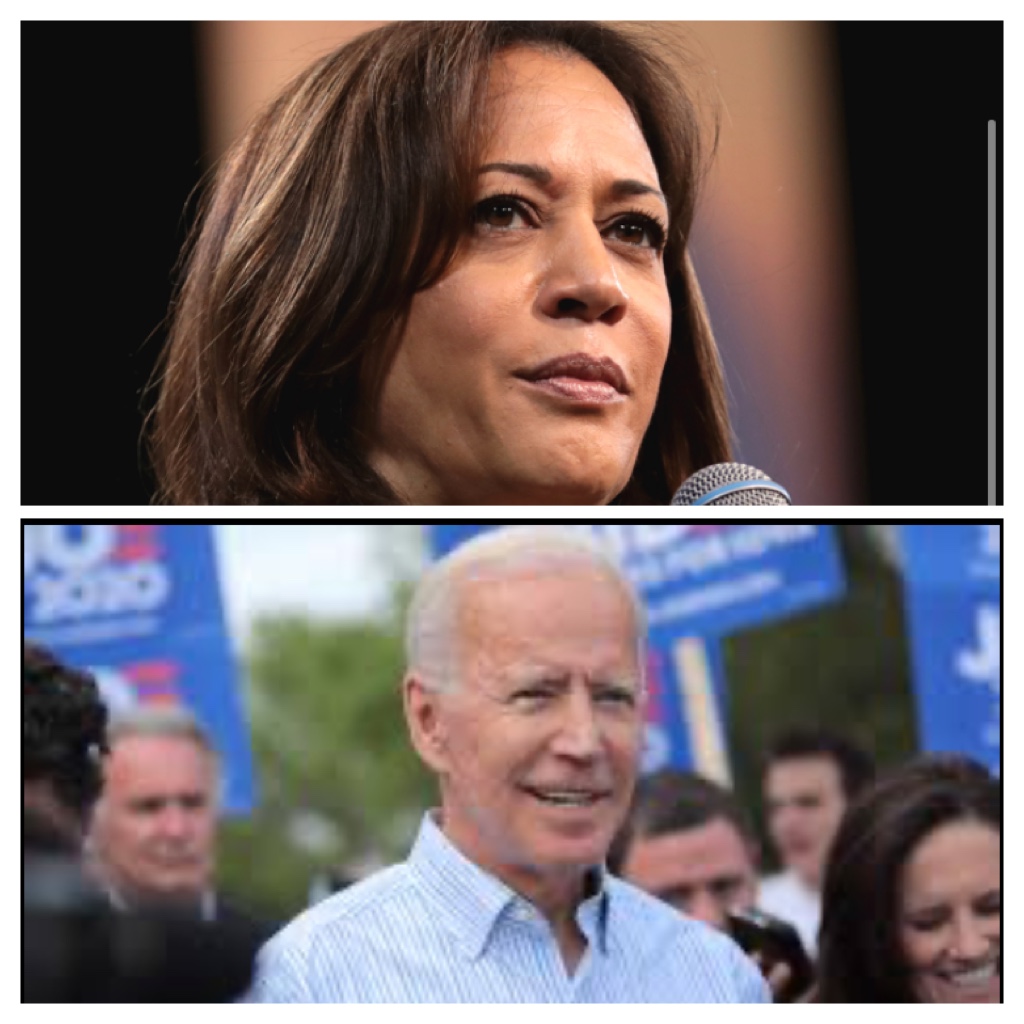
Three months out from the presidential election, Democratic candidate Joe Biden chose California Senator Kamala Harris as his pick for Vice President. Considering their clash during the Democratic primary, their newfound unity sets a new tone between the two politicians. With a long track record in politics, both Democrats have been praised and criticized for their stances and how well they complement one another. But, so far, surveys such as the NBC News/Wall Street Journal poll indicate that voters are happy with Harris’ addition to the Democratic ticket with a 39% of Americans with a positive rating and 35% with a negative rating.

Why Kamala Harris?

Before making his pick, Biden spent much of his campaign deciding between various potential running mates. Publicly promising that he would choose a female Vice President, many wonder what other criteria the Democratic candidate used to put Harris on the ticket.

The pick clearly shows that Biden is appealing to more left-leaning, radical democrats, as Kamala Harris was ranked as the most liberal senator in 2019. Additionally, sensing a lack of support from black voters and the unrest surrounding people’s resistance to perceived racial injustice, Biden likely chose Harris to energize and mobilize voters. Harris is the first black woman and the first Asian American to be included on the ticket of a major party. Biden’s campaign has not been idle in touting the historic milestones.

Compared to other options for Vice President, Kamala was, above all else, safe. Her main competition, Susan Rice, was a U.N. Ambassador. While picking Rice would have signaled Biden’s intention to strengthen his stance on foreign policy given her credentials, she had never run for elected office. In contrast, Harris has been elected in California as both attorney general and Senator. In addition, she had already been vetted in her presidential campaign and had proven herself to be formidable in the eye of the public. As polls demonstrated a lead against Trump, Biden had no reason to shake things up by choosing a running mate inexperienced in the electoral process.

Policy

Kamala Harris’ foreign policy preferences generally fall in line with Biden’s. Despite growing solidarity with Palestinians among the Democratic Party, both Biden and his running mate believe in aligning America’s interest with Israel. Outside the scope of the Middle East, the Democrats take a decidedly anti-Trump stance in advocating for decreased negotiations with North Korea and Russia. However, while much of Harris’ positions on foreign policy remain unspoken, Biden expands his goals to include narrow uses of force for counterterrorism objectives. He has also stated his reluctance towards unilateral action to effect change in foreign governments.

Both Biden and Kamala are in favor of affirmative action. As attorney general of California, Harris expressed her support for affirmative action during the Supreme Court case of Fisher v. University of Texas. The plaintiff sought to challenge affirmative action in the race-based admissions policies of the university. Despite California’s banning of affirmative action, Harris decided to defy voters in her state by filing legal papers in the Supreme Court case that supported race-based admissions criteria. In addition, she filed papers in 2013 that advocated for affirmative action at the University of Michigan. Biden also supports affirmative action as he openly used gender as a primary factor in choosing Harris. In addition, he promised to appoint the first female, black Supreme Court justice. Harris’ and Biden’s stance on affirmative action carries with it an unavoidable irony as the Supreme Court ruled in the case of Fisher v. University of Texas that the gender and race-based conditions that Biden promises to follow in his Supreme Court appointment are unconstitutional.

Watching the Democratic debate, it would seem that Biden and Harris disagree over gun control legislation. However, further investigation indicates that contention about gun legislation revolves around how to enact legislation, not the substance of regulations. Both Democrats support dramatically expanding background checks for potential gun owners. In addition, they both hope to ban assault weapons and high capacity magazines. Biden and Harris diverge in the extent to which they would impose gun regulations given an uncooperative Congress. During her presidential campaign, Harris has stated that she would give Congress 100 days to pass gun control reform. If Congress refused, she promised to override their complacency with executive action. Biden retorted that such an act from the executive branch would be unconstitutional.

Both Democrats promise to prioritize action to address climate change. During the presidential campaign, Biden and Harris’ plans differed significantly in their costs. Biden proposed a $2 trillion plan while Harris advocated for a large-scale $10 trillion plan. Despite the difference in scope and cost, both remain committed to addressing environmental concerns.

Trade represents an area of disagreement between Biden and Harris. Initially, Kamala vocalized her support for free-trade policies. However, in practice, she has a protectionist record. She voted against the United States-Mexico-Canada Agreement (USMCA), a free-trade agreement between Mexico, Canada, and the US. She also stated that she would not have voted for the North American Free Trade Agreement (NAFTA), an agreement that preceded the USMCA. In contrast, Biden voted in favor of NAFTA and has declared his support for the USMCA. Thus, Biden and Harris stand opposed on the topic of free trade.

They are also divided on how to approach health care reform. Harris has demonstrated her support for a single-payer health care system in which universal health care would be financed by a public system. She has signed on to Bernie Sanders’ Medicare for All Act and raised her hand during the Democratic debate when asked who would abolish employer-provided insurance in favor of a government-provided plan. She later attempted to walk back her position and propose a plan that would simply make Medicare and Medicare Advantage plans available to all. Biden does not want Medicare for All. In contrast to Harris’ fluctuating position on reform, Biden would simply like to expand health care access and choice by protecting the Affordable Care Act, health care reform put in place by the Obama administration. Despite their differences in policies, both Biden and Harris are committed to working towards universal access to health care.

In addition to areas of contention, Biden and Harris agree on many policy preferences. Both argue for stronger legislative protections for LGBT people. They are also both in favor of rolling back Trump’s immigration policies, reforming but not abolishing Immigration and Customs Services (ICE), and protecting Deferred Action for Childhood Arrivals (DACA). Harris and Biden oppose the death penalty. Finally, both advocate for reversing the tax rates imposed by the Tax Cuts and Jobs Act of 2017 which lowered the top marginal individual income tax bracket to 37%.

Moving Forward

The differences between Biden and Harris’ policy preferences demonstrate that a Biden administration would be mostly united on Democratic approaches to policy. However, their disagreements highlight the fact that Harris holds more radical liberal views than any other democrat, surprisingly more than Bernie Sanders. That is, her positions are more left-leaning and she is far more willing to bypass constitutional regulations or democratic processes to further her agenda.

As the rift between moderate Democrats and radical leftists grows, Biden hopes to unify his base. Kamala provides a running mate choice that illustrates support for far left policies without having to compromise on his own moderate platform. However, if a Biden administration becomes a reality, we will see whether Harris affects policy in practice.

Biden and Alexandria Ocasio-Cortez: Difference Among Democrats

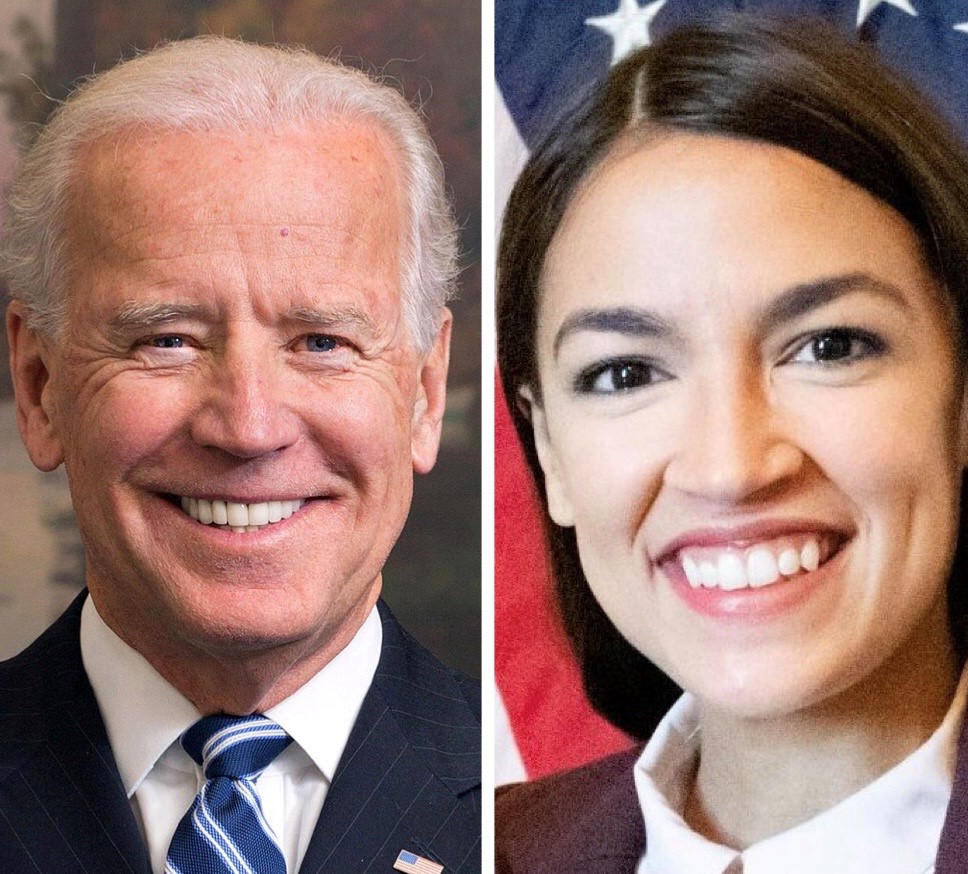
With the presidential election on the horizon, Democrat candidate Joe Biden commissioned a “joint task force” with Vermont Senator Bernie Sanders to develop a policy agenda. New York Rep. Alexandria Ocasio-Cortez (AOC) was among the most notable appointees of the task force. In addition to the explicit function of the working group to inform specific areas of policy, the joint task force serves as a symbol of unity between perceived moderates such as Biden and more radical Democrats such as Rep. Ocasio-Cortez. Some worry about the possible rift opening up between Democratic politicians and their policy preferences. A review of Biden and Ocasio-Cortez agreements and areas of contention help shed light on the varying stances within the Democratic Party.

What Are Their Policy Positions?

Some Democrats were disappointed with Biden’s reluctance to embrace a single-payer healthcare system in his approach to health care reform. He is not against citizens’ access to a public option. Rather, he advocates for maintaining the Affordable Care Act (Obamacare) and lowering requirements for those wishing to enroll in Medicare, providing more of a hybrid approach. AOC insists that Biden’s approach is not enough. Instead of accepting the status quo, she argues that a “Medicare for All” would be more successful in ensuring equal and affordable access to health care.

In addition to health care reform, Biden and Ocasio-Cortez differ in their stance on how to address climate change. Although they both agree on the need to rejoin the Paris Climate Agreement and to upgrade public transportation to accommodate climate change, they differ slightly in how they view emission quotas. Biden has proposed that the US reach net zero emissions by 2050. This plan lags 20 years behind AOC’s Green New Deal which calls for the country to reach the zero emissions quota in just 10 years. In addition, Ocasio-Cortez calls for the banning of fracking and natural gas while Biden does not.

Both Biden and AOC would like to implement the provisions of the College for All Act which would eliminate tuition and fees at public universities for all families below an income of $125,000. Comparing their overall stance on loan forgiveness, Rep. Ocasio-Cortez takes a decidedly more broad and simple approach. She advocates for wide-scale student loan forgiveness. In contrast, Biden would like to confine loan forgiveness to public universities and only up to a certain amount ($10,000 for each borrower during COVID). He also supports a plan where citizens are relieved after paying 5% of their income for 20 years.

In terms of their tax reform preferences, Ocasio-Cortez and Biden maintain a typical Democratic preference to increase taxes. AOC is somewhat more extreme in her view that the top marginal income bracket should confiscate 70% from top earners. In comparison, Biden simply hopes to reverse the top income bracket to 39.6% which reflects the tax rate before the enactment of President Trump’s tax bill, the Tax Cuts and Jobs Act of 2017.

One of the main aspects of Rep. Ocasio-Cortez’s platform involves the vocal denunciation of the Immigration and Customs Enforcement (ICE) due to the apparent inhumane treatment of illegal immigrants. Although Biden hopes to reform the agency and increase transparency, he does not see abolition as an effective approach. However, they are unified in their efforts to uphold DACA and their opposition to the construction of a physical wall on the Southern Border.

As part of “the squad,” a group of radical Congresswomen including Representatives Ilhan Omar, Ayanna Pressley, and Rashida Tlaib, Ocasio-Cortez has broken with the tradition of a pro-Israel stance in the Democratic Party. With concern for the oppression of Palestinians, AOC characterizes herself as defending the persecution of Muslims through the condemnation of Israeli foreign policy decisions. Despite no position on how to limit the sectarian violence experienced by many Muslims in the Middle East outside the lense of the Israel-Palestine conflict, she specifically speaks out against the Israeli occupation of the West Bank. In comparison, Biden takes a pro-Israel stance in line with mainstream Democrats such as Nancy Pelosi. He has praised President Trump’s recent brokering of the peace deal between the United Arab emirates (UAE) and Israel which codifies the UAE’s recognition of Israel’s statehood and lays the foundation for the normalization of economic relations in the Middle East.

The Future of the Democratic Party

With Rep. Ocasio Cortez’s affinity for progressive policies such as Medicare for All and the Green New Deal, she stands apart from the more moderate policies promised by a Biden administration. Proponents of AOC hope to elect Biden to eliminate the possibility of a Trump administration and pull him towards more progressive policies during his presidency. Thus, Biden is charged with balancing his own moderate preferences while appeasing those in the Democratic party who lean farther left. Many people point to young Democrats such as Ocasio-Cortez as a foreshadowing of a more progressive party platform as many people look to the future of the Democratic Party as a whole. However, it is not yet clear whether the rift between moderate and radical Democrats will serve as a means of higher accountability and innovative ideas within the party or whether it will simply hinder Biden’s ability to rally a large enough base to win the presidency.

Joe Biden: The ‘Most Progressive President’ Ever?

The Democratic primary was largely decided in March (Senator Bernie Sanders dropped out at the beginning of April), but those five months can make all the difference in the world. March marked a time before the US economy contracted by a third, before tens of millions faced housing eviction and protests over another police killing of a Black man rocked every state in the nation.

And during that time, presumptive nominee Joe Biden has seemed to change as well. During the primary, he was defined by incrementalism and the long shadow of his decades in the Senate—but now, his plans and his actions have brought Sanders to describe him as, if those plans are implemented, “the most progressive president since FDR.” Biden himself has stated that, if elected, he and his administration “won’t just rebuild this nation—we’ll transform it.”

But in many ways, Biden’s apparent change is less a radical departure from his positions of the past, and more an acceptance of his position as the standard-bearer of a party that has shifted around him.

Biden Is Historically In The Center (Of The Party)

Biden was first elected to the Senate in 1979, and over that time, many of his views have shifted significantly. In the 1990s, he voted for the Defense of Marriage Act, which prevented same-sex marriages; in 2012, he was the first high-ranking Democrat to endorse it, even before the president. And some of the most contentious points in the primary came over his support for the 1994 Violent Crime Control and Law Enforcement Act and the Anti-Drug Abuse Act of 1988, both of which he has said he regrets.

But his views have evolved with the party. The majority of Democratic senators voted for the Defense of Marriage Act (32 of 46), the Violent Crime Act (54 of 56) and the Anti-Drug Abuse Act (49 of 54). In fact, tracking his voting records through Congress, Biden is dead center of the Democratic caucus:
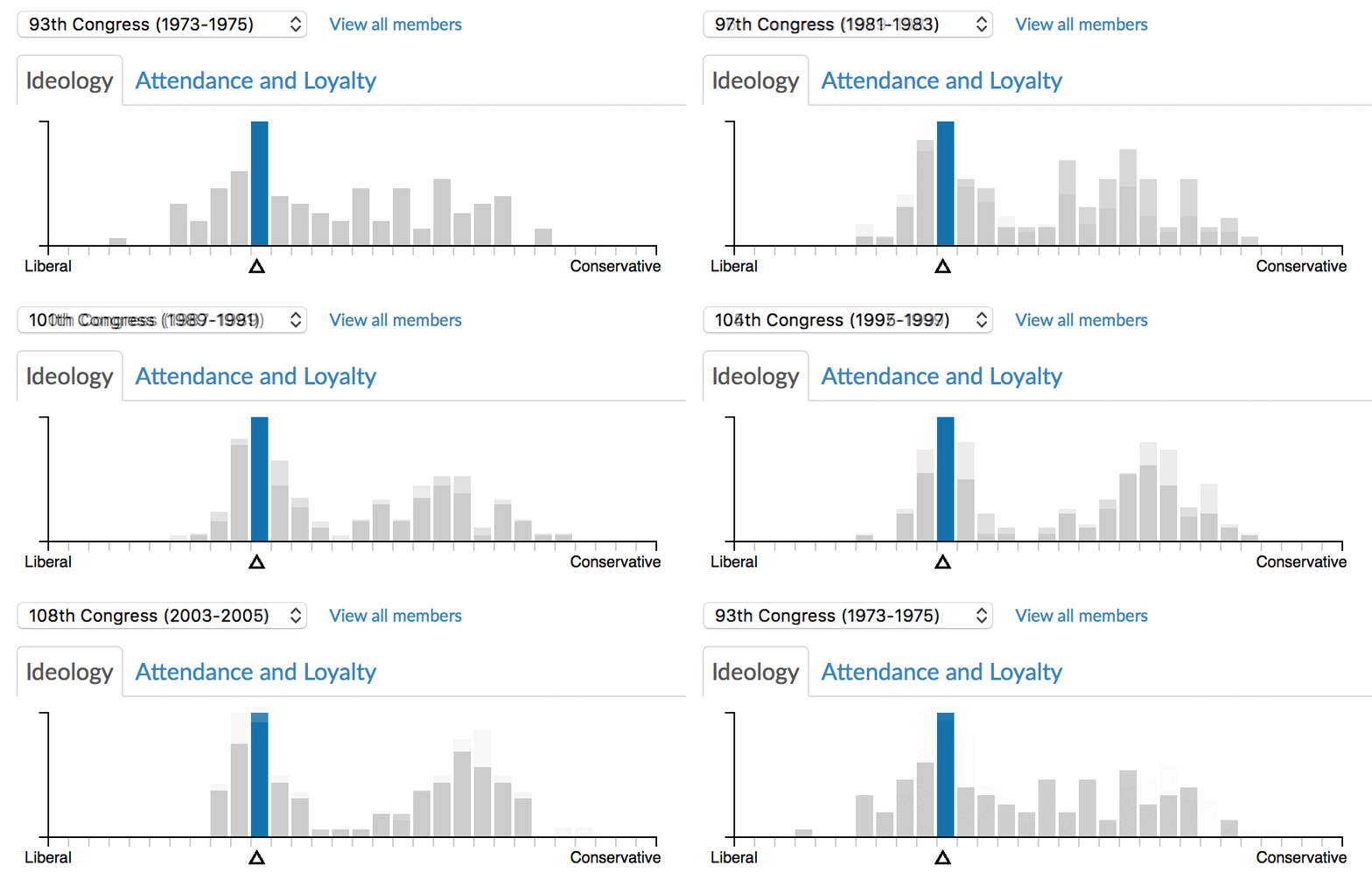
A .gif showing Biden's votes in the Senate, falling largely in the center of the Democratic caucus.

(the left bloc generally represents Democratic senators, the right bloc Republican senators. Biden’s position among them is marked in blue. On average, Biden was more liberal than 51% of Democratic senators and more conservative than 49% of Democratic senators).

So the question of where Biden stands is, in its broadest sense, a question of where the Democratic Party stands—and there’s evidence to suggest that the party is further left than it’s ever been. Even if ideas like Medicare-for-all or the Green New Deal weren’t enough to win the primary, the discussions they sparked in public opinion and the ideas they proposed were the catalyst which carved out the space in which Biden’s plans now fall.

So What Are Biden’s Plans?

Biden’s campaign website features an extensive list of policy plans, many targeted at specific communities. After the primary ended, several of these plans were reworked or added to with input from activists, legislators, and prominent Democratic figures. A joint task force between the more establishment and progressive wings released guidelines on some major policy areas, and what Biden’s plans have become in response:

Education

Biden’s plans on education represent a drastic shift from the Obama-era policy, perhaps driven in response to Secretary of Education Betsy DeVos’ championing of charter schools. In K-12 education, Biden pledges a massive investment in public schools (especially Title I schools in low-income areas; his plan calls for tripling funding for those schools) and teachers, though he has not yet adopted the recommendation of stricter federal oversight on charter schools.

Post-high-school, while Biden has adopted the progressive tenet of free public college for all at least to a degree: his plan says that colleges will be free for families earning under $125,000, and that community colleges will be free for everyone. Beyond that, Biden says that he will work to reform the student loan system to reduce administrative burden and—like many other of his plans—specifically invest in colleges and universities that serve communities of color.

Economy

The task force called for a comprehensive plan that specifically addressed communities of color, which Biden’s campaign has made the fourth pillar of his “Build Back Better” program. Though it does not include some of the policies championed by Sanders and Warren such as a “wealth tax”, it embraces the role of government in creating jobs (and assisting economic recovery in the wake of the pandemic) through the creation of a Public Works Job Corps.

His current economic plan, of which more details are expected to be released soon, is also interconnected with many other areas such as climate change, where Biden’s platform details that infrastructure development will also be designed to electrify and decarbonize much of the US’ existing infrastructure.

Immigration

On immigration, Biden’s plans (and even the task force recommendations) fall most in line with his primary campaign: the idea that, as president, Biden will work simply to undo much of what Trump has done. Much of Biden’s immigration plans amount to a dismantling of the restrictions implemented since 2016, such as the travel bans on Middle-Eastern countries and changes to the asylum system which forced immigrants to wait in Mexico or other Central American countries while their cases are processed.

While Sanders made waves in the primary for calling to abolish ICE and decriminalize illegal immigration (making it a civil penalty rather than a criminal one), Biden makes no such pledges. He calls for expanding the visa system to make more potential immigrants eligible, and creation of an oversight panel on ICE—another sign that, while pushed by the left, he is not the “Trojan horse” for their policies that many Republicans have attacked him as.

Climate

In a primary which saw broad, sweeping climate plans from candidates like Gov. Jay Inslee of Washington and of course the Green New Deal championed by Senator Sanders, Biden was criticized by progressive groups like the Sunrise Movement for being less willing to take bold steps, especially on an issue that many young voters—a weak area for him—care heavily about.

Yet just a few months later, the presumptive nominee’s sweeping new climate plan has been largely hailed by those groups. For one thing, they had a hand in crafting it: Biden’s plan came about as a result of one of his unity task forces between the progressive and establishment wings of the party, including people like John Kerry and Alexandria Ocasio-Cortez, and parts of it are drawn heavily from Inslee’s comprehensive, 200-page-plus path he laid out in the primary.

And it’s likely climate where Biden carves out his path to being the “most progressive president since FDR”. For one thing, it calls heavily for both government spending and investment in public-works programs, and has been supported by large groups of organized labor.

That said, Biden has also made efforts to continue his appeal as a more moderate candidate; in Midwestern states like Pennsylvania and Ohio, he has stated that he will not ban fracking—something that more progressive Democrats have called for and Republicans have attacked them over.

Criminal Justice

Criminal justice and police reform is another issue where the party (and public opinion) has shifted rapidly following the killing of George Floyd and nationwide protests. And once again, Biden has not moved as far left as some prominent Democratic figures: he doesn’t agree with completely “defunding the police”, and has stated that some funding should be “redirected” to less confrontational services such as social workers or mental health counselors, and says that police forces today are too heavily militarized.

His platform is also a repudiation of the bills of the 1980s and 1990s that adopted a “tough on crime” stance, calling for billions in investments to reduce incarceration and end mandatory minimums for nonviolent crimes—an especially important step for a candidate long dogged by his votes for those bills, and as public perception shifts away from the ideals of “law and order” that President Trump has pushed in response to the protests.

Health Care

Joe Biden’s healthcare plan has shifted left as well: he proposes creating a public option for health insurance administered by Medicare. This is most similar to the option presented in the primary as “Medicare for all who want it”—a plan that would not abolish private insurance but allow another option, especially for low-income families or those who don’t receive employer-based healthcare.

Also among his healthcare plans, but less contentious among Democratic voters and activists, are plans meant to prevent pharmaceutical companies from overpricing the drugs and medication that many Americans need: Medicare would directly negotiate the prices for all purchasers,  as well as restrictions on launch prices and price increases.

Housing

The pandemic has exposed the cracks in the United States’ housing system, showing just how vulnerable millions of people are to losing their homes when uncertain times hit—it’s estimated that almost 40 million people are at risk of eviction as the federal moratoriums expire. In response, President Trump signed an executive order which instructs the relevant departments to ‘consider’ limiting evictions or providing more money in aid, but doesn’t necessarily force them to do so.

Biden’s plan is founded on the view that even stricter eviction bans are no more than a stopgap measure. It calls for an extension of the Section 8 housing voucher program, which provides vouchers to low-income families that landlords may redeem, that would make it fully universal rather than capped at whatever Congress allocates. Even under normal conditions, it’s estimated that three-quarters of eligible households don’t receive help because there isn’t enough money in the pool, and that isn’t accounting for a pandemic which puts millions more at risk. Making the program universal, like Medicare or SNAP, would mean that—in theory—everyone eligible for benefits would receive them.

Procedure

While not policy-specific, many of Biden’s proposals call for huge investments in government spending, and will face steep opposition in the Senate even if Democrats win a majority in the fall—and, perhaps spurred by the failure of many of Obama’s policies over budget concerns and the filibuster, many Democrats have signaled willingness to end the filibuster and allow deficits to rise, allowing major increases to the national debt.

In a way, Democrats are borrowing here from Republicans’ playbooks to change the rules of Congress when it benefits their party, such as the ending of ‘blue slips’ for judge confirmations and reducing the amount of debate each judicial nominee receives before the Senate must vote on their confirmation. And the same appears to be true of budget deficits and the national debt. Republicans have long held the mantle of the fiscally-responsible party, but the national debt has surged under Trump, and his former chief of staff Mick Mulvaney stated that the party’s position on deficits shifts based on who occupies the White House: “My party is very interested in deficits when there is a Democrat in the White House,” he said in an overseas speech. “Then Donald Trump became president, and we’re a lot less interested as a party.”

Facing such opposition, not to mention the unprecedented economic downturn caused by the coronavirus pandemic, Biden and Congressional Democrats seem less inclined to rein in the budget as they have previously. Even the Blue Dog coalition, a group of moderate Democrats who promote fiscal responsibility, have called the unprecedented government spending “necessary”. And Biden’s plans, calling for trillions of dollars in spending, have only increased in scale—he himself has not mentioned the national debt, but House lawmakers have concurred that now is not the time for it: “We should be using our strong balance sheet to borrow to stimulate the economy. And that may involve more programs like climate and transportation going into the Biden administration,” said Rep. Scott Peters (D-CA), the vice chair of the moderate New Democrat Coalition.

Of course, Biden’s exact approach to procedure will be unknown unless he wins the White House in November. But progressive groups are hopeful that, especially on sweeping legislation such as climate, they won’t see the same failure as with Obama’s climate bill—without 60 votes in the Senate, it never even came to the floor.

The Most Progressive President?

Biden’s plans have been compared to FDR’s of the mid-20th century, both for their large investment in public-works projects and their creation in response to a sharp and unprecedented economic downturn that has left record numbers unemployed (though for very different reasons). But comparing the two on a single one-dimensional spectrum from liberal to conservative leaves out a very important difference between them—while perhaps similarly bold on economic issues, Biden’s plans and stances are consistently far more progressive than FDR’s on social issues (including healthcare, education, climate change, criminal justice, and housing).

The New Deal coalition that propelled Democrats to power from 1932 to the late 1960s was based largely on economic issues, uniting disparate groups such as white, socially conservative Southerners with ethnic and racial minorities under broad economic plans that benefitted almost all workers—but to do so, the coalition largely suppressed differences on social issues. In essence, it was an economically-liberal coalition which contained both socially liberal and conservative members. And when it fell apart, it did so due to backlash in the South to the civil rights movement and racial integration.

Biden, in contrast, explicitly addresses both economic and social issues in his platform—social issues on which his change over the years is especially evident. And it may be that which sets his particular progressivism apart from presidents of the past.

The Politicization of School Reopening

In mid-June, as cases of coronavirus began to surge once again, Pew Research published a poll showing how attitudes towards the pandemic had shifted. The differences between political parties were especially stark: just 23% of Democrats, but 61% of Republicans, believed that the worst was already behind us; 77% of Democrats, and only 45% of Republicans, were worried about unknowingly spreading the coronavirus. Most notably, the poll found that partisanship was the single biggest driver of attitudes towards the pandemic—dwarfing other dividing lines such as race, gender, geography, or age:

So why the partisan polarization? Many Republicans have called for the same or similar public health measures as their Democratic counterparts—Senate Majority Leader Mitch McConnell (R-KY) stated that “Wearing simple face coverings is not about protecting ourselves, it is about protecting everyone we encounter,” on the Senate floor, and GOP governors in states such as Arkansas, West Virginia, and Alabama have issued statewide mask mandates.

But, in many ways, the Republican Party is the party of Trump—several of his early critics were defeated or retired from the party, and Republican primaries (such as the recent Senate runoff in Alabama) have become a test of who is more loyal to the president. And in much the same way, the Democratic Party has aligned itself against Trump: the drawn-out presidential primary was less a contest of grand ideas and more a test of who, regardless of their particular brand of liberalism, could defeat Trump in 2020.

What does this mean? It’s a departure from both the leadership that Americans have come to expect from the White House, and the public reaction to such statements or orders. When Trump criticizes mask-wearing, or states that schools must reopen, he turns the issue from public health into partisanship—and, as above, a partisan gulf opens between the two groups. Over the course of the pandemic, as Trump has called masks a “double-edged sword” and said “I’m not going to be doing it” [wearing a mask], in contrast to the statements from Democratic leadership that a federal mask mandate is “long overdue”, an almost 30-point gap has opened between Democrats and Republicans on the issue of mask-wearing.

School reopening has followed a similar trajectory. Trump and Education Secretary Betsy DeVos have spoken strongly in favor of in-person education resuming this fall—in Arizona, Trump said that “Schools should be opened. Kids want to go to school. You’re losing a lot of lives by keeping things closed,” and DeVos stated in a hearing that “Kids need to be in school… we can’t not allow that or not be intent on that happening,” with DeVos even threatening to cut federal funding from schools which stay closed. Several of his allies in Congress, such as members of the conservative Freedom Caucus, have followed his lead: Representatives Andy Harris (R-MD) and Morgan Griffith (R-VA) have claimed, counter to CDC guidelines and new studies out of South Korea, that “it’s safe for children to go back to school,” and “the risk is extremely low that anything will happen to them.” But other Republicans have resisted.


Proposed school-reopening plans as of Thursday, July 30th.

  • ‘Planned to re-open’ indicates that the governor/state leadership have stated that schools will be open, in some capacity, come fall
  • ‘Some open, some online’ indicates that current restrictions, combined with opening plans, mean that some districts will be resuming online-only
  • ‘Guidelines released, opening unclear’ indicates that state government have released guidelines on re-opening, but there is no state order yet/most districts have not yet released plans
  • ‘No guidelines yet’ indicates that there are not (widely available) state guidelines yet on how/when to reopen school districts

Partisanship is an indicator of whether schools are currently slated to reopen, but also notable is which states have broken ranks. The Republican governors of Alaska, Wyoming, Nebraska, Indiana, Ohio, Mississippi, Maryland, and New Hampshire have largely left their decisions to local school districts, giving them the options of continuing online if cases are high in their area, citing flexibility and local autonomy as reasons for their decision. And Hawaii, Nevada, Illinois, and Rhode Island, all Democratic-governed states, have committed to reopening.

Hawaii has the lowest case count of any state in the US. But coronavirus is surging in most of the continental US, including many Southern states whose governors have stated that schools will reopen in just a few weeks. In Florida, where new cases are quickly approaching the levels seen in New York during the early days of the pandemic, Governor DeSantis has announced that public schools will reopen at full capacity, with district-defined social-distancing measures in place. He’s faced backlash from pediatrics associations and teachers’ unions for this move, but has defended it by saying that reopening is critical to the state’s economy.

And in Missouri, Governor Mike Parson has sparked outrage by saying that “These kids have got to get back to school…They’re at the lowest risk possible. And if they do get COVID-19, which they will — and they will when they go to school — they’re not going to the hospitals. They’re not going to have to sit in doctor’s offices. They’re going to go home and they’re going to get over it.” As Missouri approaches 1,000 new cases a day, local and state officials have criticized Parson for his seeming blitheness to the risk of catching the coronavirus, as well as the possibility of children spreading the disease to older or more-at-risk family members.

But this polarization, unlike similar events in the past, may not yet have caught hold with the majority of the public. Recent polling suggests that 42% of voters think that school should not reopen at all—that classes should continue online and via distanced learning, as was the policy for most of the spring—and only barely more think that schools should reopen at all—that group disagrees, 26% to 19%, on whether schools should partially or fully reopen respectively. And parents are especially wary of returning to school—a majority, 54%, said that they would not want their child to attend any in-person classes in the fall.

Reopening schools is thorny business—for any semblance of normality to return, especially for the roughly one-third of working adults with children under 18, many experts agree that they have to. But no one knows quite how it should be done, or whether it can be done safely (and what ‘safely’ even means, in a world of relative risks and percentages). And with a growing partisan split emerging on the issue, it seems unlikely that a consensus will be reached before schools begin to reopen.

Pelosi vs. McConnell: Know the Difference

Mitch McConnell and Nancy Pelosi stand opposed to one another. Two years after the election of President Trump, a serge of anti-Trump fever pushed Democrat voters to switch the majority party in the House of Representatives. With a new Democrat majority, Pelosi was elected as Speaker of the House. In contrast, McConnell serves as the Republican majority leader of the Senate, effectively controlling the legislative program and schedule.

Although they both are leaders of the majority in their respective chambers of Congress, McConnell and Pelosi represent different parties with different aims. This directly puts the two at odds with each other with bills having to pass both the House and Senate.

Differences

Sen. McConnell and Speaker Pelosi disagree on virtually all partisan issues. You can count on Republican McConnell to stand up for the Second Amendment and Pelosi to pursue tighter restrictions on gun ownership. After each mass shooting, McConnell receives severe blowback from Democrats and the public for his stubborn conviction in the right to bear arms. He does not see gun control legislation as an impactful way to combat school shootings or gun violence in general. At one of Pelosi’s weekly press conferences, she blasted McConnell in response to his stalling of background-check gun reform by calling him a “Grim Reaper” due to his “killing” of bills that are passed in the Democrat-controlled House. Reinforcing this point, she stated that “the ‘Grim Reaper’ has decided that more people will die.”

Both do not see eye to eye on many foreign policy issues. Most notably, they have been engaged in a long-term gridlock on the Joint Comprehensive Plan of Action, commonly known as the Iran Nuclear Deal. The international agreement mandates that Iran halt operations conducive to the production of nuclear weapons in exchange for lifted sanctions and access to the international market for oil revenue. Although McConnell and Pelosi share the overarching belief that Iran should be stopped from developing or acquiring nuclear weapons, they differ on whether the Iran Nuclear Deal is an adequate means of achieving that objective. As Trump reimposed sanctions on Iran, McConnell supported the President’s abandonment of the agreement, arguing that increased pressure is the first step to re-negotiating the terms of a deal that has been flawed from the start. In contrast, Pelosi stands with fellow Democrats in pointing out that the US is violating the trust of its international allies by breaching the terms of an agreement. Furthermore, Pelosi warns that the Iranian government is likely to pursue nuclear development if the US continues to ignore its side of the deal.

Fiscally, McConnell has advocated for balancing the federal budget while Pelosi sees the need for increased government spending through infrastructure investment. In 2011, McConnell himself introduced a Balanced Budget Amendment for the Constitution, making it extremely hard to pass bills that raise taxes or spend outside specified limits. Pelosi voted against the amendment. Under McConnell, the Senate passed the Tax Cuts and Jobs Act of 2017 which effectively reduced personal and corporate taxes, with individual tax cuts diminishing over time and corporate tax cuts remaining permanent. Pelosi has sharply criticized the Republican tax bill for its disproportionate benefits for the rich. More broadly, McConnell’s conservative economic stance signals his faith in the free market to invigorate entrepreneurship and investment without government spending, taxes, or regulation. In contrast, Pelosi hopes to protect workers and middle class taxpayers through a more liberal approach to fiscal policy.

Considered one of his primary concerns, Mitch McConnell has maintained a staunch opposition towards increased campaign financing regulations. He believes that increased regulations protect incumbents and diminish participation in political campaigns. The Senator equates money with speech, essentially arguing that campaign donors are protected under the First Amendment. McConnell’s stance was eventually echoed in the Citizens United v. FEC case which prohibits the government from restricting political expenditures of corporations and other associations. Pelosi sees loose regulations on campaign financing as the reason why lobbyists and corporations have a stranglehold on Washington. In order to hold politicians accountable to voters instead of special interests tied to money, the Speaker of the House advocates for increased restrictions on campaign donations as well as better enforcement of existing regulations.

Finding Agreement

Given their mutual disdain for one another, it is incredibly hard to find areas in which Mitch McConnell and Nancy Pelosi can agree. However, both advocate for a pro-Israel stance internationally. Although Pelosi has opposed Israeli Prime Minister Netanyahu’s promise to annex the West Bank, by and large she is in favor of maintaining a strong alliance with Israel. Similarly, McConnell seeks to maintain and strengthen the US’ relationship with Israel. He has even gone so far as to condemn anti-Israeli sentiment from members of Congress such as Ilhan Omar.

Another area of concurrence is COVID relief legislation. Despite initial disagreement about the exact nature and extent of funding, they were both able to pass the Coronavirus Aid, Relief, and Economic Security Act (CARES) which provided trillions of dollars to address the COVID crisis. Given the need to pass legislation quickly, McConnell and Pelosi were eventually able to lead the majorities in their chamber to find common ground and gain bipartisan support.

Why the gridlock?

The ongoing fight between Pelosi and McConnell is not just petty politics. It highlights the foundation of our political system. Predicting the selfish and conflicting ideological interests of individuals and factions, our Founding Fathers created a system of gridlock. The inability to quickly pass legislation with counteracting people such as Pelosi and McConnell is certainly annoying and inconvenient. But, it is most certainly better than allowing one faction or idea to adopt a tyrannical position, passing any laws that they would like.

Libertarianism versus Anarchism

The Libertarian Party is the fastest growing and third largest political party in the United States. Each year, more and more Americans become disillusioned with the two party system that has dominated American politics and are looking at other parties and other ideologies. A large group of these people believe that when it comes to government, less is more. Less regulation, less federal spending and less people telling them how they should be living their lives. Per their official website, the Libertarian Party states that libertarians “strongly oppose any government interference into their personal, family, and business decisions. Essentially, we believe all Americans should be free to live their lives and pursue their interests as they see fit as long as they do no harm to another.” If it’s not hurting them and not hurting others, then the government doesn’t need to be a part of it. However, there must be a balance, as complete opposition to the state falls into the territory of anarchism.

What is Libertarianism?

Libertarianism rejects the control of the government over its citizens and advocates heavily for individual rights. Essentially, Libertarians just want to be left alone to be free to live their lives, and not be coerced by the Federal government. While Democrats and Republicans clash over issues such as immigration, drugs, abortion, law enforcement, and most recently the morality of our capitalist system, libertarians argue that government involvement in these areas infringes on their rights, not only as an American, but as a human being.

The libertarian philosophy supports drug decriminalization, open borders, LGBTQ+ rights, property rights, and free-market economy. With the ideas of freedom and self-ownership in mind, Libertarians consider themselves free-thinkers independent of the conservative/liberal dichotomy. Despite this, left and right wing philosophy do exist within the realm of libertarianism. The spectrum of libertarianism lies mostly with the issue of natural resources. The extent to which an individual believes in the equal distribution of natural resources is a key indicator of their right or left tendency within the libertarian philosophy. Advocating for natural resources to be distributed more evenly would put someone on the left end of libertarianism, and vice versa.

Libertarianism versus Anarchy: Understanding the Key Differences

Increasingly more Americans each year are breaking away from the Democrat/Republican dichotomy and embracing libertarianism, valuing their rights and freedom above all else. Libertarianism is a valuable and necessary philosophy for any democratic system; however, there comes a point where the focus on freedom and self-ownership can devolve into a lack of order and poor judgement. While many libertarians would argue that the effects of the state on its citizens are generally harmful and limiting, there are many inherent problems in the anarchist stance towards an established state.

The rejection of government institutions entirely is where the potential for anarchy begins to creep into the picture. Anarchism is a philosophy that is skeptical of all forms of authority and their intentions. The Russian revolutionary anarchist Mikhail Bakunin famously claimed that “If there is a State, there must be domination of one class by another and, as a result, slavery; the State without slavery is unthinkable—and this is why we are the enemies of the State.” While Libertarians are also skeptical of governmental power structures, anarchists view the authority of the state as an enemy force that they must continue to work against.

Libertarians are not advocating for abolition of government, as anarchists do. Rather, they understand that limited governmental structures are required to allow a free society to function without chaos and harm to others, providing safety for its citizens. A government that allows its citizens to participate in the open market, to be free to own property, firearms, and live according to their own desires and orientations is not a bad thing to them. If it was, a dedicated Libertarian Party wouldn’t exist in the first place.

Anarchist philosophy, such as the beliefs espoused by Bakunin, places trust in the hands of the people and seeks to abolish systems of power that are “repressive”. This philosophy becomes problematic in that it empowers people to act with full freedom and autonomy, which opens up the possibility of causing violence or danger to others, thereby infringing on their ability to live their lives and be as free as possible. When those who have adopted anarchist ideology use it as a means of acting violently in an attempt to dismantle the system, personal freedom is no longer the goal and society can quickly turn into unsafe territory. Libertarians are not advocating for an overthrow of the system, rather they are looking for a political solution that gives the power back to the people, rather than increasing government scope and power as well as government debt, which Libertarians feel will inevitably negatively affect the people.

Currently, there is no anarchist part in the US in any form in mainstream politics, but the Libertarian party is growing every year. In the 2016 US presidential election, Libertarian Party candidate Gary Johnson received 3.27% of the national vote with over 4 million votes, which though small, was the highest result for a third party candidate since Ross Perot in 1996. Compared to the party’s 2012 presidential election, which saw Libertarians win just under 1% of the vote, this is a sign of the party’s growth and increasing interest of Americans in other options beyond Democrats and Republicans. The 2020 Libertarian Party presidential candidate is Jo Jorgensen, an academic and political activist from South Carolina. It is anticipated that she will be on the ballot in all 50 states.


Libertarianism and Conservatism: Understanding the Difference

Despite the dominance of the two party system in American politics, a majority of American voters neither identify as Republicans or Democrats. In a country as large and diverse as the US, it makes sense that things are in reality much more complicated than the liberal/conservative divide. An increasing number of voters identify as libertarians, with the Libertarian Party being the third largest and fastest growing party in the country. Despite the increasing number of individuals identifying as libertarians, there is still some confusion as to how libertarianism differs and overlaps with conservatism.

Understanding the Differences

While many tenets of libertarianism and conservatism appear to share similarities, they are different ideologies. According to the Libertarian Party, libertarians are neither liberal nor conservative, but have many stances that could fall in either party, however, it is more complicated than that.

Libertarians value personal as well as economic freedom, believing that individual liberty is the key to society. The freer the people, the better the society. Economic freedom by lowering or eliminating taxes, shrinking the central government to a minimal state, isolationist tendencies, fair trade, drastically removing smothering bureaucracy and regulations for businesses as well as charitable welfare, rather than government welfare, are some of the biggest platforms libertarians believe in. Socially, they are inclusive and believe that individuals should be free to choose their own way of living as long as they do not infringe on others’ rights. Libertarians are against all laws that attempt to control someone’s personal lives such as restrictions on same-sex marriage, abortion, gun control and the criminalization of drugs and victimless crimes that do not infringe upon the rights of others. Libertarians are fiscally conservative and socially liberal, with the idea that the individual should possess as much freedom as possible, with little, if any, interference from the government. Libertarian principles are based around the cooperation and consent of the individual, and want to leave the government out of their lives as much as possible.

This is in contrast to conservatism, which may appear similar to libertarianism on the surface, but upon closer inspection has many differences.  Conservatives seek to preserve or conserve, hence their name, the institutions that made the country what is it today. Traditional values, personal responsibility, limited government and strong national defense are some of the tenets of conservatism. Conservatives feel that the role of the government is to empower the individual to solve their own problems. While these may appear to be many of the same beliefs held by libertarians, conservatives have shown to be much more likely to support interfering in other country’s affairs, restricting personal freedom such as opposition to social issues such as same-sex marriage, the abortion issue as well as being against illegal immigration. Conservatives are also more likely to support increased military spending, which libertarians oppose.

Why the Difference Matters

While it is easy to say that liberals are Democrats and conservatives are Republican, in reality it is more complicated than that. There are many members of Congress who identify as conservative Democrats, such as Joe Manchin, senator from West Virginia, and Ben McAdams, representative from Utah, as well as members of the Republican party who hold many strong libertarian views, such as Rand Paul, senator from Kentucky and Mike Lee, senator from Utah. Because political parties in the US are so large and diverse, it is important to understand the individual candidate’s stances and beliefs, and not to simply vote based on party.

Particularly in election years such as this one, it is important to understand where each party stands on the key issues and how they affect the average voter. Many people may find themselves holding strong libertarian views but feeling they must choose between Republicans or Democrats. Likewise, someone may feel very strongly on certain social issues, but feel there is a need for a fiscally conservative government, and that neither Democrat nor Republican is the right choice. In that case, the Libertarian party and its 2020 presidential candidate Jo Jorgensen might be the candidate they are looking for. Understanding the difference when someone claims to be conservative or libertarian could help undecided voters make up their mind when choosing who to vote for.


Obama, Before, During and After Presidency

President Barack Obama was one of the first in many positions to be African American. Many criticized as well as praised his time in office. He was the president that helped give LGBT people the right to marry and the one to create Obamacare. He was a man of peace and has accomplished a lot during his life before and after his time in office.

Early Life

Barack Hussein Obama II had a fruitful and well-traveled childhood. Born August 4, 1961 from Ann Dunhamm, a white American, and Barack Obama Sr., a black Kenyan, met at the University of Hawaii. His father left and divorced his mother when Obama Jr. was two. Obama later in his presidency had to prove his citizenship by releasing his birth certificate.

His mother remarried Lolo Soetoro. When Obama was six his family moved to his stepfather’s origin country, Indonesia, where he attended religious schools for both Catholics and Muslims.

Obama was sent back to the United States after his mother’s concern for his education grew. He lived with his mother’s parents and stayed in Hawaii until he went off to college in Los Angeles California. This was also shortly after his mother passed in 1995.

After his Graduation from Columbia with a B.A. in Political science with a minor in English literature, He worked at International Business Cooperation and New York Public Interest Group.

He lived and worked in New York four years until deciding to move to Chicago in 1985 to work as a community advisor for Altgeld Gardens to improve the public housing in the city. He did this for three years before realizing that a law degree would help him, and he enrolled in Harvard Law School in 1988.

After graduation in 1991, he was the first African-America to be elected to the Harvard Law Review board.

Early Politics

During his internship at Sidley and Austin law during his first year at Harvard, he met his future wife Michelle Robinson. After graduation, they married and settled in Chicago where they had their first child.

Obama’s first taste in politics was his involvement in marrying his wife who had political ties. He was put on Project Vote and helped get into office the first African-American senator, Carol Braun.

He had his first run for office as Illinois state senator. Beating his predecessor, Alice Palmer, in 1996 after her failed attempt to run for congress, he was both a minority in color and political view. In a predominantly republican legislator, Obama had a rough time passing bills and making allies.

After some time, he began to gain a foothold in his state and was able to pass 300 bills, and in 2000 Obama was eyeing a seat in the US senate. The election would take place in 2004 and he would take the state by a record-breaking margin of 70 percent to 27 percent.

Holding a US senate seat for 5 years, Obama then set his eyes to the top as President of the United States.

First term Presidency

Obama was elected to the presidency in 2009 at the back-end of the 2007 recession from President Bush’s time in office. His major focuses during his first term were fixing the American economy and dealing with the now unpopular war in the middle east.

Addressing the Recession Obama proposed and got congress to approve a $787 million stimulus. This helped extend unemployment benefits and cut taxes. After the economy stabilized in 2009 there was another $179 million from the American Recovery and Reinvestment act to further solidify the economic condition.

Though Obama did help with this issue, the middle class was still suffering heavy taxation and income inequality was at its highest point according to pew research.

The war on terror was another issue altogether. The twin towers were still fresh in the minds of many Americans, but they were also tired of the lack of results this war was having. Osama Bin Laden had been labeled as the one in charge of the attack on 9/11 and the US had been hunting him for years.

It was not until 2011 that his whereabouts had been discovered. This was also during the time Obama had ordered most US troops out of Iraq and Afghanistan. In April of that year the order was given to take out Bin Laden. The operation was successful, and the leader of Al Qaeda was gone.

Obama also reduced the nuclear stockpile of atomic weapons by 24% owned by the US, earning him a Nobel Peace Prize. He also enacted the Affordable care act or Obama care in 2010.

Second Term Presidency

During Obama’s 2nd term after reelection in 2012, he started focusing on the other major issue plaguing American politics and the world, global climate change.

Obama pushed incentives for businesses, citizens and homeowners, incentivizing tax free or paying, to put solar and other renewable sources on or around their homes and businesses. He also restricted and blocked many efforts to expand oil drilling and fracking. Though not entirely opposed, these efforts forced many to see the implications of emissions and benefits of new and inexpensive energy sources.

Obama enacted the Clean Power Plan which required power plants to reduce carbon emission by 30% by implementing renewable energies or other sources. Obama helped modernize the automotive industry with a bailout in 2009, later requiring higher standards for cars that produced less emissions. He also signed the Paris agreement, setting the standard around the world for reducing carbon emissions.

Obama had controversial views on gun control, and after the shooting of Sandy Hook Elementary school in 2012 shortly after his election he used this to propose banning “assault weapons.” Though he was outspoken against he saw to the signing of concealed carry on Ametrax for checked baggage and allowed concealed carry in national parks. In fact, no major gun control bill passed during Obama’s presidency.

Close to the end of his presidency Obama also signed the largest trade agreement, The Trans-Pacific Partnership. He got the nuclear peace agreement with Iran signed to reduce the production of enriched uranium, limiting nuclear armament but enough to produce for power plants.

During Obama’s time as president issues like Gay Marriage became legal, and according to PEW many say there was higher equality and brought to light many issues of inequality during his presidency.

One of his final acts as president was to modernize the federal government and fix major technical issues with healthcare.gov. This helped solidify his health care system for his final term in office.

Post Presidency

After running out his second term and unable to rerun for the presidency, Obama took to speaking at major financial conferences in Wall Street and has earned millions from his memoirs in office. He still runs the Obama Foundation and the My Brother’s Keeper Alliance which was founded in 2014.

He has largely stayed out of the political spotlight, only criticizing his successor, Donald Trump, on issues like the Paris Agreement and the Iran nuclear deal. Even with his former VP, Joe Biden, running for the 2020 presidential election, he has had little hand in this.

How Republicans Are Looking To Hold the Senate

Republicans still hold a majority in the Senate, and regardless of who wins the presidential race, it’s a majority they want to keep. At present, elections analysts give even odds of either party holding onto Congress’ upper chamber come November; significantly better than the odds facing Trump amidst a [re]surging pandemic and flaring protests, which hover around 20% in most analyses.

Senate Majority Leader Mitch McConnell has boasted about being the “grim reaper” of the legislation passed by the Democratic-led House, illustrating that the party which controls the Senate has almost total control over which bills are passed and which are never given a vote, much less sent to the president’s desk—and Republicans no doubt remember the benefits between 2014 and 2016 of having a majority even if a Democratic president is elected (Voters are much more critical of the president and the president’s party for perceived failures to pass legislation, meaning that an opposition Senate—or House—reaps the political spoils of holding legislation back).

So what makes the Republican odds so much better than Trump’s?

The Senate has always favored smaller, more rural states—and has since Congress was divided into two chambers. Benefiting smaller states was the entire reason the Senate was created: to offset the proportional (based on population) representation that the House afforded, which gave power to the larger and more populous states. However, this means that control of the Senate tends to skew towards whichever party is most dominant in those small, rural states. In the early 20th century, when direct election of Senators began, that meant that the average Senate seat was biased towards Democrats—but now, control of the Senate is biased towards Republicans:

(The reason the House is skewed as well is largely due to gerrymandering, and is beyond the scope of this article)

Yet despite this bias, Republicans are on the defensive in 2020. They’re facing much the same situation as Democrats did in 2018, where the party had to defend almost half of their delegation, much of it on unfavorable territory such as West Virginia (voted for Trump by 42 points), Montana (Trump by 20 points), Indiana (Trump by 19 points), and North Dakota (Trump by 35 points). But Republicans also lack a favorable national environment for their candidates, which is why they’re facing tight races even in red states.

What Seats Could Republicans Gain?

Despite being largely on the defensive, Republicans still have a chance to pick up a few seats. Out of the 12 Democrats are defending, Republicans believe that two incumbents look particularly vulnerable:

Senator Doug Jones won an upset victory in Alabama in 2017 over scandal-plagued Roy Moore, but he may not be able to repeat it. The state is deeply red, and Jones only managed to eke out a margin of 1.6 points against Moore, becoming the first Democratic senator elected since 1992. The problem he faces is that both the Republican frontrunners to replace him are much more popular in the state—Jeff Sessions used to hold the senate seat before becoming Trump’s Attorney General, and Tommy Tuberville is a well-known football coach who worked for nearly a decade at Alabama’s University of Auburn.

While recent polls predict that Jones will do much better than a typical Democrat in the state—which has seen presidential margins of ~30 points towards Republicans in the last three elections—recent polls have him tied or slightly behind against both front-running Republican candidates.

And in Michigan, many Republicans see John James—who ran unsuccessfully against Senator Stabenow in 2018—as having a good chance against first-term Democratic Senator Gary Peters (who is the only other Democratic Senator, besides Jones, who is up for re-election in a state Trump won in 2016). James is an African-American army veteran who many see as a ‘rising star’ in the Republican Party—but he may be fighting the trends within the state.

In 2018, Michigan moved away from Trump’s narrow victory: Democrats swept all the statewide races, ousting many Republican incumbents, and James lost to Stabenow by 6.5 points. While James is a strong challenger, it’s unclear if he can do better his second time around: he’s outraised Peters in the last few quarters, but recent polls show Peters still with a double-digit lead over James.

Once again, polls can be found here.

Where Democrats Are Looking To Win The Senate

Last Thursday, Tom Cotton of Arkansas decried the bill to make Washington D.C. a state, dismissing it as an attempt to gain “two Democratic Senate seats in perpetuity”. However, even in that scenario, Republicans would maintain a majority: 53-49. Instead, Democrats are looking to a different path to attain a majority in Congress’ upper chamber, in thirteen races across the country:

The State of the Senate

Come November 2020, 35 Senate seats are up for re-election: twelve currently held by Democrats, and twenty-three held by Republicans. Of those twenty-three, Democrats believe they have a shot at flipping thirteen (though some have much longer odds than others):

In two states, the Democratic candidates lead in polls by double digits over the Republican incumbents. Colorado is a purple state that has steadily drifted blue, and former governor John Hickenlooper appears well-positioned to take on Cory Gardner, though he faced a primary challenge from Andrew Romanoff heightened by his decision to blow off a recent ethics hearing. The problem for Gardner is that US Senate races have become increasingly nationalized, and he’s tied himself to a deeply unpopular Republican president in a state that leans Democratic (unlike other senators such as Susan Collins of Maine, another Republican in a blue state, who is much more willing to criticize Trump).

The polls reflect this: a survey in May, the most recent Senate poll, has Hickenlooper up by 18 points over Gardner. Even if the race narrows as November approaches, Colorado voters appear unlikely to split their tickets: there were no crossover districts between the 2016 Senate election and the 2018 governor election:

A map of Colorado by state House district

To the southwest, former astronaut Mark Kelly is well-positioned against Senator Martha McSally in Arizona, leading her both in fundraising (with double her cash on hand) and the polls (by 11 points on average). Unlike Colorado, the state isn’t particularly blue-leaning; it voted for Trump by 3.5 points in 2016, and 2020 polls show a thin margin between Biden and Trump.

So what explains the double-digit margin? Even though the state isn’t blue, it’s still trending towards Democrats—and it seems McSally hasn’t embraced those trends. Unlike John McCain and Jeff Flake, the Arizona senators in 2016 who criticized the president and provided key votes against him, McSally has been loath to criticize Trump. But the president isn’t popular in Arizona, and her decision to stick with Trump is likely key to the fact that Kelly is up 2-to-1 among moderates and 15 points among independents.

Rounding out the trio of Western states which are key to Democrats’ Senate chances is Montana, where Democratic Governor Steve Bullock is running against incumbent Steve Daines. And unlike Colorado, Montana is known for its ticket splitting: in 2016, the state voted for Trump by 20 points while also re-electing Bullock by 4 points; in 2018, Democratic Senator Jon Tester was re-elected by 3.5 points while the statewide race for the House went to Republican Greg Gianforte by 4.6 points.

Instead, Bullock’s chances may hinge on the coronavirus pandemic. Most governors have seen their approval ratings soar, and Bullock is no exception, garnering a 70% approval rating for his response and leading Daines by 7 points in the most recent poll (conducted early May). Much of that approval, however, hinged on the fact that Montana has the lowest coronavirus infection rate in the country, and that Bullock was able to begin a reopening earlier than most states. As the pandemic resurges in the US, Bullock needs Montanans to continue to believe that he is the one to lead them through it.

The Toss-Ups

There are three other states where Democrats hold a consistent if narrow, polling lead. In Maine, incumbent Republican Susan Collins, a self-described moderate who won her last election by 30 points in the slightly Democratic state, faces a much steeper challenge this time around. Much of her support among Democrats has dropped away with her support of Supreme Court nominee Brett Kavanaugh and vote to acquit Trump during his impeachment trial, but she’s also lost support among Republicans for criticizing the president, voting not to repeal Obamacare, and calling for witness testimony in that same trial.

She appears likely to face the Speaker of Maine’s House of Representatives, Sara Gideon; though the Democratic primary for the seat has not yet taken place, Gideon leads her nearest challenger, Betsy Sweet, by around 50 points in polling of the primary. In the general election, Gideon holds a narrow lead over Collins in polling—but both campaigns have the fall ahead of them to sway voters, in what’s expected to be the most expensive Senate race ever in Maine.

Besting it is the Senate race in North Carolina, set to be the most expensive Senate race ever between incumbent Republican Thom Tillis and former state senator Cal Cunningham. Tillis is seen as a uniquely vulnerable Republican senator, briefly boasting the lowest approval ratings of any Senator and unpopular among both Republicans and Democrats for his rapidly changing positions on the border wall, among other policies (he wrote an op-ed opposing the emergency declaration, and then refused to vote against it).

North Carolina is the only state where the senatorial, gubernatorial, and presidential races are all expected to be competitive; Cunningham holds a razor-thin lead over Tillis in the latest polls, Biden leads in a state Trump won in 2016 (and wants to again), and Democratic Governor Roy Cooper, who saw a spectacular rise in polling in the early days of the pandemic, now faces a challenge in his own lieutenant governor. The state is expected to lean back towards the Democrats, but both parties are expected to invest millions before November arrives.

Iowa is perhaps best categorized as the opposite of Colorado: a former swing state which has drifted red in the 2010s, though it still boasts a competitive Senate race. Democrat Theresa Greenfield faces Senator Joni Ernst and holds a narrow lead in the most recent polls. Ernst is another Senator who’s seen her allegiance to Trump handicap her election hopes—his approval rating has dropped dramatically in a state he carried by ten points in 2016, and hers with it.

Ernst’s main hope is that Greenfield is not well-known; she served as the president of a real-estate company and held no political office, meaning that a large group (almost 40%) of Iowans have little opinion of her. But the face that the race is competitive demonstrates the strength of the national political environment for Democrats, especially in a state that Trump won so decisively.

Expanding the Map

Several other races, mostly in red states, are seen as competitive, though the Democratic challenger holds no clear advantage. In Kansas, for example, Democratic hopes were buoyed by the success of gubernatorial candidate Laura Kelly in 2018 against unpopular Kris Kobach, who got the lowest percentage of the vote by a Republican candidate in a decade. While the race is still likely Republican, Democrats believe they have a shot because Kobach is also a frontrunner for the Republican nomination for Senate—Kobach is an extremely polarizing Republican even in Kansas for his hardline immigration policies and harsh view of voting rights, but faces a tight primary ahead of him.

The presumptive Democratic nominee is Barbara Bollier, a Republican-turned-Democrat who Democrats believe is their best shot at winning a reliably red state. In recent polls, she ran even with almost every front-running GOP candidate—but election analysts warn that this isn’t an indication of anything, as Republican voters haven’t yet coalesced around a candidate. When they do, Bollier faces a much more difficult fight for the Senate.

In South Carolina, Jaime Harrison, former state Democratic Party chair, faces an uphill battle to take on Republican Lindsey Graham, one of Trump’s most ardent defenders in the Senate. While other Republican senators have suffered for their loyalty to Trump, in South Carolina it has largely strengthened Graham’s position as one of the most popular Republican officials in the state. Recent polls and fundraising have been good for Harrison—he’s outraised Graham and is locked in a virtual tie with the sitting senator—but it’s hard to say whether that will be enough in such a red state.

Georgia has not one, but two Senate races this cycle (a regular election and a special election), both of which are shaping up in odd ways. The regular election features incumbent David Perdue up against Democrat Jon Ossoff, with both candidates locked in a virtual tie after Ossoff won his primary. Georgia, though a Republican state, is largely seen as trending Democratic—based largely on results from the 2018 gubernatorial election—and Democrats hope that trend will allow Ossoff to eke out a narrow victory.

The special election, however, is much messier. The primary for the seat is a “jungle primary”, meaning that candidates from all political parties appear on the same ballot, and the top two advance to November. But both the Republican and Democratic nominations for the seat are contested: Republicans between incumbent Kelly Loeffler and Representative Doug Collins, Democrats between Reverend Raphael Warnock and Matt Lieberman. But due to the quirks of the jungle primary, it remains a distinct probability that two Republicans, Collins and Loeffler, and no Democrats, could make the November runoff.

Another unexpectedly competitive race is the Senate seat in Alaska, where independent Al Gross (who would caucus with the Democrats if elected) is looking to unseat first-term Senator Dan Sullivan. Gross is a unique candidate—a doctor and fisherman who “killed a grizzly bear in self-defense when it snuck up on him” (according to his first ad)—and one whose presence has caused many to rethink their evaluations of the Alaska Senate race as safely Republican.

Gross also raised more money than Sullivan early in 2020, though Sullivan has more cash on hand, and the incumbent senator is still strongly favored. There are no recent external polls of the state—Democrats claim their polling shows Gross and Sullivan tied, while Republicans claim their own numbers don’t worry them.

Last, and probably least, are the Senate races in Texas and Kentucky. While they’ve garnered high-profile attention, especially Kentucky, where Senate Majority Leader Mitch McConnell is up for re-election, Texas and Kentucky are reliably red states, and recent polls put both Republican incumbents up by double digits over any challenger. While nothing’s impossible—Democrat Andy Beshear managed to win the governor’s mansion in Kentucky in a perfect storm, facing a deeply unpopular incumbent, and Texas is ever-so-slowly trending blue—these are not races that Democrats are likely to win.

Most cited polls have been aggregated here.

The Utah Gubernatorial Primary

Against a once-in-a-century pandemic, Utahns have until June 30th to mail in their ballots for the state’s primary election. There are various Democratic & Republican down-ballot contests across the state (and depending on congressional district), but the most-watched is surely the Republican primary for governor. Four candidates are competing for the nomination in what looks to be a close race, not to mention Utah’s first primary conducted entirely by mail.

So: who are the candidates, and what are their visions of Utah? What does the race look like, and what does the winner face in November?

The Candidates

Spencer Cox/Deidre Henderson

Cox is the current Lieutenant Governor of Utah and has already picked up some notable endorsements, including that of current governor Gary Herbert and more than half of Utah’s mayors. However, his campaign has come to be defined by the coronavirus, as Cox is the head of Utah’s pandemic taskforce, in charge of coordinating the state’s response. He seeks to cast that experience as vital for a governor who will have to lead Utah out of the damages caused by an economic shutdown, not to mention face a possible second wave of infections, saying in a debate that “[Utah] is better off than any other state in the country and the people of Utah know that,” and in a statement to KUER that “Now, more than ever, Utah needs a prepared and proven leader”.

His campaign platform has also changed with the pandemic: while before the onset of the coronavirus, he described one of his most important issues as continuing the growth of Utah’s economy that began after the recession, now he looks to rebuild that economy. Other issues central to his vision of Utah include changing the education system to minimize federal involvement and give local districts/cities more control over their hiring and curriculums.

Beyond that, Cox has largely been seen as the most moderate of the Republican candidates: in a May poll, he won over self-described ‘moderate conservatives’ by double-digits while tying ‘strong conservatives’ with former Utah House Speaker Greg Hughes. That said, he hasn’t fully embraced that view. When asked about it shortly after launching his campaign, he said that “I think sometimes we confuse kindness and moderation…people see somebody who tries to be kind and listen to others and thinks, ‘Oh, well, he must be a moderate.’ I do have some very conservative views…” (such as strong Second Amendment support, opposition to abortion, and lowering taxes)

In essence, Cox is running a fine line between two groups of people who will vote in the primary: the moderate Republicans and even Democratic crossovers on one side, and the strident conservatives on the other. To be seen as too conservative will likely pull that moderate support towards Jon Huntsman Jr.—but if voters think Cox is too moderate, they will lean towards Hughes instead, who has already criticized Cox over his comments towards the president.

Jon Huntsman Jr./Michelle Kaufusi

In contrast, Huntsman has stuck by his moderation despite its costs of strong conservative support. Some of that may be simply because of his political record: as governor of Utah, he supported many of Obama’s policies like the economic stimulus plan, a carbon cap-and-trade bill, and civil unions for same-sex couples, not to mention serving under Obama as ambassador to China. Now, he seeks to return to the governorship with a promise that his experience as ambassador will make Utah competitive not just within the US but on the world stage.

Like Cox, one of Huntsman’s first priorities is revitalizing Utah’s economy, which he sets as a precursor to his “Utah Unlimited” plan, which Huntsman claims will more than double the state’s GDP. This growth, he claims, will be created largely in the fields of biotechnology, defense, and financial services. Other priorities on his list include giving the state and local communities greater control over Utah’s public lands, improving air quality across the state, and giving people access to mental health resources (especially as rates of depression and suicide have skyrocketed in Utah and other Mountain West states).

Will it be enough? For much of 2019, Huntsman led in polling, but sometime around March 2020—when the pandemic made its impact in the US—he lost that lead to Cox. In the most recent poll, he and the Lieutenant Governor are polling within three points of one another, and it seems likely that the race could tip either way. If it does lean towards Huntsman in the end, he may have an unusual constituency to thank: Democrats and more progressive voters.

Since Utah is an overwhelmingly Republican state, many Democrats and independents (such as former state senator Jim Dabakis) are registering as Republicans to have a say in the primary (which is closed to only registered party members). Huntsman leads among that group 42% to 30%, and it may be the votes of the only-temporarily-Republicans that could hand him the nomination.

Greg Hughes/Victor Iverson

While many have described the Republican primary as a “two-person race” [between Cox and Huntsman], the candidate most likely to break into that race is Greg Hughes, former Speaker of Utah’s House of Representatives. In the Republican convention, he beat out Huntsman for second place (and, more importantly, a spot on the primary ballot), and has surged in more recent polls to trailing the two frontrunners by only single digits, the biggest change in polling so far in the race.

Hughes seeks to sell himself and Washington County Commissioner Victor Iverson as the “conservative ticket”, and has tied his fortunes to that of President Donald Trump in the state. Hughes was an early supporter of Trump during the 2016 primary, and has run ads featuring the nickname given to him by the president: “The Original”, as well as attacking Cox for distancing himself from Trump. Hughes is also the only candidate of the four who doesn’t believe in human-caused climate change, and boasts about his opposition to the Affordable Care Act.

Fighting to earn the votes of the most conservative voters also puts Hughes most at odds with the current governor—he gave the state a ‘D’ rating for its response to the pandemic, calling it a “heavy-handed lockdown” and referring to a short-lived effort to track entrances into Utah as “communist-style snitch hotlines”.

It remains to be seen whether Hughes will benefit or suffer from his association with the president. Despite Utah’s heavy Republican lean, Trump is not particularly popular in the state, with recent polls showing Trump leading former vice president Joe Biden by only three points (though Trump’s approval remains higher among registered Republicans).

Thomas Wright/Rob Bishop

If Hughes is the conservative candidate, Wright seeks to portray himself as the outsider. The former chair of the Utah Republican Party and the owner, president, and principal broker of Sotheby’s International Realty, his pitch to voters is that a combination of business and political experience will let him make the best decisions for the state of Utah.

He lists his top priority as reopening the economy and getting Utahns back to work, using vocational schools to retrain unemployed workers and cutting items from the budget when necessary. Wright has also called for development of an efficient mass transit system in order to take cars off the road and improve air quality, as well as policies addressing education, housing, and rural development, which all candidates agree need to be addressed.

Wright’s campaign hasn’t taken off, however, even as ballots are being sent out — he hasn’t gotten above 10% in any primary polls. Though he claims internal polling still shows a path to the nomination, his voters may instead be the kingmakers in the race between Cox, Huntsman, and Hughes, for Wright’s own path is difficult to see so late in the race (barring a drastic change in the state of the primary).

What Comes Next

Whoever wins the Republican primary will face Democrat Chris Peterson, a professor at the University of Utah and former official in the Consumer Financial Protection Bureau. One of his top priorities is challenging predatory loan companies in the state, as well as expanding access to health care, which he calls a ‘basic human right’. He was chosen at a virtual Democratic convention with more than 88% of the vote.

Peterson acknowledges that his campaign will be a “tough uphill climb” in a state that hasn’t elected a Democratic governor since Scott Matheson in 1980, which is also the reason many Democrats are switching registrations. The race is rated Safely Republican, meaning many believe the candidate who wins the Republican primary will be Utah’s next governor come November.