The Iran Nuclear Deal: Trump, Obama, Iran, and Nukes… Who Won?

The Islamic Republic of Iran has always had problems with the West led by the United States over its nuclear ambitions. Iran always considered it to be a sovereign right and a sacred duty to own a deterrence weapon to protect itself from outside aggression. However, In July 2015, Iran reached a landmark agreement over its nuclear capabilities, along with the United States, Germany, Russia, China, the United Kingdom, and France. The agreement was officially called The Joint Comprehensive Plan of Action (JCPOA), also known as the Iran Nuclear Deal. At the time when it first came out, everyone had hoped for it since it appeared to limit Iran’s nuclear aspirations, but as US President Donald Trump ascended to power in 2016, there was a lot of speculation over the deal, until he ultimately decided to officially withdraw from the agreement altogether in May 2018. So, what went wrong with the JCPOA?

Circumstances Before Iran Nuclear Deal

Before the agreement, Iran was not letting inspectors from the International Atomic Energy Agency (IAEA) to its nuclear facilities. In addition, Iran was known to be less than 12 months away from obtaining a “Turn-Key” nuclear weapon, meaning that they have mastered many parts of the fuel cycle, the weapon design, and the missile delivery system using their formidable ballistic missiles program. In the Bushehr Reactor, Iran’s only nuclear power plant, Iran had a large stockpile of uranium-235, which is the isotope needed to obtain a nuclear bomb. They also had more than 20,000 centrifuges to enrich uranium to weapons-grade. This number of centrifuges along with this large stockpile of Uranium-235 was said to be enough for 10 atomic bombs according to the Obama Administration. All they needed was to enrich the Uranium, using the centrifuges to the required level to obtain a bomb, which is about 90%.

The Terms of the JCPOA:  Iran Nuclear Deal

There is no evidence of a secret part of the JCPOA, but public information, particularly from BBC states that with the agreement in place, Iran was required to decrease the number of centrifuges by about 25% to 5,060, until 2026. It also agreed to reduce its stockpile of enriched Uranium by 98% and limit uranium enrichment to 3.67%. On top of that, it allowed access for inspectors from the IAEA to visit Iran’s nuclear facilities. According to the New York Times,  By the time President Trump took control in January 2016, The IAEA declared that Iran was following the agreement and the nuclear-related sanctions against Iran were lifted, but there were inherent issues with the deal that we will discuss further.

Problems with the Iran Nuclear Deal

President Trump was a critic of the deal even before he took power, considering the deal to be toothless with Iran, saying he will get a much stronger deal that will force Iran to comply with it.

Iran was free to leave the deal in 2026 using a sunset clause which meant they could re-engage their program in 2026 without encountering sanctions. There was a consensus among scientists that Iran would be less than 12 months away from obtaining a nuclear bomb if they followed the terms of the agreement and ended it when scheduled in 2026. This could mean that the Obama administration was just trying to solve the problem for the short term.

One of its biggest problems is that it didn’t allow adequate inspection of Iran’s Nuclear plants.  According to CBS, it would take 24 days to visit the site, in person, after requesting an inspection. These terms were overly-friendly to Iran, allowing them to hide Nuclear activities and materials within those 24 days if needed.  Remote monitoring systems do exist at certain plants like the nuclear facilities at Fordow fuel enrichment plant and the Natanz enrichment facility.  However, sensitive military sites including those that U.S. officials have suspected nuclear weapons to exist can only be visited with permission which may not be granted.

Another issue is that Iran had a formidable Ballistic missile program which includes short, medium, and long-range ballistic missiles, in addition to their newly tested inter-continental ballistic missile (ICBM)- Shahab-3- which can easily carry a nuclear warhead and reach as far as Europe. The ICBM program was not addressed in the JCPOA and it meant that Iran can move forward with its missile delivery system, and by 2026, they will have everything ready to achieve their final target, a nuclear bomb.

For a while after America’s withdrawal, Iran remained in compliance with the deal (according to the IAEA), although officially withdrawing from the agreement on January 5, 2019. With President Trump’s increasingly critical comments towards the Iranian government, and reinstating the sanctions, Iran announced that it would raise its enrichment percentage of Uranium-235 along with increasing its stockpile of the material itself, both to be above the limits defined by the JCPOA. After that, Iran announced that they will develop more advanced centrifuges to provide quicker enrichment of uranium, meaning they were trying to make up for the time lost when they were complying with the agreement.  However, according to the New York Times, Iran is still willing to return to the agreement and cooperate with the IAEA if the sanctions were lifted.

Also, the deal was not pleasing to American allies in the Middle East such as Israel and Saudi Arabia. Both these countries, especially Israel believed that this deal would take a lot of pressure off the rogue Iranian government, which the deal was called “A Historical Mistake” by Prime Minister Netanyahu of Israel. Republicans in addition to the Israelis did not like the deal because it awarded billions of dollars to a rogue regime that cannot be trusted.

Speaking of billions, it is believed that in the 1970s, Iran’s Shah regime made a weapons deal with the United States and paid $400 million for the deal at that time. However, when the Islamic revolution broke out, The US decided not to send any weapons as sanctions were placed on Iran. What happened was that Iran insisted to have that money returned to it as part of the deal and with interest. The Obama administration reportedly agreed to the proposal and made the $400 million payment in cash and shipped it to Iran in a cargo plane. The US also reportedly agreed to make interest payments that mount a total of $1.3 Billion after Iran signed the agreement. The problem here is that the $400 million payment was made to Iran while it was still under sanctions. Why did the U.S. violate its own sanctions to make a deal?  Also, why did we agree to pay interest of over a Billion dollars on sanctioned money?

Since 2016, the IAEA has issued 11 reports certifying that Iran has met its requirements under the deal. The Agency also said it has gained access to all requested sites in 2017. However, the inspections have not included military sites. Statements by Iranian leaders have concerned officials in Washington. “The Americans will take their dream of visiting our military and sensitive sites to their graves… It will never happen,” Ali Akbar Velayati, a top adviser to Supreme Leader Ayatollah Ali Khamenei, Iran’s highest authority, said in 2017.

Conclusion

The JCPOA looked like a very good deal initially but after digging deeper, many have found the following problems:

  • The inspection system does not allow visits to sensitive military sites that could harbor nuclear weapons.
  • The U.S. promised to repay $400 million of sanctioned money and billions in interest on top of it.
  • The agreement has a sunset clause allowing Iran to walk away anytime.
  • The agreement does not stop Iran from developing dangerous ballistic missiles.
  • Lastly, it’s not a permanent agreement.

In Addition, America’s two most important allies in the Middle East never agreed to it.
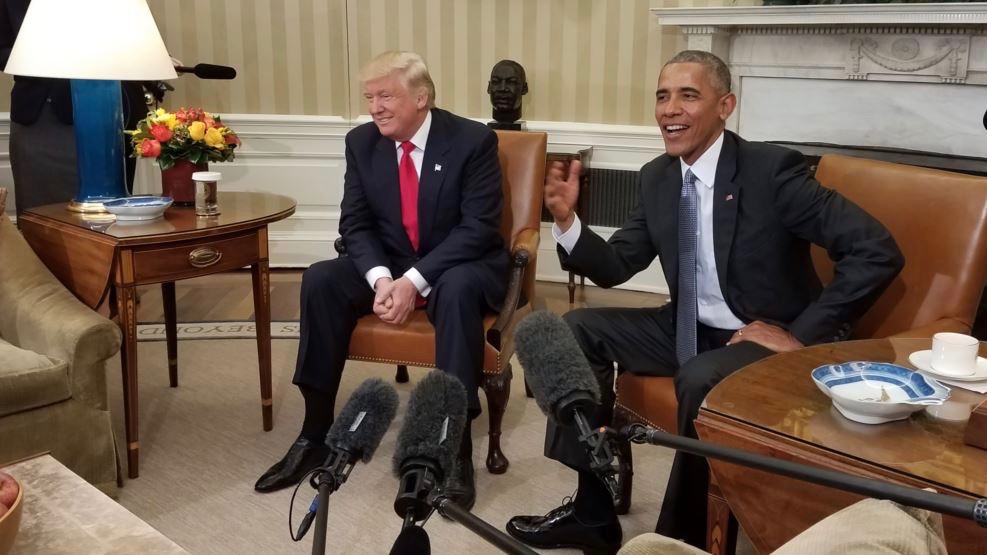


Obama Vs. Trump, What They Accomplished

With the 2020 elections right around the corner, and Trump‘s impeachment trial finally behind us, we want to reflect on the past of what Trump has done during his reign as President.

According to Politifact, Obama kept more promises during his time as president, though he had two terms to work with. Trump’s administration has more in the works that may go unfulfilled if not elected for a second term.

Trump’s Term So Far

Trump has tried to dip his finger into every pie with his promises. Everything from Tax cuts to cutting funding for planned parenthood. This has created both benefits and controversy.

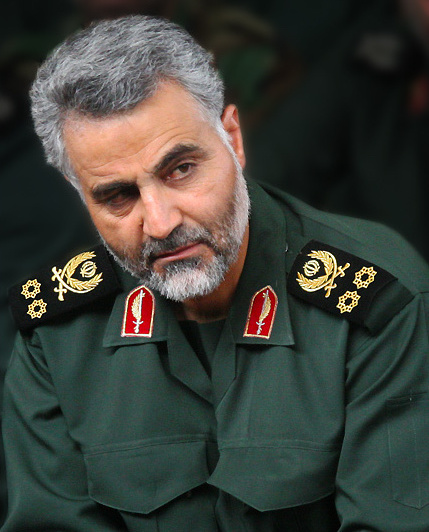
Some of the recent things Trump has accomplished is that he ordered and killed Iranian general Qassem Soleimani, who was responsible for the deaths of many US troops.

Trump was also the first president to sit and talk with one of the most dangerous men in the world, Kim Jong-un, to try and barter peace. He has recently revealed a peace deal for Israel and Palestine, though it was quickly rejected by both countries.

What drove Trump’s campaign is immigration. Stating he will reverse Obama’s DAPA and DACA orders, but only successfully eliminating DAPA. The other and most iconic is the wall that he wanted Mexico to pay for to further solidify the border. This has been an undertaking which will most likely go unfinished if not re-elected. The most recent development from that front is a section of the wall collapsing towards Mexico.

There is also the large anti-Muslim factor to his immigration standards that fell through since his time in office. Originally wanting to “Ban Muslims from entering the U.S.,” by creating executive orders. If claimed that it was for national security, the supreme court said that it could be done. Though many Americans and world leaders didn’t like this idea of a “Muslim ban,” Trump did meet in the middle and enacted a travel ban that targeted “terror prone” places such as “Iran, Libya, Somalia, Syria, Yemen, North Korea and Venezuela,” according to an article by Miriam Valverde of politifact.com.

Eliminating and cutting taxes was another big driver in his campaign, with which he has been able to achieve. One such act is the Tax Cut and Jobs Act of 2017. Though this act did reduce taxes for income brackets across the board according to the Tax Foundation, “bringing jobs back to America ” is a tall order for internationally based companies. Companies like Apple had to repatriate billions of dollars in offshore shares, losing millions if not billions in the process of converting currency and foreign tax.

Trump’s tariffs have created backlash when they were enacted creating higher pricing for industries that rely on foreign industry. Retailers such as Best Buy took a 20% drop in stock prices due to roughly 60% of their stock being Chinese manufactured. Though both have been in a trade war, there are rumors China will cut tariffs by 50% for imported goods.

Under Trump the economy has been slightly boosted. stock market and GDP have been on a steady rise while unemployment has been reduced. He has saved $33 billion by cutting and repealing regulations according to Heritage.org.

Finally he promised to expand the military efforts in the middle east, expanding the Navy by capping to 350 ships and submarines, adding to the Air Force over a thousand new fighter aircraft, and building the Marine corp to 36 battalions. He asked for the removal of troops from Syria. He also followed through with his promise to beef up military action in the middle east, deploying more than 14,000 troops to Afghanistan. the number has risen with the recent attack on the US embassy in Iraq, adding another 750 to the roughly 5,200 deployed there.

Obama’s Time in Office

Obama accomplished a lot in his 8 years as president. No president is perfect, and Obama had many blunders along with other liberal policy enactments and accomplishments.

First and foremost is Obama’s legacy on healthcare, The Affordable Care Act or Obamacare. This act mandated that every citizen of the United States was required to have health insurance or pay a fine (recently redacted fine when the Tax Cut and Jobs act passed). It did much more than that as it put caps on co-pays, restricted the ability for insurers to deny coverage to those with severe illness and so forth. Many people however found it a burden on the Taxpayer as Obamacare forced others to pay for insurance for someone else. Insurance premiums in most cases more than doubled or tripled, making it very unaffordable healthcare.

Obama was the president who was in office when the man who orchestrated the 9/11 attacks, Osama Bin Laden, was killed. He was pulling troops from the area when this act crippled Al-Qaeda. Some argue that by leaving Iraq at this crucial moment this gave ISIS time to establish and claim dominance as the new world terror.

His other most controversial act was to reduce military and nuclear arms in US possession as close to zero as possible. By the end of Obama’s second term, the administration was able to decommission roughly 553 nuclear arms. The stockpile was at 4,018 by the end of his term. He was also the first US president to visit the Hiroshima bomb site.

Obama also tried to fuel the US economy, but instead of focusing on big business he created the JOBS Act, which would help small businesses and start-up. Some aspects regulated crowdfunding and investing. This would make it more difficult for one investor to make all the decisions and allow for more diverse input.

He also had the Dodd Frank Act, which targeted agencies that supposedly caused the recession and financial crisis in 2008. This act targeted large companies and liquidated assets from them to prevent the collapse of the stock market in the event of the companies failure. This also heavily regulated banks from investing financial assets, limiting a banks growth but supposedly protecting consumer investment in the bank.

Obama was also a large advocate for climate reform. Pushing hard on regulating oil, methane, coal and other fossil fuels, Obama pushed for clean energy. Regulations such as the Clean Power Plan required states to reduce carbon emission as they see fit, so long as it is done. Also helped regulate deep water drilling after the BP oil spill.

The Common Ground

What do Trump and Obama have in common? According to FRED (Federal Reserve) he and Obama have both had somewhat positive effects on the economy. Both lowered unemployment rate, raised GDP and both had negative effects like raising the national debt. They both helped boost wages, jobs, and reduce unemployment.

Killing of Iranian General and the Elections

An Iranian General, Qassem Soleimani, was recently killed in a U.S. drone strike. This has sparked greater tensions in the middle east. Iran’s supreme leader Ayatollah Ali Khamenei, in a recent report by ABC News, even cried along with thousands that crowded the street during the generals funeral.

“Soleimani was plotting imminent and sinister attacks on American diplomats and military personnel.” Said Donald Trump. The attack was in retaliation to an American contractor being killed by an Iranian-backed militia one week earlier. Many others in the Pentagon and on Capitol Hill also stated that Qassem was a threat that needed to be neutralized. Many believe this to be a way to deter attacks and not provoke them.

Democratic candidates on the other hand are backing the Anti-war train like Pete Buttigieg and Tulsi Gabbard. Pete having a military background stated that there are unforeseen repercussions that could occur. Bernie sanders voted in 2002 against the war in Iraq which he used as a log on the political flame.

“This is a dangerous escalation that brings [The United States] closer to another disastrous war in the middle east,” Said Bernie Sanders. “ [This will] cost trillions more dollars, and lead to even more death[s],”

While some Democrats are condemning the assassination, others are backing the assassination such as Joe Biden, Former VP to Obama and current leader of the democratic party. Joe agrees that Qassem needed to be “Brought to justice for his crimes,” but also agrees that this is a dangerous situation we have put ourselves in. We have yet to see the approval ratings for each candidate following these events.

What This could Mean for the Future Presidency

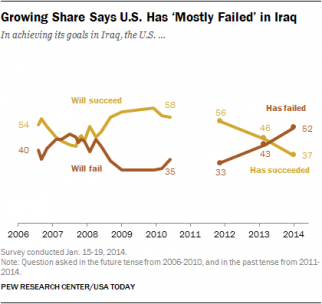
How this will affect the polls has yet to be seen, understanding that it was in retaliation to an American contractor being murdered helps, but Qassem was Iran’s top general, and killing him is as close to a declaration of war as any. Given the reports of Pew, it is safe to assume that Americans don’t want another Desert Storm on their hands.

Image sourced from https://www.pewresearch.org/

If there is a war that starts in Iran, Trump may have a good chance to win. Many presidents like Woodrow Wilson, Franklin Roosevelt and even Abraham Lincoln were re-elected during wartime. Though in recent history this has yet to hold up since during the Vietnam war and the War on Terror we have seen many different presidents.

The match has been lit, we will wait with baited breath to see if Trump burns his hand or lights the fire for re-election.