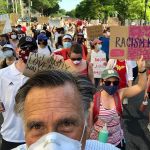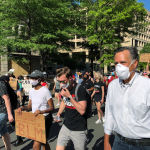
On May 30th, Salt Lake City faced one of the first violent protests seen in the history of the city. An empty police car was flipped and incinerated, the windows of the local 7-11 shattered, completed with a mob-style beat down on a man wielding a crossbow with intent to harm.
The aftermath of the protest garnered more outcry against the violence of the riots than support for the larger Black Lives Matter movement.
Rioting draws the attention of the media, and consequently serves as a focal point for those who speak louder about “unnecessary violent actions” but not when the same unnecessary violence is executed by the police. In America, violent protests means shattered glass, but violent police means death. One is a sentence, the other is not.
Before the incineration of the police vehicle, an officer had shoved an elderly man to the ground, in almost every case of violence in the Salt Lake City protest, acts of violence were preceded by violent police actions.
The intent behind rioting is unity in doing so; it is not like black Friday, where patrons fight over who will receive the next i-pad mini, rioting is united. Seemingly meaningless destruction may not help to propel the Black Lives Matter movement – but jarring images symbolic of Black pain will.
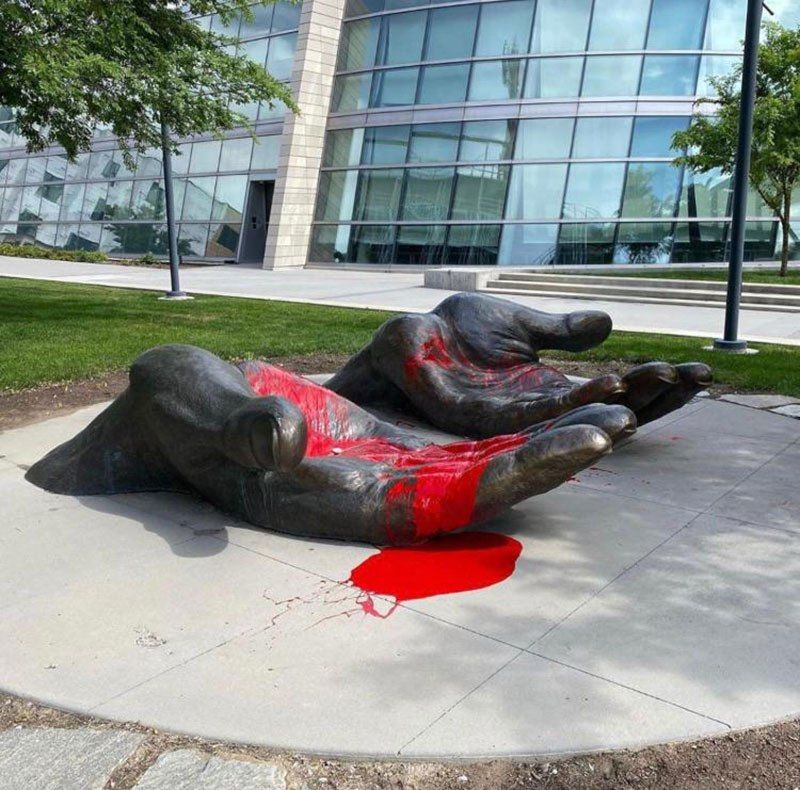
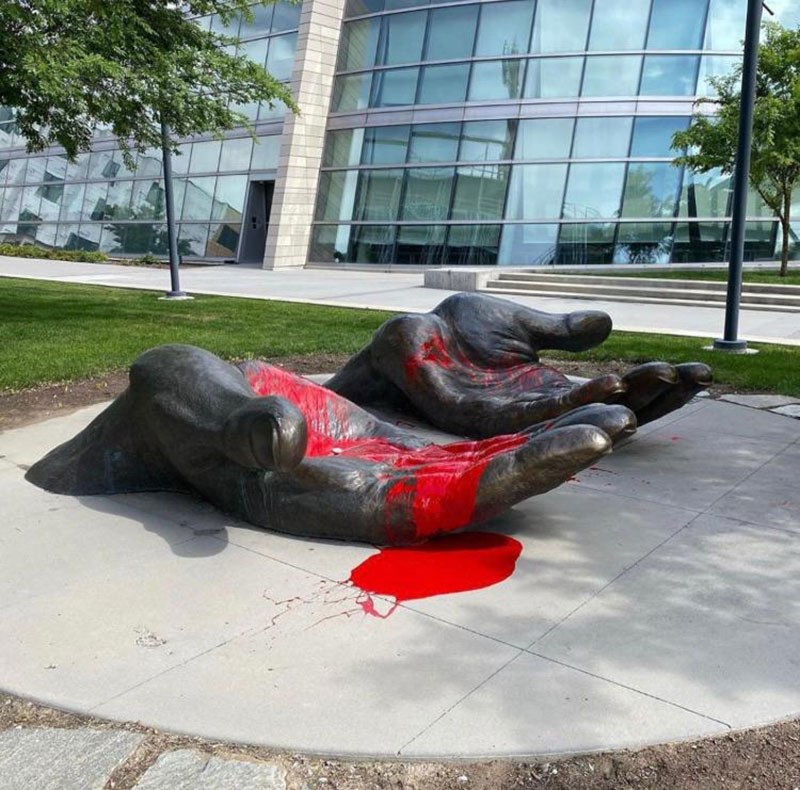
One such example is the bloodied palms of the Serve and Protect sculpture at Salt Lake City’s Public Safety building (see above). The image has garnered national acclaim and serves as a symbol of the greater movement ahead. Vandalism is a crime, but without the crime, we would not have been able to see the symbolism in what lies ahead.
Many have come to question whether or not violence is warranted within protests, it comes down to effectiveness. Rioting has always been a valid form of protest. Since the dawn of American time, democracy has always been defended through violence. There is precedent, and thus far, protests seem to be garnering renewed support and changes are slowly being made with new laws against no-knock warrants and charges against the police officers.
White entitlement to the bodies of People of Color has gone on long enough. It is only in the last few decades that People of Color have had autonomy over their own bodies. Consider Colin Kaepernick – one of the most visual instances of a trigger to white fragility. A Black man, silently, and respectfully, going down on one knee, and the immediate uproar of anger and criminalization he faced.
It is not your place, nor mine, to speak as to how the oppressed should respond to their oppressors. The Black community is exhausted, rightfully so. They have protested peacefully, silently, politically, and are still being met with the same outrage as they have from the beginning. Four hundred years of Black pain and anger, and they are still being killed like dogs in the streets.
If history is any indication, it takes a true spark, or in this case, it may take a bonfire, to truly ignite change. The least we can give is our solidarity in doing so.